Nursery Dresser Organization Ideas Parents Can Copy and Use
Good nursery dresser organization ideas can completely change how a baby room functions once the tiny socks, swaddles, pajamas, diapers, and daily outfits start multiplying faster than expected. A well organized nursery dresser keeps everything visible, reachable, and easy to reset after laundry instead of turning drawers into stressful digging zones every morning.
Start Here:

Jump to:
Nursery Dresser Organization Ideas That Stop Drawer Chaos
A baby dresser can look tidy the day you fold everything. Then laundry comes back, a new size gets opened, and one tiny drawer somehow has pajamas, socks, burp cloths, and half a pack of diapers all fighting for the same space.
Nursery dresser organization ideas work best when every drawer has one clear job.
The dresser is not just furniture. In a small nursery, it becomes the daily command center. That is why the drawer layout matters more than the dresser style.
I believe the fastest way to make a nursery dresser easier to use is to organize it by how often you touch each item, not by how cute the folded stacks look on day one.
The finished setup should let you open one drawer and grab exactly what you need without moving three other piles first. That sounds simple, but it is where many baby dressers start falling apart after the first few weeks.
For the rest of the room, pair this drawer system with DIY small nursery closet organizer ideas so hanging clothes and folded clothes are not fighting for the same storage space.
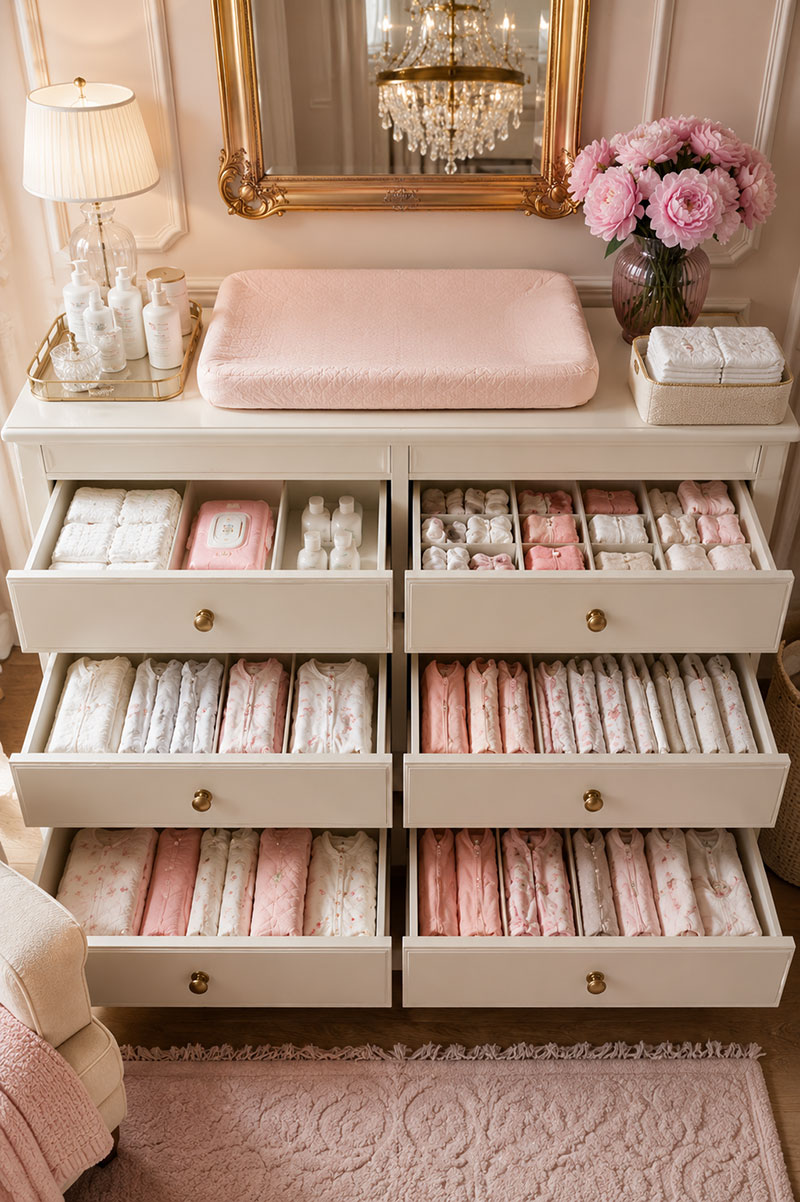
Exact Nursery Drawer Map Parents Can Copy
The easiest dresser layout starts with the drawers you touch most often. Put those near the top. Save lower drawers for backup items, future sizes, and things you do not need while holding a baby.
Use this simple drawer map:
- Top left drawer: diapers, wipes, cream, and a few changing pads
- Top right drawer: socks, mittens, bibs, and small daily pieces
- Middle left drawer: sleepers and pajamas
- Middle right drawer: onesies and everyday outfits
- Bottom left drawer: swaddles, burp cloths, and blankets
- Bottom right drawer: next size clothing and overflow items
This arrangement keeps urgent items high and slower rotation items low. It also prevents the common problem of filling the top drawers with adorable clothes while the diaper supplies end up across the room.
A dresser that works during a midnight change is better than one that only looks nice in a photo.
Baby Clothes Drawer Dividers That Keep Tiny Items Visible
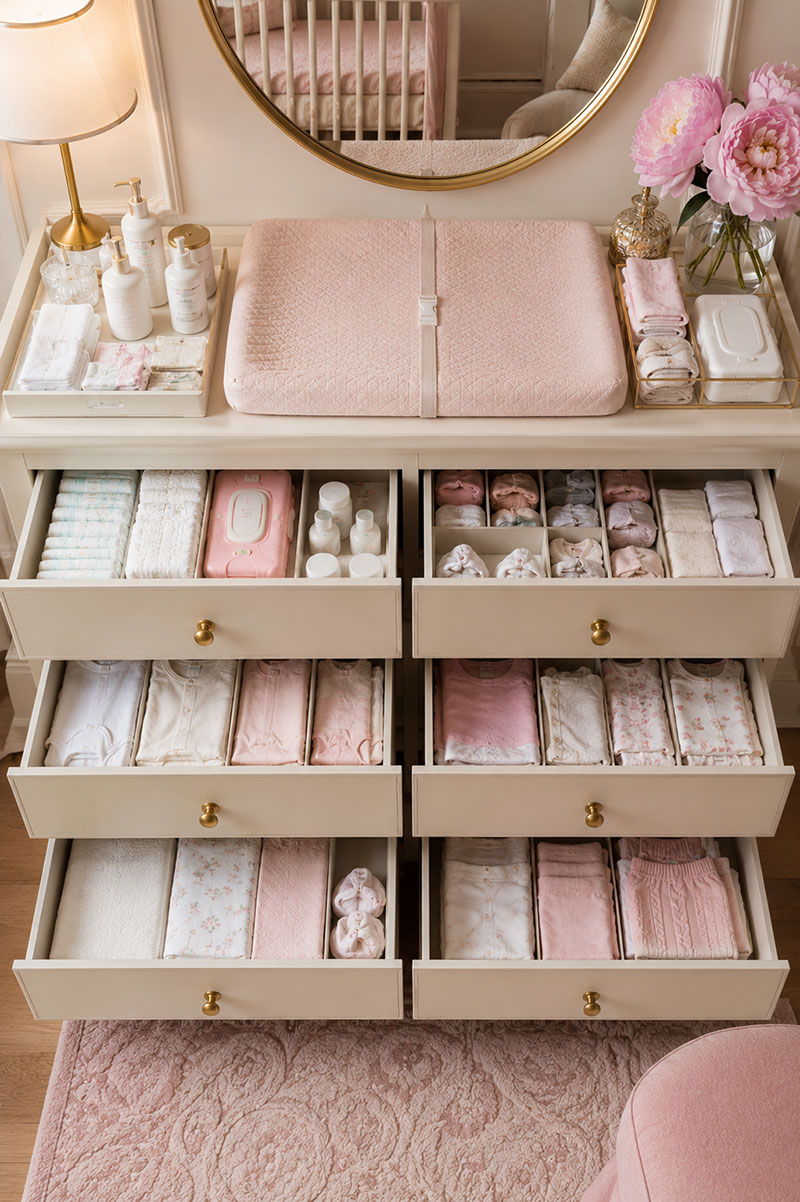
Tiny baby clothes can vanish in a drawer faster than anyone expects. Socks slide under pajamas. Bibs disappear behind onesies. The smallest things are always the first things to get lost.
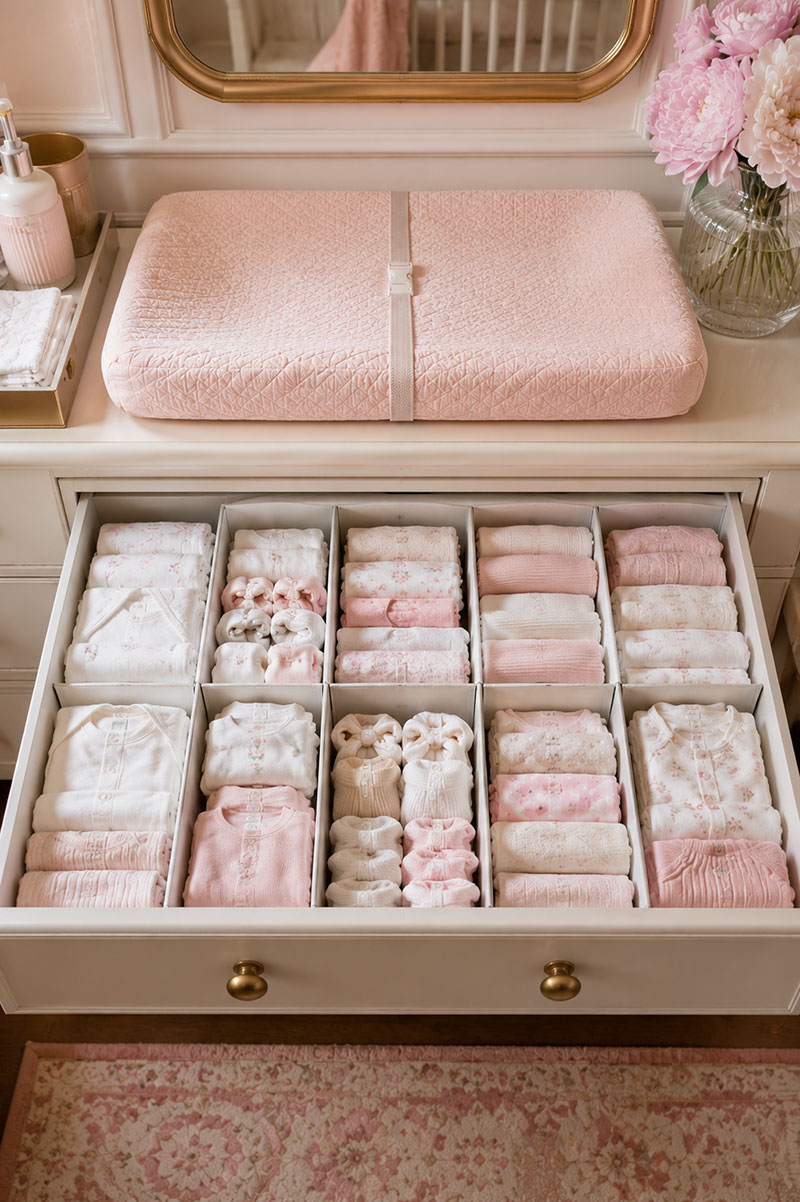
Drawer dividers fix that by creating small lanes inside each drawer. You do not need a custom insert. Adjustable dividers, fabric bins, or shallow boxes can do the job.
For a beginner setup, divide each clothing drawer into three zones:
- Back row: backup pieces
- Middle row: current size clothing
- Front row: daily grab items
That front row matters. When the items you use every day sit closest to your hands, the dresser resets faster after laundry and does not turn into a deep pile.
For larger storage outside the drawers, see nursery storage ideas for small rooms. That page helps when the dresser is doing too much and the room needs another storage zone.
Diaper Drawer Setup for Faster Daily Changes
A diaper drawer gets messy when it is treated like a supply drawer instead of a working drawer. There is a difference.
A supply drawer stores extras. A working drawer holds what you actually reach for several times a day.
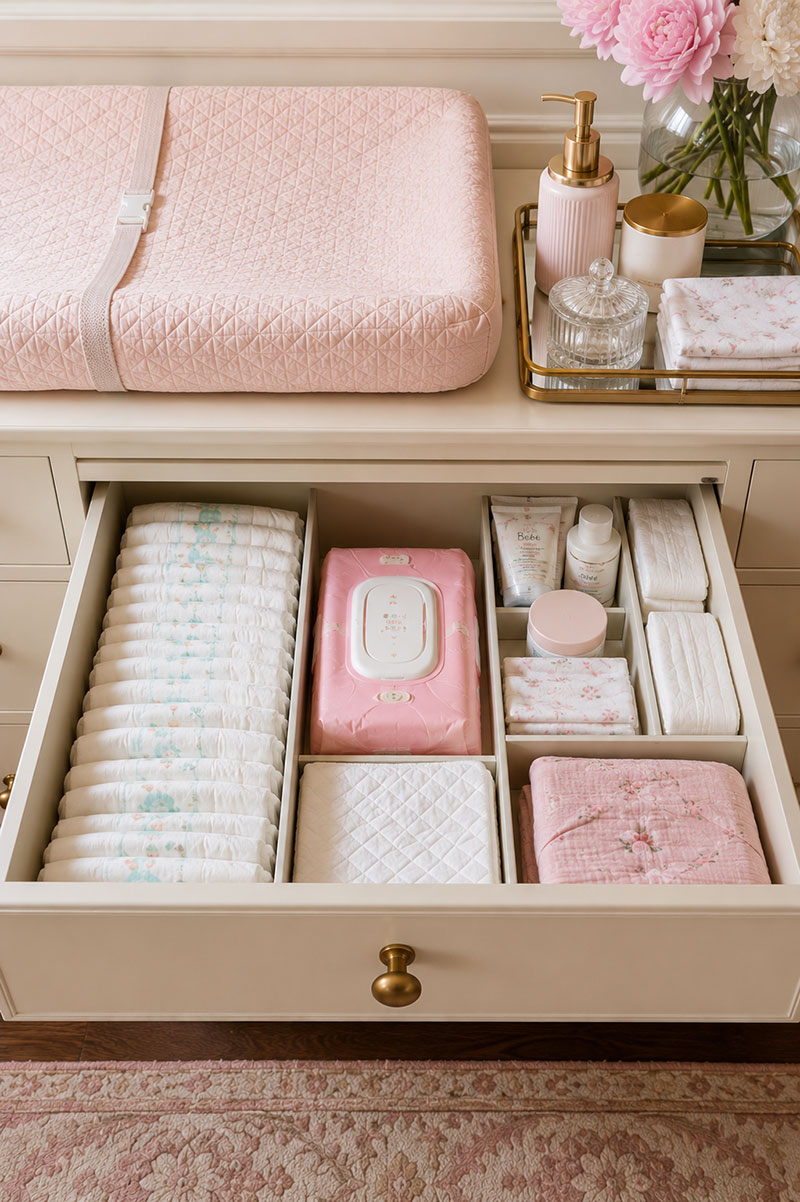
Keep the diaper drawer simple:
- One row of diapers
- One pack of wipes
- Diaper cream standing upright
- A small section for changing pads
- A tiny empty spot for items you need to drop in quickly
Do not overfill this drawer. When the top drawer is stuffed, it becomes annoying to open and harder to reset. Backup diapers can go in the closet, a basket, or a lower dresser drawer.
The finished drawer should look almost underfilled. That is the point. It needs room for real life.
If your dresser also works as a changing station, these changing table dresser ideas can help you keep the top surface practical without crowding the room.
Top of Dresser Organization Without Surface Clutter
The top of the dresser is where good nursery organization either holds together or slowly starts to slide. A pacifier lands there. Then lotion. Then a brush. Then clean laundry waits there for two days.
The best top of dresser setup has fewer pieces than people think.
- One changing pad if the dresser is used for changing
- One low tray for daily items
- One small covered container for tiny pieces
- One open space for folding or sorting
That open space is not wasted. It is the landing zone that keeps the whole dresser from becoming crowded.
If the dresser top is full before the baby arrives, it will be impossible to use once the room is busy.

For placement help, see nursery layouts with crib and dresser placement. Dresser location matters because the drawers need space to open fully without blocking the crib, chair, or walking path.
A drawer system is easier to maintain when the furniture sits in the right spot, so this guide to where to put a nursery dresser can help you choose a wall that keeps storage, changing supplies, and traffic flow working together.
Nursery Dresser Safety and the Laundry Reset
A nursery dresser should be organized, but it also needs to be treated as furniture a child may eventually pull on. That part is easy to forget when the baby is still tiny.
In the United States, the U.S. Consumer Product Safety Commission recommends anchoring furniture to help prevent tip overs. You can read more through the CPSC Anchor It furniture safety guidance.
Always follow the dresser manufacturer’s instructions for anchoring, drawer weight, and changing pad use.
Once the dresser is anchored and organized, use a weekly laundry reset. This is a small habit that keeps the drawer system from falling apart.
- Remove anything too small
- Move the next size into the back row
- Put daily outfits back in front
- Refill only the working diaper drawer
- Leave one small empty space for quick sorting
A drawer system that survives laundry day is the one worth keeping.

More Nursery Storage Ideas for Small Rooms
Once the dresser drawers are under control, the rest of the nursery gets easier to manage. The dresser should not have to hold everything.
Use the closet for hanging clothes and backup sizes. Use the dresser for daily clothing and diaper supplies. Use baskets or shelving for items that do not belong in either place.
The space beneath the crib presents another layer of hidden storage, and these under crib storage ideas for nursery overflow show smart ways to store extra sheets, diapers, blankets, and out-of-season baby clothes without crowding the dresser.
The easiest nursery to maintain is not the one with the most storage. It is the one where every storage piece has a job.
FAQ About Nursery Dresser Organization Ideas
How do you organize a nursery dresser?
Organize a nursery dresser by giving each drawer one clear purpose. Keep diapers, wipes, and daily changing items in a top drawer, place pajamas and everyday outfits in the middle drawers, and use lower drawers for blankets, swaddles, and future clothing sizes.
What should go in the top drawer of a baby dresser?
The top drawer should hold the items you reach for most often, such as diapers, wipes, cream, socks, bibs, and small daily pieces.
Are nursery drawer dividers worth it?
Yes. Drawer dividers help keep tiny baby clothes, socks, mittens, and bibs visible so the dresser does not turn into mixed piles after laundry.
How do you organize baby clothes by size?
Keep the current size in the easiest drawers to reach. Store the next size in a lower drawer, closet bin, or back section so it is nearby but not mixed with daily clothing.
Should a nursery dresser be anchored to the wall?
Yes. Dressers should be anchored according to the manufacturer’s instructions because children may eventually pull on drawers or climb on furniture.
When you click on links to various merchants on this site and make a purchase, this may result in this site earning a commission. This does not affect the price you pay.

UBGI Gold Standard 2026
Reviewed under the site's
editorial checklist.
Photos, decorating ideas, party setups and reader submissions are shared for inspiration unless a page is specifically presented as a pattern, tutorial, reference guide or step-by-step project. Follow the instructions, measurements, safety guidance and manufacturer directions provided for the particular project or product.
About Jan | Contact | Baby Nursery Ideas (Blog) | Site Map | Privacy Policy | Disclosure Policy | Disclaimer | Affiliate Disclosure | Earnings Disclosure | Facebook | Pinterest
I am a participant in the Amazon Services LLC Associates Program, an affiliate advertising program designed to provide a means for us to earn fees by linking to Amazon. As an Amazon Associate I earn from qualifying purchases.
Copyright © 2006-2026. All Rights Reserved.