5 Crucial Steps in Preparing a Baby's Nursery
In our list, we will share 5 crucial steps in preparing a baby's nursery that should not be overlooked. In the tips, I will share what I have learned from a. personal nursery DIY projects b. listening to parents that have shared their experiences b. advice from experts whose opinion I respect and trust.
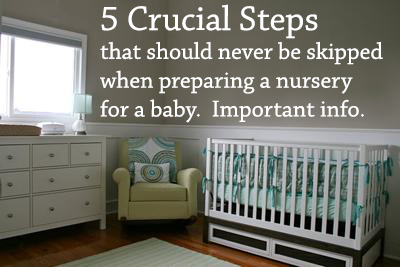
5 Crucial Steps in Preparing a Baby's Nursery
1. Plan nursery painting early enough to allow plenty of time for the room to air out before the baby arrives. If possible, have someone else do the painting during pregnancy. When painting indoors, use paint intended for interior use, follow the manufacturer's directions and keep the room well ventilated with open windows and fans that move air outdoors.
After painting, continue ventilating the nursery for another two to three days and limit time spent in the freshly painted room. Pregnant women should also avoid scraping, sanding or removing old paint, especially in homes built before 1978, because the dust may contain lead. For current information about paint exposure during pregnancy, see MotherToBaby's guidance.
2. If the nursery's flooring will be replaced with carpet, do so immediately after painting or choose an option known not to compromise air quality. For practical purposes, hardwood, bamboo or tile are recommended to reduce dust and allergens as well as for being easy to clean. When using nursery area rugs to soften hard surfaces, wash them whenever possible before use and secure them to the floor using tape.
3. When buying new furniture, remove it from the boxes and assemble everything as soon as possible to allow for that "new smell" to dissipate. The same rules apply to new bedding and window treatments. Give all new furnishings and fabrics time to air since it would be ill advised to bring newborn home to a nursery filled with air that smells like chemicals.
If you plan to use secondhand nursery furniture, take extra care with a used crib. Traditional drop-side cribs do not meet current federal crib safety standards and should not be used. Before using any secondhand crib, check that the model has not been recalled and make sure all hardware, slats, mattress supports and other parts are present, secure and in good condition.
Review the current CPSC crib safety recommendations before putting a used crib into service. The mattress should fit tightly, the crib should have no missing, loose or broken hardware, and the crib should meet current safety requirements.
4. Some parents resist anchoring the baby dresser to the wall stating that it would make moving the furniture more difficult as baby grows. Experts in child-proofing advise that once baby is mobile that it is important to anchor the furniture to the wall. Safety 1st Furniture Wall Straps that currently cost less than $5 a set can help to prevent accidents.
5. Once safety issues have been addressed, we can start to plan a nursery storage system, organizing the closet to make the most out of the space available and have a place to put items that might harm baby or cause accidents out of the way.
I hope that you have found useful information in our list of tips on how to prepare the baby's nursery in 5 easy steps that you can use in your DIY project.
Thanks for visiting Unique Baby Gear Ideas.
When you click on links to various merchants on this site and make a purchase, this may result in this site earning a commission. This does not affect the price you pay.

UBGI Gold Standard 2026
Reviewed under the site's
editorial checklist.
Photos, decorating ideas, party setups and reader submissions are shared for inspiration unless a page is specifically presented as a pattern, tutorial, reference guide or step-by-step project. Follow the instructions, measurements, safety guidance and manufacturer directions provided for the particular project or product.
About Jan | Contact | Baby Nursery Ideas (Blog) | Site Map | Privacy Policy | Disclosure Policy | Disclaimer | Affiliate Disclosure | Earnings Disclosure | Facebook | Pinterest
I am a participant in the Amazon Services LLC Associates Program, an affiliate advertising program designed to provide a means for us to earn fees by linking to Amazon. As an Amazon Associate I earn from qualifying purchases.
Copyright © 2006-2026. All Rights Reserved.