Boy and Girl Twin Nursery Ideas for One Beautiful Room
By Jan Bay
Boy and girl twin nursery ideas do not have to start with dividing the room into a pink side and a blue side. I think the prettiest rooms for twins start with one shared color palette and one overall decorating direction, then give each baby a few details of his or her own. Matching cribs can make the larger pieces feel settled, while different artwork, names, crib sheet colors and personalized accents keep the nursery from looking like two identical spaces copied side by side.
Explore More Twin Nursery Ideas
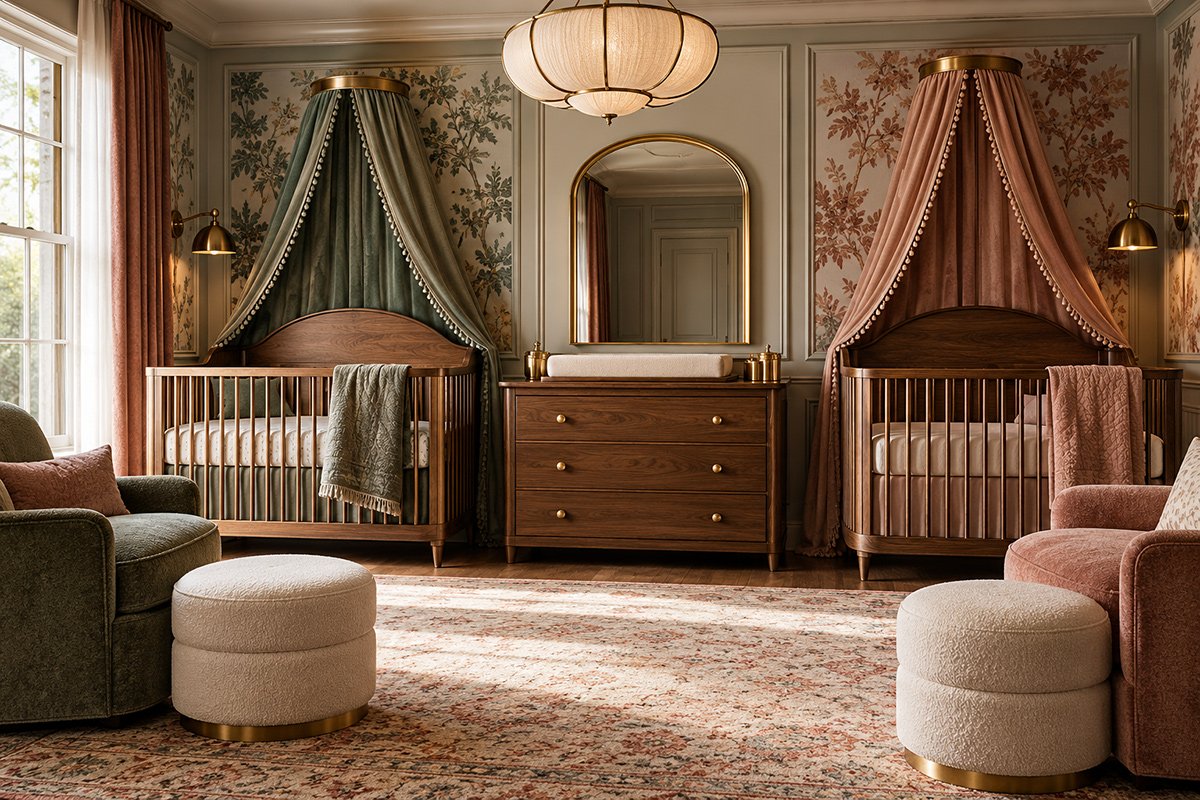
Coordinating Twin Nursery Decor
Jump to Boy and Girl Twin Nursery Ideas
Start With One Shared Color Palette
What Should Match in a Twin Nursery
What Should Be Different for Each Baby
Boy and Girl Twin Nursery Color Ideas
Boy and Girl Twin Nursery Ideas Start With One Shared Color Palette
If you're decorating for a boy and a girl, I'd pick the room palette before choosing anything that is supposed to look "boy" or "girl." That one decision keeps the nursery from turning into two separate decorating projects that happen to share four walls.
Start with two or three colors that belong together across the whole room. Then decide which color will carry the biggest surfaces, which one will show up in smaller accents and which color can change a little from one baby's side to the other.
You don't need a neutral room to make that work. A shared palette can have plenty of color.
I like combinations where the colors relate without becoming mirror images. Sage with dusty rose and deep berry can work beautifully. So can muted teal with rust and soft coral. Lavender with smoky blue gives you another direction that doesn't make the room look split down the middle.
The trick is repetition. If one color appears beside one crib, bring a smaller amount of it somewhere across the room. Do the same with the other baby's accent color. That little bit of crossover is what makes the space read as one nursery.
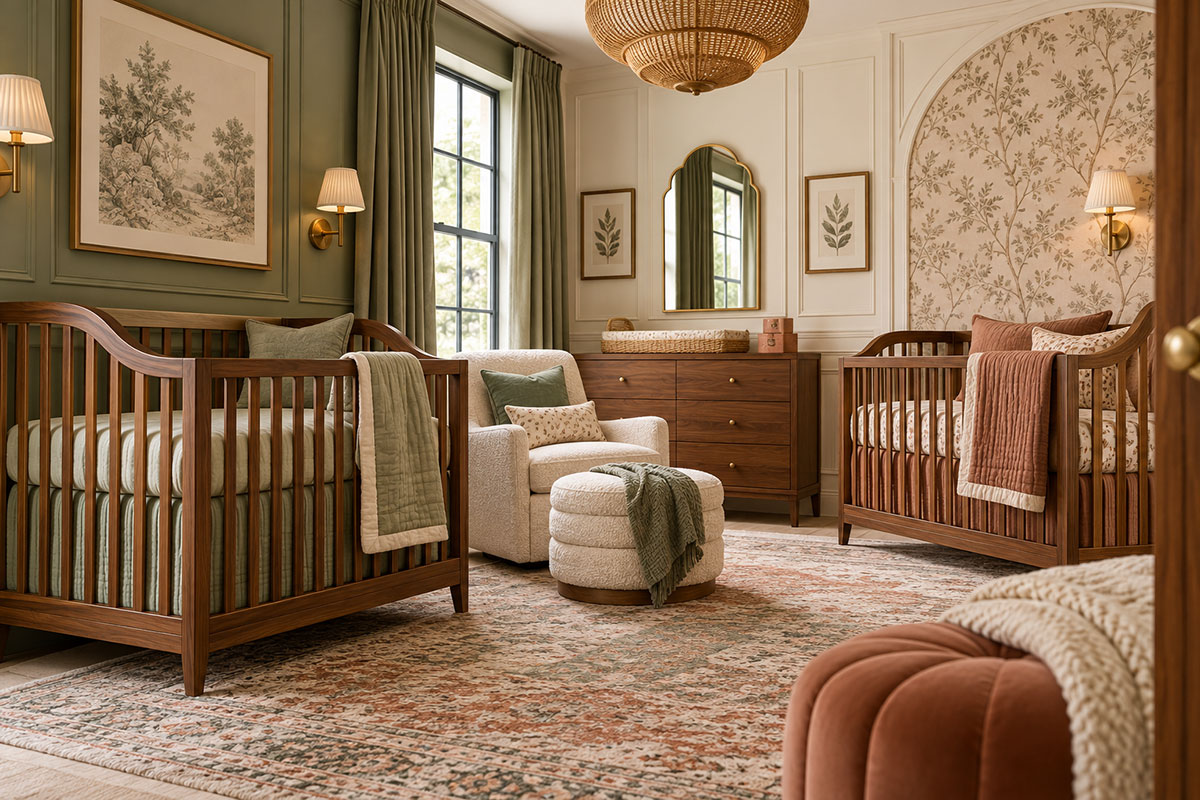
What Should Match in a Boy and Girl Twin Nursery?
I wouldn't try to make every purchase different just because the babies are different. Matching some of the larger pieces actually gives you more freedom with everything else.
If the room is fairly small, matching cribs are an easy choice. Two cribs already create a lot of visual weight, and using the same finish keeps that part of the room settled. The dresser can repeat that wood tone or painted finish without turning the room into a furniture set.
If you're still deciding where those pieces will fit, work that out before decorating. My twin nursery layout ideas page shows several ways to arrange two cribs without sacrificing the walking path.
I would usually repeat these larger elements:
- crib style or crib finish;
- major furniture finish;
- window treatment;
- main rug;
- wall treatment;
- general picture-frame finish.
That gives the room a framework. Once that framework is there, stop matching.
What Should Be Different for Each Baby?
The smaller details are where I'd let each baby's area have its own personality.
Different fitted crib sheet colors are an easy place to start because they can pull from the same palette without being identical. Artwork can do the same thing. You might use coordinating prints with different subjects, different initials in matching frames or two name pieces that share the same style but not the same design.
I would also let one or two accent colors lean more strongly toward each crib. Maybe berry shows up more beside one baby and teal shows up more beside the other. Both colors can still appear across the room, just in different amounts.
That is enough separation for most rooms.
You do not need two rugs, two wall treatments, two themes or a visible line telling you where one baby's territory ends and the other's begins.
Boy and Girl Twin Nursery Color Ideas Beyond Pink and Blue
There is nothing wrong with pink and blue if those are the colors you really want. I just wouldn't make them the automatic starting point.
A shared room gets much more interesting when the palette has a third color doing some of the work.
Here are combinations I'd consider:
- Sage, dusty rose and plum: colorful without becoming sugary.
- Muted teal, rust and warm white: a little richer and especially good with walnut or pecan furniture.
- Lavender, smoky blue and soft gray: cooler and a little more tailored.
- Terracotta, muted coral and olive: warm without turning beige.
- Deep green, raspberry and crisp white: higher contrast and especially pretty with traditional wall molding.
If you want the room to feel lighter, use the strongest colors in textiles, art and smaller upholstered pieces instead of covering every wall with them.
If you want more examples before choosing a direction, the twin nursery pictures page is the better place to browse finished-room inspiration.
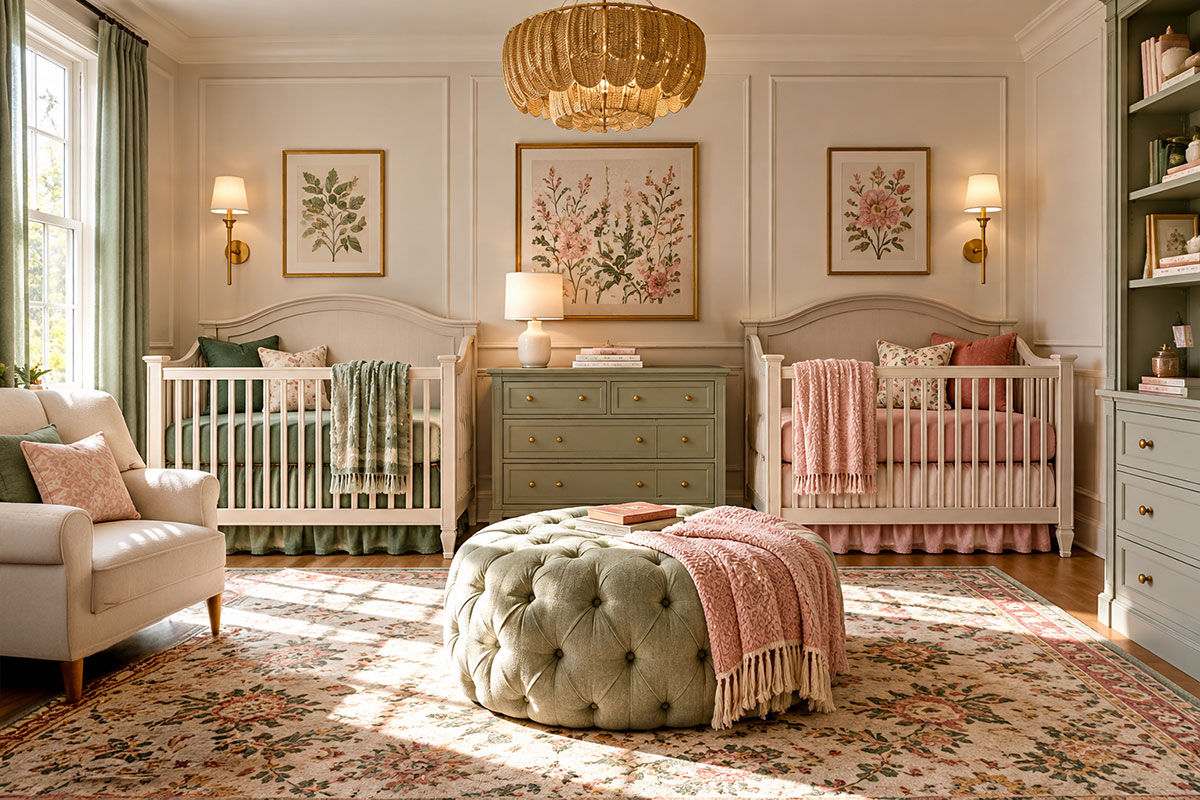
How to Coordinate Two Cribs Without Making Them Identical
Two cribs are naturally going to become the biggest visual pair in the room, so I would let them coordinate and put the differences inside and around them.
Matching crib frames with different fitted sheets can be plenty. If you want a little more distinction, use separate artwork above or near each crib, provided the placement itself is safe and nothing can fall or be pulled into either sleep space.
I would not load the cribs themselves with decorative extras just to make each side look different.
Current American Academy of Pediatrics safe sleep guidance recommends a firm, flat, noninclined sleep surface with a fitted sheet and no other bedding or soft objects in the crib. You can review the AAP safe sleep recommendations.
So keep the personality on the wall, in the color palette and in the parts of the room that are meant for decorating. The crib itself can stay simple.
If you're still choosing the cribs rather than decorating around ones you already own, see my cribs for twins page before buying two large pieces that may not suit the room.

Personalize Each Baby's Space Without Doubling the Decor
Personalizing a shared nursery does not mean buying two versions of everything.
I'd choose a few details for each baby and make those count.
A name or initial is obvious, but you can also personalize with color, artwork or one distinctive accent beside each crib. One baby might have a berry-toned print while the other has a deep green one. The frames can match so the pair still belongs together.
If you use shelves, baskets or drawer labels, you can separate practical belongings there too. That gives each baby an identifiable place without adding another dresser or another storage system.
Keep the personalization at the edges of the room rather than trying to make every shared object declare which baby it belongs to.
Cribs, dresser, rug and major storage can be shared visually. Artwork, names, sheets and small accents can be individual. That's really enough.
Twin Nursery Themes for a Boy and Girl
A boy and girl twin nursery theme should give you enough range to vary the details without requiring two unrelated sets of decor.
I would choose themes with more than one subject, color or motif to work with.
A woodland room can use leaves, trees, foxes, deer and acorns without assigning every animal to one baby. A garden theme can mix flowers, butterflies, birds and vines. A vintage storybook room can use different illustrations in the same framing style. A celestial room can use stars, moons and constellations without dividing the subject by gender.
You can also skip a literal theme and let color plus one design feature carry the room. Painted wall molding, a patterned wallpaper panel or a distinctive rug can do more for the room than a collection of themed accessories.
If you want to compare broader directions, go back to my twin nursery ideas and themes page. For more general nursery theme inspiration, you can also browse gender neutral nursery themes.
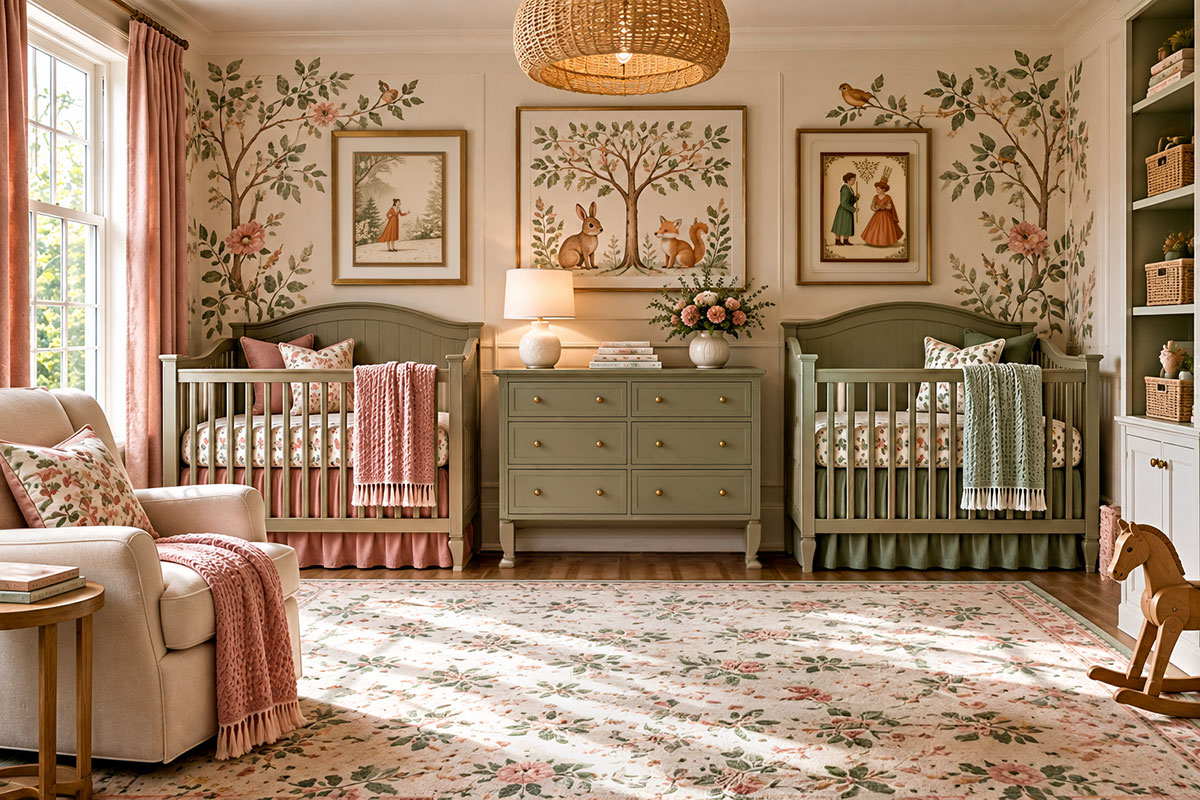
How to Avoid the Half Pink Half Blue Look
If you don't want the room to look divided, don't decorate it in halves.
That sounds obvious, but it is easy to do without meaning to. One pink crib area goes on the left, one blue crib area goes on the right, and suddenly the center of the room feels like a border.
Instead, carry colors across the whole space.
If there is rose beside one crib, repeat a little rose in artwork or fabric somewhere near the other side. If you use blue near the second crib, bring a smaller blue detail back across the room. Let the rug, walls and larger furniture belong to both babies.
I also prefer one shared focal point rather than two competing ones. A beautiful wall treatment, statement light fixture, rug or dresser can anchor the room while the crib areas stay coordinated around it.
The finished nursery should read as one room first and two individual spaces second.
That is the difference between coordinated and matched. You want enough repetition to hold the nursery together, then enough variation to remind you that two different little people live there.


When you click on links to various merchants on this site and make a purchase, this may result in this site earning a commission. This does not affect the price you pay.

UBGI Gold Standard 2026
Reviewed under the site's
editorial checklist.