Free Crochet Bird Patterns for Baby Blankets, Mobiles, and Nursery Decor
By Jan Bay
Free crochet bird patterns are a unique and inexpensive way to make handmade baby gifts, nursery mobiles, blanket appliqués, garlands and small keepsakes even more special using simple shapes, soft yarn and stitched details.
Explore More Free Crochet Baby Patterns
🍼 Easy Baby Lovey Crochet Patterns
🐾 Crochet Animal Appliqué Patterns
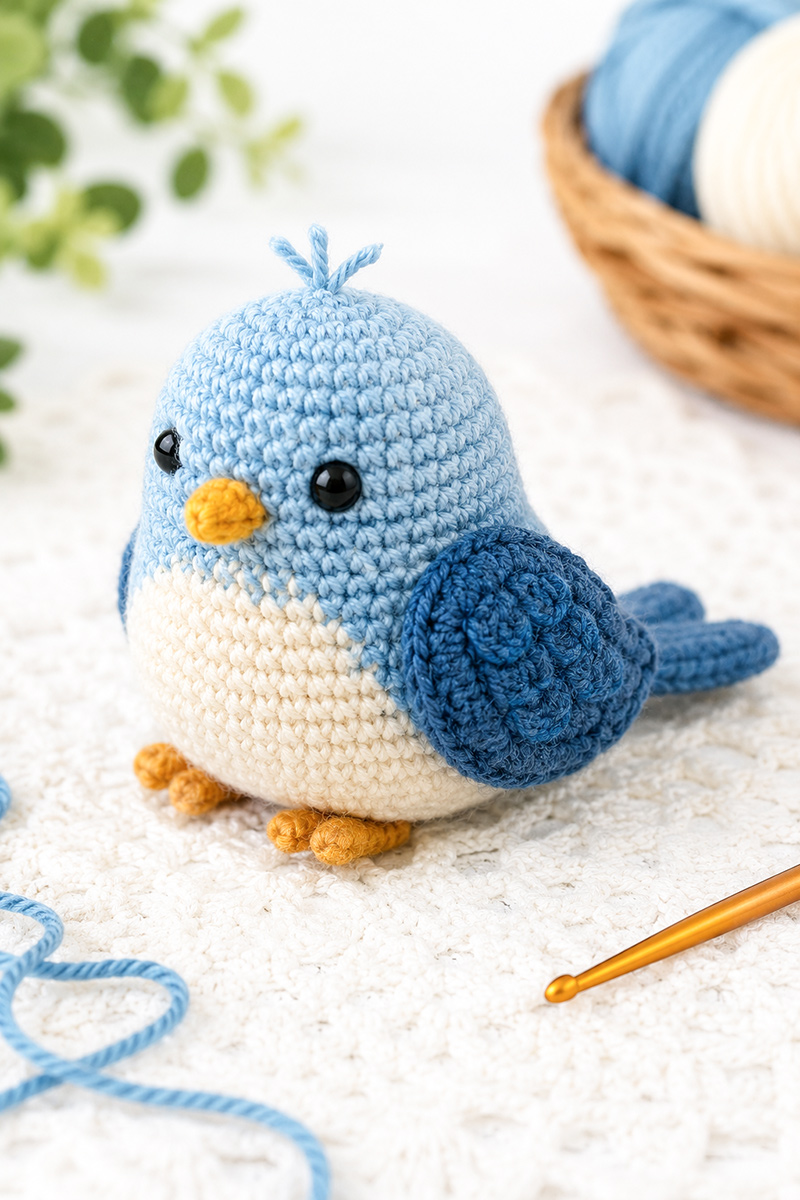
Important pattern note: The photographs on this page show larger and more detailed crochet bird variations for design inspiration. The free pattern below makes a much smaller, single-color rounded bird approximately 3½ inches tall with simple flat wings, a tiny yarn beak and three chain-loop tail feathers. It does not produce the color-blocked belly, layered wings, feet, head tuft, shaped tail or plastic eyes shown in some of the photographs. Use embroidered eyes for the mini bird pattern.
Helpful Crochet Supplies
Jump to a Section
Free Crochet Bird Patterns for Baby Gifts and Nursery Decor
Free crochet bird patterns are versatile because they can be used to make nursery mobiles, blanket appliqués, garlands, ornaments and small decorative accents. Simple bird shapes work well for beginners, while more detailed designs with layered wings, embroidered feathers and shaped beaks offer plenty of opportunities to customize each project.
Free Simple Crochet Baby Bird Pattern
This free simple crochet baby bird pattern makes one small rounded stuffed bird that can be used as a nursery mobile ornament, garland ornament, shelf decoration or handmade nursery gift. It is not a flat blanket appliqué pattern. Use soft washable yarn and embroidered features. Keep the finished bird and all hanging strings completely out of a baby's reach, and do not place it in or attach it to a crib, bassinet or play yard.
Materials
- Approximately 35 yards of worsted weight (#4) yarn in the main body color
- Small amount of yellow or orange yarn for beak
- Size G/4.0mm crochet hook
- Small handful of polyester fiberfill stuffing
- Yarn needle
- Black embroidery floss for eyes
Gauge: Gauge is not critical for this project, but use a hook size that produces a firm fabric so the stuffing won't show through.
Stitches Used
- ch = chain
- sc = single crochet
- inc = 2 single crochet in same stitch
- dec = single crochet 2 stitches together
- sl st = slip stitch
Skill level: Advanced beginner. This pattern uses a magic ring, continuous rounds, increases, decreases, stuffing, sewing and simple embroidery.
Finished size: Approximately 3½ inches (9 cm) tall using worsted weight (#4) yarn and a G/4.0 mm crochet hook.
Bird Body
Work in continuous rounds. Place a removable stitch marker in the first stitch of each round and move it up as you work.
- Round 1: Make a magic ring, 6 sc in ring. (6)
- Round 2: Inc in each stitch around. (12)
- Round 3: Sc 1, inc; repeat around. (18)
- Round 4: Sc 2, inc; repeat around. (24)
- Rounds 5-9: Sc around. (24)
- Round 10: Sc 2, dec; repeat around. (18)
- Stuff the body lightly, adding enough fiberfill to hold its rounded shape without stretching the stitches.
- Round 11: Sc 1, dec; repeat around. (12)
- Round 12: Dec around. (6)
- Fasten off, leaving a yarn tail. Thread the tail through the front loop of each of the final 6 stitches, pull gently to close the opening, secure the yarn and bury the end inside the body.
Wings, Make 2
The turning chain does not count as a stitch.
- Ch 5.
- Sc in second chain from hook and across. (4)
- Ch 1, turn. Sc across. (4)
- Ch 1, turn. Dec, sc 2. (3)
- Ch 1, turn. Dec, sc. (2)
- Fasten off, leaving a long tail for sewing.
Beak
- Ch 3.
- Sc in second ch from hook, sl st in next ch.
- Fasten off, leaving a tail for sewing.
Tail
Before attaching the tail, choose the front of the bird and place a removable stitch marker or short piece of scrap yarn where the center of the beak will be sewn.
- Join yarn at the center back, directly opposite the front marker, between Rounds 8 and 9.
- Ch 5, sl st back into the same space.
- Ch 4, sl st back into the same space.
- Ch 5, sl st back into the same space.
- Fasten off. Knot or weave the yarn ends securely and bury them inside the stuffed body.
Assembly
Sew one wing to each side of the body, centering each wing between Rounds 5 and 8 and positioning the top of the wing slightly below the head area. Position the wider single-crochet end of the beak against the face, with the narrower slip-stitch end pointing outward. Sew the beak to the marked front center between Rounds 3 and 5. Embroider one small eye on each side of the head just above and slightly behind the beak. Do not use buttons, beads or plastic safety eyes for this nursery project. After sewing and embroidering, secure every yarn and embroidery-floss tail and bury the ends inside the stuffed body before trimming.
For a mobile or garland display: Use a doubled length of matching yarn or strong crochet thread. Pass it under two adjacent stitches at the top center near Round 1, pass through the same stitches a second time, and knot it securely. Test the hanging point and make sure the bird remains balanced before adding it to a mobile or garland. Keep the bird, hanging strings and complete display out of a baby's reach, and never attach the display to a crib, bassinet or play yard.
To turn this into a bluebird, use blue yarn for the body and soft yellow yarn for the beak. For a baby chick, use yellow yarn for the body and orange yarn for the beak.
What I Look for in a Crochet Bird Pattern
When I choose crochet bird patterns for baby gifts or nursery decor, I look for simple shapes first. A rounded body, secure wings, a small stitched beak and embroidered eyes are easier to finish neatly and safer than patterns that depend on buttons, beads or loose pieces.
I also prefer birds that can be used more than one way. The same small stuffed crochet bird can become a nursery mobile ornament, a garland ornament, a shelf decoration or a keepsake gift. That flexibility matters because handmade nursery projects should be pretty, practical and easy to repeat.
Easy Crochet Bird Patterns for Beginners
If this is your first crochet bird pattern to make, start with a rounded body, small wings and a simple embroidered face. These beginner-friendly designs work up quickly and use only a few basic stitches, making them ideal for weekend projects or handmade baby gifts.
Small crochet birds are also perfect stash busters because they require very little yarn. Try soft pastel colors for spring nurseries, classic white doves for neutral rooms or cheerful blue, yellow and coral birds to brighten a baby's space.
- Simple oval body construction
- Flat or lightly stuffed wings
- Tiny embroidered eyes for baby safety
- Small triangle beak
- Easy tail feathers
- Minimal sewing
Once you've mastered one bird, it's easy to make an entire flock in coordinating colors.
If you want to move from a small bird to a larger freestanding project, my free crochet duck pattern uses the same basic shaping skills with a rounded body, separate head, flat wings and webbed feet.
Crochet Birds for Baby Mobiles
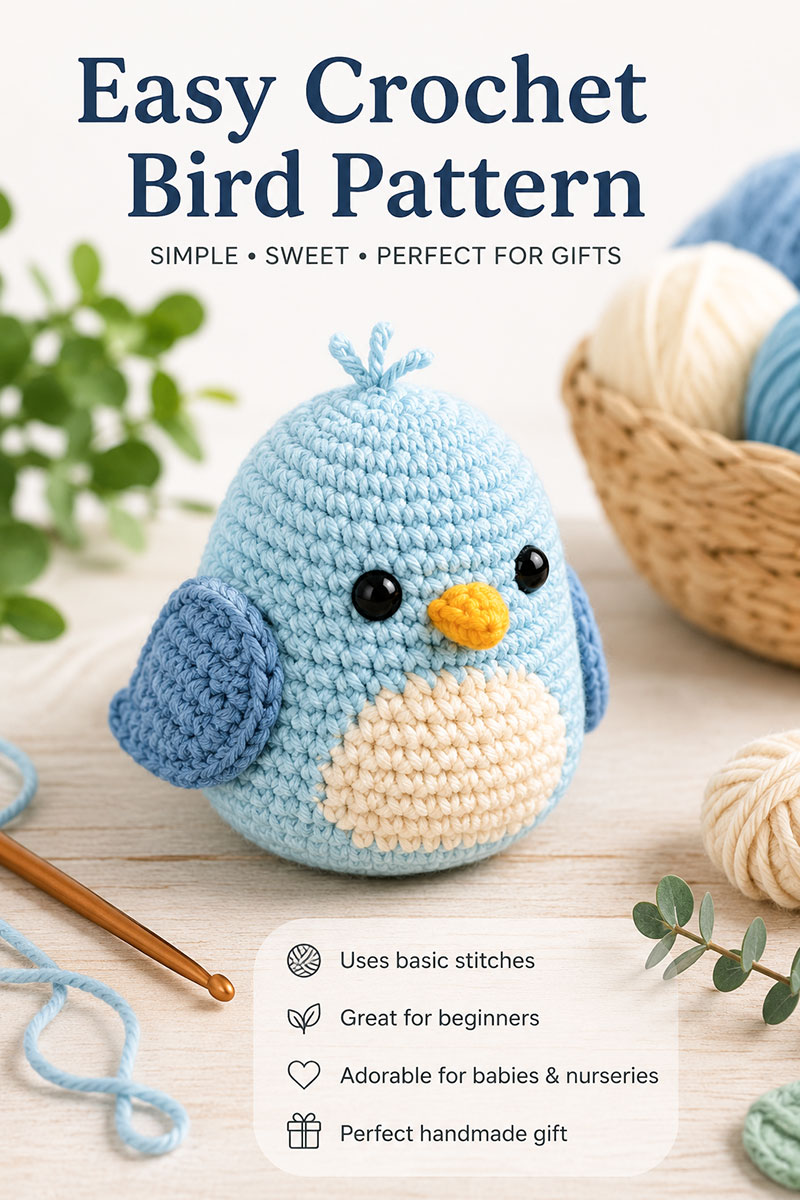
Free crochet bird patterns are perfect for baby mobiles because they're lightweight, colorful and easy to combine with clouds, stars, leaves and flowers. Hanging several birds together creates gentle movement while giving the nursery a cheerful handmade look.
For the best balance, keep each bird close to the same finished weight and suspend them at slightly different heights. Lightweight stuffing and embroidered features help keep the mobile safe and visually balanced.
- Bluebirds
- Robins
- Cardinals
- Lovebirds
- Owls
- Baby chicks
- Doves
Soft cotton yarn produces crisp stitch definition while remaining lightweight enough for hanging decorations.

Crochet Bird Appliqué Patterns
Crochet bird appliqué patterns are perfect for baby blankets, quilts, pillows, baskets and nursery wall hangings. Since they require much less yarn than stuffed birds, they're also a quick way to use leftover skeins from larger crochet projects.
Mix different bird sizes and colors across a blanket border or arrange several birds on branches for a woodland-inspired nursery design. Layered wings and tiny embroidered details give even simple appliqués extra character without adding much complexity.
- Baby blankets
- Loveys
- Storage baskets
- Nursery banners
- Wall hoops
- Gift bags
- Handmade cards
Realistic Crochet Bird Patterns
Realistic crochet bird patterns use layered wings, shaped beaks, longer tails and carefully chosen colors to resemble real birds while remaining soft enough for decorative nursery projects.
Robins, bluebirds, cardinals and wrens are especially popular because their distinctive colors are easy to recreate with yarn while still keeping the finished project soft and baby friendly.
If realism is your goal, spend extra time on shaping and embroidery rather than adding complicated stitch patterns. Clean shaping usually makes the biggest visual difference.
If realism is the goal, try my free crochet mallard duck pattern uses a green head, narrow white neck ring, chestnut breast, gray body, shaped bill and layered wing details to make the finished bird recognizable as a mallard.
How to Crochet Bird Wings
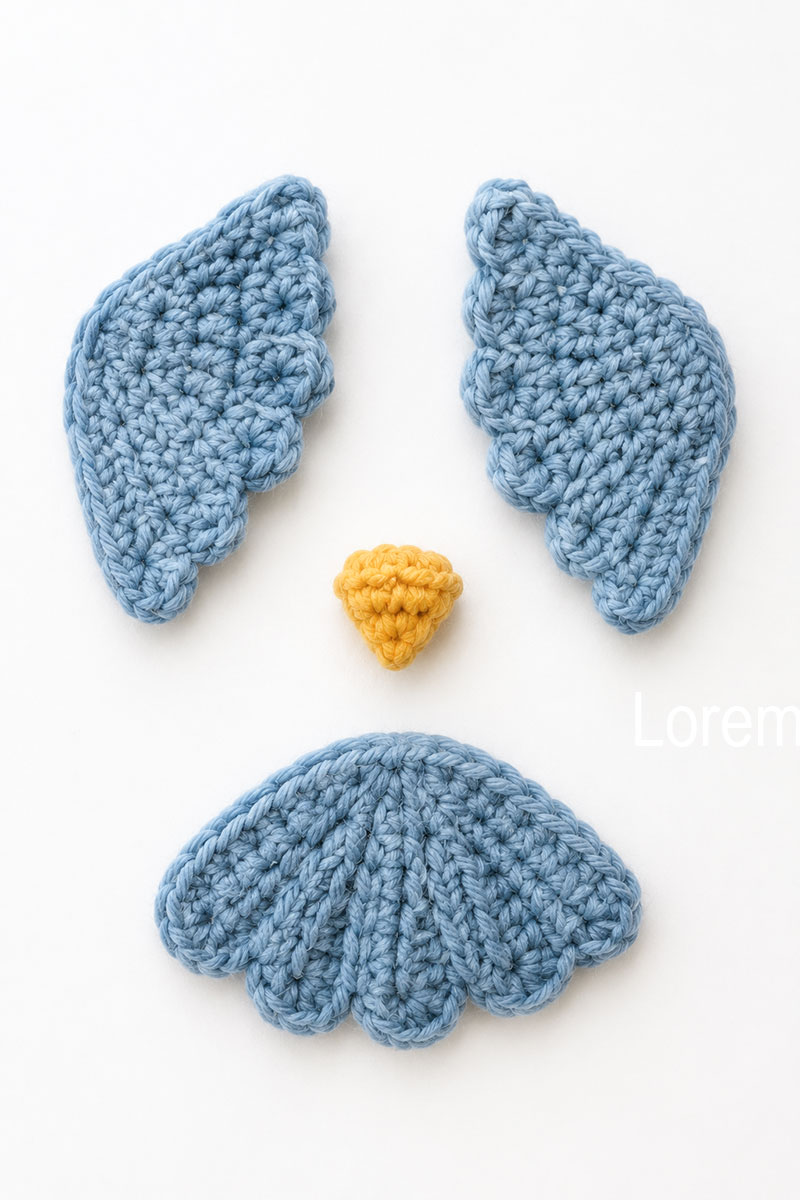
Many free crochet bird patterns include separate wings that give each finished bird its own personality. Small rounded wings create a sweet baby look, while longer pointed wings produce a more realistic appearance.
For nursery projects, lightly stuffed or flat wings usually work best because they stay soft and don't add unnecessary weight. Sewing the wings slightly forward on the body also gives birds a natural resting pose.
- Rounded baby bird wings
- Layered realistic wings
- Flat appliqué wings
- Textured feather stitches
- Contrasting wing colors
- Simple beginner wing shapes
A small amount of shaping can make even the simplest crochet bird look much more lifelike.
How to Crochet Bird Beaks
A neatly shaped beak gives every crochet bird its own personality. Tiny triangle beaks are ideal for baby birds and nursery mobiles, while slightly longer beaks create a more realistic look for robins, bluebirds, cardinals and other songbirds.
Yellow, gold, orange and soft brown yarn all make attractive beaks depending on the species you're creating. Keep the beak proportional to the head so it complements the finished bird instead of becoming the focal point.
- Simple triangle beaks
- Rounded baby bird beaks
- Long pointed songbird beaks
- Embroidered beaks
- Separate crochet beaks
For baby gifts, embroidered beaks are often the safest and most durable choice because there are no small pieces that can loosen over time.
Simple Crochet Bird Feet
Not every free crochet bird pattern needs feet, but they can add a charming finishing touch to decorative birds, nursery displays and seasonal decorations. Fine yarn or embroidery floss works well for delicate legs, while thicker yarn creates a more whimsical style.
If the bird is intended for babies, embroidered feet are usually the safest option because they won't snag or separate from the finished project.
- Embroidered bird feet
- Simple chain stitch legs
- Standing decorative birds
- Perching bird feet
- Minimalist baby bird feet
Crochet Bird Nests for Nursery Displays
A simple crochet bird nest complements many free crochet bird patterns by adding an extra layer of charm to decorative birds, nursery shelves and seasonal displays. Small nests can also become part of a baby mobile or be paired with crochet eggs, flowers or leaves for a woodland-inspired nursery decoration.
Natural tan, cream and brown yarns give nests a realistic appearance, while pastel colors coordinate beautifully with soft nursery palettes. The finished nest can be stitched onto a wreath, displayed in a basket or used as part of a larger handmade centerpiece.
When decorating a nursery, keep nests and other decorative accessories securely attached or displayed completely out of baby's reach.
Color Ideas for Crochet Birds
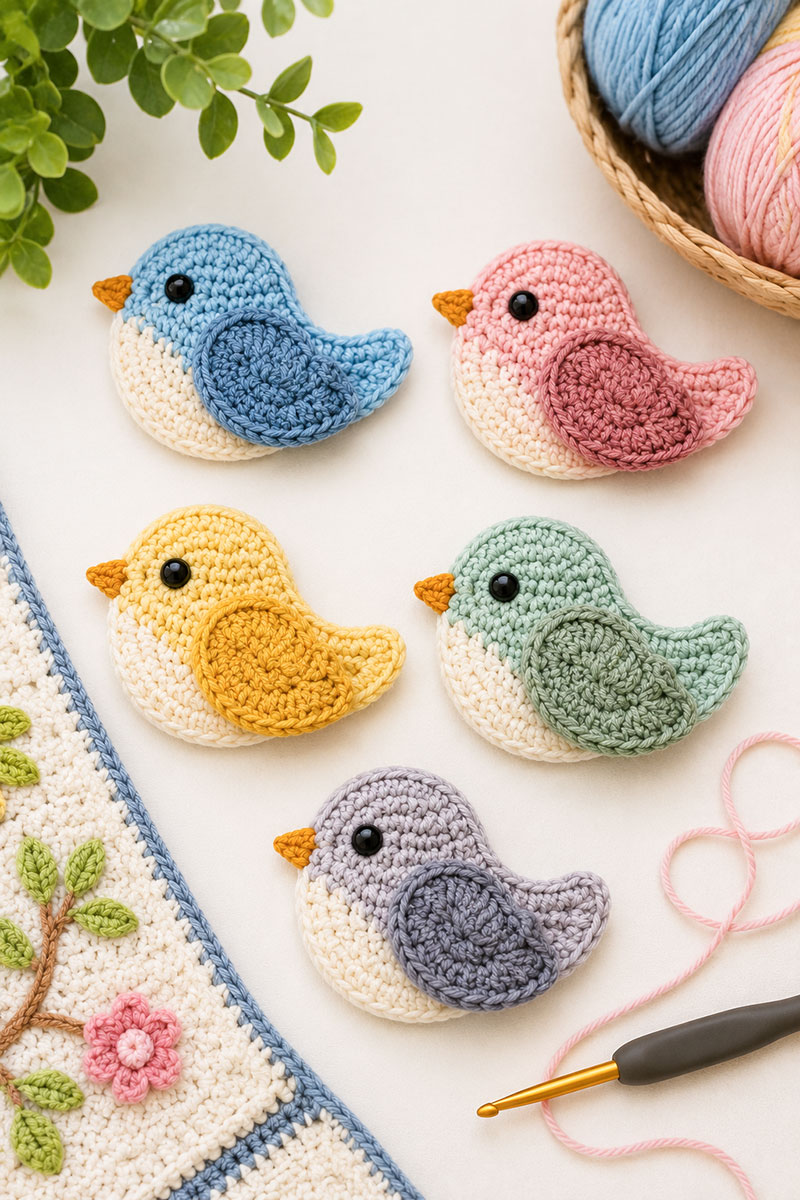
One of the most enjoyable parts of making free crochet bird patterns is choosing colors. Realistic birds look beautiful in natural shades, while playful nursery birds can be made in soft pastels or brighter colors that coordinate with baby bedding and nursery décor.
Soft nursery colors such as sage green, dusty blue, blush pink and warm ivory are especially popular for handmade baby gifts because they coordinate beautifully with modern nursery themes.
- Robin red with warm brown
- Bluebird blue and white
- Cardinal red with black accents
- Soft gray and cream doves
- Yellow baby chicks
- Pink and peach songbirds
- Sage green woodland birds
- Neutral ivory and taupe birds
Using the same color palette across several crochet birds creates a coordinated collection that's perfect for baby mobiles, nursery garlands and handmade gifts.
Tips for Better Crochet Bird Patterns
Even simple free crochet bird patterns look more polished with a few thoughtful finishing details. Small changes in shaping, embroidery and color placement often make a bigger difference than adding complicated stitch techniques.
- Position the wings slightly behind the neck instead of the middle of the body.
- Use embroidered eyes for baby projects.
- Lightly stuff the body to maintain a natural shape.
- Add subtle color changes to the chest or wings.
- Keep the beak proportional to the head.
- Steam-block flat wings before attaching them.
- Choose soft washable yarn for baby gifts.
Whether you're creating a tiny appliqué, a nursery mobile or a handmade baby gift, careful finishing gives every crochet bird a polished appearance that looks beautiful in the nursery and holds up well through years of use and display.
If you're making a crochet bird for a baby gift, choose a soft, machine-washable yarn whenever possible. The Craft Yarn Council's care symbols guide explains the standard washing and care symbols you'll find on yarn labels, making it easier to select a yarn that's practical for everyday use.
Frequently Asked Questions
What is the easiest crochet bird pattern for beginners?
The easiest crochet bird pattern for beginners is usually a small rounded bird with simple wings, an embroidered face and a tiny triangle beak. Flat crochet bird appliqués are also beginner-friendly because they require less shaping and sewing.
Can crochet bird patterns be used for baby mobiles?
Yes. Crochet bird patterns work well for baby mobiles when the birds are lightweight, securely stitched and displayed out of baby's reach. Use embroidered features instead of buttons, beads or safety eyes for nursery projects.
What yarn is best for crochet birds for baby gifts?
Soft, washable cotton or acrylic yarn is usually best for crochet birds made as baby gifts. Choose yarn that feels gentle, holds its shape and can be cleaned easily if the item will be handled often.
Are crochet bird appliqués good for baby blankets?
Yes. Crochet bird appliqués are a sweet way to decorate baby blankets, loveys, quilts and nursery wall hangings. Keep the appliqué flat, stitch it securely and avoid small loose details on anything intended for a baby.
How do I make a crochet bird look more realistic?
Use layered wings, careful color placement, a proportional beak and embroidered feather details to make a crochet bird look more realistic. Robins, bluebirds, cardinals and doves are good choices because their colors are easy to recognize.
When you click on links to various merchants on this site and make a purchase, this may result in this site earning a commission. This does not affect the price you pay.

UBGI Gold Standard 2026
Reviewed under the site's
editorial checklist.
Photos, decorating ideas, party setups and reader submissions are shared for inspiration unless a page is specifically presented as a pattern, tutorial, reference guide or step-by-step project. Follow the instructions, measurements, safety guidance and manufacturer directions provided for the particular project or product.
About Jan | Contact | Baby Nursery Ideas (Blog) | Site Map | Privacy Policy | Disclosure Policy | Disclaimer | Affiliate Disclosure | Earnings Disclosure | Facebook | Pinterest
I am a participant in the Amazon Services LLC Associates Program, an affiliate advertising program designed to provide a means for us to earn fees by linking to Amazon. As an Amazon Associate I earn from qualifying purchases.
Copyright © 2006-2026. All Rights Reserved.