Safer Drop Side Crib Alternatives for Easier Mattress Access
By Jan Bay
Safer drop side crib alternatives can provide easier mattress access without relying on a movable side rail. Traditional drop side cribs should not be used for infant sleep, but reaching over a tall fixed rail can be difficult for someone who is short, recovering from childbirth, managing back pain or living with limited mobility. Safer options include a current fixed-side crib with an adjustable mattress support or another sleep product used within its stated age, weight and developmental limits.
Related Crib Safety and Selection Guides
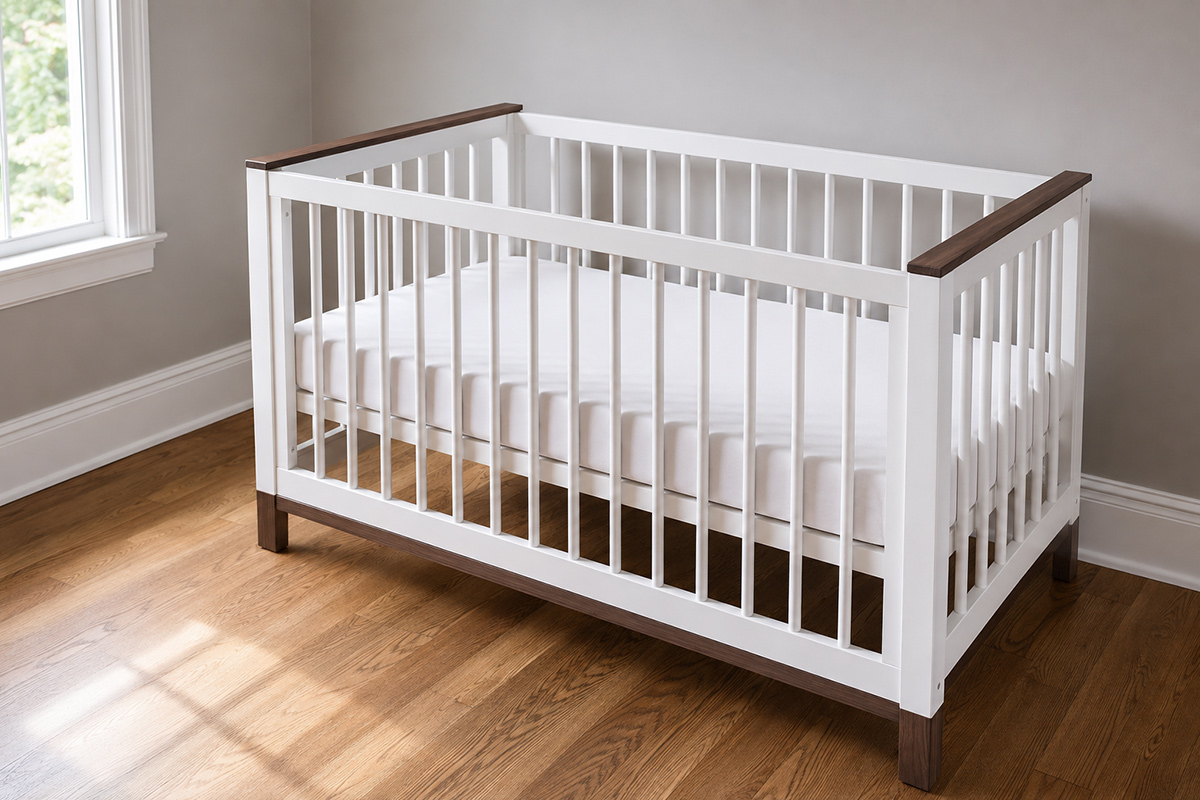
A current fixed-side crib may provide different mattress-support heights while all four side rails remain stationary.
See a Current Fixed-Side Crib
A fixed-side crib with an adjustable mattress support provides easier access during the appropriate early stage without relying on a movable side rail. Follow the product’s instructions for lowering the mattress as the baby develops.
On This Page
- Best alternative to a drop side crib
- Fixed-side cribs with adjustable mattress supports
- Crib access for short parents and limited mobility
- Mini cribs for easier reach and smaller rooms
- Bassinets and bedside sleepers
- Portable cribs and play yards
- Misleading movable-side shopping terms
- Compare the alternatives
- How to choose the right sleep product
- Drop side crib alternative questions
What Is the Best Alternative to a Drop Side Crib?
A current fixed-side crib with an adjustable mattress support is the closest long-term alternative for many families. The mattress can begin at a manufacturer-approved upper position during the appropriate early stage, reducing how far an adult must reach while all four crib rails remain stationary.
The mattress support must be lowered according to the manufacturer’s instructions as the baby gains new abilities. Sitting, pulling up and standing change what is safe. The convenient upper position is temporary, not a setting to preserve once the baby has outgrown it.
Traditional drop side cribs should not be used for infant sleep. Adding hardware, fixing the rail in its raised position or choosing not to operate it does not turn the crib into a current fixed-side design. The drop side crib safety and ban guide explains why the entire movable-rail design matters.
The right alternative solves the reach problem without bringing the old rail problem into the new nursery.
How an Adjustable Mattress Support Makes a Fixed-Side Crib Easier to Use
An adjustable mattress support changes the height of the sleep surface inside the crib. It does not move the side rail. Depending on the model, the support may have two, three or four manufacturer-approved positions.
At an upper position, the mattress sits closer to the top rails and requires less bending. This position is intended only for the early stage identified in the product instructions. As soon as the baby reaches the stated developmental milestone, move the support to the required lower position.
A lowered mattress can turn a manageable reach into a long bend. Check that movement before buying. Stand beside a fully assembled display crib if possible and reach toward the lowest mattress position without leaning your weight against the rail.
Do not compare cribs solely by the number of mattress heights. Also consider:
- The height and thickness of the top rail
- The distance from the rail to the lowest mattress position
- The crib’s overall width
- Whether the mattress support positions are clearly shown in the manual
- Whether the crib can be assembled exactly as instructed
- Whether the mattress fits tightly at every edge
The crib safety checklist covers the label, manual, recall record, mattress fit, slats, hardware and frame.
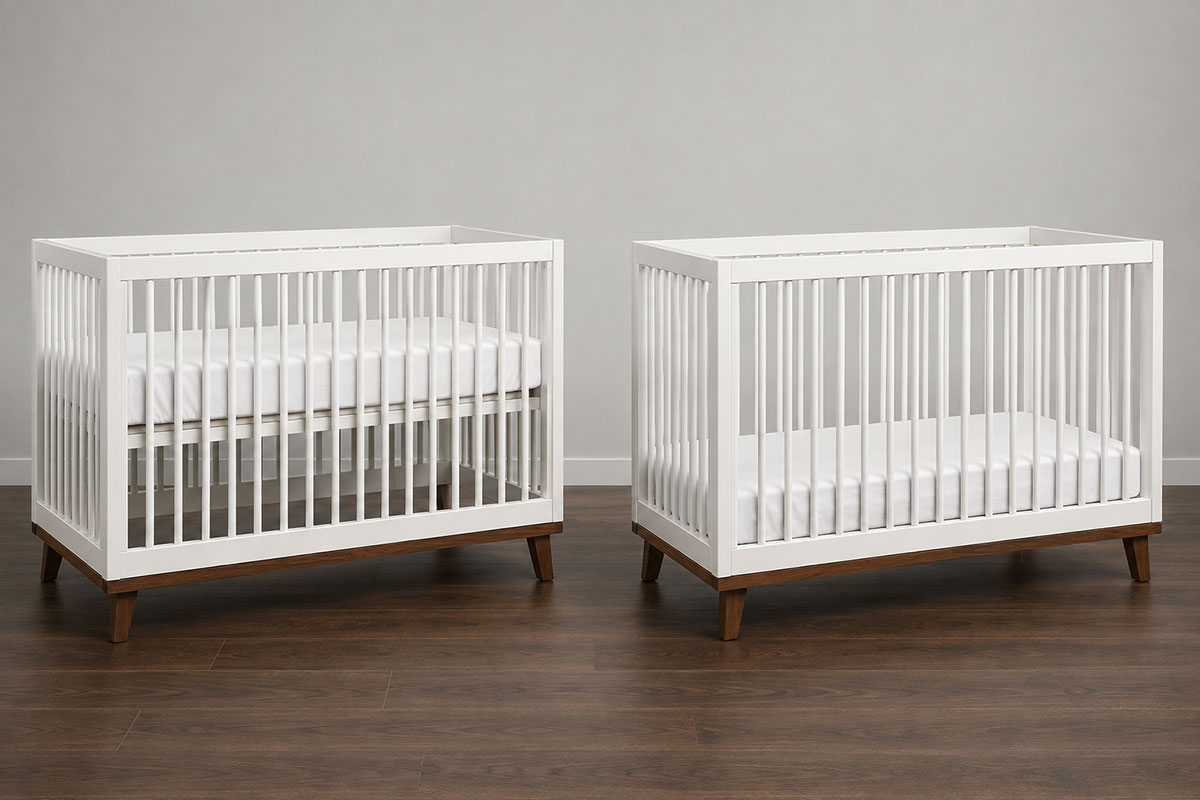
An adjustable mattress support changes the sleep-surface height while every crib rail remains stationary.
Crib Access for Short Parents, Back Pain and Limited Mobility
A person’s height is only part of the reach calculation. Arm length, balance, grip, abdominal healing, back pain and the crib’s lowest mattress position can all change how the same crib feels in daily use.
Begin with the lowest mattress setting rather than judging the crib only in its showroom-ready upper position. The lowest position is where reach often becomes difficult, and it may be needed while the child is still being lifted in and out regularly.
A stable step stool is not an automatic answer. Leaning forward from an elevated surface while carrying a baby can create another fall risk. Do not modify the legs, shorten the rails, remove a side or drill new mattress-support holes.
When a physical limitation makes crib access difficult, discuss lifting movements and recovery restrictions with the appropriate health professional. An occupational therapist may also help evaluate room layout and movement without altering the crib.
Keep a clear path beside the crib. Rugs that slide, baskets on the floor and furniture squeezed against the lifting side make an already difficult reach less predictable.
Reach deserves the same attention as color, finish and conversion features. A crib can look perfect in the room and still be the wrong physical fit for the adult using it every night.
Can a Mini Crib Be Easier to Reach Into?
A mini crib has a smaller mattress and footprint than a standard full-size crib. Its narrower width may allow an adult to stand closer to the center of the mattress, but a mini crib is not automatically lower or easier to reach into.
Compare the actual rail height and lowest mattress position. Two mini cribs can have similar outside dimensions while feeling very different when the mattress support is lowered.
Use only the mattress supplied with the mini crib or one specifically identified by the manufacturer. Non-full-size crib mattresses are not interchangeable simply because their measurements appear close.
A folding mini crib can help in a small room or temporary sleeping area, but folding features, wheels and conversion claims should be checked against the product manual. Locking wheels do not replace correct assembly or a firm, level sleep surface.
Return to the crib and mattress guides when comparing full-size and compact options.
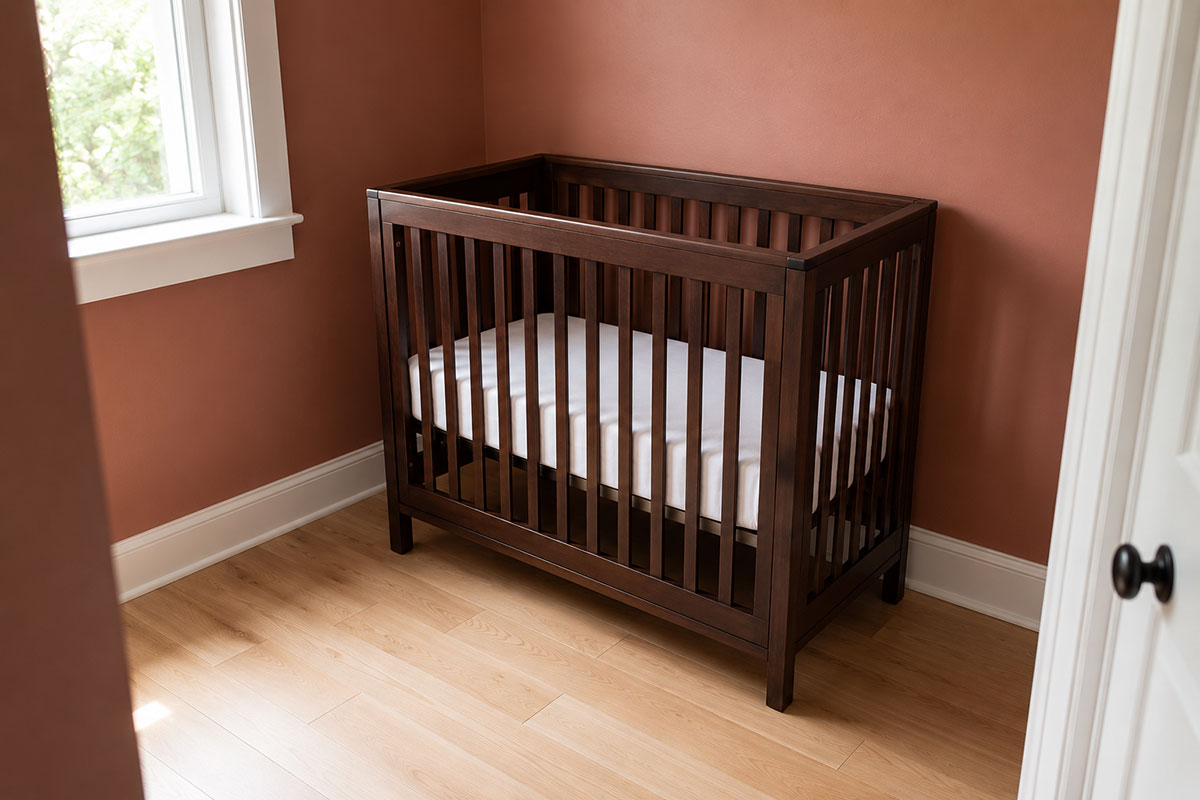
A mini crib has a smaller footprint, but its rail height and lowest mattress position still need to be checked.
When a Bassinet or Bedside Sleeper May Help
A bassinet can provide a higher, smaller sleep surface during the newborn stage. It is a short-term option with product-specific weight and developmental limits, not a full replacement for every crib stage.
Stop using the bassinet when the baby reaches any limit stated by its manufacturer. That may involve weight, age, rolling, pushing up or another developmental milestone. Follow whichever limit comes first.
A bedside sleeper is a separate regulated product category. It should not be confused with a traditional drop side crib, an adult bed pushed against a crib or a crib with one rail removed.
Use a bedside sleeper only in the configurations permitted by its instructions. Attachment systems, height settings and side panels must remain exactly as the manufacturer specifies. Do not fill gaps with towels, foam, pillows or an added mattress.
The CPSC safe sleep information provides current guidance for cribs and other infant sleep products.
Portable Cribs and Play Yards as Temporary Alternatives
A portable crib or play yard may provide a practical sleep space when it is designed and approved for that purpose. It can be useful during travel, in a smaller home or while waiting for a current crib to arrive.
Use only the sleep surface supplied by the manufacturer. Do not add a second mattress, foam pad, folded blanket or topper to make the bottom feel softer or higher. Added padding can create gaps and change how the product was designed to perform.
Check the product’s age, weight and developmental limits. Lock every required rail and support before use, and stop using the product if a component is damaged, missing or cannot be secured exactly as instructed.
A play yard is not a reason to postpone replacing an old drop side crib indefinitely. It is one possible sleep product with its own instructions and limits.
Watch for Misleading Movable-Side Shopping Terms
Search results do not always use crib terminology accurately. A listing may say adjustable side, drop down crib or sliding crib when the product actually has an adjustable mattress support, a toddler conversion rail, a bedside-sleeper panel or no movable rail at all.
The word adjustable deserves a second look. Determine exactly which component changes position.
- Adjustable mattress support: The sleep surface can be installed at approved heights while the rails remain fixed.
- Toddler guardrail: A conversion component used only after the crib stage according to the manual.
- Bedside-sleeper panel: A feature belonging to a separate product category with its own instructions.
- Folding frame: A storage or portability feature that does not make the product a traditional drop side crib.
- Traditional drop side rail: An older crib side that slides or lowers and should not be used for infant sleep.
Read the complete product description and manual rather than relying on a search-result title. If the listing photographs and written description disagree, do not fill in the missing information with an assumption.
Compare Drop Side Crib Alternatives
| Option | Possible access benefit | Important limit |
|---|---|---|
| Full-size fixed-side crib | Adjustable mattress support during approved stages | Lowest mattress position may still require a deep reach |
| Mini crib | Narrower footprint may allow closer access | Not automatically lower; mattress compatibility is model-specific |
| Bassinet | Higher sleep surface during the newborn stage | Short-term use with strict developmental and weight limits |
| Bedside sleeper | Designed for close bedside access in approved configurations | Separate product category with exact attachment and use requirements |
| Portable crib or play yard | Portable sleep space with a different frame design | Use only the supplied sleep surface and observe all product limits |
How to Choose the Right Alternative
Start with the child’s current age and developmental stage. That determines whether a bassinet remains appropriate or whether a crib, mini crib or portable sleep product is needed.
Next, examine the adult’s reach at the product’s lowest required setting. A comfortable newborn-stage reach does not predict how the same crib will feel after the mattress is lowered.
Before choosing, confirm:
- The product category and intended sleep use
- The manufacturer and exact model
- The current recall status
- The age, weight and developmental limits
- The mattress supplied or approved for the product
- The lowest mattress or sleep-surface position
- The instructions for changing positions or configurations
- The amount of clear floor space needed beside it
Do not buy a used sleep product when its label is missing, its history is uncertain, required hardware is absent or the correct manual cannot be found. The used baby crib guide explains why a clean appearance cannot answer those questions.
Choose the product that remains workable after the easy upper setting is gone.
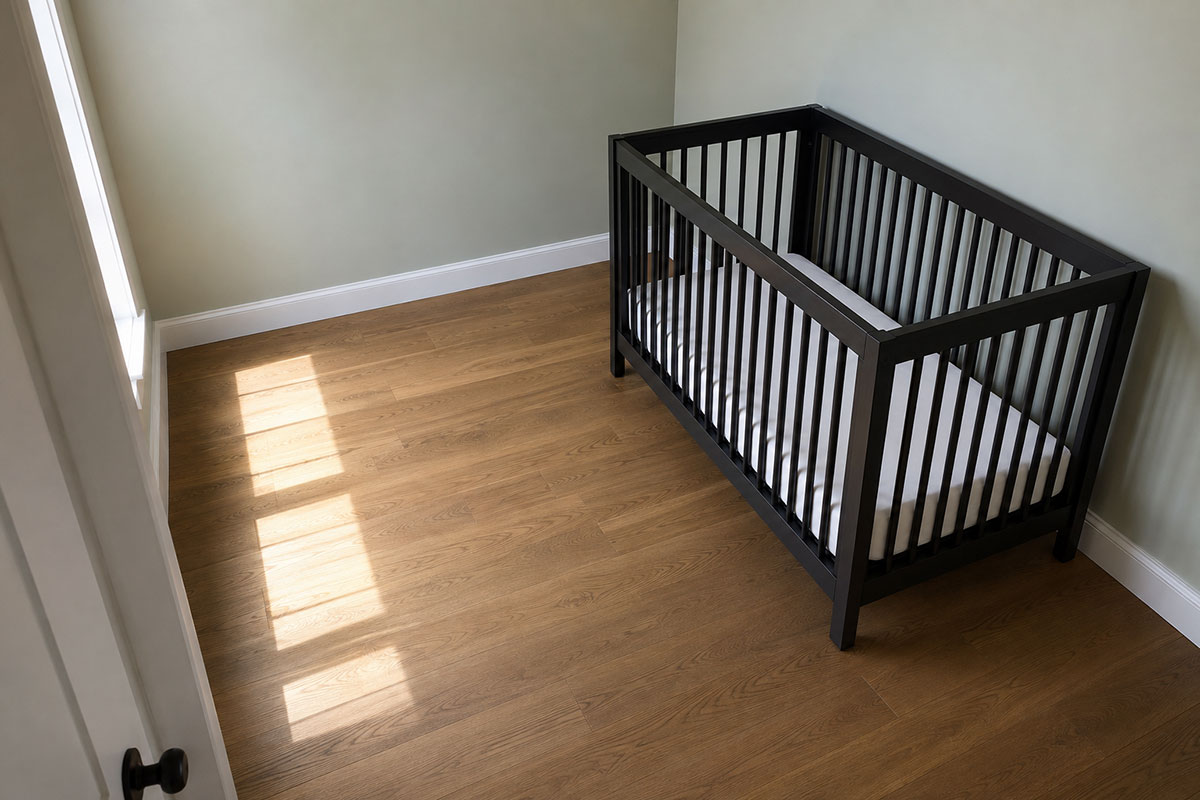
Clear floor space and the crib’s lowest mattress position both affect how manageable the daily reach will be.
Drop Side Crib Alternative Questions
What is the safest alternative to a drop side crib?
A current fixed-side crib that meets applicable United States requirements is the closest long-term alternative for many families. An adjustable mattress support can reduce reaching during approved early stages while the rails remain stationary.
Are cribs with adjustable mattress heights drop side cribs?
No. An adjustable mattress support changes the position of the sleep surface. A traditional drop side crib has a side rail that moves vertically.
What crib is easiest for a short parent to use?
There is no single model that fits every person. Compare rail height, crib width and the reach to the lowest mattress position. A mini crib may allow closer access, but it is not automatically lower.
Can I use a step stool to reach into a crib?
A step stool can create a balance and fall concern, particularly while carrying a baby. Do not treat it as an automatic solution. Evaluate a different crib or sleep product and seek appropriate professional guidance when mobility or recovery affects lifting.
Is a bedside sleeper the same as a drop side crib?
No. A bedside sleeper is a separate product category designed for specific bedside configurations. It must be used exactly as its manufacturer directs and should not be created by removing a crib rail.
Can a bassinet replace a crib?
A bassinet can serve as a sleep space during the limited stage allowed by its manufacturer. It cannot be used after the baby reaches the stated weight or developmental limit.
Is a mini crib easier to reach into?
It may be easier for some adults because the crib is narrower, but rail height and the lowest mattress position vary. Check the assembled measurements rather than assuming that smaller means lower.
Can I attach a traditional drop side rail so it no longer moves?
No. Hardware, straps, screws or homemade devices do not turn a traditional drop side crib into a current fixed-side crib. Do not return the old crib to infant use.
Can I use a play yard instead of a crib?
A play yard designed for infant sleep can be used within its manufacturer’s instructions and limits. Use only the supplied sleep surface and do not add a second mattress or extra padding.
When should a crib mattress be lowered?
Follow the exact crib instructions. Mattress-height changes are tied to developmental milestones such as sitting, pulling up or standing, and the support should be lowered no later than the point stated by the manufacturer.
When you click on links to various merchants on this site and make a purchase, this may result in this site earning a commission. This does not affect the price you pay.

UBGI Gold Standard 2026
Reviewed under the site's
editorial checklist.
Photos, decorating ideas, party setups and reader submissions are shared for inspiration unless a page is specifically presented as a pattern, tutorial, reference guide or step-by-step project. Follow the instructions, measurements, safety guidance and manufacturer directions provided for the particular project or product.
About Jan | Contact | Baby Nursery Ideas (Blog) | Site Map | Privacy Policy | Disclosure Policy | Disclaimer | Affiliate Disclosure | Earnings Disclosure | Facebook | Pinterest
I am a participant in the Amazon Services LLC Associates Program, an affiliate advertising program designed to provide a means for us to earn fees by linking to Amazon. As an Amazon Associate I earn from qualifying purchases.
Copyright © 2006-2026. All Rights Reserved.