Best Nursery Chair for Small Spaces
Finding the best nursery chair for small spaces usually comes down to one thing: choosing a chair that lets you feed, rock, and move in and out of the room without blocking the crib, closet, door swing, or walking path.
Before you buy a nursery chair, these pages may completely change what you think will fit:
See the small nursery layouts that save the most floor space
Pick the best place for a chair before the room gets crowded
Find the cribs that make tiny nurseries seem bigger
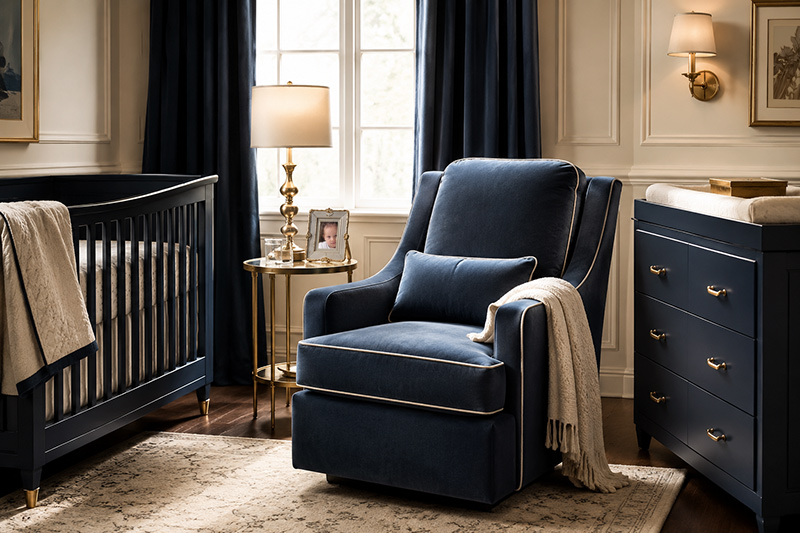
Jump to the section you need most:
What Size Nursery Chair Fits A Small Room?
Glider Vs Recliner In A Tiny Nursery
The Layout Mistakes That Waste Space Fast
Where A Nursery Chair Actually Fits Best
The Features Worth Paying For In Smaller Nurseries
The best nursery chair for small spaces is usually a compact glider or narrow recliner that leaves enough room to walk between the crib, dresser, doorway, and storage areas without blocking daily movement.
Choosing the best nursery chair for small spaces becomes much easier once you start focusing on movement clearance instead of just furniture size. A chair can technically fit the wall while still making the nursery frustrating to use every day.
Best Nursery Chair For Small Spaces And Tiny Rooms
It catches people off guard all the time. A nursery can look open and manageable until the chair arrives and suddenly every walkway disappears.
Finding the best nursery chair for small spaces usually comes down to choosing a chair that works with the room instead of dominating it. Width matters, but chair depth matters even more once footrests and side baskets enter the picture.
Nursery chairs around 30 to 34 inches wide often leave enough clearance to move naturally through the room without brushing against furniture every few steps.
Parents with longer legs or taller frames may also need to compare seat depth, back height, and arm height, so my guide to a nursery chair for tall parents explains which measurements matter most.
I believe oversized armrests cause more layout problems than people expect because those extra inches quietly steal usable movement space without improving comfort very much.
In one nursery setup I planned, the chair technically fit the wall measurements perfectly. Then the recliner opened and blocked the dresser drawers and made diaper changes impossible to manage.
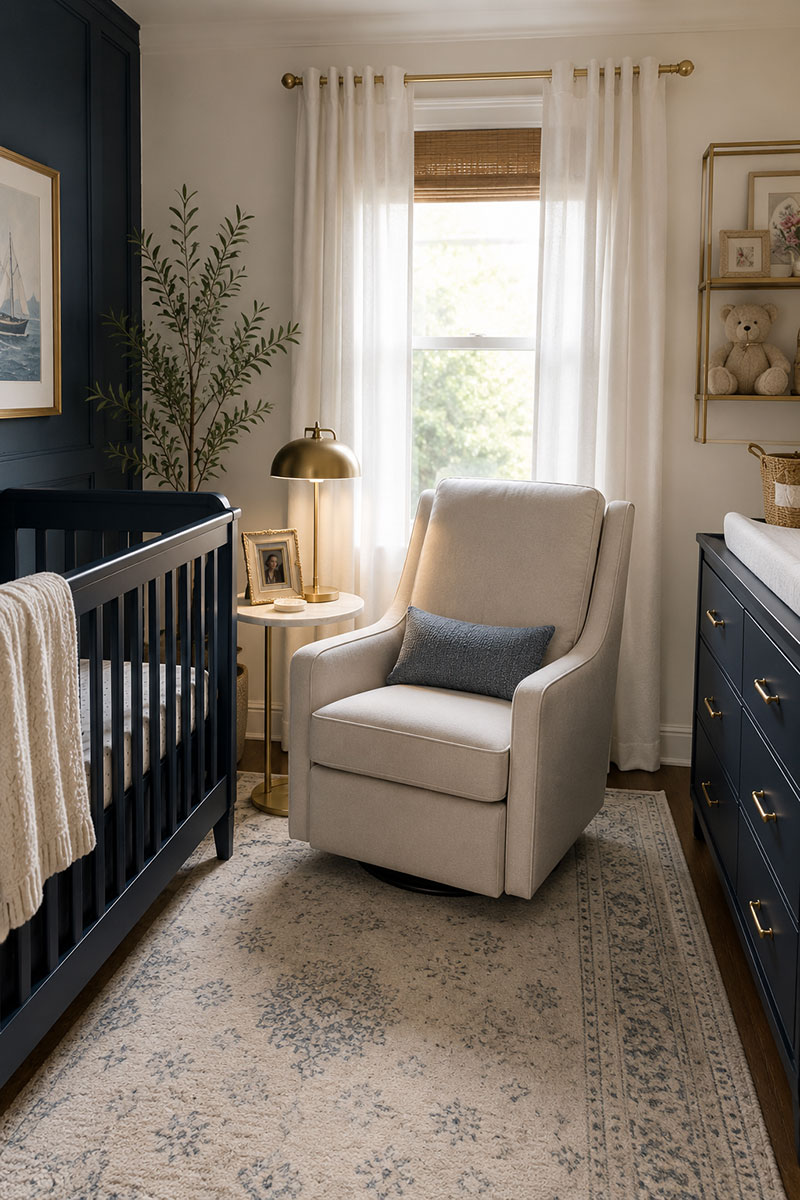
These small nursery layouts leave more room to move around
Closet access becomes another hidden issue in tighter rooms. A chair may fit along the wall itself while still blocking drawers, folding doors, or the nursery entrance once everything is assembled.
Plan the nursery before the chair changes the entire traffic pattern
Glider Vs Recliner In A Tiny Nursery
Large recliners look inviting in furniture stores because the displays sit inside giant open showrooms. Real nurseries with limited square footage are another story entirely.
Compact gliders tend to fit smaller rooms better because the movement stays within a tighter footprint. Recliners need additional clearance once the footrest extends and the back tilts outward.
For feeding-focused comfort in a tighter nursery, my guide to the best nursery glider for breastfeeding explains which support features matter most during long nursing sessions.
For a tighter comparison before you buy, see my nursery recliner vs glider guide.
The difference becomes obvious during late night feedings when somebody is trying to cross the room quietly without bumping into furniture corners.
This becomes even more important in a small apartment nursery where every inch beside the crib and dresser matters.
See how much room nursery recliners really require
That does not mean every glider belongs in a tiny nursery either. Some swivel bases spread surprisingly wide once they start rotating.
Before choosing a recliner, check where to put a recliner in a nursery so the chair does not block the crib, dresser, closet, or walking path.Before choosing a recliner, check where to put a recliner in a nursery so the chair does not block the crib, dresser, closet, or walking path.
For a broader chair-style comparison, see my nursery glider vs rocking chair vs recliner guide before choosing the final chair.
For a closer look at chair styles that still work after the nursery is in daily use, my nursery rocking chair guide compares rockers, gliders, and the little comfort details that matter in tight rooms.
I personally lean toward nursery chairs with visible flooring underneath because they visually lighten the room instead of creating one large upholstered block from wall to wall.
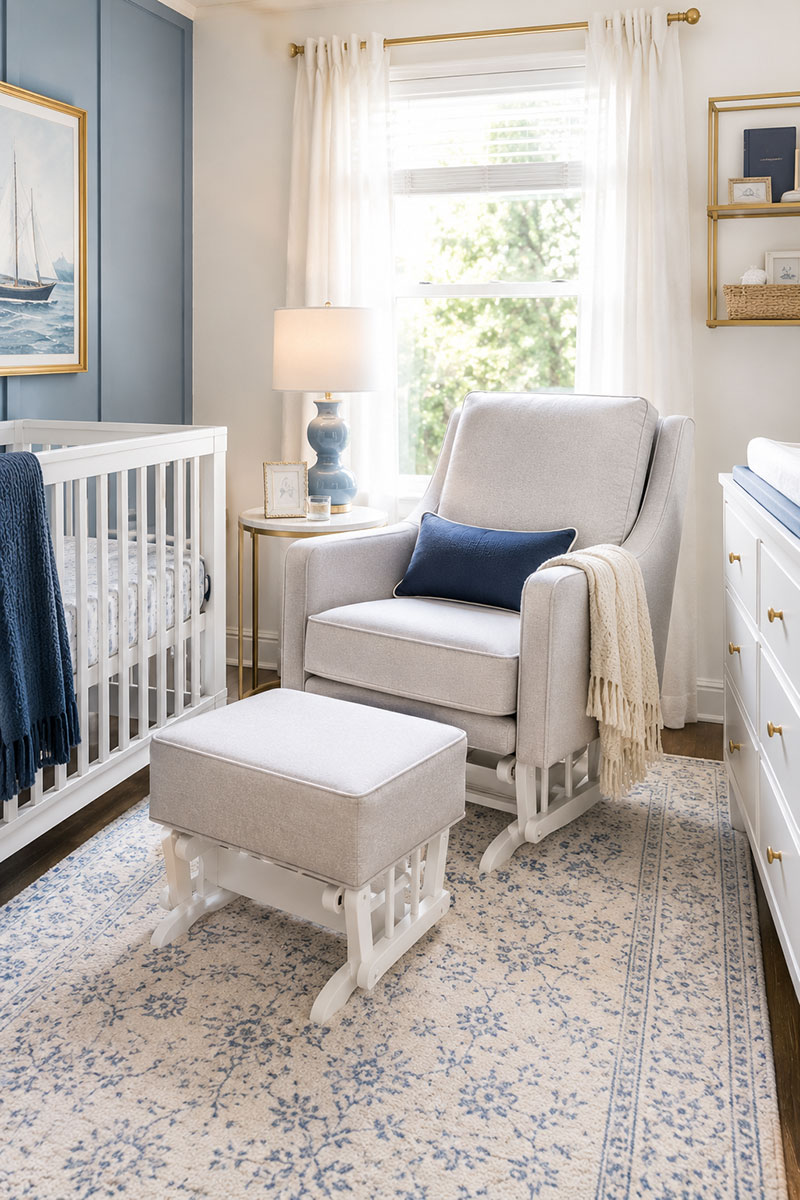
See the nursery furniture pieces that deserve priority in smaller rooms
The Layout Mistakes That Waste Space Fast
Many nursery layouts fall apart because the chair gets treated like the final leftover item instead of part of the original furniture plan.
That creates awkward walking paths where someone has to twist sideways between the crib and chair just to reach storage drawers or the changing area.
Another mistake involves placing the chair directly beside the crib with almost no breathing room between them. It may look polished at first, but everyday use becomes frustrating once blankets, bottles, chargers, and diaper supplies start collecting nearby.
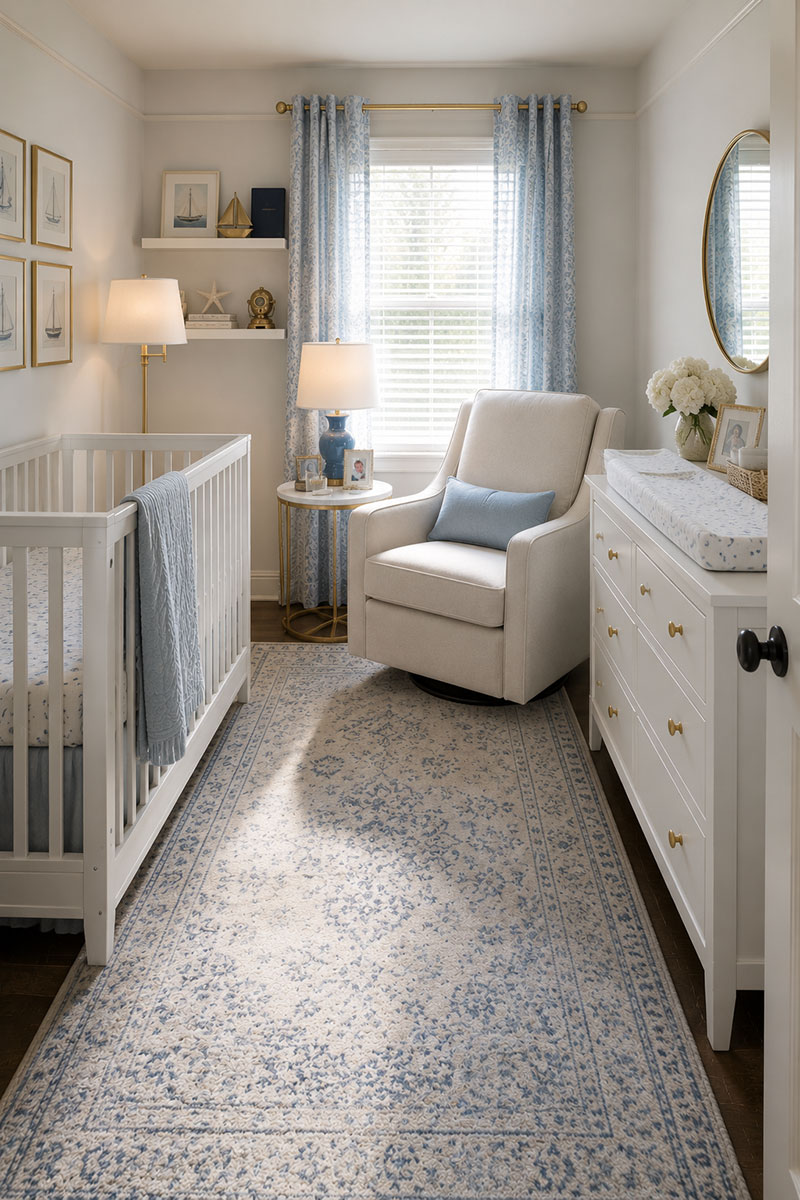
These nursery furniture layouts preserve far more usable walking space
Large rugs can shrink a nursery visually faster than many people expect. Rugs with visible border space around the edges usually help a room stay open.
Floor lamps also create problems in tighter layouts because the bases compete with the chair for space.
Wall mounted lighting usually works better in tighter nurseries because it keeps the walking areas cleaner and avoids bulky lamp bases beside the chair.
Where A Nursery Chair Actually Fits Best
The best nursery chair location is often near a source of natural daylight but away from the direct crib access path.
That balance matters more than perfect symmetry.
People frequently center the chair on an empty wall because it photographs nicely before the nursery starts functioning day to day. A few weeks later, diaper caddies, burp cloths, chargers, and extra blankets begin taking over nearby surfaces.
Corner placement often creates a smoother movement pattern in smaller nurseries. Angling the chair slightly toward the crib can free up surprising amounts of usable room while still keeping nighttime feedings convenient.
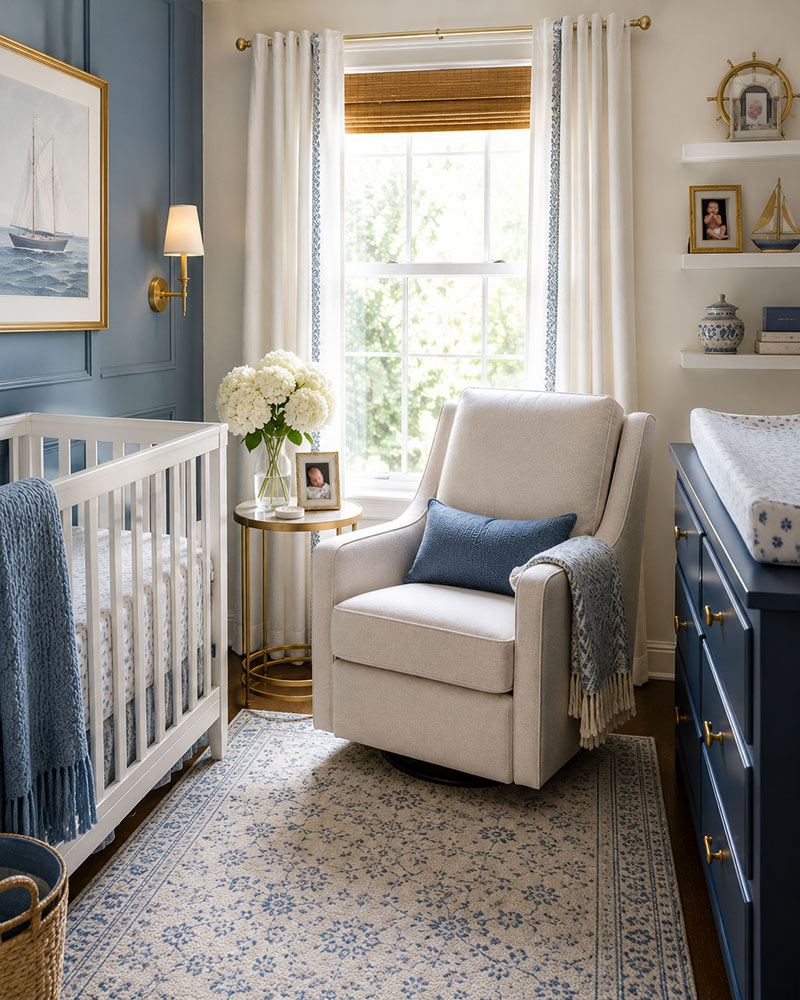
See nursery layouts that make crib placement easier
Sliding closet doors also help considerably in smaller rooms because they avoid the clearance problems traditional doors can create beside nursery chairs.
Best Nursery Chair For Small Spaces Features That Matter
Compact nursery chairs work best when the features solve real layout problems instead of adding unnecessary bulk.
Slim arm profiles, upright backs, shorter recline depth, and hidden glider bases tend to make the biggest difference in smaller rooms.
Built in charging ports can also reduce the need for extra side tables. That matters more than people expect once baby monitors, bottles, wipes, and phones start gathering beside the chair.
These other baby items also fit tighter nurseries better
I honestly think oversized cloud style recliners overwhelm average nurseries visually, even when the measurements technically fit the room.
Smaller profile chairs also transition more naturally into bedrooms, reading corners, or living rooms later, which makes them easier to keep long after the nursery years end.
For nursery furniture spacing and infant sleep guidance, the U.S. Consumer Product Safety Commission safe sleep recommendations remain one of the strongest resources available.
How To Make A Tiny Nursery Look Bigger
Furniture height changes a nursery more than wall color does.
Lower profile chairs paired with visible flooring underneath nearby furniture can make tighter rooms appear far more open almost immediately.
The room usually starts feeling easier to walk through almost immediately after oversized furniture is removed.
See how smaller nurseries can still look magazine worthy
Wall shelves also free up surprising amounts of usable room because fewer items end up stacked beside the chair.
In real nurseries, side tables quickly become catch-all spots for wipes, receipts, chargers, bottles, and random baby gear within days.
These nursery wall shelf ideas free up room almost immediately
Keeping the nursery chair close to the wall color instead of making it the darkest object in the room can also help smaller layouts appear less boxed in.
The best nursery chair for small spaces is rarely the biggest or most expensive option. In smaller nurseries, the chairs that work best are usually the ones that leave enough room for real daily movement once the nursery is fully in use.
Questions Parents Ask Before Buying A Nursery Chair
Can a recliner work in a small nursery?
Yes, but compact recliners designed for smaller rooms usually fit far better than oversized living room styles. Recline clearance should always be measured before buying.
What type of nursery chair saves the most space?
Compact gliders often preserve the most usable movement room because the motion stays within a smaller footprint.
How much room should be left around a nursery chair?
Leaving enough space to comfortably walk around the chair without twisting sideways makes everyday nursery use much easier.
Should a nursery chair go beside the crib?
Sometimes, but corner placement or nearby wall placement often creates a cleaner movement path in smaller nurseries.
Are swivel nursery chairs worth it in small rooms?
They can help with flexibility, but swivel bases need enough surrounding clearance or they may hit nearby furniture.
When you click on links to various merchants on this site and make a purchase, this may result in this site earning a commission. This does not affect the price you pay.

UBGI Gold Standard 2026
Reviewed under the site's
editorial checklist.
Photos, decorating ideas, party setups and reader submissions are shared for inspiration unless a page is specifically presented as a pattern, tutorial, reference guide or step-by-step project. Follow the instructions, measurements, safety guidance and manufacturer directions provided for the particular project or product.
About Jan | Contact | Baby Nursery Ideas (Blog) | Site Map | Privacy Policy | Disclosure Policy | Disclaimer | Affiliate Disclosure | Earnings Disclosure | Facebook | Pinterest
I am a participant in the Amazon Services LLC Associates Program, an affiliate advertising program designed to provide a means for us to earn fees by linking to Amazon. As an Amazon Associate I earn from qualifying purchases.
Copyright © 2006-2026. All Rights Reserved.