Must Have Baby Gate Information and Options for New Parents
Baby gates are commonly used in homes with infants and toddlers as part of everyday household setup. As children begin to move independently, areas such as stairways, hallways, and open room entrances become more noticeable within the home environment. In houses with stairs, it is common for gates to appear at both the top and bottom levels. These changes often occur within the first months of a child’s life, as home layouts take on new significance once early movement begins.
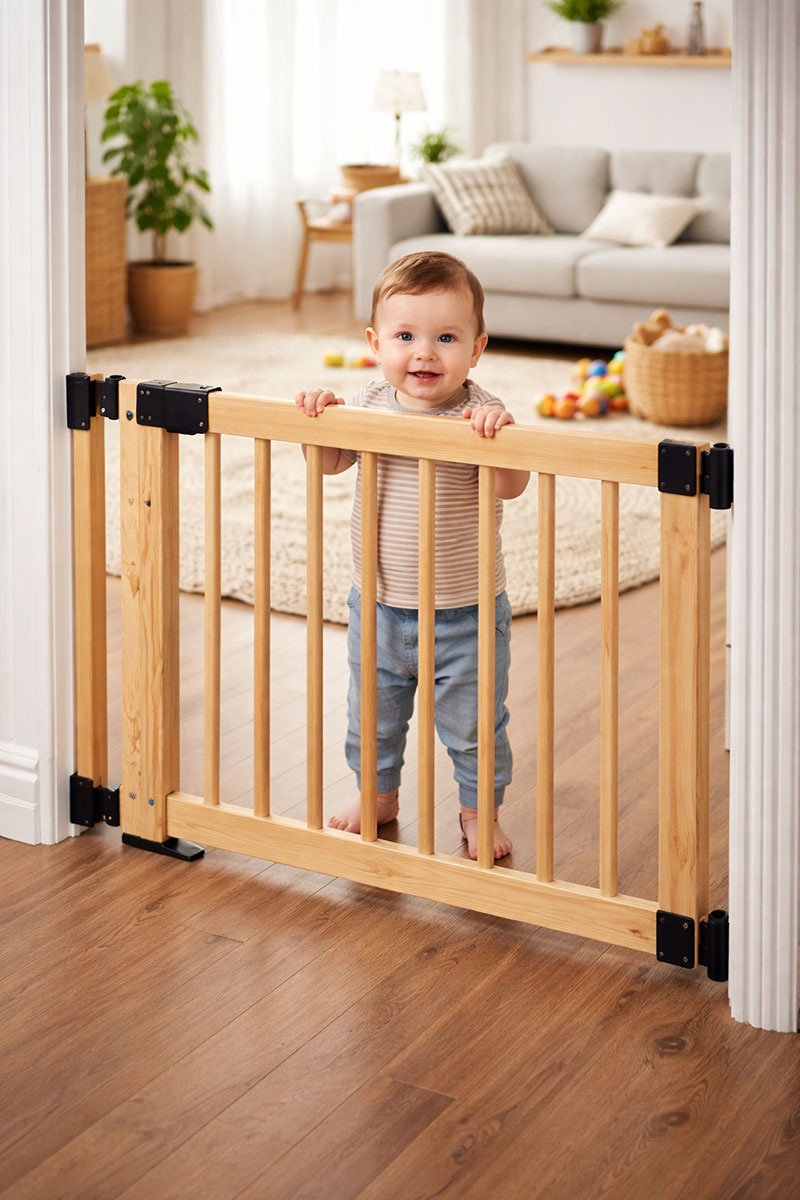
The need for a baby gate is often overlooked by parents when buying nursery necessities. A practical what to buy before your baby arrives checklist can help parents remember practical safety items like baby gates before crawling and climbing stages begin.
In many homes, gates become relevant as soon as a child begins moving independently. Homes with stairs commonly have one gate placed at the top and another at the bottom. The time between birth and early movement often feels short, and household layouts can suddenly feel very different once a baby begins crawling.
Baby gates exist because everyday spaces can change quickly once a child starts to explore. Open stairways, hallways, and room entrances become areas that attract attention. From an adult point of view, these areas are part of normal daily life. From a baby’s point of view, they are simply something new to reach. This difference in perspective is why gates appear in so many homes with young children.
Babies do not recognize household hazards in the way adults do. Stairs, doorways, and open rooms do not register as risky spaces. They are just another place to move toward. This creates moments where adults react quickly while a baby continues forward without hesitation. Baby gates are part of how families separate open areas while still keeping rooms connected.
Tips for Choosing a Baby Gate
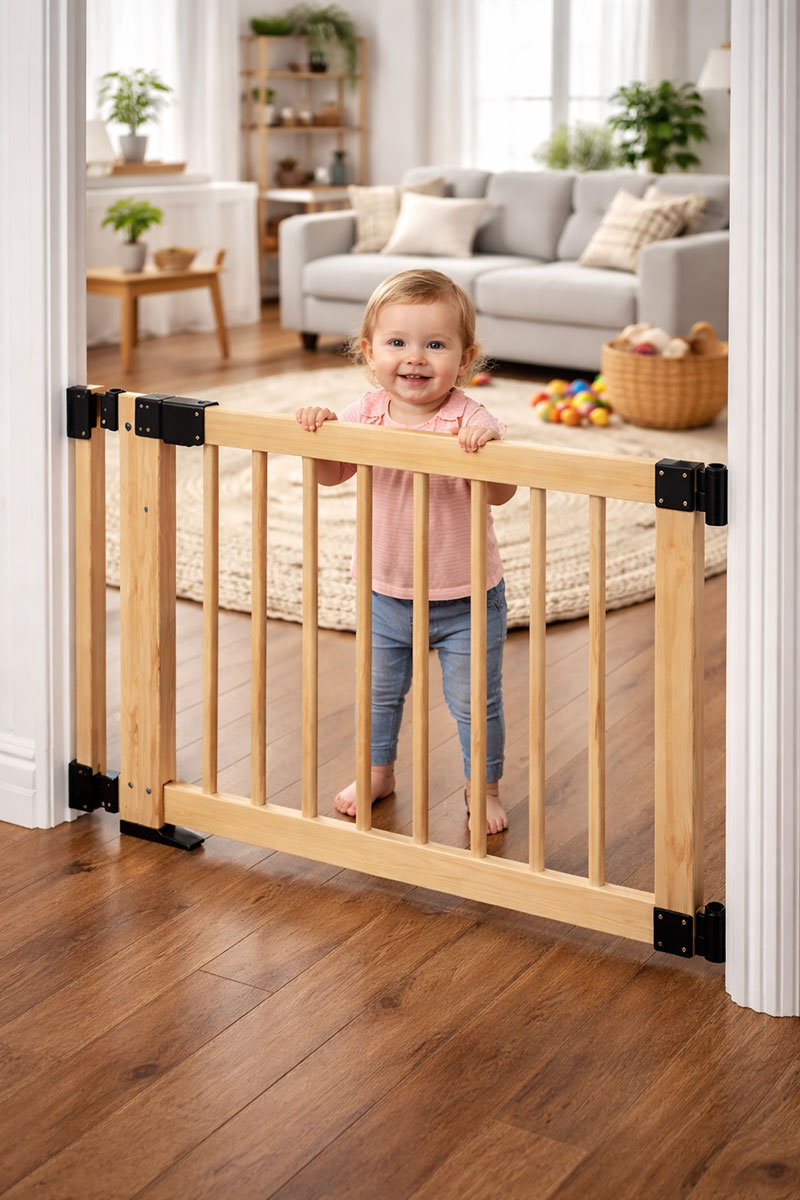
Wood Baby Gate
What Are My Options?
There are several general approaches people take when adding a baby gate to their home. These approaches vary based on materials, appearance, and how the gate is created or installed.
1. Buy a plastic or metal gate
2. Create a gate at home using wood or fabric
3. Have a wooden gate made by a woodworking professional
These options reflect the most common paths families follow. Some gates are purchased ready to use, while others are made to match a specific space or style. Each approach appears in homes for different reasons, often based on layout, décor, or long-term use.
Read guidelines for baby safety gates here
Information about baby gate guidelines is published by consumer and product testing organizations. These materials outline how gates are categorized and how they are commonly used in homes. Reading published material allows families to understand how different gate types are described in consumer references.
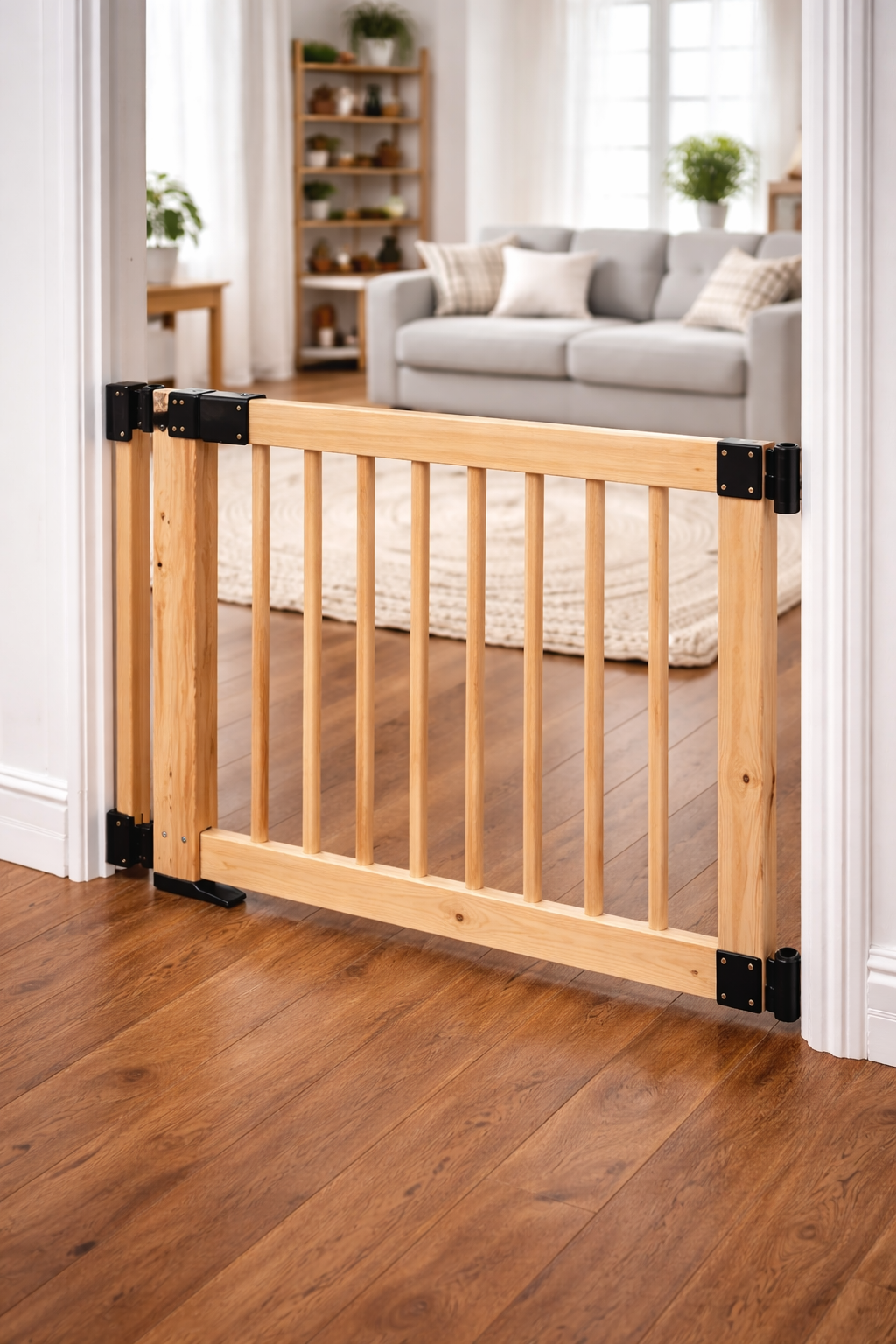
Baby or Pet Gate
Wood gates are often chosen for their appearance as well as their structure. In many homes, a gate remains in place for several years, especially in houses with pets or multiple children. Because of this, some families prefer a gate that blends with flooring, trim, or stair rails rather than one that looks temporary.
Wood baby gates are not usually thought of as decorative items, but they become part of the visible home environment. In hallways and stair openings, they sit at eye level and are seen many times each day. This visibility is why some homeowners focus on how a gate looks as much as how it functions.
Baby Gates Made of Fabric
Many families start with a basic gate and later replace it with something that better matches their home. Fabric baby gates are one example of a gate that reflects personal style more than structure. These gates are often used in areas where appearance is a higher priority than strength.
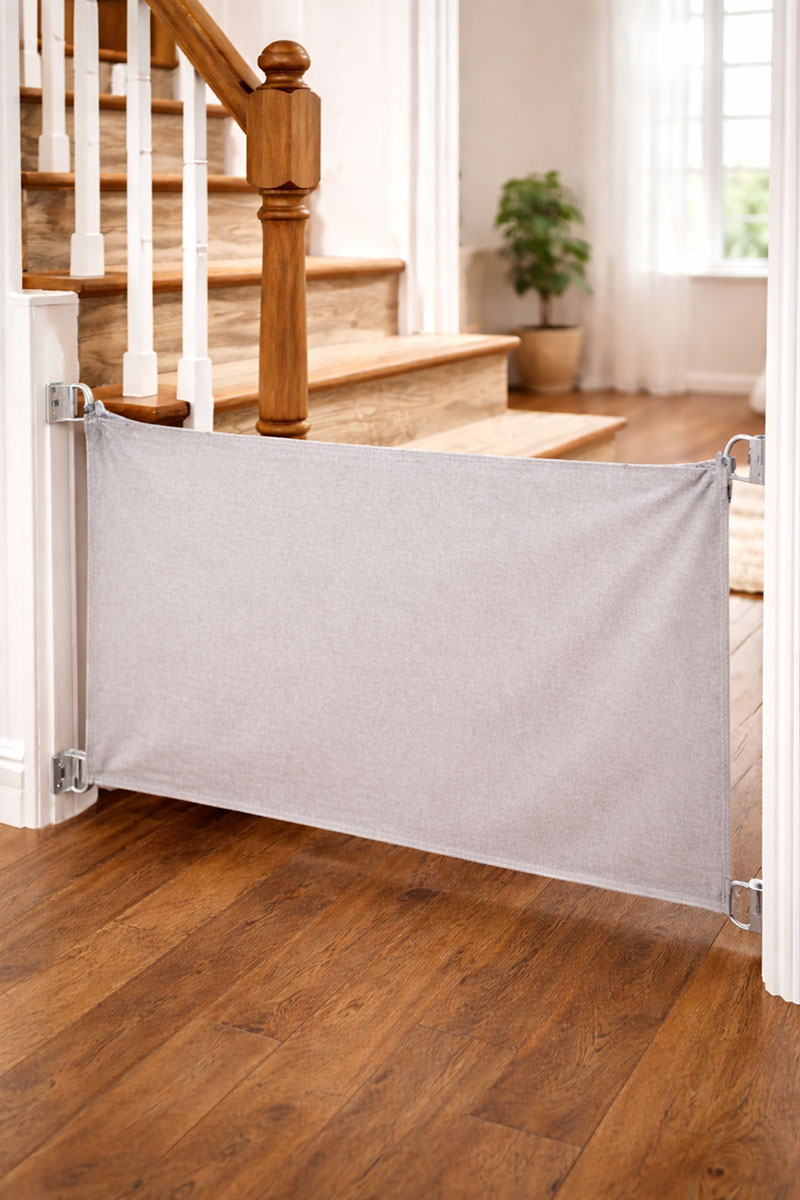
A gate made of fabric does not function the same way as a metal or wooden gate. It does not block weight or pressure in the same manner. For this reason, fabric gates are often described as visual barriers rather than physical ones.
Fabric gates work by creating a visible boundary. They signal where movement stops and where permission is needed to continue. In many homes, they are placed in lower-risk areas or used temporarily while other solutions are planned or installed.
Baby gates as a category include many materials, shapes, and uses. Some are simple pressure-mounted frames, while others are attached directly to walls or stair posts. Over time, families may use more than one type as their needs change and children grow.
The topic of baby gates appears across many parenting and home design discussions because it sits at the intersection of function and daily living. Gates change how people move through their homes. They affect traffic flow, room access, and even how furniture is arranged near stairways and door frames.
The information shared on Unique Baby Gear Ideas focuses on describing baby gate types, materials, and placement examples seen in real homes. These pages collect visual references, general descriptions, and links to related topics so readers can explore the subject in more depth.
Over time, families often adjust or replace gates as layouts change or as children reach new stages. A gate used during crawling may be different from one used later, or it may be removed entirely. The presence of a baby gate is usually temporary, but its role in daily routines can be significant while it is in place.
Baby gate discussions often include personal experiences, home photos, and examples of different setups. Sharing these experiences adds context to how gates appear in real spaces rather than only in product images.
This page exists as part of a larger collection covering baby gear and home-related items. It does not provide assembly instructions or technical direction. Instead, it serves as a reference point for understanding the types of baby gates commonly seen in homes and how they are described across different sources.
When you click on links to various merchants on this site and make a purchase, this may result in this site earning a commission. This does not affect the price you pay.

UBGI Gold Standard 2026
Reviewed under the site's
editorial checklist.
Photos, decorating ideas, party setups and reader submissions are shared for inspiration unless a page is specifically presented as a pattern, tutorial, reference guide or step-by-step project. Follow the instructions, measurements, safety guidance and manufacturer directions provided for the particular project or product.
About Jan | Contact | Baby Nursery Ideas (Blog) | Site Map | Privacy Policy | Disclosure Policy | Disclaimer | Affiliate Disclosure | Earnings Disclosure | Facebook | Pinterest
I am a participant in the Amazon Services LLC Associates Program, an affiliate advertising program designed to provide a means for us to earn fees by linking to Amazon. As an Amazon Associate I earn from qualifying purchases.
Copyright © 2006-2026. All Rights Reserved.