Fabric Baby Gate Ideas: Design Styles and Limitations
Fabric baby gate ideas focus on soft, flexible gate styles that are typically used to create visual boundaries in doorways, hallways, and room openings rather than rigid physical barriers. These fabric-style gates are often chosen for their lightweight design, decorative appearance, and ability to blend more easily with home décor compared to traditional hardware-mounted baby gates.
What fabric baby gates are — and why parents look for them
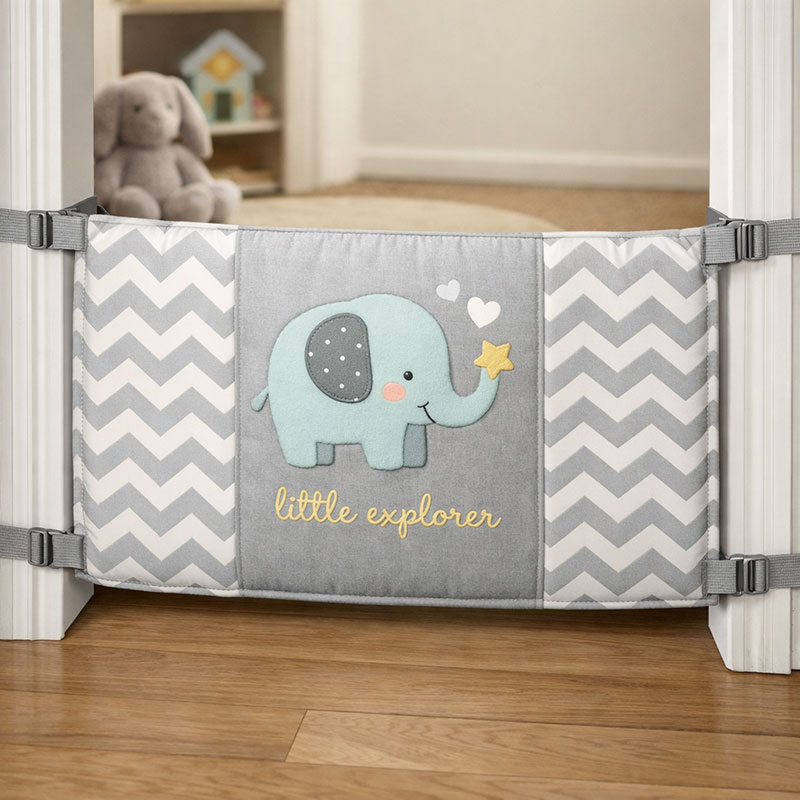
When people land on this page, they’re usually trying to answer a very specific question: what exactly is a fabric baby gate, and where does it actually make sense in a real home. I’ve seen fabric gates show up most often in homes where parents want a visual boundary more than a physical one — something lightweight that signals “this area is off-limits” without adding hardware or changing the look of a room.
Fabric baby gates are typically soft, flexible panels designed to span a doorway or opening. They don’t behave like rigid pressure-mounted or hardware-mounted gates, and that difference matters. Understanding that distinction early makes the rest of the decision much clearer.
Fabric baby gate ideas: how they differ from traditional gates
The biggest difference between fabric baby gate ideas and standard baby gates is intention. A traditional gate is designed to resist pressure. A fabric gate is designed to be seen. That sounds simple, but it affects everything from placement to expectations.
I tend to describe fabric gates as visual boundaries rather than physical barriers. They’re often chosen for wide doorways, playroom entrances, or low-traffic areas where the goal is to create a gentle stop signal instead of a firm block. Parents who expect them to perform like metal or wood gates are usually disappointed.
See fabric baby gate styles commonly used indoors
Quick fit check
Before getting too deep into styles or materials, it helps to pause and look at the opening you’re dealing with. Fabric gates tend to work best in standard interior doorways or between rooms where walls are already finished and level.
If the space needs something that can handle leaning, pulling, or climbing pressure, a fabric gate is usually not the right category. That’s the moment to step back and compare it against a more traditional option like the ones outlined on my baby gate overview page.
Where fabric baby gates are commonly used
In real homes, fabric baby gates show up most often in spaces where movement needs light guidance rather than enforcement. Hallway transitions, playroom entrances, and temporary room separations are common examples I see referenced by readers.
They’re also chosen in homes where visual continuity matters. A soft gate in a neutral fabric blends into décor in a way rigid gates never quite manage. That aesthetic appeal is usually the primary motivation — not durability.
Most parents choose fabric gates for one reason
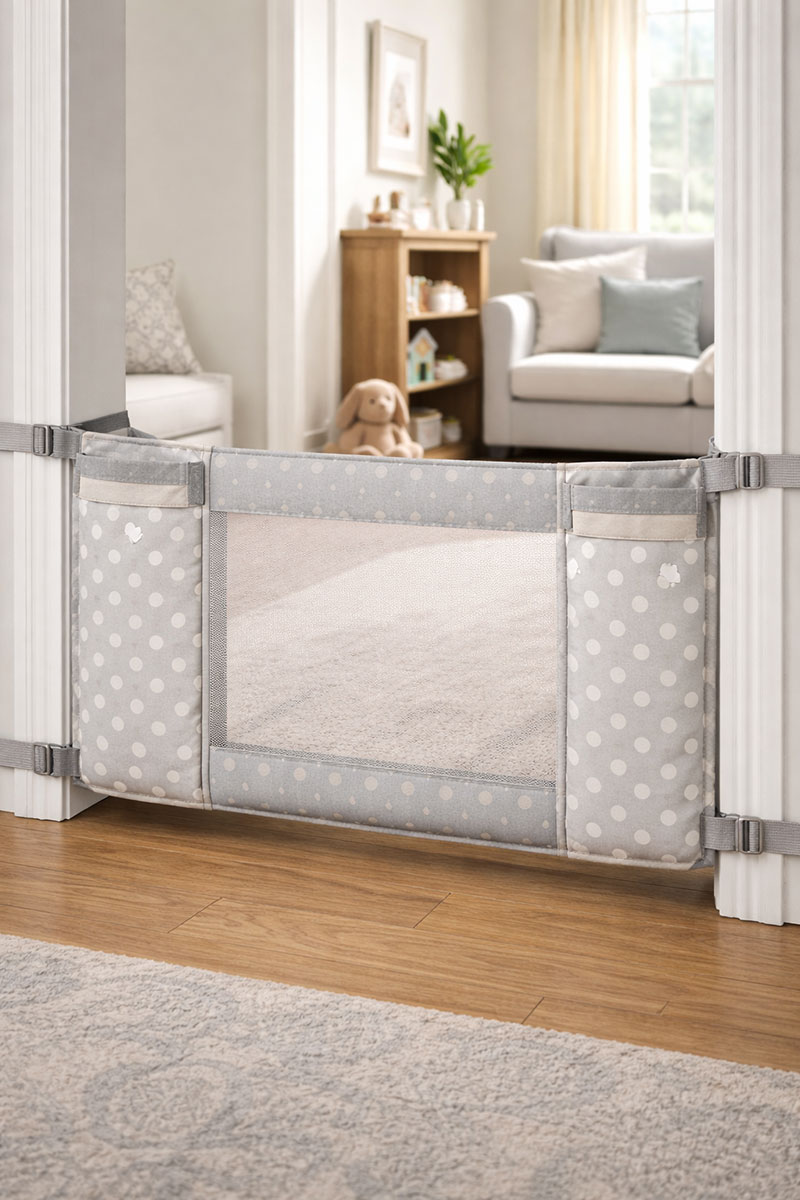
The reason comes up again and again in emails and comments: flexibility. Fabric gates can be rolled, removed, or adjusted quickly, and they don’t permanently alter the space. For families who rearrange rooms often or want something temporary, that flexibility is appealing.
That same flexibility, though, is also the limitation. A fabric gate isn’t meant to stop momentum or withstand repeated force. Keeping that tradeoff in mind prevents frustration later.
Comparing fabric gates to other baby gate styles
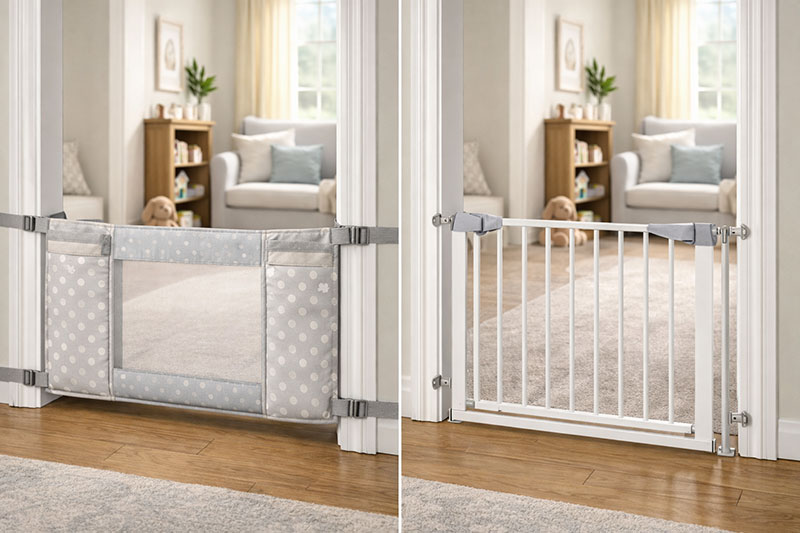
It helps to view fabric baby gates as one branch of a much larger category. When compared side by side with pressure-mounted, hardware-mounted, or retractable mesh gates, the differences become clearer.
Pressure-mounted gates rely on wall tension. Hardware-mounted gates rely on fixed anchors. Fabric gates rely on visibility and light resistance. None of these approaches are interchangeable — they simply serve different situations.
If you only remember one thing
Fabric baby gates are about communication, not containment. When expectations line up with that reality, they tend to be appreciated. When expectations don’t, they’re usually replaced quickly.
Materials, appearance, and everyday wear
Most fabric baby gates are made from canvas, polyester blends, or reinforced textiles. The look can range from simple solid panels to patterned designs meant to blend into a room. Appearance is often a deciding factor, especially in shared living spaces.
Over time, fabric gates show wear differently than rigid gates. Instead of dents or scratches, you’ll notice stretching, fading, or edge wear. These changes don’t usually affect function right away, but they do influence how long the gate looks presentable.
Cleaning and upkeep expectations
One thing I always recommend thinking through is maintenance. Fabric gates are more visible to spills, fingerprints, and pet contact. Some styles allow spot cleaning, while others are designed to be wiped down gently.
If easy cleanup is a top priority, it’s worth reviewing alternative gate materials alongside fabric options before deciding.
How fabric baby gates fit into a larger baby-proofing plan
Fabric gates work best when they’re part of a broader approach to managing space. They’re often paired with closed doors, furniture placement, or room layout changes that naturally guide movement.
When used alone in high-traffic or high-energy areas, they tend to underperform. When used as a visual cue within an already structured space, they make much more sense.
What to do next if you’re still deciding
If you’re on the fence, I suggest stepping back and comparing your space against other gate categories. Looking at the differences between fabric gates and more rigid options can clarify which direction feels right.
You may also find it helpful to review how other families approach doorway and hallway control using different styles, especially when décor and layout are a concern.
Final thoughts before you choose
Fabric baby gate ideas tend to appeal to parents who value flexibility, aesthetics, and light guidance over physical resistance. When those priorities match your space, fabric gates can feel like a natural fit.
If your needs lean more toward containment or durability, it’s usually better to explore a different gate category altogether. Either way, understanding the role fabric gates play makes the next step clearer and avoids second-guessing later.
For additional background on how child access products are categorized and regulated in the U.S., the Consumer Product Safety Commission provides general consumer product information at the CPSC website.
When you click on links to various merchants on this site and make a purchase, this may result in this site earning a commission. This does not affect the price you pay.

UBGI Gold Standard 2026
Reviewed under the site's
editorial checklist.
Photos, decorating ideas, party setups and reader submissions are shared for inspiration unless a page is specifically presented as a pattern, tutorial, reference guide or step-by-step project. Follow the instructions, measurements, safety guidance and manufacturer directions provided for the particular project or product.
About Jan | Contact | Baby Nursery Ideas (Blog) | Site Map | Privacy Policy | Disclosure Policy | Disclaimer | Affiliate Disclosure | Earnings Disclosure | Facebook | Pinterest
I am a participant in the Amazon Services LLC Associates Program, an affiliate advertising program designed to provide a means for us to earn fees by linking to Amazon. As an Amazon Associate I earn from qualifying purchases.
Copyright © 2006-2026. All Rights Reserved.