Baby Footprint Christmas Ornament Ideas for Baby's First Christmas
By Jan Bay
A baby footprint Christmas ornament captures something priceless: a tiny foot that will never be quite this small again. These keepsake ideas use an actual baby's footprint or impression, with simple options for clay, salt dough and painted ornaments that can be dated for baby's first Christmas and brought back to the tree every year.
Explore More Baby Footprint and Christmas Keepsakes
Baby's First Christmas Ornament Ideas
How to Get a Clear Baby Footprint
Baby Footprint Ornament Craft Supplies
Jump to Baby Footprint Christmas Ornament Ideas
Choose the Best Footprint Ornament Method
How to Make a Baby Footprint Christmas Ornament
How to Get a Clear Baby Footprint
Clay and Dough Footprint Ornaments
Painted Baby Footprint Ornaments
Choose the Best Footprint Ornament Method
Before you buy supplies, decide whether you want the ornament to preserve the impression of the foot or the actual printed footprint. They sound almost the same, but they give you very different keepsakes.
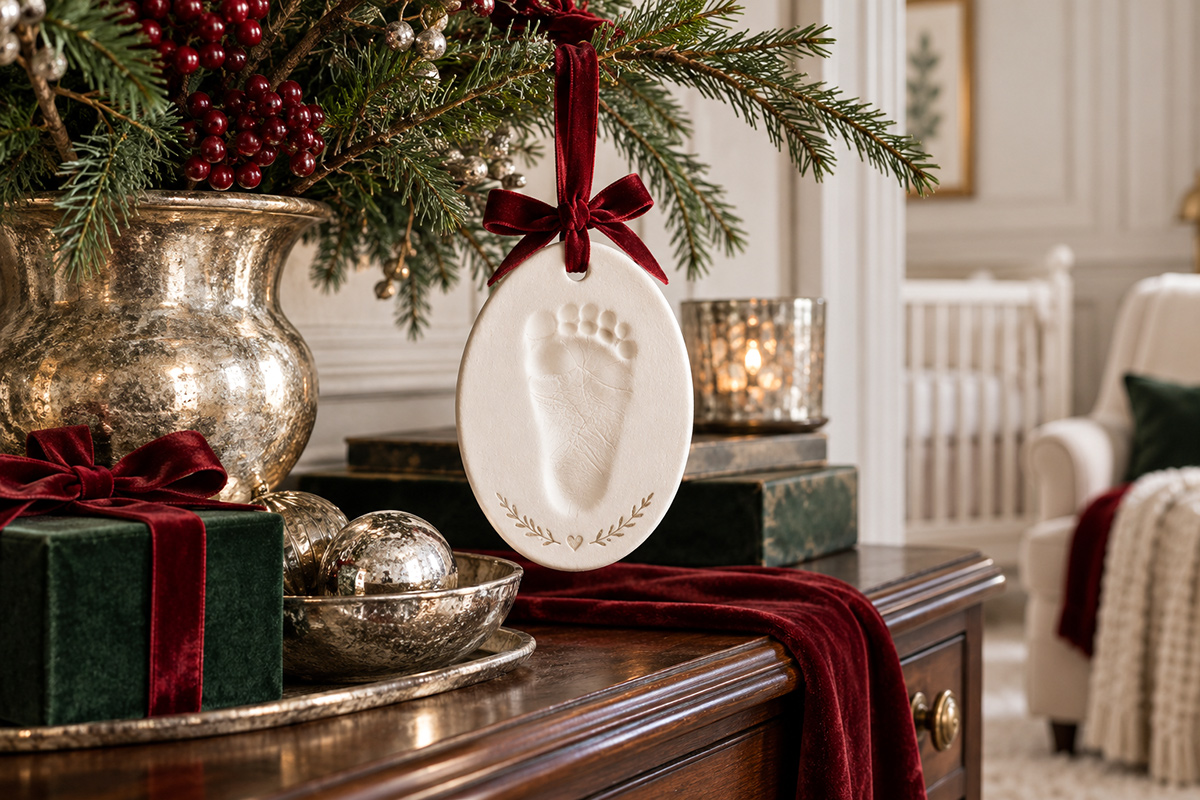
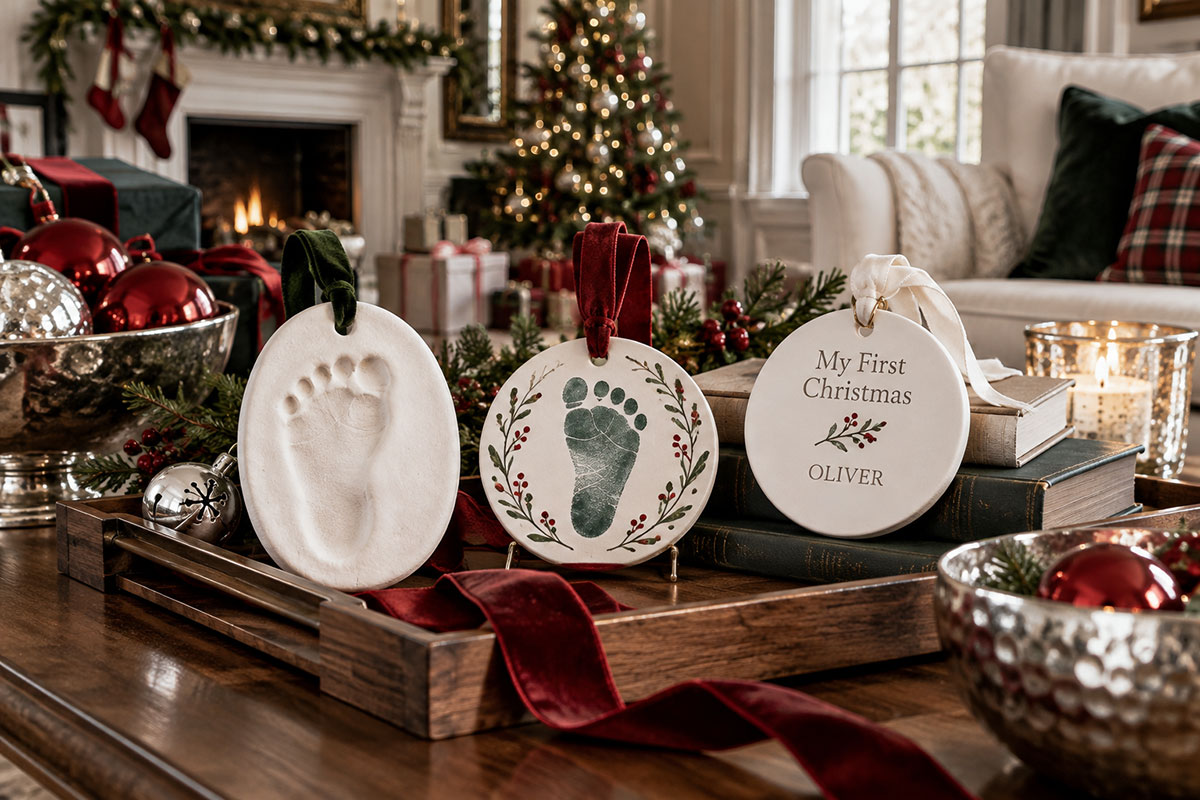
A clay or dough ornament records the shape in relief. You can see the heel, the ball of the foot and those tiny toes pressed into the surface. I'd choose this version when the footprint itself is the whole point of the ornament. Keep the shape simple and let that impression do the work.
A painted ornament gives you the familiar flat footprint. It works well on a wood, ceramic or other flat ornament blank, but only use a marking product according to its label. Don't assume that a paint marked washable or non-toxic is automatically intended for use on a baby's skin.
There's also a third option, and it's the one I'd use if getting one clean print has already required enough patience: make the footprint on paper first. Once you have one good print, you can scan, trace or transfer it to an ornament without asking the baby to cooperate again.
You only need one good footprint. After that, stop trying to improve it just because one toe isn't perfect. The slightly crooked little print may be exactly the detail you want to remember.
How to Make a Baby Footprint Christmas Ornament
The simplest version is one footprint, one ornament and just enough information to identify it later. You don't need to turn the footprint into a complicated Christmas character unless that's the look you want.
For a basic footprint keepsake, gather:
- A flat ornament blank or a piece of soft clay or dough large enough for the baby's entire footprint
- A washable marking product whose label permits the way you plan to use it, if you're making a printed footprint
- Plain paper for a practice print
- A soft cloth and warm water for cleanup
- A small sponge or applicator if you're using paint
- A fine paint marker or other suitable craft marker for the name and date after the ornament is dry
- Ribbon or cord for hanging
- A compatible clear sealer if the ornament material and decoration require one
Have everything ready before you bring the baby's foot into the project. This isn't the time to discover that the wipes are across the room or that the ornament blank is still in its package.
If you're using paint, apply a thin, even coat rather than dipping the foot into it. Too much paint fills the spaces around the toes and turns a tiny footprint into a blob. Too little leaves the heel and ball of the foot patchy. A practice print on paper lets you see the amount you need before the ornament gets involved.
Support the ankle, bring the ornament to the foot when that's easier, and press the heel first. Then settle the middle of the foot and toes onto the surface without sliding them around. Lift the foot straight away from the ornament.
Look at the print before doing anything else. Can you recognize the heel? Are most of the toes there? Does it clearly look like your baby's footprint?
That's enough.
If you're working with soft clay or dough and the first impression really is unusable, smooth or reroll it while the material is still workable and try again. Once you have a readable footprint, leave it alone and move on to the finishing details.
Keep the Footprint Part Simple and Baby-Safe
The ornament is an adult craft project even though the baby's foot supplies the important part. Keep paint, clay, dough, markers, sealers, ribbon and small pieces out of the baby's mouth and reach.
If a product will touch the baby's skin, read its label before using it. “Washable” and “non-toxic” are not the same thing as permission to use a product as body paint. Poison Control's guidance on the safe use of art products recommends following product directions and not using an art product on skin unless its label says it is safe for that use.
If you're unsure about a material, don't put it on the baby's foot. Make the footprint with a product intended for that purpose or capture the footprint safely on paper and transfer the design afterward.
Wash and dry the foot as soon as the print is finished. Then move the baby away from the work area before you start adding markers, sealers, ribbon or other finishing materials.
How to Get a Clear Baby Footprint Without Chasing Perfection
If an open handprint is difficult because the baby's fingers keep curling, a footprint can be easier to capture. It can still smear if the foot slides across the surface, though.
Get the ornament into position before you touch the foot to it. If you're trying to hold the baby, find the center of the ornament and line up the footprint all at once, there are simply too many moving pieces.
I would practice once on plain paper first. That tells you whether you have too much paint, too little paint or a foot that's ready to kick its way out of the project.
Press rather than rub. The heel, ball and toes need contact, but the foot doesn't need to be mashed into the surface. With a clay impression, too much pressure can push the foot through the material or distort the edges. With paint, movement is what usually ruins the shape.
If the baby's toes overlap a little or one toe barely prints, don't automatically redo it. A real baby footprint doesn't need to look like clip art.
For more help with the actual print-making step, my how to get a clear picture of a baby footprint page stays focused on capturing the print itself. My baby footprint ideas page has non-Christmas ways to use the finished print.
Clay and Dough Baby Footprint Ornaments
A pressed footprint is the version I'd keep the quietest. The impression already gives the ornament texture and detail, so it doesn't need a painted Santa hat, three colors of glitter and a large bow competing with it.
Roll or shape the material evenly and make it large enough to leave a visible border around the whole foot. Don't size the ornament so tightly that the heel sits on one edge and the toes crowd the other. That little bit of open space is what makes the footprint look intentional instead of squeezed in.
Decide where the hanging hole belongs before you make the impression. Leave enough material around the hole that the top isn't a thin strip likely to crack. If the material requires a hole before drying or baking, make it while the ornament is still workable.
Then center the foot and press it straight into the surface. You want an impression deep enough to read clearly without forcing the foot all the way through the material.
If the material can be safely reworked and you get a major smear, start over before it sets. Don't keep poking at a nearly good footprint. That usually does more harm than the original little imperfection.
Dry, cure or bake the ornament exactly as the material or recipe requires. Different clays and doughs behave differently, so I would not substitute one drying time for another.
Once it is completely finished and cool, add the baby's name and Christmas date. You can lightly accent the impression if you want, but you don't have to. A natural or single-color ornament with one tiny footprint can be prettier than a heavily decorated one.
Salt dough works as one version of this idea too. Use a salt dough recipe intended for ornaments, then follow the footprint guidance here to leave enough space around the foot, make the hanging hole before drying or baking, and preserve the impression without crowding it with extra decoration.
Painted Baby Footprint Christmas Ornament Ideas
A painted footprint gives you more room to play with the Christmas design because the print is flat. I would still make one decision first: is the footprint the keepsake, or is the footprint being turned into a picture?
For the keepsake version, use one footprint in a color that shows clearly against the ornament. Add the baby's name and date on the back or along one open edge. Done.
If you want a more playful Christmas ornament, the footprint can become part of a simple holiday motif. A green print can suggest a Christmas tree shape. Two small green footprints can be arranged as a mistletoe-style design. A brown footprint can become the base of a reindeer design after the print is completely dry.
I wouldn't put all three ideas on one ornament. Pick one.
Keep painted details away from the spaces that make the footprint recognizable. If the toes disappear under decorations and the heel is covered with lettering, you've lost the reason you made a footprint ornament in the first place.
If your first footprint is on paper, you can also preserve that exact shape instead of making another print. Trace it onto a flat ornament, reduce or enlarge a scan carefully while keeping the proportions intact, or use the paper print as the artwork inside a small frame-style ornament.
That paper-first approach is especially useful when you're making several ornaments for grandparents. Capture the baby once, then make the copies at the craft table without repeating the footprint session.
What to Put on a Baby's First Christmas Footprint Ornament
The footprint preserves the size and shape of that tiny foot, but it won't tell you which Christmas it came from twenty years later. Add enough information that the ornament can identify itself after the original box and gift tag are long gone.
I'd put the baby's full name and the Christmas year somewhere permanent. If the front already has a beautiful footprint, use the back. There's no prize for squeezing every detail around the toes.
You can also add the baby's age, birth date or a very short first-Christmas message if there's room. I would choose the information that will mean something later and skip decorative wording that crowds the print.
If the ornament is for a grandparent, you can put the family relationship on the back too, but I would still keep the baby's actual name and date. An ornament marked only “Grandma's Little Reindeer” may be cute now and surprisingly unhelpful after more grandchildren arrive.
The footprint is the ornament. Everything else is supporting information.
If a footprint isn't the keepsake you want to make, my baby's first Christmas ornament ideas include handprint, photo, personalized and baby announcement ornaments too.
Finish and Store the Footprint Keepsake So It Lasts
Don't rush the ribbon onto an ornament that is still damp, soft or tacky. Let paint, clay, dough and sealer finish drying or curing according to the product instructions first.
If the surface needs protection, choose a sealer that is compatible with the ornament material and the paint or marker you used. Test it on a scrap or hidden area if the finish could react with the decoration. A sealer that makes the name run or changes the paint isn't helping.
Once the ornament is finished, check the hanging hole and ribbon before it goes on the tree. The ribbon needs to support the ornament without cutting into a fragile hole or pulling against a thin edge.
Store footprint keepsakes individually rather than dropping them into a box with heavier decorations. A soft wrap around a dry ornament keeps painted surfaces from rubbing against other pieces and protects raised clay or dough impressions from knocks.
And write the name and date directly on the ornament rather than relying only on the storage box.
Boxes get separated. Keepsakes shouldn't lose their story when they do.
Baby Footprint Christmas Ornament FAQ
What is the easiest baby footprint Christmas ornament to make?
A flat ornament with one printed footprint is the simplest version because there is no shaping or impression material to dry. Use a marking product only as directed on its label, make one clear print and add the baby's name and Christmas date after it dries.
What if the baby's footprint smears?
If you're using workable clay or dough, smooth or reroll the material before it starts to set and try again. With paint, practice on paper first. Don't redo a footprint just because one toe is faint. A readable real print is more important than a perfectly even one.
How big should a baby footprint ornament be?
Use the baby's actual footprint to choose the ornament rather than relying on an age-based size. The full heel and every toe should fit comfortably with some open space around them. Measure or trace the foot first if you're buying blanks before making the print.
Should the baby's name and date go on the front or back?
If they fit without crowding the footprint, either side works. I prefer the back when the footprint already fills most of the front. That leaves the print easy to see while the identifying information stays permanently attached to the keepsake.
Can I use regular acrylic craft paint on a baby's foot?
Don't assume a craft paint is appropriate for skin just because it is labeled washable or non-toxic. Follow the product label and use it on skin only when the manufacturer permits that use. If the product isn't intended for skin contact, capture the footprint with a suitable footprint product or use a paper-first transfer method instead.
Can I make several ornaments from one footprint?
Yes. Make one good footprint on paper, then scan, trace or transfer that same print for several keepsakes. That's a practical way to make ornaments for grandparents while preserving the exact same tiny footprint on each one.
More Ways to Save That Tiny Footprint
A Christmas ornament only needs to capture one small piece of this stage. It doesn't need to tell the baby's whole story.
If you have a footprint you love, save the original paper print even after the ornament is finished. You can use it later for nursery art, another keepsake or simply tuck it away with the baby's papers.
My baby handprint and footprint keepsakes page has more ways to preserve prints outside the Christmas season, and my baby Christmas crafts collection has other handmade holiday projects when you want to make something besides an ornament.
When you click on links to various merchants on this site and make a purchase, this may result in this site earning a commission. This does not affect the price you pay.

UBGI Gold Standard 2026
Reviewed under the site's
editorial checklist.
Photos, decorating ideas, party setups and reader submissions are shared for inspiration unless a page is specifically presented as a pattern, tutorial, reference guide or step-by-step project. Follow the instructions, measurements, safety guidance and manufacturer directions provided for the particular project or product.
About Jan | Contact | Baby Nursery Ideas (Blog) | Site Map | Privacy Policy | Disclosure Policy | Disclaimer | Affiliate Disclosure | Earnings Disclosure | Facebook | Pinterest
I am a participant in the Amazon Services LLC Associates Program, an affiliate advertising program designed to provide a means for us to earn fees by linking to Amazon. As an Amazon Associate I earn from qualifying purchases.
Copyright © 2006-2026. All Rights Reserved.