Pumpkin Centerpiece Ideas for Fall Baby Showers, Halloween & Thanksgiving
By Jan Bay
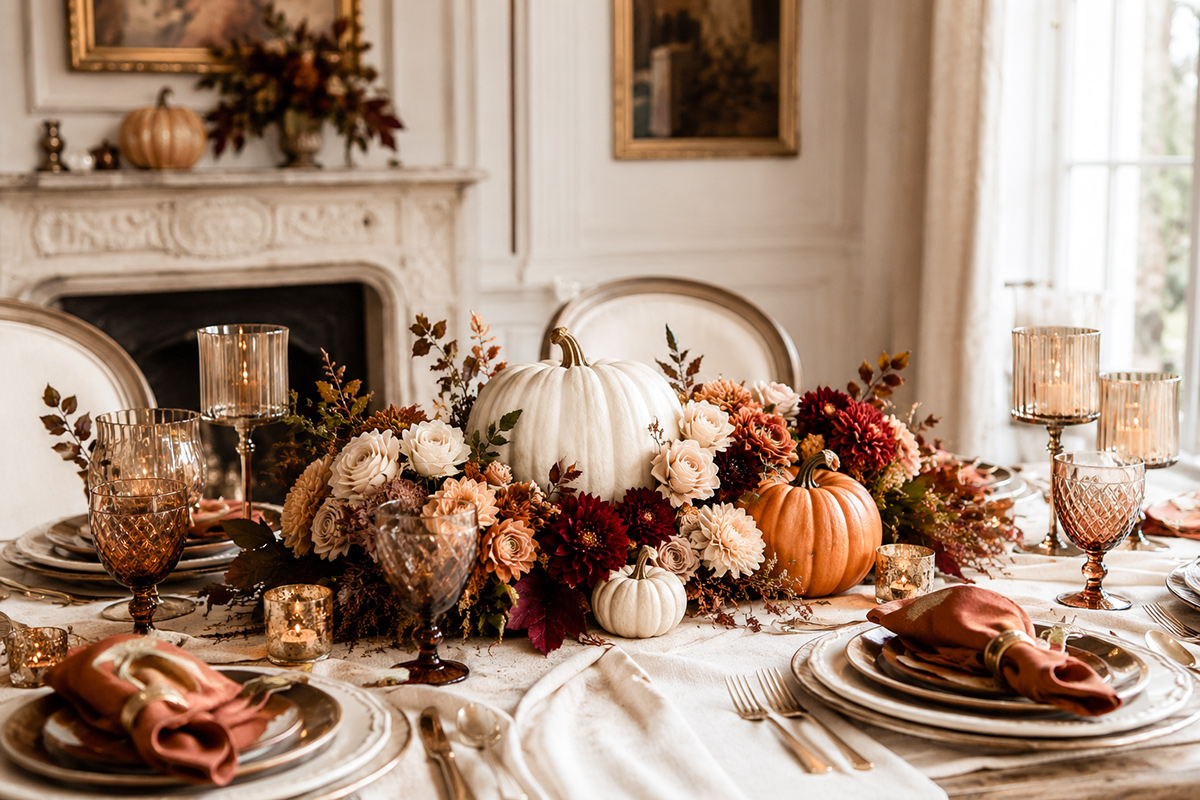
Pumpkin centerpiece ideas can take a fall baby shower table from simple to memorable without filling every inch with decorations. Use pumpkins with fresh or dried flowers, white pumpkins, candlelight and seasonal colors for a Little Pumpkin shower, an October celebration or a Thanksgiving baby shower.
Plan More Fall Baby Shower Details
Little Pumpkin Baby Shower Ideas
Pumpkin Centerpiece and Floral Arrangement Supplies
Jump to Pumpkin Centerpiece Ideas
Fall Baby Shower Pumpkin Centerpieces
Which Pumpkin Centerpiece Makes Sense for Your Table?
You don't need to build the most elaborate arrangement on the page. Pick the centerpiece by where it's going and how long you need it to last.
| Where You're Using It | I'd Choose | What I'd Skip |
|---|---|---|
| Round guest table | One low floral pumpkin | Tall flowers blocking conversation |
| Long rectangular table | Several smaller pumpkin groupings | One enormous arrangement in the center |
| Buffet or dessert table | A taller floral pumpkin or fuller arrangement | Decor that crowds serving dishes |
| Fall baby shower | Pumpkins with blush, plum, burgundy or muted orange flowers | Adding every fall motif at once |
| Halloween | Pumpkins with deeper flowers and a few dark accents | Letting novelty decorations bury the centerpiece |
| Thanksgiving | Intact or white pumpkins you can restyle | Starting over with an entirely new centerpiece |
Pumpkin Centerpiece Ideas with Fresh Flower Arrangements
If you want the pumpkin itself to be part of the centerpiece, I’d start with a medium pumpkin and use it as the container instead of surrounding a vase with several loose pumpkins. There are some very realistic-looking faux pumpkins in stores and online, and they’re worth considering if you’re concerned about a real pumpkin staying fresh through Thanksgiving. You get the fall look right away, but the arrangement still has one clear focal point. That matters on a baby shower table where you also need room for plates, drinks, favors and all the other things that somehow end up there.
A pumpkin about 7 to 8 inches across is a useful size for a floral arrangement. It’s large enough to hold a good group of flowers without turning into something guests have to look around to talk to one another. University of Illinois Extension uses a pumpkin in roughly that size range for its pumpkin floral arrangement guidance and recommends placing a small plastic liner inside the hollowed pumpkin to hold the floral foam and water.
I’d do the same thing rather than putting wet floral foam directly against the pumpkin flesh. Cut the opening only as wide as you need, hollow out enough space for the liner, then set the liner down inside the pumpkin. You can still keep the cut pumpkin lid if you like the stem and tuck it into the finished arrangement at an angle.
For the flowers, you don’t need every fall color at once. Pick two or three flower colors, add one deeper accent and stop there. For a fall baby shower, blush with rust and burgundy works nicely. So does dusty pink with plum and soft orange. If you want something lighter, try ivory flowers with peach, muted orange and a little dried texture.
Mums are an easy choice because their rounded shape suits a pumpkin without fighting it. Roses make the arrangement feel less like ordinary autumn porch decor, and a trio of dahlias can create a strong focal cluster without taking over the arrangement. Add smaller flowers between them rather than packing the pumpkin with nothing but large heads.
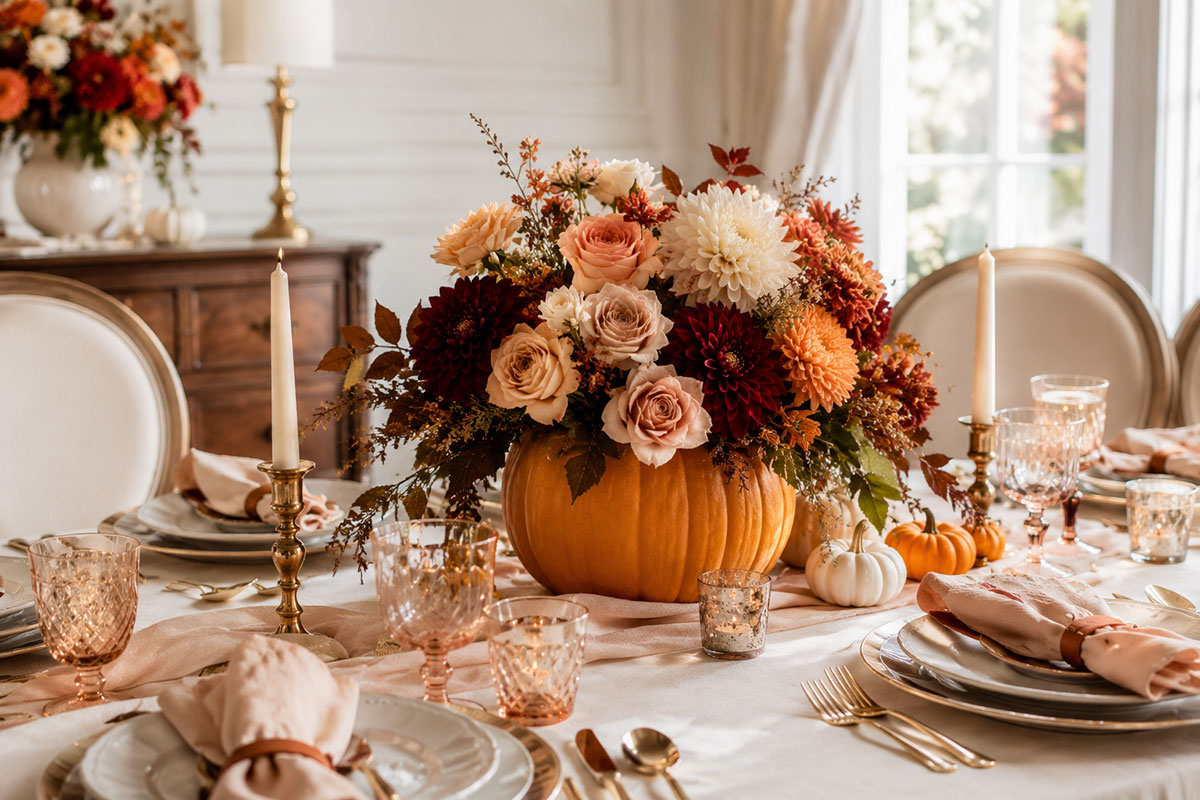
The height matters just as much as the flowers. I’d keep most of the arrangement fairly low and let only a few stems rise above the main cluster. A tall, perfectly rounded florist-style bouquet may be pretty by itself, but it can be annoying in the middle of a table. A slightly wider, lower arrangement usually makes more sense here.
Don’t feel obligated to carve every pumpkin either. If you’re making several pumpkin centerpiece ideas for a long table, use one or two floral pumpkins as the main pieces and fill the spaces between them with intact mini pumpkins, candles or small bud vases. Repeating the big arrangement six times can get expensive fast, and it usually isn’t necessary.
Pumpkin Floral Centerpieces Without Carving Every Pumpkin
A floral centerpiece doesn’t have to mean putting the flowers inside the pumpkin. In fact, if I were decorating several tables, I’d probably carve only the main centerpiece and use intact pumpkins everywhere else. Carving isn’t your only option here. You can stencil a simple Halloween design on an intact pumpkin with washable paint, then remove the design afterward if the surface allows and the pumpkin is still in good condition. That gives you a chance to reuse the same pumpkin for a Thanksgiving arrangement instead of starting over. It also cuts down on prep, gives you more control over the shape of the arrangements and lets you set things up earlier.
Start with one low floral container and place two or three pumpkins around it. Keep the container hidden by choosing flowers that spread slightly beyond its edge, then tuck the pumpkins close enough that the pieces read as one arrangement instead of a vase with pumpkins scattered nearby.
This is especially useful if you want to mix pumpkin colors. A medium orange pumpkin can anchor the arrangement, while a white pumpkin and one smaller muted green pumpkin break up all that orange. I wouldn’t use five different pumpkin colors just because they’re available. Two or three is enough. Decorative gourds can add a different shape without adding another color to the palette.
The flowers can repeat those colors without matching them exactly. Rust flowers beside an orange pumpkin can disappear into it, so add contrast with burgundy, ivory, dusty rose or deep plum. If the pumpkins are mostly white, you can use richer flowers without making the table feel heavy.
Dried flowers work well here too, particularly if you’re setting up the day before. Wheat, dried grasses and preserved flowers add fall texture, but use them as accents rather than building a huge fan of stems behind the pumpkins. You still want the arrangement to sit comfortably on a dining or gift table.
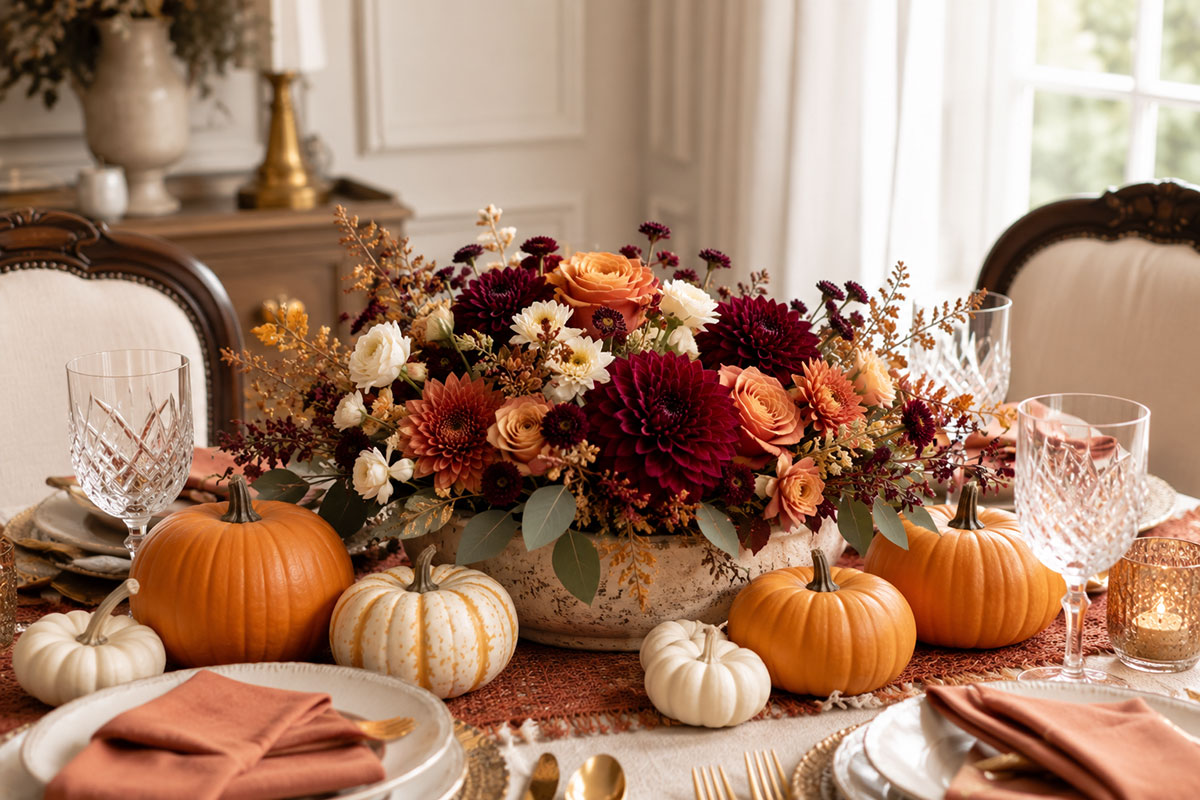
If you’re using candles, put them beside the arrangement rather than buried among dried leaves and flowers. Battery-operated candles are the simpler choice when the centerpiece includes dried material or when guests will be moving decorations around during the party.
I’d also skip loose faux leaves scattered over the whole table. A few tucked into the centerpiece are fine. Fifty of them between the plates just become something everyone has to move.
Pumpkin Vase Centerpieces for Fresh or Faux Flowers
A pumpkin vase is a good choice when you want the centerpiece to look clearly seasonal without building a large arrangement around it. You can use a real pumpkin, a hollow faux pumpkin or a ceramic pumpkin-shaped container. The look is similar, but the practical differences matter.
Use a real pumpkin when you want the natural color and texture to do most of the decorating. Put a waterproof container inside it rather than filling the pumpkin itself with water. That gives the flower stems a proper container and makes cleanup much easier.
A faux pumpkin makes more sense if you need several matching centerpieces or want to prepare them well ahead of the shower. Cut the opening once, insert a small vase or jar, and use the pumpkin shell to hide it. You can also reuse the same pumpkin for Thanksgiving instead of throwing the whole arrangement away after the party.
Ceramic pumpkin vases are the easiest option if you already have one that suits the table. I’d keep the flowers simpler in that case because the container is already decorative. A handful of mums, roses or seasonal filler is plenty. You don’t need a fancy vessel and an oversized bouquet competing with each other.
For long rectangular tables, one large pumpkin vase in the middle can look lonely. Try three smaller arrangements spaced down the table instead. Keep them related by using the same flower colors, but they don’t have to be identical.
You can also make one floral pumpkin the focal point and use smaller bud vases between it and the place settings. That gives you the look of a fuller tablescape without making every piece large.
Fall Baby Shower Pumpkin Centerpieces
For a fall baby shower, I’d make the centerpiece look like it belongs at a baby celebration first and a fall table second. Pumpkins can carry the seasonal part without adding acorns, scarecrows, hay bales, leaves, signs and every other autumn decoration at the same time.
A Little Pumpkin baby shower can use traditional orange pumpkins, but you don’t have to stay with orange and brown. Blush, mauve, plum, terracotta and ivory give you plenty of fall color while keeping the table softer for a shower.
If the room already has a lot of orange, I’d use white pumpkins in the centerpieces and bring the deeper fall colors in through the flowers. White pumpkins with burgundy, dusty pink and muted orange flowers work especially well because the pumpkin shape is still obvious without adding another large block of orange to the table.
You can go the other direction too. Use one orange pumpkin as the focal point, then keep the flowers mostly ivory and blush. That’s an easy way to make the pumpkin stand out without turning the entire table orange.
For a buffet or dessert table, you have more room to go taller. A floral pumpkin can sit beside the cake, drinks or favors as long as it doesn’t block the food or make serving awkward. On guest tables, keep the centerpieces lower and leave a clear path for conversation.
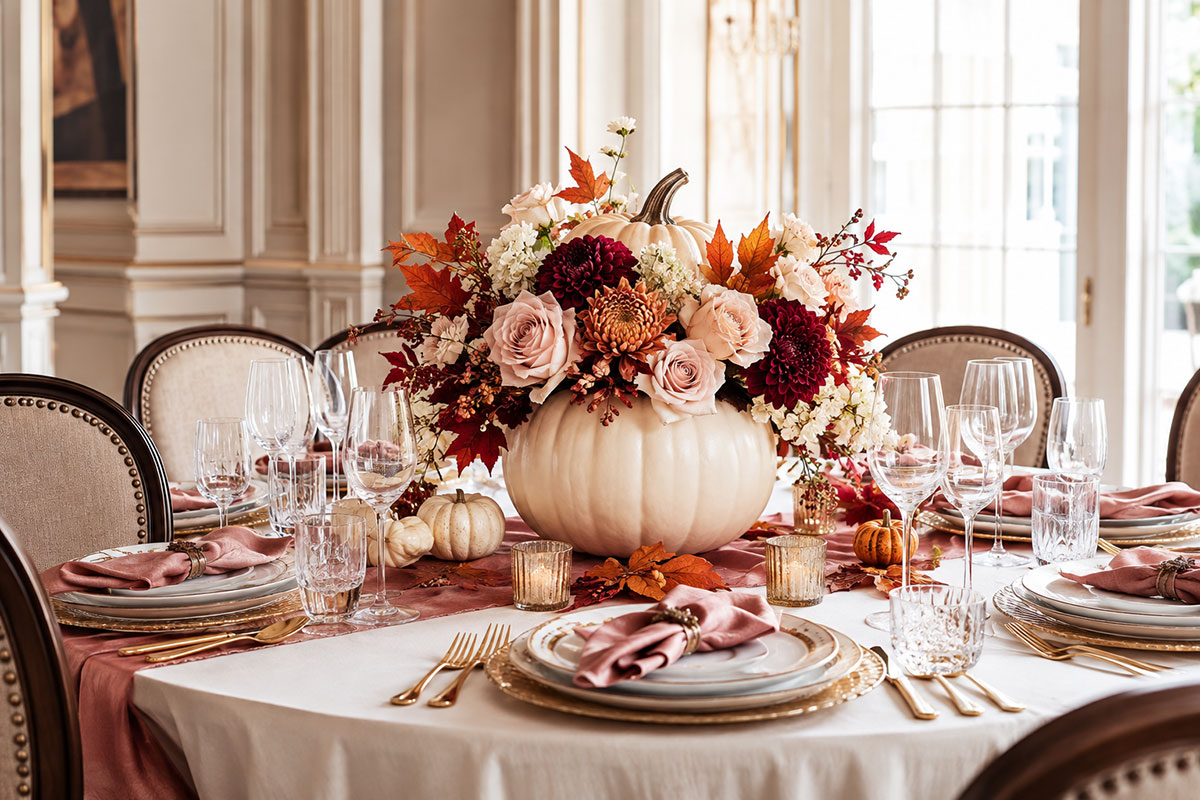
If you’re decorating more than one table, I wouldn’t make every centerpiece exactly the same. Use the same colors and repeat one or two flowers, then vary the pumpkin sizes or arrangement shape a little. The room will still look coordinated, but it won’t feel like you bought six copies of one decoration.
The centerpiece can also carry a small piece of the shower theme. A simple wooden or cardstock “Little Pumpkin” tag tucked beside one arrangement is enough. You don’t need wording on every pumpkin.
If you’re still planning the rest of the room, these fall baby shower ideas can help you coordinate the centerpiece colors with the food, decorations and other details without making everything match exactly.
White Pumpkin Centerpieces That Still Look Like Fall
White pumpkins are useful when the rest of the table already has plenty of fall color. They give you the pumpkin shape without adding another big area of orange, which makes it much easier to work in blush, burgundy, plum, terracotta or deeper green.
Keep some contrast around them. An all-white pumpkin, ivory flower and white tablecloth arrangement can disappear into itself. Burgundy mums, dusty pink roses, rust-colored flowers or a few dark leaves give the pumpkin enough definition to stand out.
If you're using several white pumpkins, vary the size instead of lining up identical ones. One medium pumpkin with two smaller ones looks more natural than three matching pumpkins sitting shoulder to shoulder. On a long table, repeat that little grouping farther down the table rather than stretching one arrangement across the whole surface.
White pumpkins also make it easier to change the occasion without starting over. Pair them with blush and mauve for a baby shower, deepen the flowers and add black accents for Halloween, or use rust, cranberry and warm brown details for Thanksgiving.
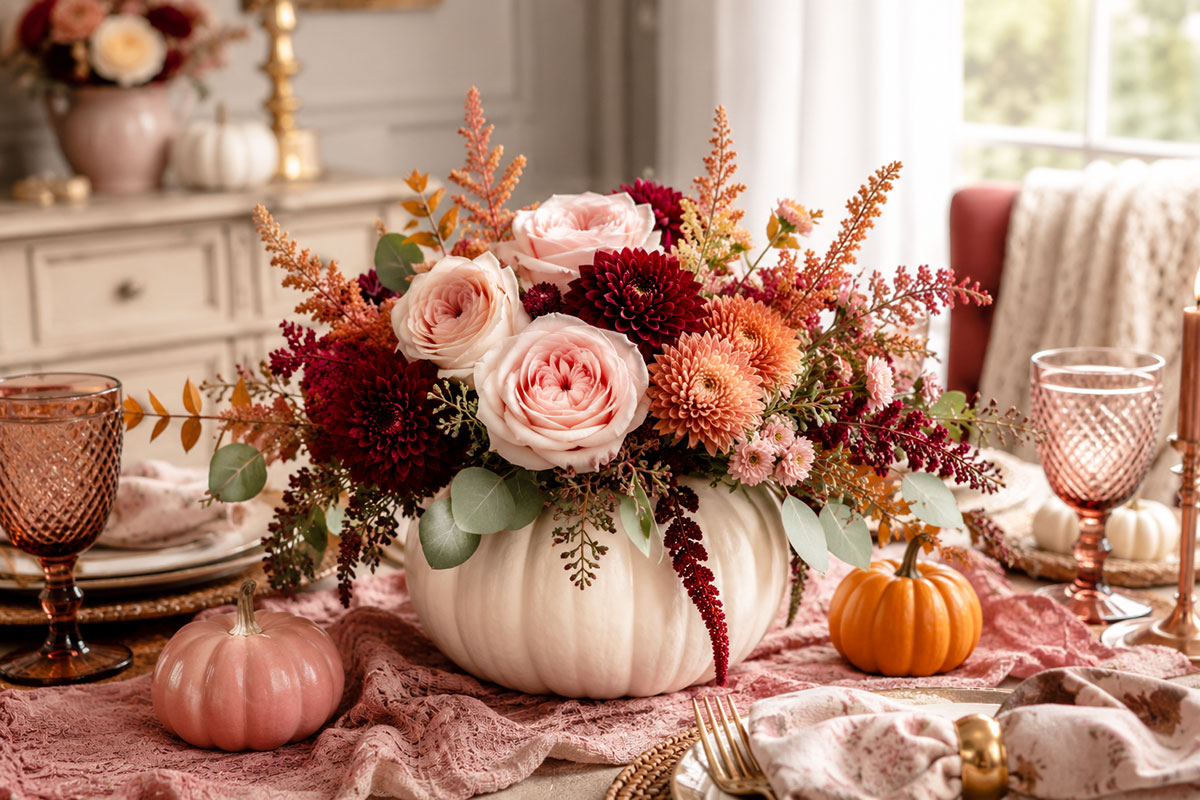
I would skip glittering or painting every white pumpkin unless that finish is actually part of the party theme. Their natural color is already doing the work. Let the flowers and table setting carry the extra color.
Pumpkin Table Centerpieces for Round and Long Tables
The shape of the table should change the centerpiece. A single arrangement makes sense in the middle of a round guest table. A long rectangular table usually looks better with several smaller arrangements spaced along the center instead of one oversized piece sitting in the middle.
Keep anything placed directly between seated guests low enough that it doesn't become a wall of flowers. Save taller branches, grasses and fuller bouquets for a buffet, entry table or dessert table where nobody needs to talk across them.
For a long table, try repeating three elements rather than repeating three identical centerpieces. You might use a floral pumpkin, then a pair of smaller intact pumpkins, then a low bud vase arrangement, and repeat that sequence farther down the table. The pieces relate to one another without looking mass-produced.
Leave working room too. A centerpiece can look wonderful on an empty table and become a nuisance as soon as serving dishes, glasses and favors arrive. Set out a few of those items before you decide how wide the pumpkin arrangement should be.
If the table is small, one pumpkin with flowers may be enough. Don't add miniature pumpkins around it merely because there's technically another six inches of empty table. Empty space can be useful.
Halloween Pumpkin Centerpieces Without Turning the Table Into a Haunted House
A Halloween version doesn't need a completely different centerpiece. Start with the same pumpkin and floral arrangement, then change a few details. Deep plum flowers, burgundy, black accents and a small amount of dark foliage can move a fall arrangement toward Halloween without covering it in novelty decorations.
If you want black in the centerpiece, I'd use it in small pieces rather than making the entire arrangement black and orange. A few black taper candles placed safely away from dried material, a dark vase or a handful of simple bat shapes can be enough.
For a baby shower, keep the spooky details secondary to the celebration. The separate Halloween baby shower centerpiece ideas page has more theme-specific options if you want ghosts, moons, witch hats and other Halloween motifs. On this page, the pumpkin should remain the main feature.
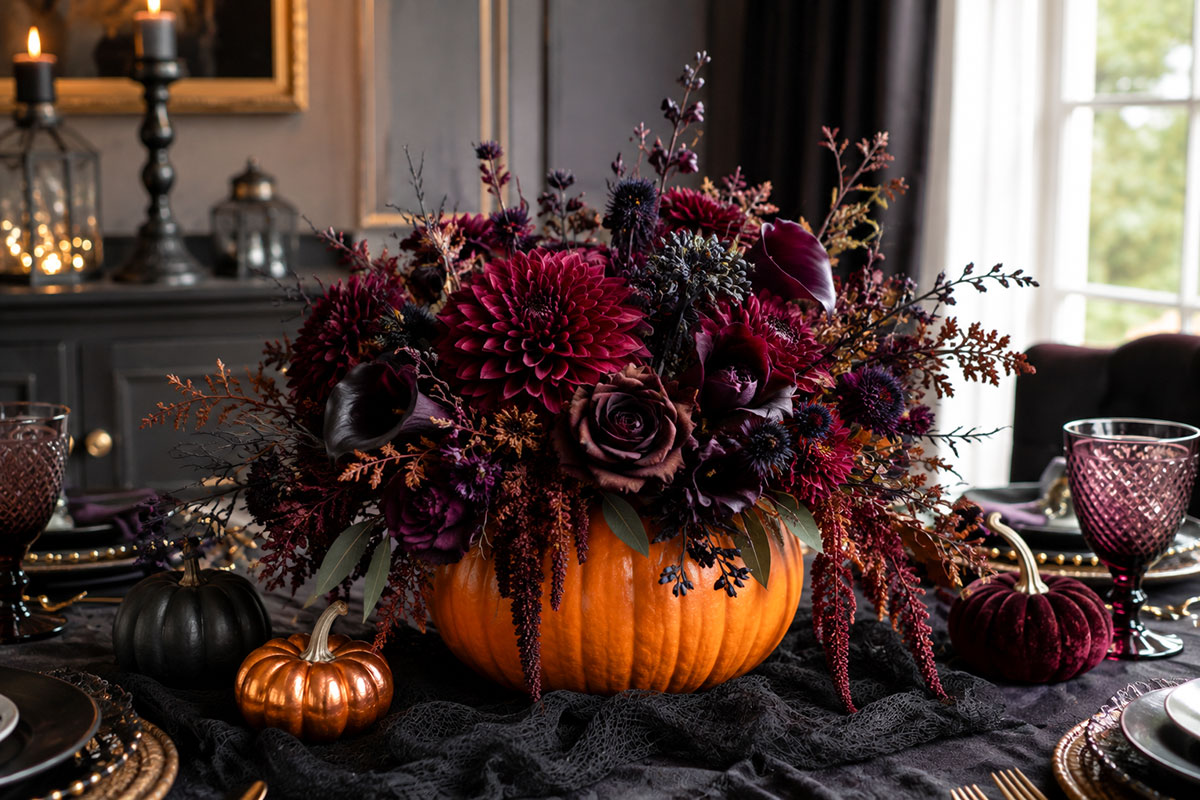
That's also why I'd skip carving faces into every pumpkin. A carved jack-o'-lantern immediately becomes the theme. An intact orange, white or muted pumpkin can work for Halloween while still looking appropriate at a baby shower table.
Thanksgiving Pumpkin Centerpieces You Can Carry Into November
If you're making the centerpiece before Halloween and want to use the idea again at Thanksgiving, intact pumpkins are the easiest pieces to carry forward. Change the flowers and small accents instead of rebuilding the entire table.
For Thanksgiving, move away from the obvious Halloween details and use warmer flower colors such as rust, cranberry, muted orange and ivory. A few dried grasses or seed heads can add texture without turning the arrangement into a bundle of dried material.
A pumpkin vase can work well on the Thanksgiving table, but keep it low if it's going where everyone will eat. If you want something taller and fuller, move that arrangement to the buffet or sideboard and use smaller pumpkins, bud vases or low candles on the dining table.
White pumpkins are particularly easy to reuse because they don't lock you into an orange-and-black October palette. Pair them with darker flowers for Halloween, then change to cranberry, rust and warm neutrals for Thanksgiving.
There isn't a prize for using every fall decoration you own. Pumpkins, flowers and one supporting detail are usually plenty. The table still needs to function once dinner arrives.
When you click on links to various merchants on this site and make a purchase, this may result in this site earning a commission. This does not affect the price you pay.

UBGI Gold Standard 2026
Reviewed under the site's
editorial checklist.
Photos, decorating ideas, party setups and reader submissions are shared for inspiration unless a page is specifically presented as a pattern, tutorial, reference guide or step-by-step project. Follow the instructions, measurements, safety guidance and manufacturer directions provided for the particular project or product.
About Jan | Contact | Baby Nursery Ideas (Blog) | Site Map | Privacy Policy | Disclosure Policy | Disclaimer | Affiliate Disclosure | Earnings Disclosure | Facebook | Pinterest
I am a participant in the Amazon Services LLC Associates Program, an affiliate advertising program designed to provide a means for us to earn fees by linking to Amazon. As an Amazon Associate I earn from qualifying purchases.
Copyright © 2006-2026. All Rights Reserved.