Nursery Lamps for a Cozy, Safe Baby Room
Nursery lamps can completely change how a baby room feels at night, making feedings, diaper changes, and bedtime routines much calmer for both baby and parent.
Helpful next reads:
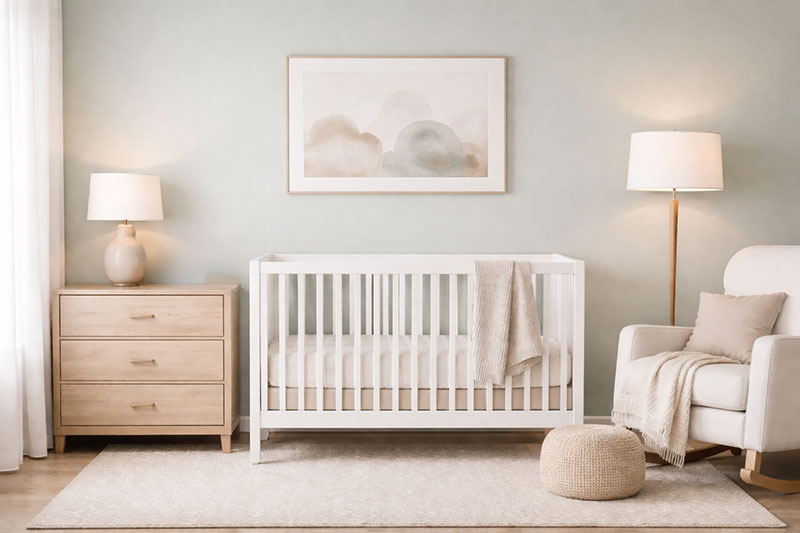
nursery lamps that fit dressers and feeding areas well
Lamps that are just right for night feedings
Most parents don’t think much about lighting until the first late-night feeding. The overhead light feels like too much, but the room is too dark to manage without it. That is usually when nursery lamps stop feeling optional and start feeling necessary.
Nursery lamps do more than decorate a baby room because they give you usable light for feeding, diaper changes, and quiet check-ins without waking the whole space. The best nursery lamps fit the way the room is used, stay safely placed, and help the nursery feel settled instead of harsh at night.
Quick answer
The best nursery lamps give enough light to handle night care, stay out of reach of the crib, fit the room layout, and create one clear usable zone instead of lighting the entire room.
Most nursery lamps are chosen for looks, not function.
Here’s the thing. A nursery lamp has to work at 2 a.m. with one hand free and a tired brain. If it is hard to reach, too bright, or placed in the wrong spot, it becomes frustrating fast. The right lamp quietly makes the whole room easier to use.
If you are building the room around it, this fits naturally with nursery ideas, baby nursery themes, and small nursery layout ideas. Once the layout is set, lighting becomes much easier to get right.
Best Nursery Lamps That Work During Night Feedings
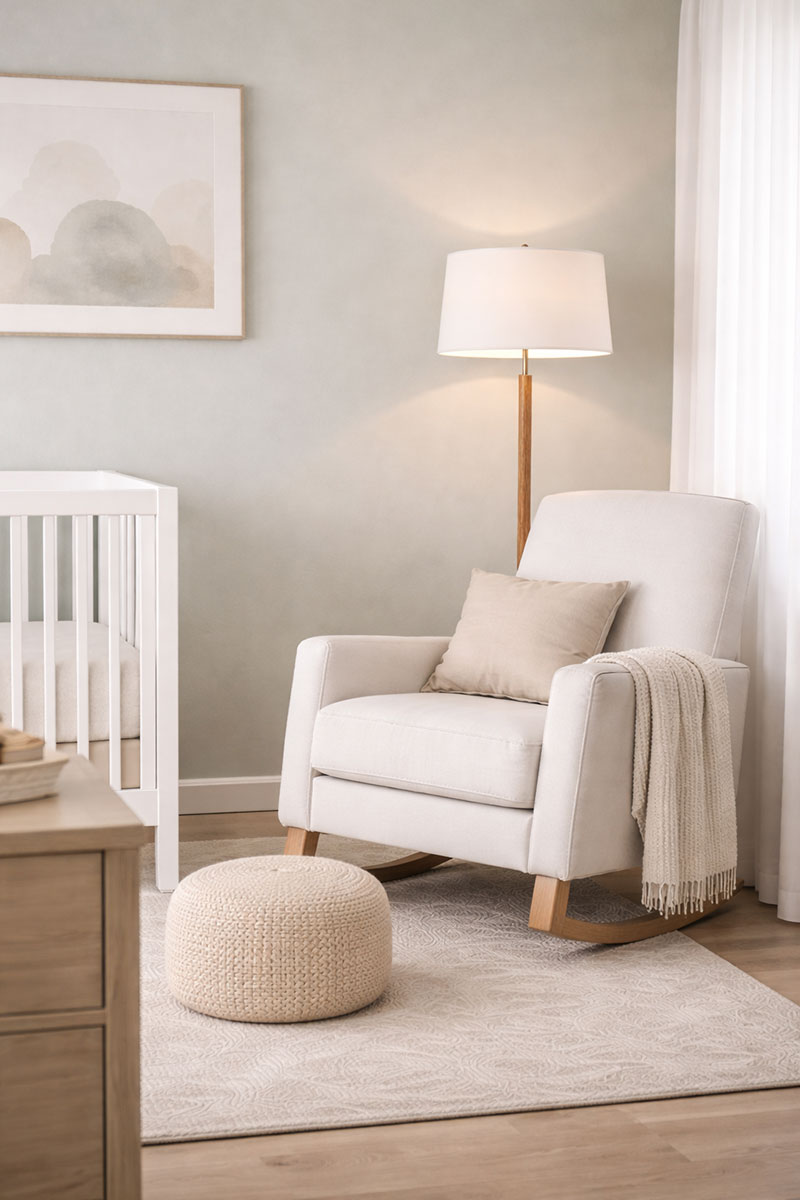
The best nursery lamps are the ones that light the exact area you use most. For many rooms, that ends up being the dresser or the chair. A table lamp on a dresser can light both the changing surface and part of the room. A floor lamp near a glider makes the feeding corner feel usable without touching the rest of the space.
Parents often notice this when they reach for something during a feeding and realize the light is either too far away or too bright. That is usually a placement issue, not a lamp issue.
The finished setup should look balanced but still practical. You should be able to reach the switch easily, see what you are doing, and move around without adjusting anything. That is when nursery lamps start to feel like part of the routine instead of an extra piece in the room.
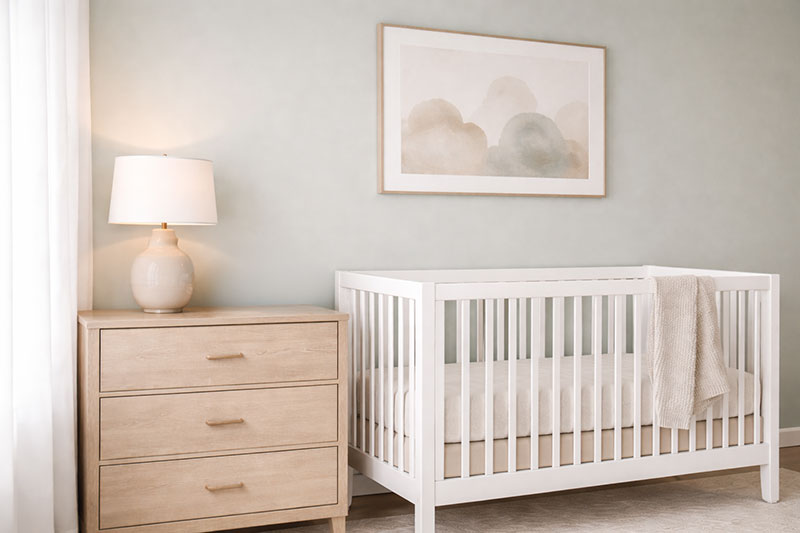
Types of Nursery Lamps That Fit Real Room Layouts
Table nursery lamps are the most flexible choice. They work on dressers, shelves, or side tables and usually give enough light without taking up floor space.
Nursery floor lamps are useful when the chair is the main focus of the room. They define that space and keep the dresser clear for everyday use.
Nursery wall lamps work best when the layout is fixed. They are less flexible but can free up space in smaller rooms.
Nursery lamps with shades tend to be easier to live with because they direct light where it is needed instead of spreading it across the entire room.
Many nurseries run into problems because the lamp type does not match the layout. A floor lamp in a tight room or a small table lamp in a large space can leave the room feeling off without it being obvious why.
How to Choose Nursery Lamps For the Lighting You Want
Start with how you use the room. If most of your time is spent in the chair, that is where your main light should be. If you use the dresser for changing, that area needs the better light.
One thing that is easy to miss is how lamp height affects usability. A lamp that sits too low can create shadows across the changing surface, while a slightly taller lamp spreads light more evenly and makes quick tasks easier without adjusting your position.
Then look at bulb warmth. A warmer bulb tends to feel easier at night and does not light the entire room. You want enough visibility without creating a wake-up signal.
Next comes usability. The switch should be easy to reach. The base should feel steady. The lamp should not crowd the surface it sits on.
Quick checklist
• Light reaches your main care area
• Switch is easy to reach with one hand
• Lamp stays stable and does not wobble
• Shade directs light instead of spreading it everywhere
• Does not crowd dresser or chair space
I’ve learned that the most useful nursery lamps create one clear working zone instead of lighting the entire room. That makes feeding, changing, and settling feel smoother because everything happens in one consistent space.
This connects directly with nursery lighting ideas if you want to build out the full room setup beyond just lamps.
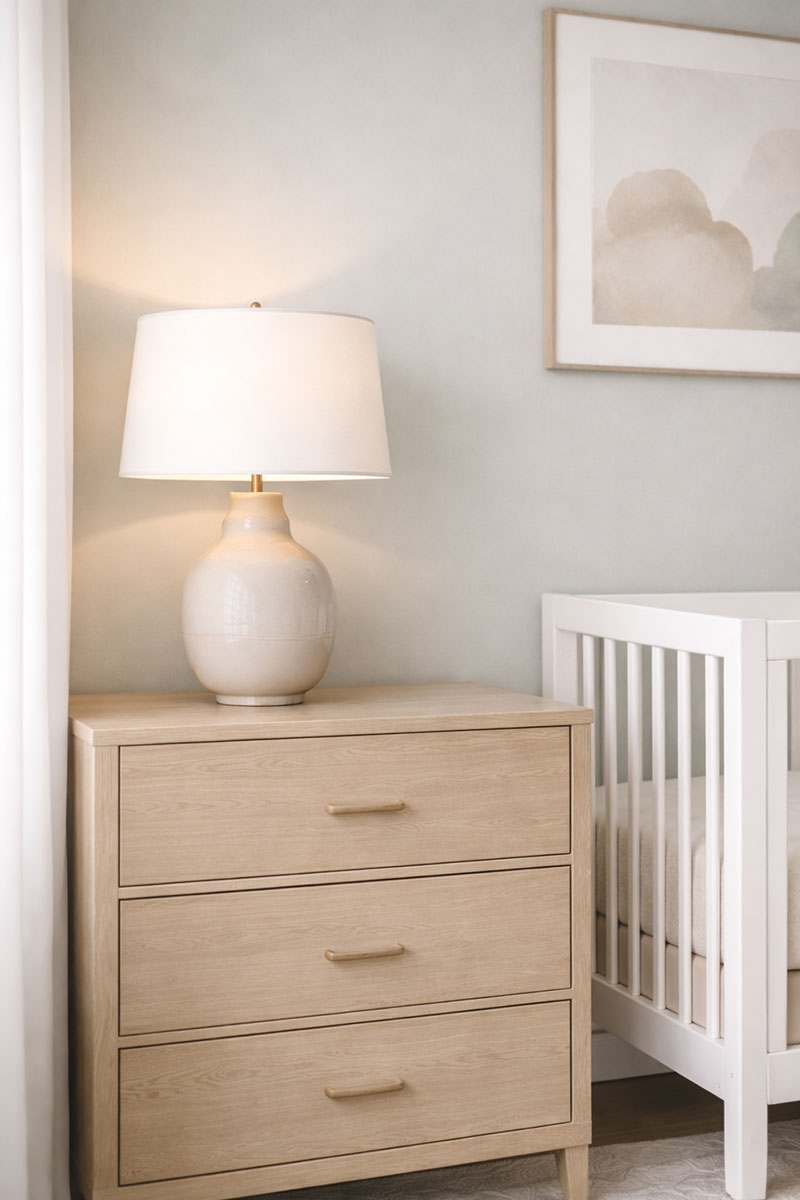
Safe Placement for Nursery Lamps Without Risk
Keep nursery lamps away from the crib and out of reach of where a child can grab or pull. This becomes more important as babies grow and start reaching for nearby objects.
This usually shows up later. The lamp that felt safely tucked away during the newborn stage suddenly looks closer once a baby can stand or lean.
Dressers are often the safest placement because they keep the lamp elevated and away from the sleep area. Floor lamps can work near a chair, but the base needs to feel steady and the cord should stay controlled.
For general nursery safety practices in the United States, HealthyChildren.org provides reliable guidance on safe room setup.
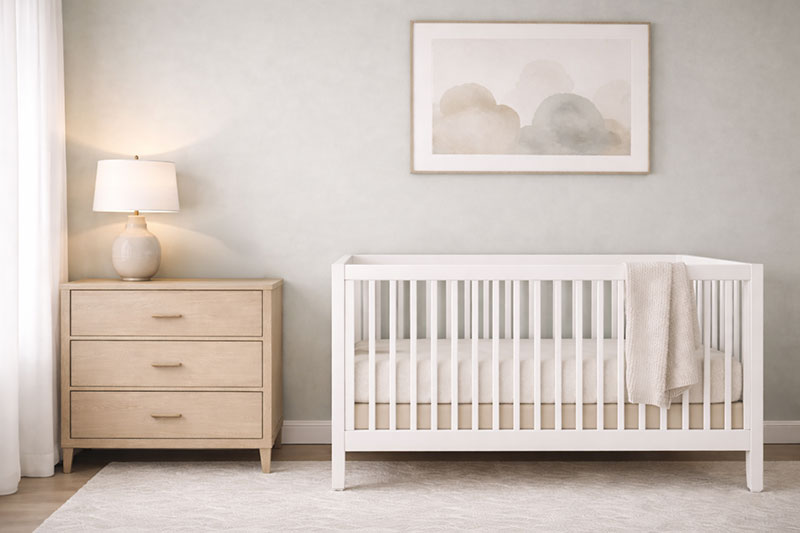
Nursery Lamps by Style That Still Feel Practical
Nursery lamps should match the room without taking over it. A simple lamp works well in a calm space. A more detailed base can fit in a classic room. A clean shape often works best in a modern setup.
The finished look should feel connected. The lamp should relate to the furniture around it so the room feels settled instead of pieced together.
To recreate that, match the lamp size to the surface it sits on, keep the proportions balanced, and let the lamp support the room instead of becoming the main focus.
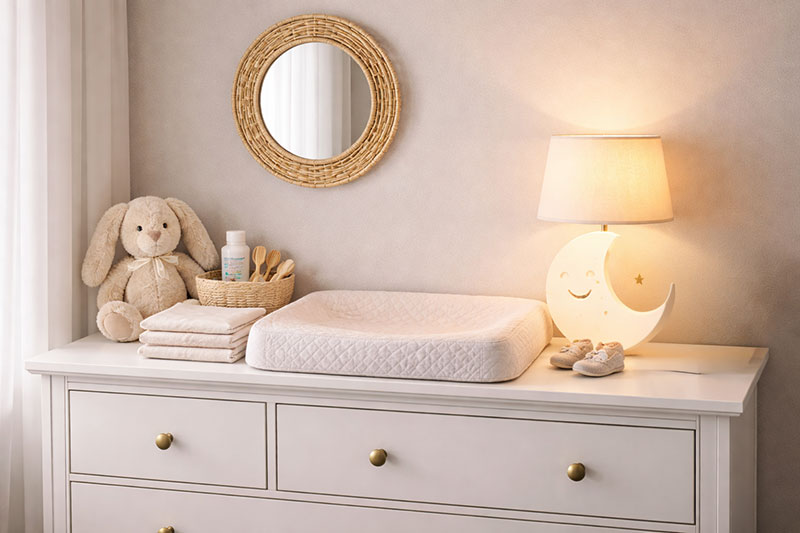
Common Nursery Lamp Mistakes That Affect Daily Use
One mistake is choosing nursery lamps that are too small to light anything useful. Another is choosing lamps that are too bright or expose the bulb directly.
This often happens when someone tries to match the lamp to the decor instead of the routine. The result looks fine but does not work well at night.
Another issue is placing the lamp where it looks balanced instead of where it is needed. Lighting should follow use, not symmetry.
The best nursery lamps are the ones that quietly do their job without getting in the way.
FAQs About Nursery Lamps Parents Ask Most
What are the best nursery lamps?
The best nursery lamps are ones that light your main care area, stay stable, and do not brighten the entire room.
Are floor lamps safe in a nursery?
Yes, if they are stable, placed away from the crib, and cords are kept out of reach.
Should nursery lamps use warm light?
Most parents prefer warmer light because it feels easier at night and does not disrupt sleep routines.
Where should nursery lamps go?
Usually on a dresser or near the chair, depending on where you handle feeding and changing.
Once nursery lamps are placed correctly, the room becomes easier to use, easier to settle into, and easier to live with every day.


About Jan | Contact | Baby Nursery Ideas (Blog) | Site Map | Privacy Policy | Disclosure Policy | Disclaimer | Affiliate Disclosure | Earnings Disclosure | Facebook | Pinterest
I am a participant in the Amazon Services LLC Associates Program, an affiliate advertising program designed to provide a means for us to earn fees by linking to Amazon. As an Amazon Associate I earn from qualifying purchases.
Copyright © 2006-2026. All Rights Reserved.