Modern Baby Quilt Patterns Beyond Traditional Crib Quilts
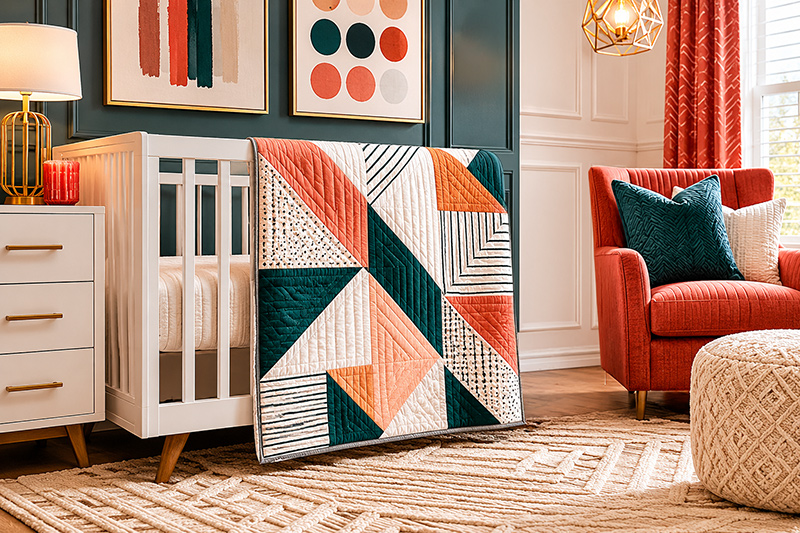
Modern baby quilt patterns can feel fresh, nursery-ready, and still beginner-friendly when they use clean shapes, simple blocks, modern colors, and one clear focal point instead of busy traditional patchwork.
Browse baby quilt pattern ideas:
Jump to a section:
Why Modern Baby Quilt Patterns Keep Looking Current
Modern Baby Quilt Patterns Versus Traditional Crib Quilts
Modern Baby Quilt Pattern Ideas Worth Making
Why Modern Quilts Often Age Better In Nurseries
Materials Needed For The Quilt Featured On This Page
How To Make A Modern Baby Quilt Step By Step
How To Avoid Copyright Problems When Designing Quilts
If you're still deciding which nursery quilt style fits your room best, browse the full Baby Quilt collection. Seeing multiple quilt styles side by side often makes the right choice much easier.
Why Modern Baby Quilt Patterns Keep Looking Current
Walk into two nurseries built five years apart and you'll often notice something interesting. The furniture may change. Wall colors come and go. Yet a well-designed quilt still looks right at home. That is one reason modern baby quilt patterns have become so popular with parents who want a project that stays relevant long after the nursery stage.
Modern baby quilt patterns focus on clean shapes, larger design elements, and clear visual impact instead of dense traditional patchwork.
Rather than filling every inch with tiny pieces, modern designs create interest through scale. Large triangles, oversized stars, wave patterns, animal silhouettes, and geometric layouts allow the eye to understand the design immediately.
I believe that simplicity is exactly what gives these quilts staying power. A quilt doesn't need fifty different fabrics to become memorable.
Parents often notice this when they move a quilt from the nursery into a toddler room. The design still works because it was never tied to a short-lived decorating trend in the first place.
Modern Baby Quilt Patterns Versus Traditional Crib Quilts
The biggest difference between modern baby quilt patterns and traditional crib quilts is visual structure.
Traditional quilts often showcase intricate piecing, dozens of blocks, and repeating motifs. Modern quilts typically use fewer pieces with more visual breathing room.
A traditional quilt may draw attention to craftsmanship.
A modern quilt often draws attention to the overall design.
Neither approach is wrong. They simply create different results.
If you're trying to choose between styles, browse easy baby quilt patterns to see how many beginner-friendly projects now borrow ideas from modern quilting while keeping construction straightforward.
Many parents start looking for a quilt pattern and end up discovering that the room itself looks better when the quilt becomes the focal point.
Modern Baby Quilt Pattern Ideas Worth Making
The most successful modern quilts usually start with one clear concept.
Instead of combining multiple themes into a single blanket, modern designs allow one visual idea to carry the entire project.
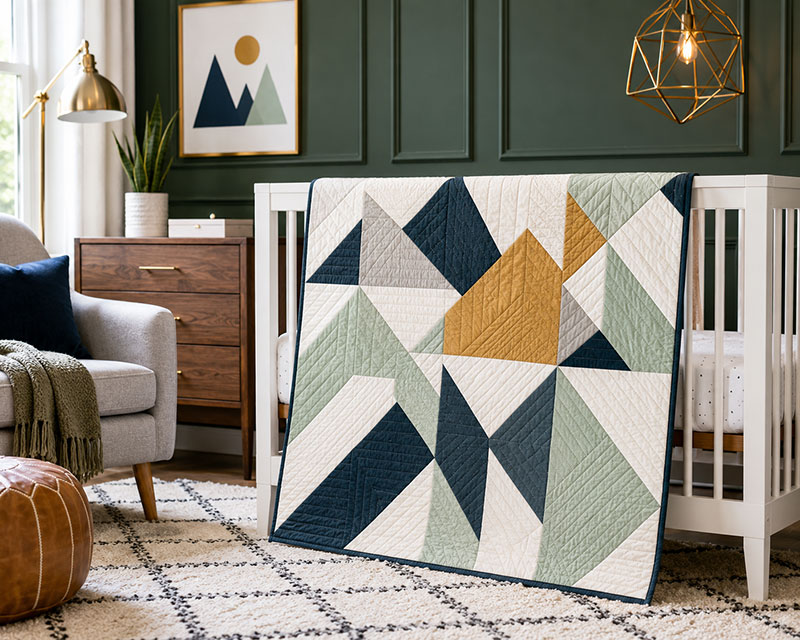
Popular choices include:
- Mountain-inspired quilts
- Ocean wave layouts
- Minimal star patterns
- Color block designs
- Animal silhouettes
- Abstract geometric quilts
- Modern woodland scenes
- Scandinavian-inspired layouts
Nature-inspired rooms often pair well with ideas from woodland baby quilt pattern.
Coastal nurseries frequently draw inspiration from ocean baby quilt pattern.
Many nurseries run into this issue because every decorative item is trying to be the center of attention. A quilt works much better when it provides visual direction while the rest of the room supports it.
Why Modern Quilts Often Age Better In Nurseries
This is a practical advantage that rarely gets discussed.
Character-based quilts, heavily themed bedding, and trend-driven nursery accessories can quickly look tied to a specific period. A geometric quilt, mountain quilt, or wave design tends to transition naturally into later stages of childhood.
That means the quilt often stays in use longer.
It may move from crib to chair. Then from chair to reading corner. Eventually it becomes part of a memory box or family keepsake collection.
I have seen many nursery quilts survive several room redesigns simply because the design itself was not dependent on a particular decorating trend.
That longevity makes modern baby quilt patterns especially appealing for gift makers.
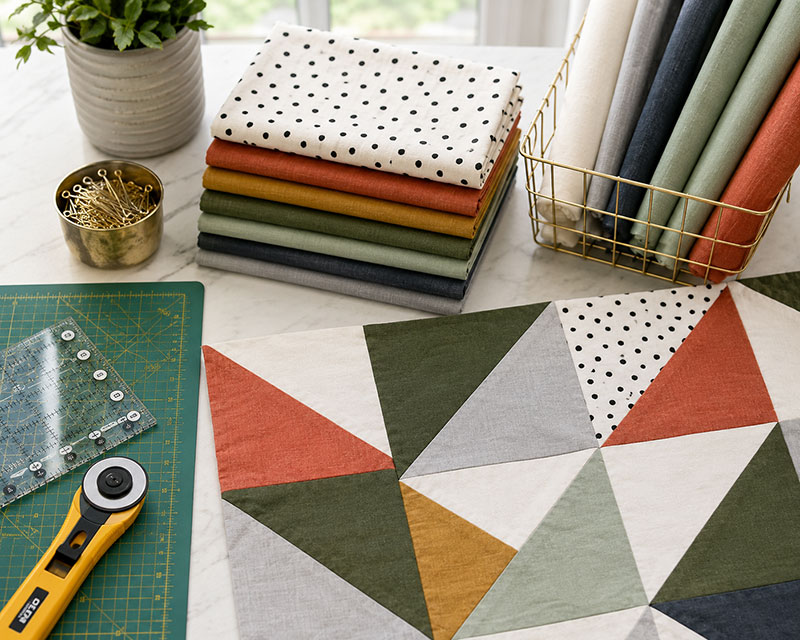
Materials Needed For The Quilt Featured On This Page
The quilt shown in the example image uses large geometric blocks designed for a finished size of approximately 40 by 52 inches.
Before choosing accent colors, background fabric, or backing, my baby fabrics guide can help you compare nursery-friendly cotton prints, blender fabrics, backing options, and modern quilt fabric choices that work well for clean geometric baby quilts.
- 1½ yards background cotton fabric
- 1 yard accent fabric A
- 1 yard accent fabric B
- 1 yard accent fabric C
- Crib quilt batting
- 1¾ yards backing fabric
- Rotary cutter
- Quilting ruler
- Cutting mat
- Straight pins or clips
- Sewing machine
- Coordinating thread
Batting selection affects drape more than many new quilters expect. Information on thickness options can be found on crib quilt batting.
Finished dimensions are similar to those discussed on crib quilt size.
How To Make A Modern Baby Quilt Step By Step
Finished size: approximately 40 x 52 inches
- Cut twelve 10-inch background squares.
- Cut twelve matching accent squares.
- Place squares right sides together.
- Mark a diagonal line.
- Sew one quarter inch on both sides of the line.
- Cut along the marked line.
- Press seams open.
- Trim blocks to 9½ inches.
- Arrange blocks into a geometric layout.
- Photograph the arrangement.
- Sew blocks into rows.
- Join rows together.
- Press all seams flat.
- Layer backing, batting, and quilt top.
- Baste layers securely.
- Quilt straight lines throughout the design.
- Trim edges square.
- Attach binding.
- Finish binding by hand or machine.
- Wash and inspect before use.
Parents often notice this when assembling the layout on the floor. One block rotated the wrong direction can completely change the finished appearance. Taking a quick photo before sewing rows together catches mistakes surprisingly well.
How To Avoid Copyright Problems When Designing Quilts
Most traditional quilt blocks are public domain and have existed for generations.
Problems usually arise when someone copies a commercial design, licensed artwork, or trademarked character too closely.
A safer approach is creating your own variation.
Change proportions. Adjust color placement. Increase block size. Rearrange the layout. Combine influences from several sources rather than duplicating a single design.
Those small changes create a quilt that reflects your own creativity while avoiding unnecessary legal concerns.
Looking For Another Quilt Project?
If this design style appeals to you, there is a good chance you'll also enjoy:
- Bunny Baby Quilt Pattern
- Butterfly Crib Quilt Pattern
- Dinosaur Crib Quilt Pattern
- Owl Baby Quilt Pattern
Each project approaches nursery quilting from a different direction, which makes them useful when you're trying to decide what type of quilt fits the room best.
The easiest way to choose a quilt pattern is to decide what you want people to notice first when they walk into the nursery.
Quick Answer
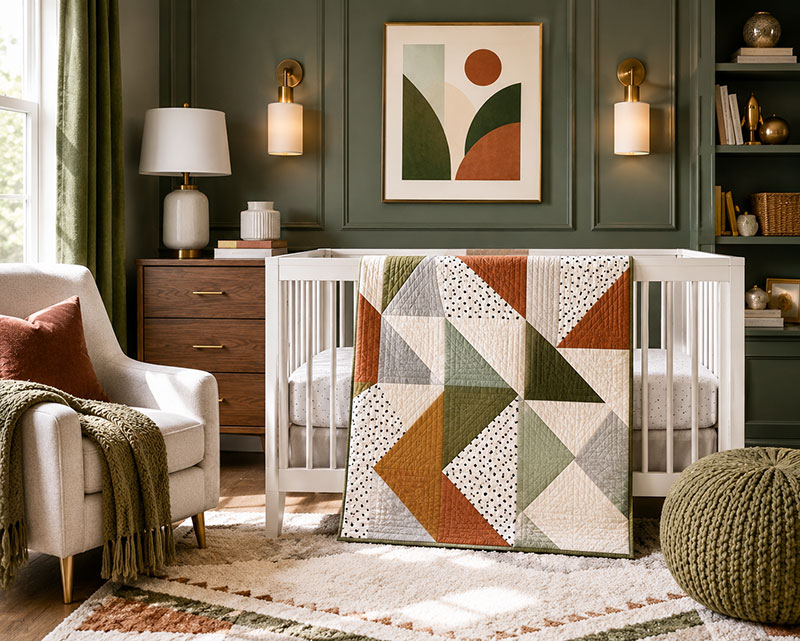
Modern baby quilt patterns use larger shapes, simpler layouts, contemporary color combinations, and clear focal points instead of dense traditional patchwork. The result is a nursery quilt that remains visually relevant while being practical for everyday family use.
For current safe sleep recommendations in the United States, see Consumer Product Safety Commission Safe Sleep Guidance.
Frequently Asked Questions
What is considered a modern baby quilt pattern?
A modern baby quilt pattern typically uses large shapes, clean lines, simplified layouts, and contemporary color palettes.
Are modern baby quilt patterns easier for beginners?
Many are because they often require fewer pieces and less complicated construction.
What size should a baby quilt be?
Most crib quilts range from approximately 36 x 52 inches to 45 x 60 inches.
Can modern quilts work in themed nurseries?
Yes. Many modern designs complement woodland, ocean, mountain, farm, and nature-inspired rooms.
What batting works best for baby quilts?
Low-loft cotton batting remains a popular choice because it folds easily and quilts well.
Can a crib quilt be used after the nursery stage?
Yes. Many continue serving as reading blankets, travel quilts, play mats, and keepsakes.
Do modern baby quilts require specialty tools?
No. Standard quilting tools are sufficient for most projects.
Where can I find more baby quilt patterns?
Visit the Baby Quilt patterns page for additional nursery quilt ideas and pattern collections.
When you click on links to various merchants on this site and make a purchase, this may result in this site earning a commission. This does not affect the price you pay.

UBGI Gold Standard 2026
Reviewed under the site's
editorial checklist.
Photos, decorating ideas, party setups and reader submissions are shared for inspiration unless a page is specifically presented as a pattern, tutorial, reference guide or step-by-step project. Follow the instructions, measurements, safety guidance and manufacturer directions provided for the particular project or product.
About Jan | Contact | Baby Nursery Ideas (Blog) | Site Map | Privacy Policy | Disclosure Policy | Disclaimer | Affiliate Disclosure | Earnings Disclosure | Facebook | Pinterest
I am a participant in the Amazon Services LLC Associates Program, an affiliate advertising program designed to provide a means for us to earn fees by linking to Amazon. As an Amazon Associate I earn from qualifying purchases.
Copyright © 2006-2026. All Rights Reserved.