How to Baby Proof a Christmas Tree: 10 Practical Ideas for Babies and Toddlers
By Jan Bay
Learning how to baby proof a Christmas tree can make decorating a lot less stressful when you have a crawling baby or curious toddler in the house. Little hands love shiny ornaments, twinkling lights, and anything they can pull or grab. Fortunately, you don't have to give up your beautiful Christmas tree. From choosing the right baby gate to securing the tree, managing electrical cords, and keeping decorations out of reach, these 10 practical ideas will help you prepare your home for the holidays.
More Baby Safety and Christmas Ideas
Baby Safety Gear and Home Babyproofing
Baby Christmas Crafts and Keepsakes
Jump to What You Need
- 1. Choose the Best Location for Your Tree
- 2. Secure Your Christmas Tree Against Tipping
- 3. Put a Baby Gate Around the Christmas Tree
- 4. Keep the Tree in a Separate Room
- 5. Keep Christmas Lights and Cords Out of Reach
- 6. Leave Lower Branches Bare
- 7. Avoid Breakable Ornaments and Small Decorations
- 8. Keep Tree Water and Fallen Needles Out of Reach
- 9. Try a Small Christmas Tree
- 10. Check Your Tree Every Day
- Printable Christmas Tree Babyproofing Checklist
- Frequently Asked Questions
Which Christmas Tree Setup Makes the Most Sense?
If you have a room you can close off, I'd start there. You can keep your regular Christmas tree without buying another piece of equipment.
If the tree must stay in your family living room, find out whether a suitable child barrier can be installed around it. Measure first, then shop. Don't buy a gate and hope you can make it fit.
And if neither arrangement works, try a smaller tree in a room your baby can't access. You don't have to give up Christmas decorating just because you need to change where the tree goes.
1. How to Baby Proof a Christmas Tree: Choose the Best Location
Before you bring out the ornaments, decide where the tree should go. A pretty corner isn't necessarily a good spot once your baby starts crawling, pulling up, or cruising along the furniture.
Look for an area away from everyday walking paths, doorways, heating vents, fireplaces, and furniture your toddler might use for climbing. If you can place the tree in a room that isn't part of your baby's usual play area, that's worth considering first.
Keep the tree at least three feet from fireplaces, radiators, candles, and other heat sources. Don't put it where it blocks a doorway or your way out of the room.
Take a minute to look at the surrounding furniture, too. A sofa, ottoman, or sturdy storage chest beside the tree can give a climbing toddler more reach than you might expect. Moving that furniture may be just as helpful as changing the ornaments.
Before you settle on a location, check these three things:
- Can your baby reach the tree from the floor or nearby furniture?
- Is there enough room for a suitable child barrier without blocking a walkway?
- Can you keep the electrical connections and tree stand inaccessible?
If your favorite tree location doesn't pass those checks, try another corner before decorating. It's much easier to move an undecorated tree.
2. Secure Your Christmas Tree Against Tipping
A Christmas tree needs a stable base whether it's real or artificial. Even a tree that stands perfectly straight can tip if a child grabs a branch, pulls on a decoration, or tries to climb it.
Start with the stand. For a real tree, use one that's designed for the height and trunk diameter of your tree. Follow the stand instructions, tighten the supports properly, and make sure the trunk sits upright.
Artificial trees need their stands assembled and locked according to the manufacturer's directions. Check that each section is fully connected before you begin decorating.
Should You Anchor Your Christmas Tree?
Securing the tree against tipping adds protection, especially with an active toddler in the house. Use a tree-stabilizing or anti-tip system suitable for your tree, and follow the manufacturer's instructions for attaching it to the tree and the wall or other approved structural support.
Don't tie the tree to a curtain rod, lightweight shelf, loose furniture, or another object that could pull over with it. Any straps or securing lines must stay completely out of your child's reach.
Decorations can make a tree top-heavy, too. Spread the weight evenly instead of hanging all the heavier ornaments on one side.
Quick check: Once the tree is assembled, inspect the stand, connections, and any securing hardware before decorating. If the tree leans, shifts, or has loose connections, correct the problem before adding ornaments.
Anchoring doesn't replace a child barrier or supervision. The goal is to keep curious little hands from reaching the tree in the first place.
3. Put a Baby Gate Around the Christmas Tree
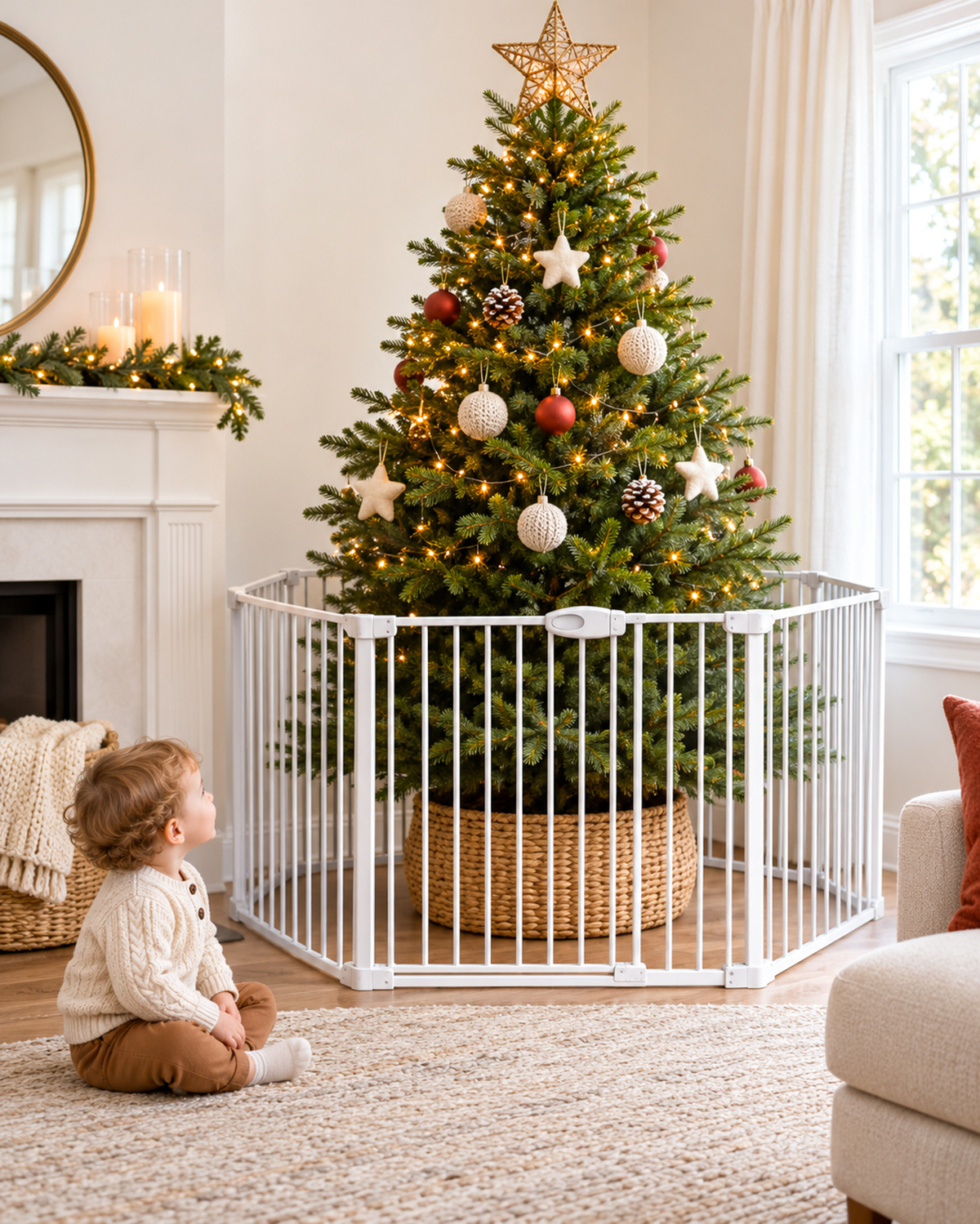
A baby gate around the Christmas tree is one of the first options worth considering when the tree needs to stay in your living room. It lets you enjoy the decorations while creating a boundary between your baby and the tree.
But don't grab just any fence and assume it'll do the job. Some decorative Christmas tree fences are made for appearance or pets, not for keeping young children away from hazards.
Choosing a Christmas Tree Baby Gate
Look for a child safety gate or enclosure whose manufacturer specifically permits the arrangement you need. Some products are designed for doorways, while others allow approved multi-panel configurations. A freestanding play yard should not automatically be treated as a protective fence around a Christmas tree.
Before buying one, check:
- Whether the product is intended for children of your baby's age and abilities.
- Whether the manufacturer allows an enclosure or barrier arrangement around a household feature.
- How the panels must be connected, mounted, or supported.
- Whether the gate has a child-resistant locking mechanism.
- Whether your child could reach branches, decorations, or cords through or over the barrier.
- Whether the setup leaves doors, exits, and walkways clear.
Before you buy a Christmas tree baby gate, get out your tape measure. Here's what I'd check:
- Measure the Christmas tree across its widest branches, not just the diameter of the stand.
- Mark where the barrier would sit. Leave enough space between the barrier and the tree so your child cannot reach branches, ornaments, lights, or the stand through, over, or around it.
- Check the available floor space. The enclosure must not block an exit, doorway, or normal walking path.
- Check the gate manufacturer's instructions for permitted configurations, mounting requirements, panel connections, and age or height limits. Don't assume you can join extra panels or use a freestanding enclosure in a different arrangement.
In the United States, children's gates and expandable enclosures are regulated under the federal safety standard in 16 CFR Part 1239. But meeting that standard doesn't automatically mean a product is approved for use around a Christmas tree. The manufacturer's instructions still determine whether your proposed arrangement is suitable.
If your measurements show that a proper barrier won't fit, skip the purchase. A Christmas tree in a closed-off room may be the better choice.
Set up the barrier exactly as its manufacturer directs. Don't improvise mounting hardware or connect several panels in a configuration the product doesn't permit.
What about a toddler who climbs? A gate may no longer be an appropriate barrier once a child can climb it, reach over it, or open it. Follow the product's height, age, and developmental limits. A closed-off room may be the better arrangement at that stage.
For other rooms in your home, my baby safety gear guide explains the main categories of equipment used as babies become more mobile.
4. Keep the Christmas Tree in a Separate Room
If you have a dining room, sitting room, or another space that can be closed off, you may not need an enclosure around the tree at all.
You can decorate the tree the way you like, then keep the room inaccessible to your baby except during supervised visits. This is especially useful if your toddler is interested in climbing over gates or can reach decorations through the bars.
A room with a door that closes securely is the simplest arrangement. Make sure your child cannot open the door, and don't use locks or barriers in a way that interferes with emergency exits.
A doorway gate may be another option when the gate is designed for that opening, correctly installed, and suitable for your child's stage of development.
You can still see and enjoy your Christmas decorations through an open doorway while your little one is elsewhere. Just close off access again before your baby comes into the room.
One thing I'd skip: Trying to make a decorative folding screen do the job of a baby gate. Unless it's specifically designed and approved as a child barrier, it may tip or create another climbing hazard.
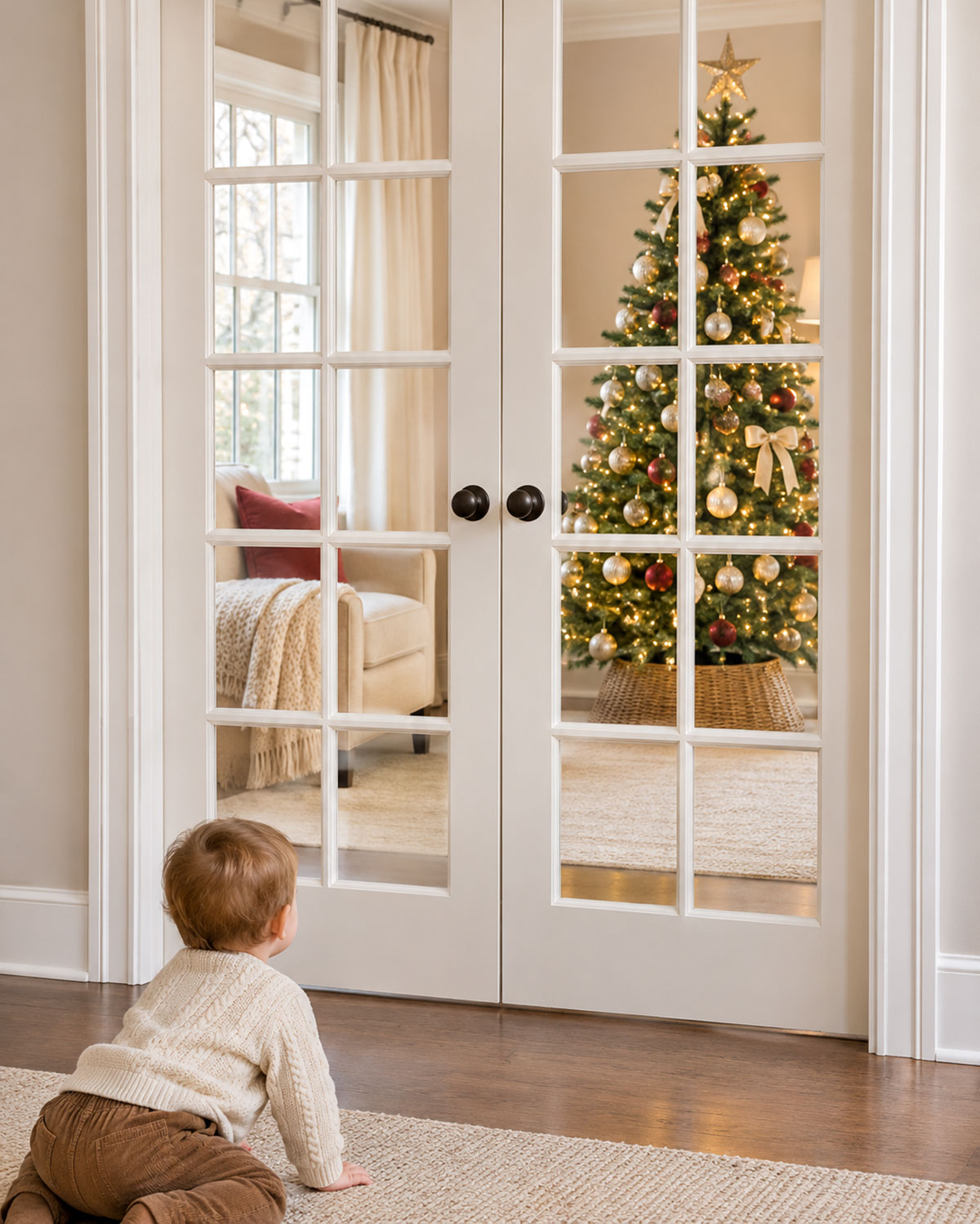
A separate room is worth considering if you want a full-size Christmas tree without rearranging your entire living room.
5. Keep Christmas Lights and Electrical Cords Out of Reach
Those little Christmas lights are beautiful, but they're also something a curious baby may try to grab, pull, or put in their mouth.
Keep light strands, plugs, extension cords, and electrical connections completely inaccessible. That includes the cord running from the bottom of the tree to the outlet.
Check every light strand before putting it on the tree. Look for damaged insulation, broken sockets, loose bulbs, and exposed wires. Don't use damaged lights.
What to Do with the Christmas Tree Light Cord
Choose a tree location that lets you keep electrical cords behind an appropriate child barrier or otherwise completely out of reach. Follow the light manufacturer's instructions for connections and cord placement.
Don't run extension cords under rugs, through doorways where they can be damaged, or beneath furniture that might pinch them. Don't overload outlets or connect more light strands than the manufacturer permits.
Use lights listed by a recognized testing laboratory and labeled for indoor use. LED Christmas lights are an option worth considering, but they still have cords and electrical parts that must remain inaccessible.
Battery-operated decorations need attention, too. Button batteries and coin batteries are particularly dangerous if swallowed. Keep battery compartments secured and the entire decoration out of reach.
Turn the Christmas tree lights off before leaving home or going to bed. Never put lit candles on a Christmas tree.
My recommendation: Don't depend on hiding a cord behind a tree skirt. Little hands can lift fabric. Keep the electrical connection where your baby cannot access it at all.
6. Leave the Lower Christmas Tree Branches Bare
You don't have to hang an ornament on every branch. In fact, a Christmas tree can look lovely with the decorations concentrated toward the middle and top.
Start decorating where your child can't reach, including from nearby furniture. Leave the lower branches empty, then step back and see how the tree looks. You may find that you don't miss the extra decorations.
Use larger decorative pieces to fill visual spaces higher up rather than adding lots of little ornaments near the bottom.
Cream, cranberry, and natural wood tones can look especially pretty against the green branches. You can still create a traditional Christmas look without covering every inch of the tree.
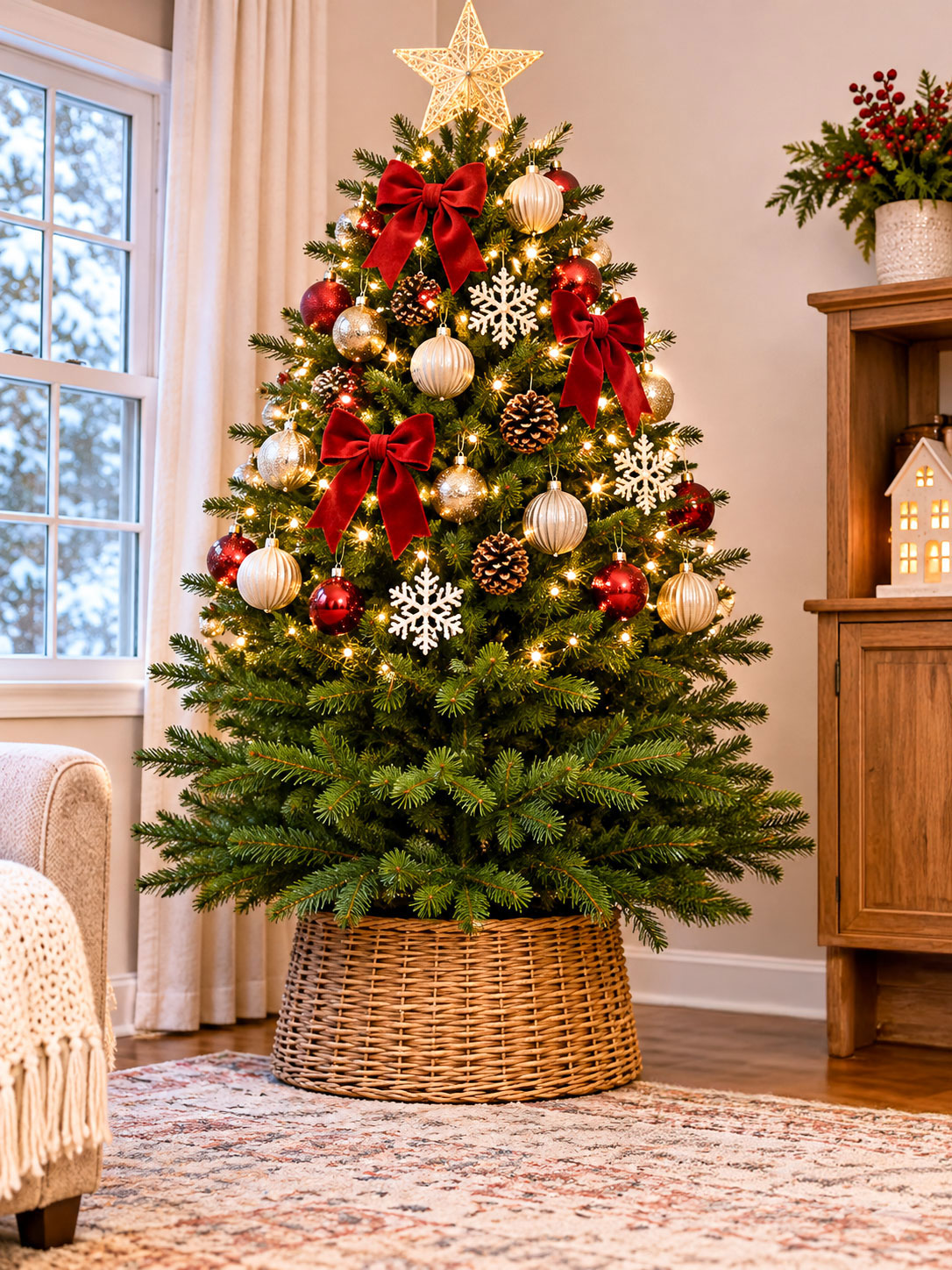
Keep in mind: Leaving the bottom branches bare is an extra precaution, not a replacement for keeping the tree inaccessible. A baby can still pull on branches, reach lights, or upset an unsecured tree.
If you have older children who want to help decorate, let them choose ornaments for an adult to hang in the designated area. That way, they can still enjoy the tradition without needing access to the lower part of the tree.
7. Avoid Glass Ornaments, Tinsel, and Small Decorations
Christmas decorations come with all kinds of little extras: metal hooks, glitter, beads, bells, and tiny pieces that can come loose. Those details are easy to overlook until your baby spots something shiny on the floor.
Take a good look at your ornament collection before hanging anything.
I'd leave these off a tree that a young child might reach:
- Glass and other breakable ornaments.
- Decorations with sharp edges or exposed metal hooks.
- Ornaments with detachable beads, buttons, bells, or other small parts.
- Tinsel, loose decorative strands, and long dangling ribbons.
- Candy-shaped ornaments that might be mistaken for food.
- Edible candy canes and treats within reach.
- Decorations with unsecured button batteries or coin batteries.
Fabric, felt, or larger unbreakable decorations may be better choices for the upper part of the tree, provided they don't contain loose parts or long hanging cords. But don't assume an ornament is suitable for a baby just because it's made of yarn, wood, or fabric.
Keep sentimental glass ornaments and handmade keepsakes on higher branches where they can't be reached, or display them somewhere else entirely.
For example, a DIY Baby's First Christmas Tree Skirt can be a lovely keepsake, but it belongs behind the tree barrier. Loose fabric, bows, and decorative trims shouldn't be accessible to a baby.
The American Academy of Pediatrics holiday decoration safety guide also covers breakable ornaments, electrical decorations, batteries, and other seasonal hazards around young children.
You can keep your favorite ornaments. Just be selective about where they're displayed.
8. Keep Christmas Tree Water and Fallen Needles Out of Reach
If you've chosen a real Christmas tree, you'll have two more things to manage: the water in the stand and the needles that fall onto the floor.
A fresh tree needs regular watering. Check the stand daily and follow the tree stand's instructions so the water level stays where it should.
But the water reservoir must remain inaccessible to your baby. A tree stand can contain standing water, fallen needles, and debris. Don't rely on a decorative basket or tree skirt to keep a child away from it.
Skip unnecessary chemicals and homemade additives in the water. Plain water is generally all a fresh tree needs.
Water the tree when your baby isn't nearby, keep electrical connections away from the water, and clean up any spills right away.
What About Fallen Christmas Tree Needles?
Check the floor around the tree every day. Pick up fallen needles, broken twigs, and pieces of decorations before your baby has a chance to find them.
Needles and small pieces of greenery don't belong in a baby's mouth. Some can be sharp or irritating, and small pieces may present a choking concern.
If the tree becomes very dry or starts dropping lots of needles, don't leave it standing simply because Christmas isn't over. Remove a dried-out tree promptly.
An artificial tree avoids the need for a water reservoir, but it isn't maintenance-free. Check for loose artificial needles, broken branches, detached tips, and other pieces that may fall.
Either kind of tree needs regular attention. Choose whichever you prefer, then plan for the extra care it requires.
9. Try a Small Christmas Tree Instead
Sometimes a full-size Christmas tree just doesn't fit comfortably into a home that's already arranged around a crawling baby or busy toddler.
That's when a small Christmas tree becomes worth considering.
A miniature tree can look every bit as festive without taking up the whole living room. You can decorate it with a few carefully chosen ornaments and enjoy the lights without needing to fill a large space.
The important part is deciding where it will go.
Choose a sturdy location that your child cannot reach or climb to. Any supporting furniture must be secured against tipping, and the tree must not be able to fall onto a child. Don't put a tree above a crib, changing area, or play space.
If you can't find a suitable elevated location, put the smaller tree in a room your baby cannot access. A small tree on an ordinary side table is not automatically a babyproofed arrangement.
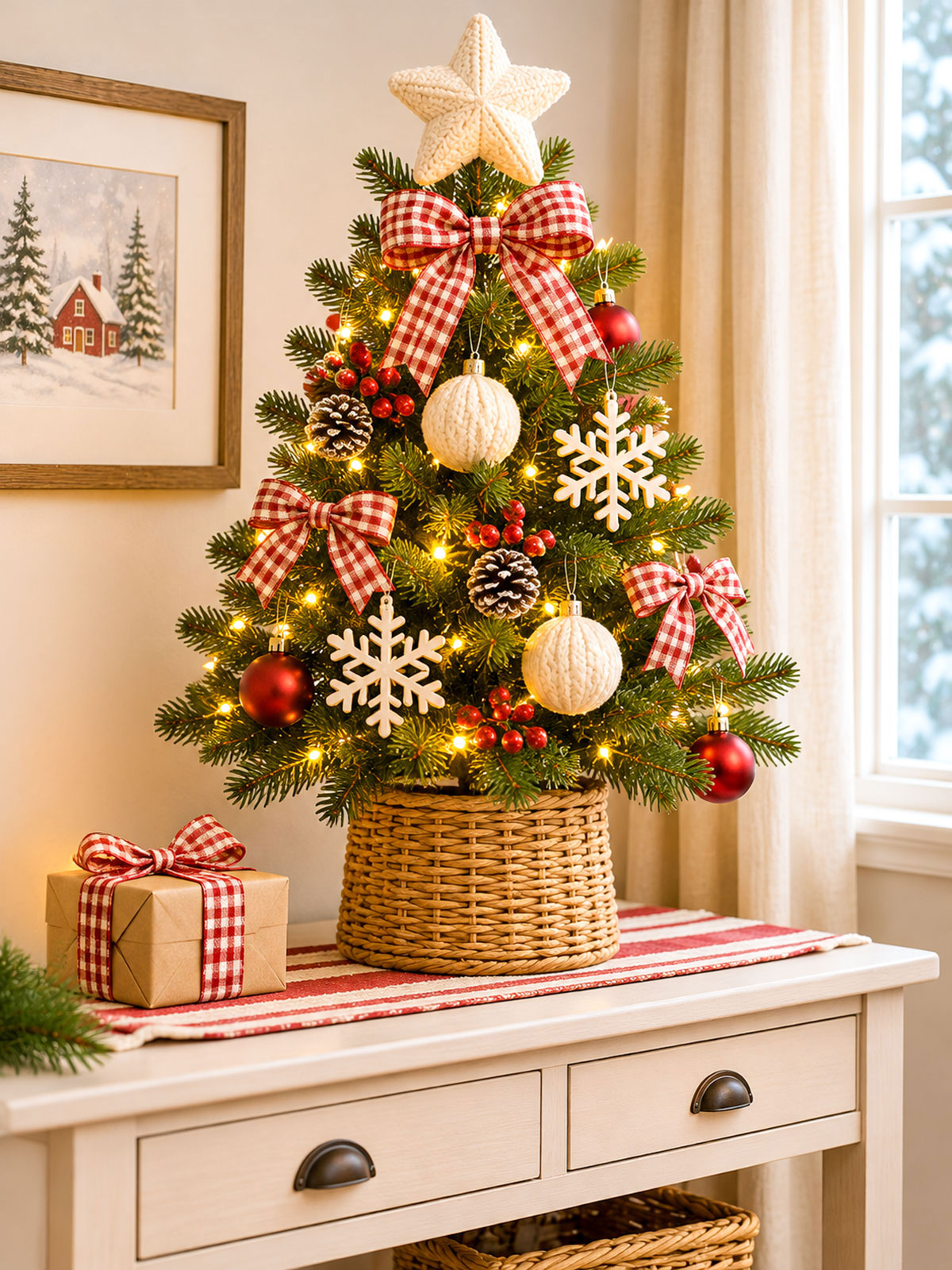
Three Christmas Tree Arrangements Worth Comparing
Full-size tree with a suitable child barrier: Worth considering when the tree needs to stay in a shared room and there's enough space for an approved barrier arrangement.
Full-size tree in a closed-off room: A practical option when you want traditional decorating without giving your baby access to the tree.
Small tree in an inaccessible location: Useful for smaller homes or when you prefer simpler decorating, provided the tree and supporting surface are stable and out of reach.
I'd look at the layout of your home before buying anything. If you already have a room that can be closed off, you may be able to use the Christmas tree you own without purchasing an extra enclosure.
10. Check Your Christmas Tree Every Day
Once you've decorated the tree and arranged the room, the big decisions are finished. But you'll still want to give everything a quick look each day.
It only takes a few minutes to check whether something has changed.
Walk around the tree and look for:
- Ornaments or small decorative parts that have fallen.
- Branches or decorations now within your baby's reach.
- Loose or damaged electrical cords.
- Gates, latches, connections, or securing hardware that have shifted.
- Tree stands that are loose or unstable.
- Fallen needles or broken artificial branches.
- Water spills around a real tree.
- Furniture your toddler may now be able to climb.
Pay special attention after you've moved furniture, rearranged decorations, watered the tree, or had visitors over.
And remember that your baby's abilities won't stand still just because the tree is already decorated. A child who could barely crawl when you put the tree up may be pulling to stand or climbing a few weeks later.
Keep checking that your arrangement still works for the child you have today.
When Christmas presents begin appearing around the tree, keep wrapping paper, plastic packaging, ribbons, and small gift accessories out of reach, too. The area around the tree deserves just as much attention as the branches themselves.
Christmas Tree Babyproofing Checklist
Here's a simple checklist you can print and use while you're setting up the tree. Work through it before the decorations go on, then check the important items throughout the season.
Before You Decorate
- □ Choose a location away from heat sources and exits.
- □ Move nearby climbing furniture if needed.
- □ Assemble the tree stand correctly.
- □ Secure the tree against tipping with suitable hardware.
- □ Choose a suitable gate, approved enclosure arrangement, or closed-off room.
- □ Check that your baby cannot reach the tree or decorations.
When You Add Decorations
- □ Inspect Christmas lights before using them.
- □ Keep lights, plugs, and cords inaccessible.
- □ Leave reachable lower branches undecorated.
- □ Avoid glass ornaments, small parts, and tinsel.
- □ Keep button batteries and battery-powered ornaments out of reach.
- □ Keep the tree skirt, ribbons, and gift packaging inaccessible.
Every Day During Christmas
- □ Check the tree stand and securing hardware.
- □ Check that gates and latches still work properly.
- □ Pick up fallen needles and ornaments.
- □ Check the water level if you have a real tree.
- □ Look for damaged cords or loose decorations.
- □ Turn off tree lights before bed or leaving home.
- □ Recheck the arrangement as your child learns new skills.
You don't need a complicated setup to enjoy Christmas with a little one. What matters is choosing an arrangement that fits your home, using suitable equipment correctly, and keeping the tree's hazards inaccessible.
Frequently Asked Questions About Baby-Proofing Christmas Trees
Is a Real or Artificial Christmas Tree Better with a Baby?
Both require precautions. A real tree needs watering and cleanup of fallen needles, while an artificial tree may have detachable pieces or damaged branches. Neither is automatically babyproof. Choose the type you prefer and make sure your baby cannot reach the tree, its decorations, or the stand.
Can I Use a Pet Fence Around My Christmas Tree?
Don't assume a pet fence will work as a child barrier. Choose equipment specifically designed and labeled for use with children, and make sure the manufacturer approves the installation or arrangement you're planning. Decorative fences and pet enclosures aren't substitutes for suitable child safety equipment.
When Can I Stop Using a Baby Gate Around the Christmas Tree?
That depends on your child's development and the gate manufacturer's limits, not just age. If your toddler can climb the gate, reach over it, or open the latch, that setup may no longer be appropriate. Keep the tree inaccessible by another suitable method until your child can consistently follow the household rules around it.
Can My Toddler Help Decorate the Christmas Tree?
Yes, with close adult supervision and age-appropriate activities. Your toddler can help choose colors or hand you an ornament for an adult to hang. Keep small parts, hooks, ribbons, and breakable decorations away from little hands and mouths. After decorating, restore the barriers that keep the tree inaccessible.
How Do I Baby-Proof a Christmas Tree When Visiting Grandparents?
Ask where the tree will be before your visit. Check whether it has an accessible stand, electrical cords, low ornaments, or breakable decorations. A room that can be closed off may be the easiest arrangement during a short visit. Don't assume a home is already babyproofed just because a child has visited before.
Do I Need to Give Up My Christmas Decorations Until My Baby Is Older?
Not at all. You may need to change where certain decorations go, leave a few favorite ornaments packed away, or display your tree in a different room for a while.
Christmas can still look beautiful. The decorations don't have to be everywhere to make your home feel festive.
When you click on links to various merchants on this site and make a purchase, this may result in this site earning a commission. This does not affect the price you pay.

UBGI Gold Standard 2026
Reviewed under the site's
editorial checklist.
Photos, decorating ideas, party setups and reader submissions are shared for inspiration unless a page is specifically presented as a pattern, tutorial, reference guide or step-by-step project. Follow the instructions, measurements, safety guidance and manufacturer directions provided for the particular project or product.
About Jan | Contact | Baby Nursery Ideas (Blog) | Site Map | Privacy Policy | Disclosure Policy | Disclaimer | Affiliate Disclosure | Earnings Disclosure | Facebook | Pinterest
I am a participant in the Amazon Services LLC Associates Program, an affiliate advertising program designed to provide a means for us to earn fees by linking to Amazon. As an Amazon Associate I earn from qualifying purchases.
Copyright © 2006-2026. All Rights Reserved.