When Is a Crib No Longer Safe to Use?
When is a crib no longer safe? A crib is no longer safe when it no longer meets current safety standards, has broken or missing parts, shows structural damage, or your child has reached the manufacturer’s height, weight, or developmental limits. Knowing the difference between normal wear and true safety risk helps you decide when it’s time to stop using it.
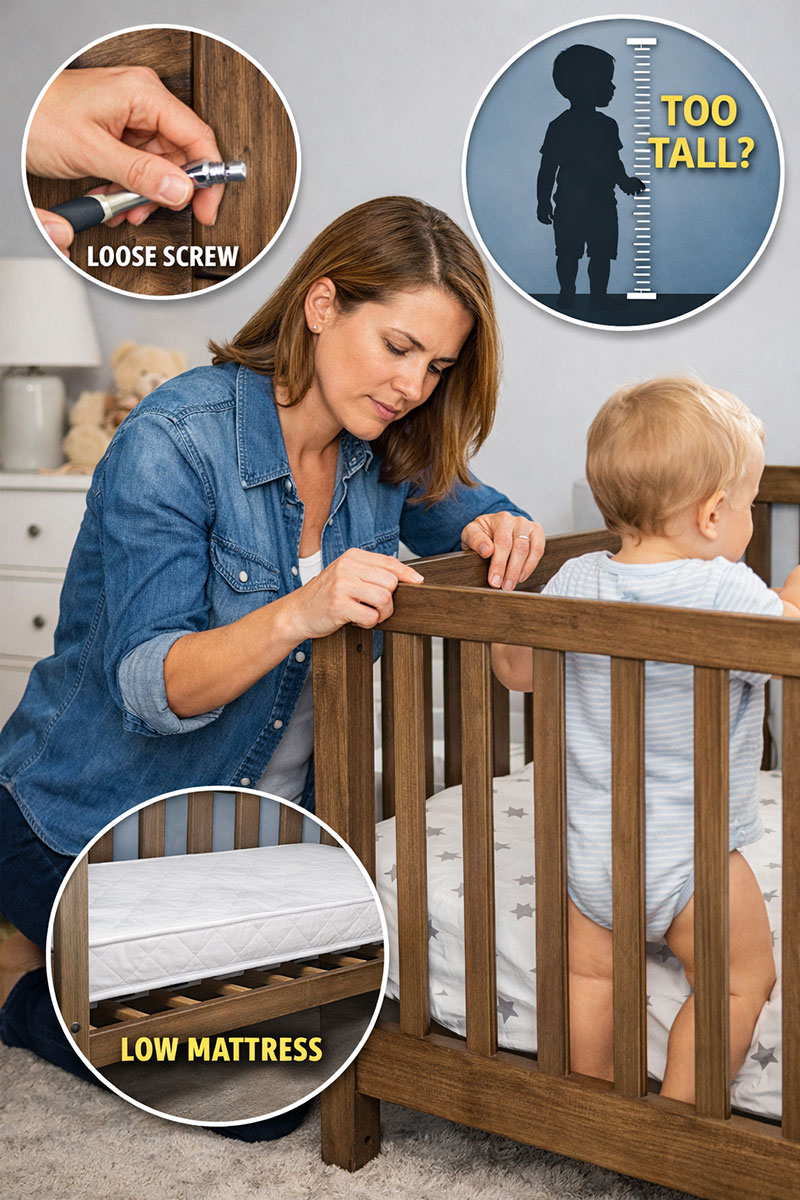
Trying to decide if a crib is still safe enough to use? Check these first:
On This Page
When Is a Crib No Longer Safe? What that means in the United States
When we talk about a crib being “safe,” we’re talking about a full-size or mini crib used for sleep, with a crib mattress inside it, and a child who is growing fast. In the United States, U.S. crib safety is tied to current safety standards and to what the manufacturer says for that exact crib model.
This page explains general safety standards, not product-specific instructions.
Parents who are planning ahead often want to understand how crib safety limits connect to room preparation, which is why I explain the timing clearly on when to set up a nursery so setup and safety decisions line up from the start.
Here’s the clear answer: a crib is no longer safe when it’s recalled, damaged, missing parts, or your child has reached the crib’s stop-use limit (height, weight, or climbing ability) stated by the manufacturer. That is when a crib is no longer safe — even if it still looks fine at a glance.
If you only remember one thing
When you can’t trust the crib to stay solid and contained, the crib is done.
That part matters more than people think.
Why crib safety matters more as your baby grows
Newborn sleep is mostly still. Then babies roll. Sit. Pull up. Try things. That’s when parents quietly start wondering when is a crib no longer safe, because movement changes everything.
The main danger isn’t just comfort. It’s falls, trapped limbs, head entrapment, and hardware that loosens under movement. A crib can look normal and still be past its safe life.
We also have the “used crib” problem. Secondhand cribs can be missing key pieces, have unknown history, or come from older manufacturing rules that were allowed back then. And parents don’t always get told that the rules changed.
Most parents choose this
Most parents keep using a crib until the child reaches the manufacturer’s stop-use limit, or until the child shows they can climb out.
But if the crib has damage, missing parts, or recall issues, most parents move on sooner.
What goes wrong when a crib is no longer safe
Cribs don’t usually “fail” in a dramatic way. They drift. A screw backs out. A rail gets a little wobbly. A mattress support starts to sag. A slat loosens. Small stuff. Quiet stuff.
This is where most parents get confused.
Because a crib can still hold a baby and still be unsafe at the same time. The question isn’t just when is a crib no longer safe by age — it’s when the structure, containment, or limits are no longer reliable.
Quick decision check
Consider the crib unsafe right now if it’s recalled, the rails or slats are loose, the mattress support isn’t solid, or any required hardware is missing.
If you’re trying to decide what to do next, treat “wobbly” as a stop-and-evaluate moment, not a “later” problem.
Common signs a crib is no longer safe
These are the signs I watch for because they show loss of structure, loss of containment, or loss of confidence in what the crib will do during normal child movement. When parents ask when is a crib no longer safe, these are the real-world answers.
The crib is recalled or was part of a known unsafe design (including any drop-side or movable-side crib).
Any rail, corner, or joint wiggles when you apply normal hand pressure.
A slat is loose, cracked, missing, or spaced oddly from the others.
The mattress support looks bent, bowed, or unstable.
Hardware is missing, mismatched, or repeatedly loosens over time.
There are sharp edges, splintering wood, broken paint, or exposed staples.
Your child is tall enough that the rail is no longer a reliable barrier.
Your child can climb or is trying to climb out.
Parents also ask about the “crib weight limit.” It matters, but height and climbing often end crib use sooner than weight does. You can read the deeper breakdown here: crib weight limits and when to stop using the crib.
Mattress firmness, fit, and side-gap safety also matter when a crib starts showing wear, so review these crib mattress safety basics.
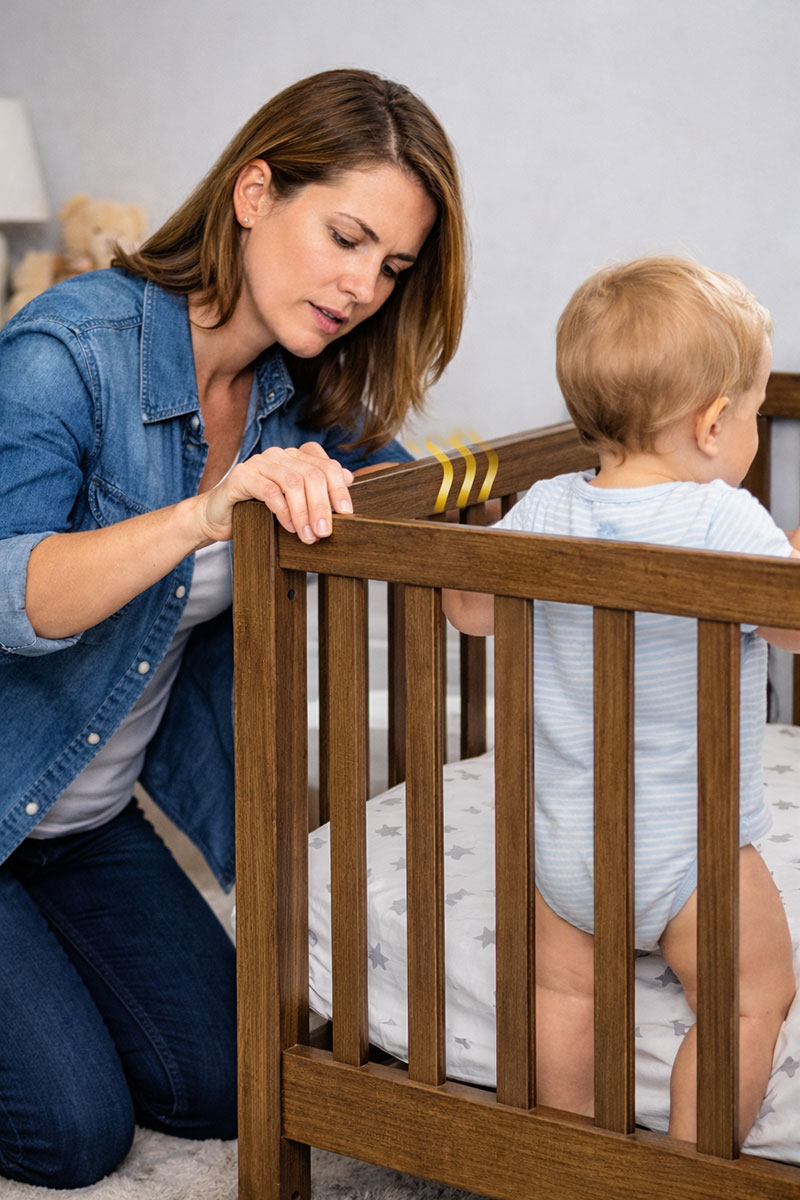
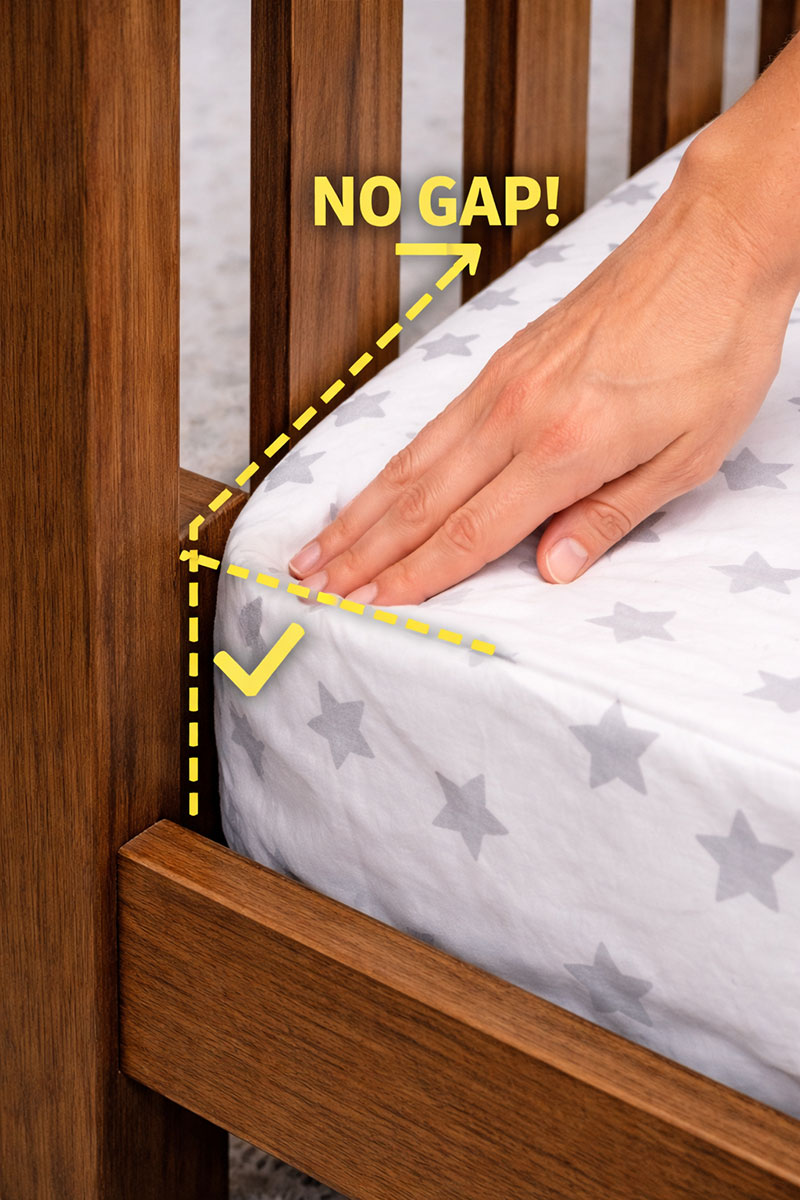
There’s also a mattress fit layer. A safe crib setup depends on the crib mattress fitting correctly—no big gaps at the sides. A crib can be “new” and still have a bad fit if the mattress is wrong. This page goes deep on that: crib mattress fit and gap safety.
What about age, crib lifespan, and “how long is a crib good for”?
Parents want a simple number. I get it. But crib lifespan is really about condition, recalls, and whether the crib still meets modern U.S. safety standards—not a birthday.
A crib that’s old but solid and still compliant can be fine. A newer crib with damage or missing parts can be unsafe today.
So when is a crib no longer safe in terms of lifespan? It’s no longer safe when it fails current standards, loses structural stability, or no longer matches your child’s developmental stage.
If you’re thinking in “years,” read this next: crib lifespan and when it’s time to replace.
If this sounds picky, it is but there is a good reason
Cribs are sleep spaces. Sleep is when you’re not watching every second.
That’s why the margin needs to be boring and strong.
Did I buy the right crib type for my child?
This is the part people don’t say out loud. A crib can be “safe,” but still not be the right fit for your home, your space, and your baby’s stage.
Some parents do better with a full-size crib and a plan to transition to a toddler bed when climbing starts. Some do better with a mini crib in a small room.
For a broader look at crib styles that work better when floor space is tight, see cribs for small spaces.
Some families are traveling and need a safe sleep option that isn’t a traditional crib at all.
We’re not chasing perfection here. We’re trying to match the sleep space to the actual reality of the next six months.
For crib type clarity and what to watch for, this hub keeps it organized: baby cribs: types, safety basics, and choosing the right one.
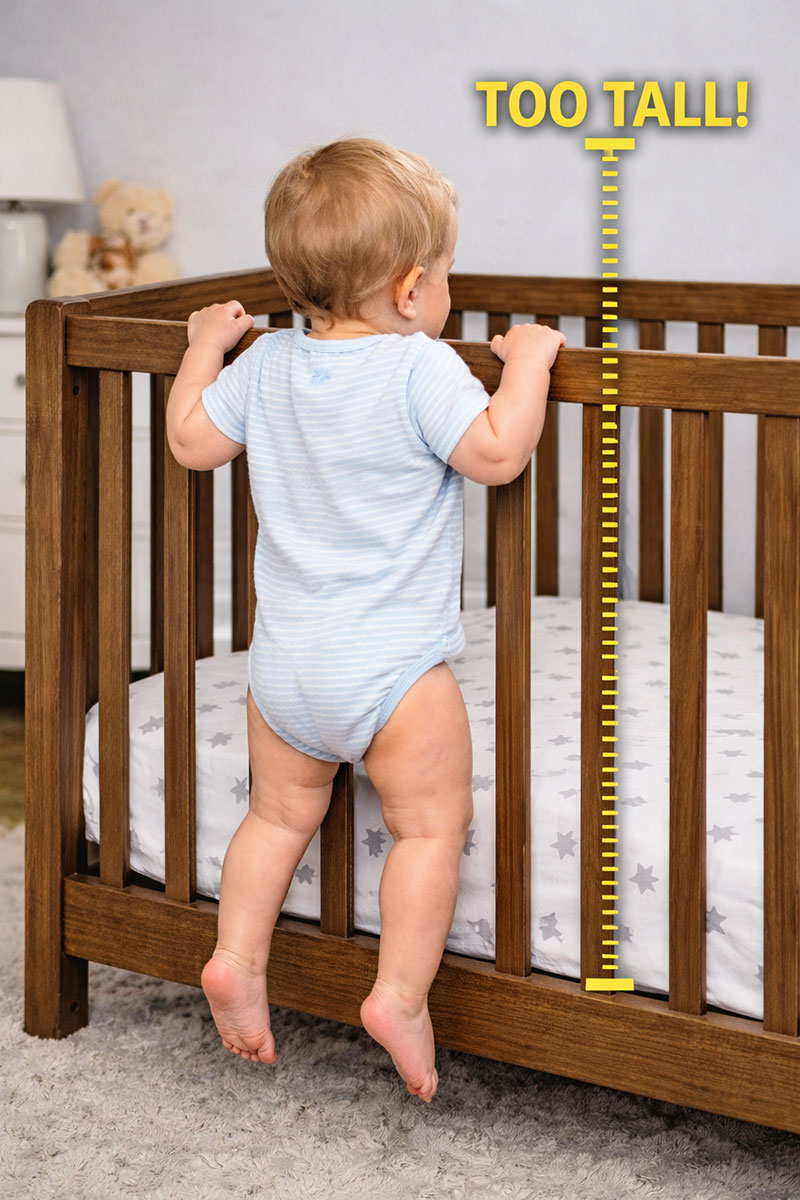
Parents also ask about the mattress height adjustment, because a higher mattress with an active baby can turn into a fall risk. That topic lives here: when to lower a crib mattress.
Edge cases that deserve extra caution
Older cribs, used cribs, and cribs missing manuals or parts are the tricky ones. If the crib model can’t be identified, the manual can’t be found, or any required parts are missing, the safe choice is to treat it as not reliable for sleep.
No workarounds. No guessing.
What should I do now?
First, identify what you’re working with: the exact crib model, the condition of the rails and slats, and whether the manufacturer lists a stop-use limit for height or weight. Then consider whether your child is approaching climbing behavior or rail-height risk.
What to do next is simple: decide whether this crib is still a stable, contained sleep space for your child right now. If not, it’s time to move to the next safe sleep stage.
What to do next, in two calm steps
Identify whether your crib has a recall history or a known unsafe design. If it does, it’s not a “maybe.” It’s done.
Then look at the stop-use limit and your child’s development. A child who can climb is telling you the crib stage is ending.
For official recall information in the United States, the U.S. Consumer Product Safety Commission keeps a public recall database here: CPSC product recalls.
One more thing parents search for is the “used crib safety checklist.” I keep that guidance simple and focused here: is it safe to use a used crib?.
Safe crib basics in one place
Safe crib decisions come down to four things: current U.S. safety standards, the manufacturer’s stop-use limit, the crib staying structurally solid, and the mattress fitting correctly with no hazardous gaps. For the full safety foundation and the pages that connect to it, go here: crib instructions and safe crib basics hub.
We’re not trying to make the “perfect nursery.” We’re trying to keep sleep boring and safe.
When you click on links to various merchants on this site and make a purchase, this may result in this site earning a commission. This does not affect the price you pay.

UBGI Gold Standard 2026
Reviewed under the site's
editorial checklist.
Photos, decorating ideas, party setups and reader submissions are shared for inspiration unless a page is specifically presented as a pattern, tutorial, reference guide or step-by-step project. Follow the instructions, measurements, safety guidance and manufacturer directions provided for the particular project or product.
About Jan | Contact | Baby Nursery Ideas (Blog) | Site Map | Privacy Policy | Disclosure Policy | Disclaimer | Affiliate Disclosure | Earnings Disclosure | Facebook | Pinterest
I am a participant in the Amazon Services LLC Associates Program, an affiliate advertising program designed to provide a means for us to earn fees by linking to Amazon. As an Amazon Associate I earn from qualifying purchases.
Copyright © 2006-2026. All Rights Reserved.