Simmons Crib Instructions: Manual Lookup and Model Documentation
Simmons crib instructions are organized by manufacturer model numbers, with manuals indexed to specific crib designs, production runs, and hardware configurations rather than shared across visually similar models.
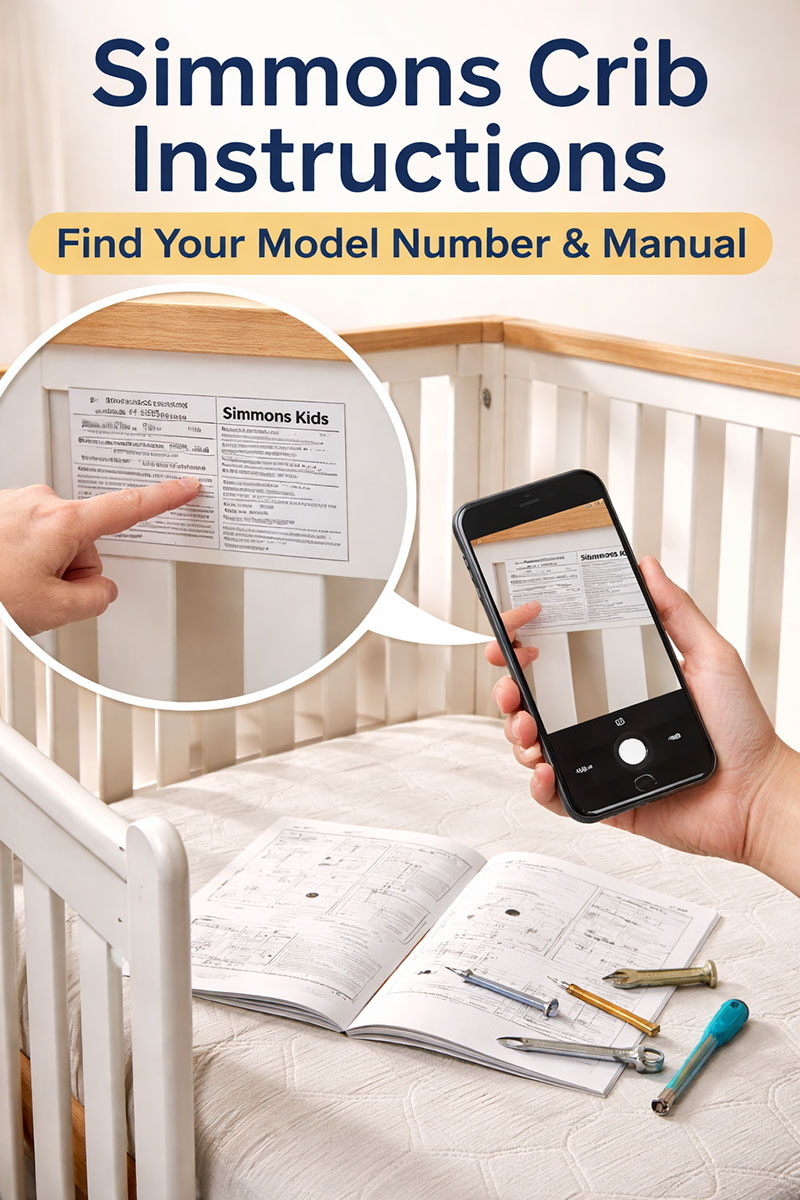
If you’re checking a secondhand Simmons crib while the manual is missing, use my crib safety checklist as your quick safety scan before you go any further.
Amazon listing links appear as visual reference only.
Simmons crib instructions as archival records
Simmons crib instructions exist as archival manufacturer records tied to defined crib model families. Each instruction packet reflects documentation approved for a particular production run and configuration set. These packets represent historical manufacturing records rather than generalized instructional narratives.
Across Simmons documentation archives, instruction packets differ even where crib silhouettes appear similar. Differences arise from production timing, hardware revisions, finish variations, and compliance updates. Documentation therefore reflects internal manufacturing distinctions rather than outward appearance.
Simmons crib instructions packets also preserve era-specific formatting. Earlier records frequently display abbreviated component names and limited regulatory language, while later records include expanded compliance phrasing and standardized layout conventions. Archived scans retain these traits as part of the historical record.
Model identifiers as the indexing structure
Simmons documentation systems rely on model identifiers as the primary indexing structure. Model numbers serve as the consistent reference point across manufacturer catalogs, scanned archives, and third-party document libraries. Decorative names and marketing labels appear inconsistently across decades and therefore hold limited archival value.
Model identifiers often include multiple segments associated with finish codes, factory designations, or revision cycles. Closely related identifiers may correspond to different internal hardware groupings or structural revisions. Documentation packets mirror these distinctions through altered diagram plates and revised component legends.
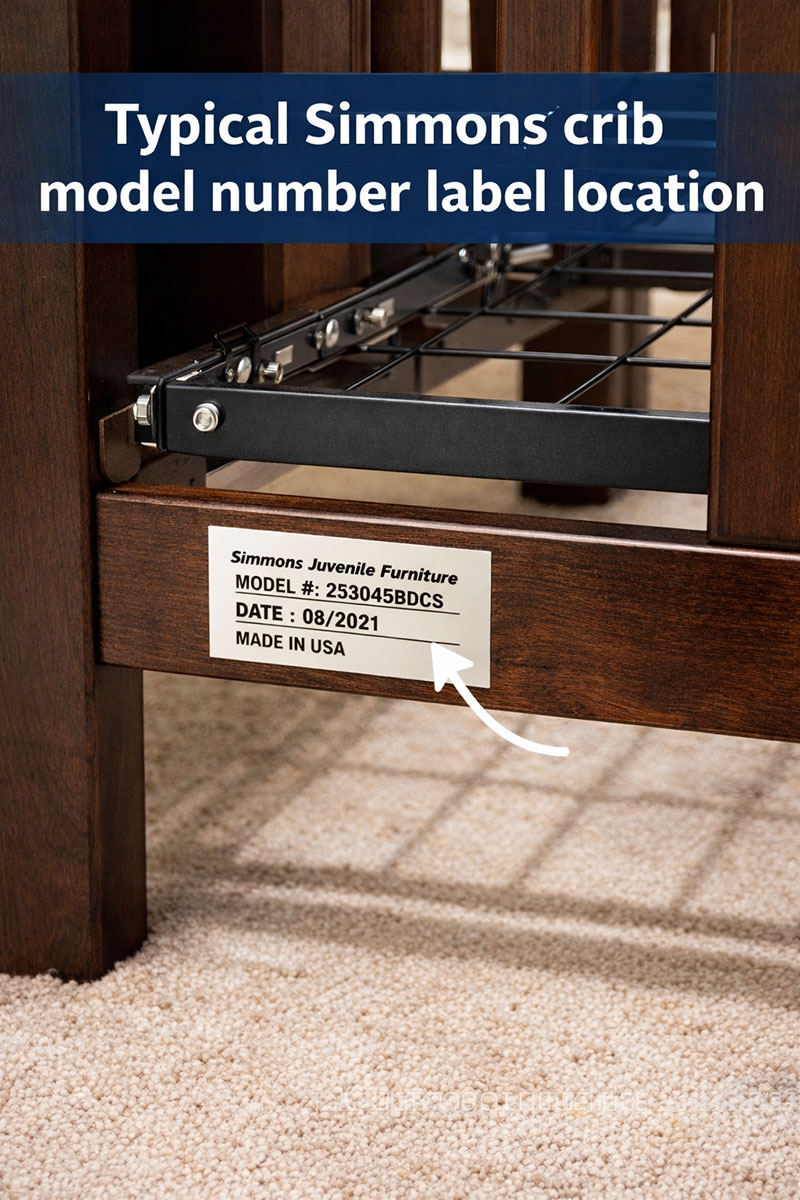
Product labels attached to crib frames typically present the model identifier alongside manufacturing data. Instruction packets preserve these identifiers through internal reference lines, footer text, or annotation fields, even when external file names remain generic.
Document formats within Simmons instruction archives
Archived Simmons instruction material appears in several recurring document formats. A single crib model may generate multiple documentation packets, each preserving a different layer of manufacturer information.
Illustrated parts inventories present numbered component lists accompanied by concise descriptors. Hardware elements frequently receive internal letter or number codes that correspond to diagram callouts. These inventories establish the terminology framework reflected throughout related records.
Diagram-centered documentation booklets emphasize perspective drawings and exploded views. Cover titles often remain broad, while model-specific identifiers appear within the document body. Diagram layouts frequently persist across production periods even when internal references change.
Owner and compliance sheets present product identification language, manufacturing notes, and regulatory statements. These documents often retain model identifiers while omitting detailed hardware legends present in diagram-focused packets.
Revision variants emerge when a crib design remains in production across multiple cycles. Revision variants commonly display identical covers paired with subtle internal diagram updates reflecting approved manufacturing changes.
Internal distinctions documented across similar designs
Simmons crib lines include numerous models that share external styling while differing internally. Documentation records capture these distinctions through adjusted rail-connection diagrams, revised component legends, and altered support-frame references.
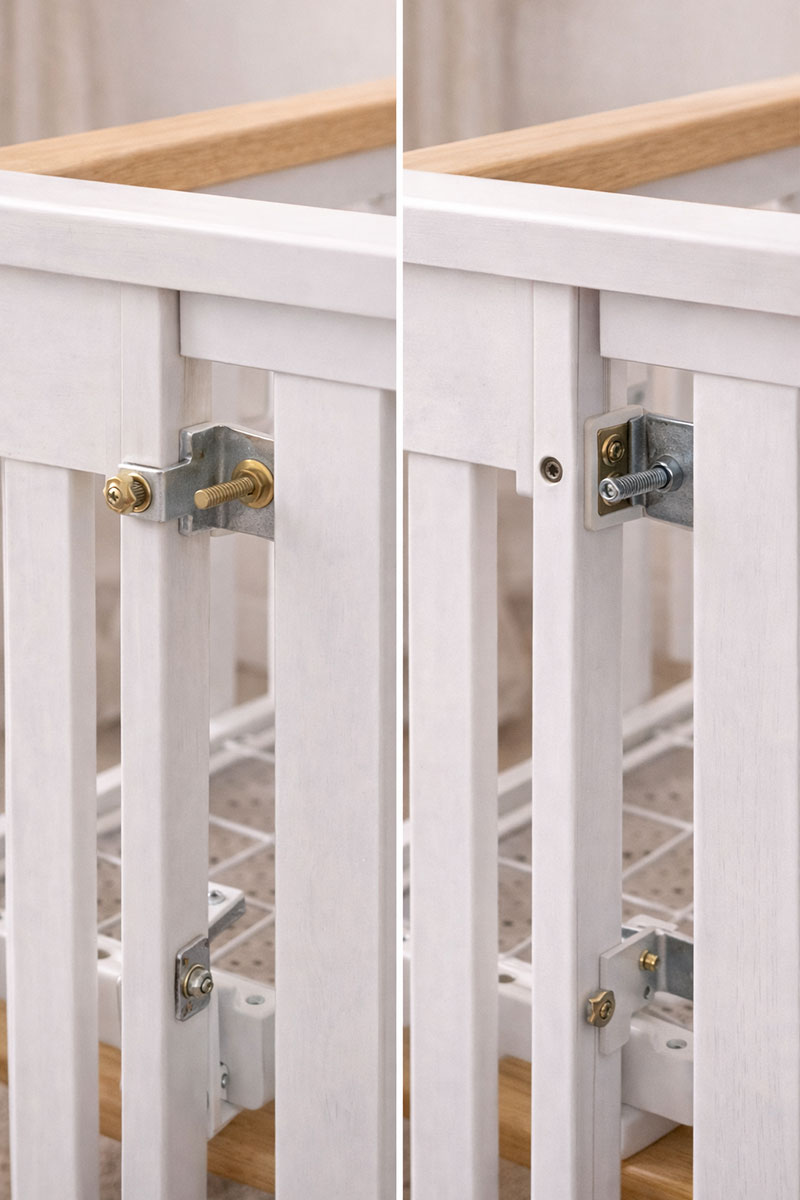
Rail-connection illustrations frequently reveal differentiation between model families. Some records depict bracket-based interfaces, while others depict direct bolt-through interfaces. These differences appear as diagrammatic distinctions within documentation rather than as narrative emphasis.
Mattress-support references also vary across documentation packets. Records may depict metal platforms, spring frames, or alternate support assemblies, each labeled with internal terminology associated with the model family.
Generic titles and document identity
Instruction packet titles frequently remain generic across Simmons archives. Phrases such as “crib instructions” appear repeatedly on covers and within scanned file names, creating overlap across unrelated models. Document identity therefore derives from internal markers rather than from cover text.
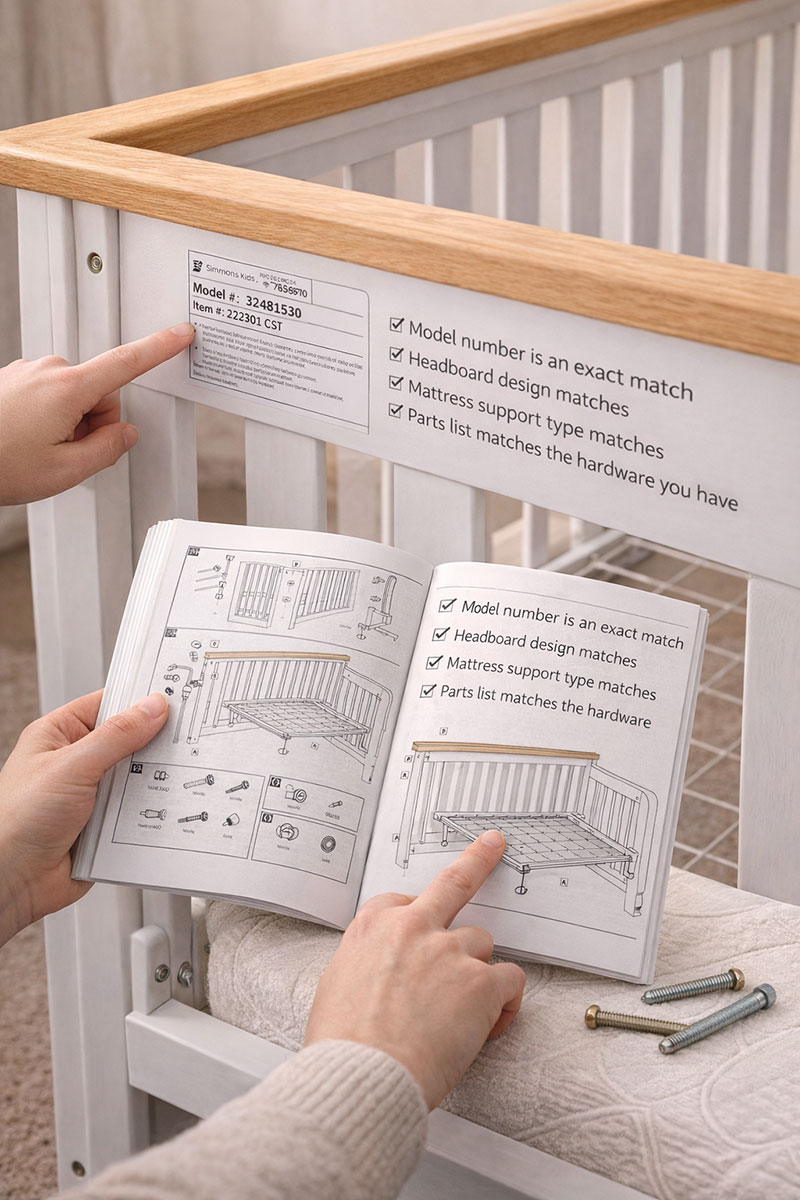
Internal markers include the model identifier line, diagram numbering conventions, and component legend structure. These elements remain stable within a model family even when external titles remain broad or simplified.
Documentation provenance varies across sources. Some packets originate from manufacturer-hosted collections, while others derive from consumer scans or resale archives. Despite variation in scan quality or completeness, internal identifiers typically remain intact.
Placement within the UBGI instruction library
Within the UBGI content structure, Simmons instruction documentation occupies a defined position inside the broader instruction-manual library. Brand-indexed organization separates documentation context from component sourcing topics and from assembly-focused content.
https://www.unique-baby-gear-ideas.com/crib-instructions.html
Simmons-specific component identification topics appear within the crib-parts cluster as separate pages. This structure preserves topical separation between documentation records and parts catalog references.
https://www.unique-baby-gear-ideas.com/simmons-crib-parts.html
https://www.unique-baby-gear-ideas.com/simmons-crib-replacement-screws.html
Recall-era context preserved in documentation
Regulatory changes influence the language and formatting present in Simmons instruction packets. Later records display standardized compliance statements and expanded labeling conventions, while earlier records reflect more compact presentation. Archived documentation retains these distinctions as part of the manufacturing record.
Recall notices and regulatory postings exist outside standard instruction libraries and reference model identifiers and date ranges using separate formatting conventions. The Consumer Product Safety Commission database serves as the authoritative public archive for recall documentation.
Within this safety-topic cluster, broader regulatory context appears on a separate reference page dedicated to drop-side crib history and policy.
https://www.unique-baby-gear-ideas.com/ban-drop-side-cribs.html
Identifiers preserved within scanned records
Across scanned Simmons documentation, certain identifiers remain consistently legible despite variation in scan resolution. Component legends often appear in larger type, while diagram silhouettes retain recognizable geometry even when fine print softens. These characteristics preserve document identity across archival copies.
Some packets include a consolidated component overview page that remains readable even when multi-page booklets degrade. Others include schematic callouts assigning letter codes to component groupings, with those codes remaining consistent within a model family.
Relationship to the crib-parts cluster
Instruction documentation intersects with parts terminology because manufacturer records establish the naming conventions reflected across catalogs. The crib-parts cluster organizes these conventions by brand and model while retaining separation from instruction-document topics.
https://www.unique-baby-gear-ideas.com/crib-parts.html
Secondhand crib context appears within a separate safety and evaluation topic area. That topic remains independent from instruction documentation and from component reference pages.
https://www.unique-baby-gear-ideas.com/is-it-safe-to-buy-a-used-baby-crib.html
Simmons instruction packets represent one layer within a broader documentation ecosystem composed of model identifiers, diagram sets, revision histories, and catalog language spanning multiple decades. Across that ecosystem, the model identifier remains the stable archival element linking instruction records, scanned collections, and parts nomenclature references.


