How to Remove Stains From a Mattress (Step-by-Step Guide)
Here is how to remove stains from a mattress. Blot first, identify the stain type, use the correct cleaner, avoid soaking the mattress, and let the area dry fully before putting bedding back on.
Quick answer: Blot the stain first, treat it by stain type, and use as little liquid as possible so the stain lifts out instead of spreading deeper.
More Mattress Cleaning Help:
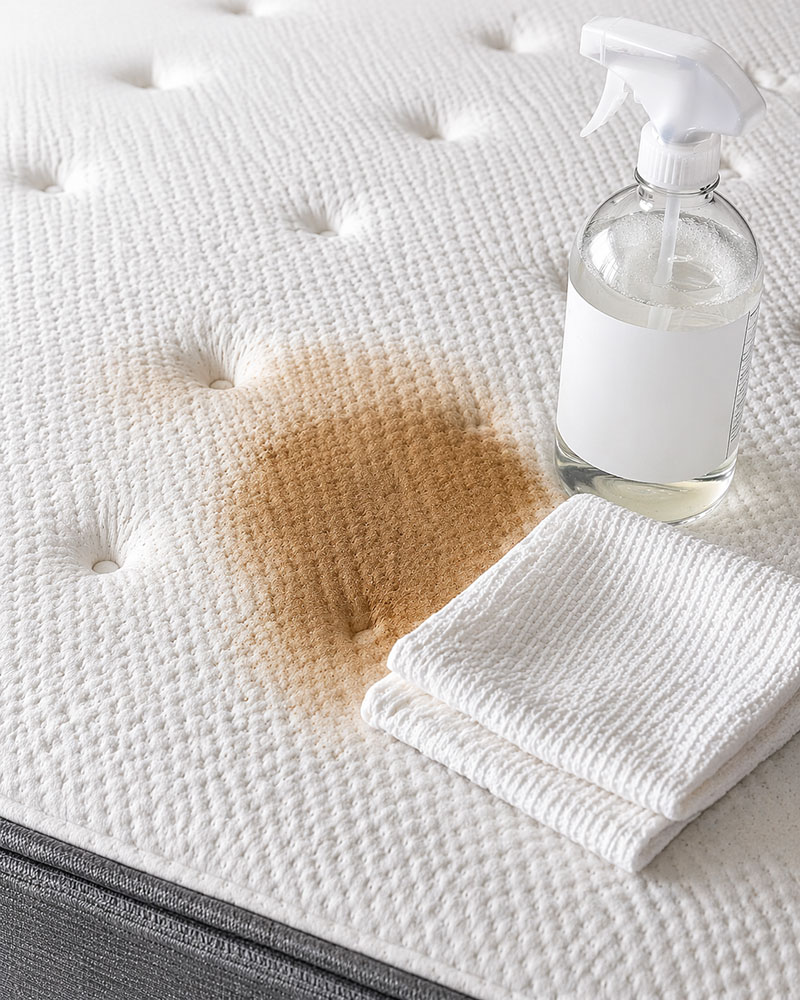
Most mattress stains can be improved at home when you match the cleaning method to the type of stain and treat it before it sets deeper into the fabric.
Jump to What You Need:
How to Remove Mattress Stains Fast
Identify the Type of Mattress Stain
Remove Yellow and Sweat Stains
How to Remove Stains From a Mattress Fast and Correctly
If you need advice that goes beyond spot cleaning, this step-by-step guide shows the complete process: how to clean a mattress
Most mattress stains show some visible change within 10 to 20 minutes when the right cleaner is used. If nothing changes, the stain may be older, deeper, or the wrong cleaning method is being used.
A stain that is lifting correctly often fades first around the outer edge. If the center stays dark while the surrounding area lightens, too much liquid has probably been used and the stain has been pushed farther into the mattress.
The difference shows after it dries. A properly cleaned spot fades evenly. A rushed one leaves a ring that is more noticeable than the original stain.
The finished surface should look even from multiple angles and feel dry all the way through.
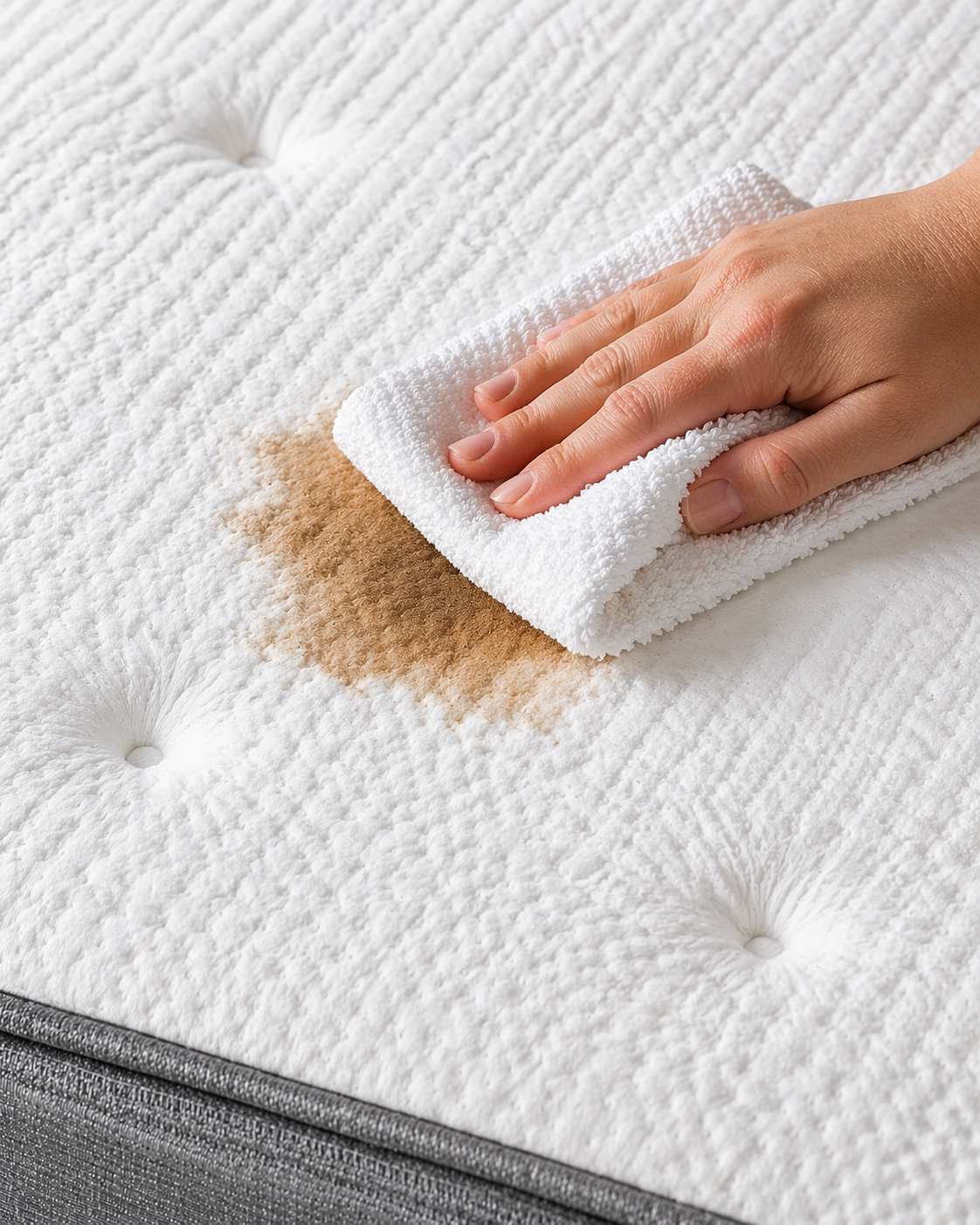
Identify the Type of Mattress Stain Before Cleaning
The way a stain looks and feels usually tells you how it should be treated. Cleaning without identifying the stain is what leads to repeated attempts that never fully work.
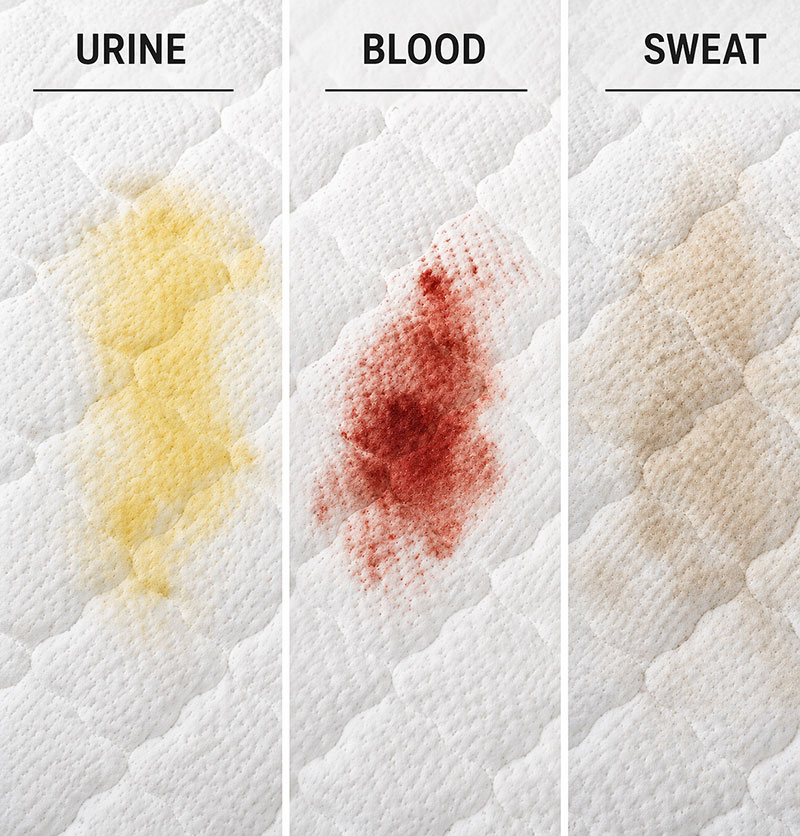
Urine stains often appear pale yellow and become more visible when damp. Blood stains stay darker and spread thin if water is added too early. Sweat stains tend to cover a wider area and look uneven across the surface.
Starting with the right approach prevents over-wetting and keeps the stain from spreading outward.
How to Remove Urine Stains From a Mattress Completely
Urine stains rarely stay on the surface. Even when the top layer looks clean, odor can remain underneath. That is why quick wiping does not solve the problem.
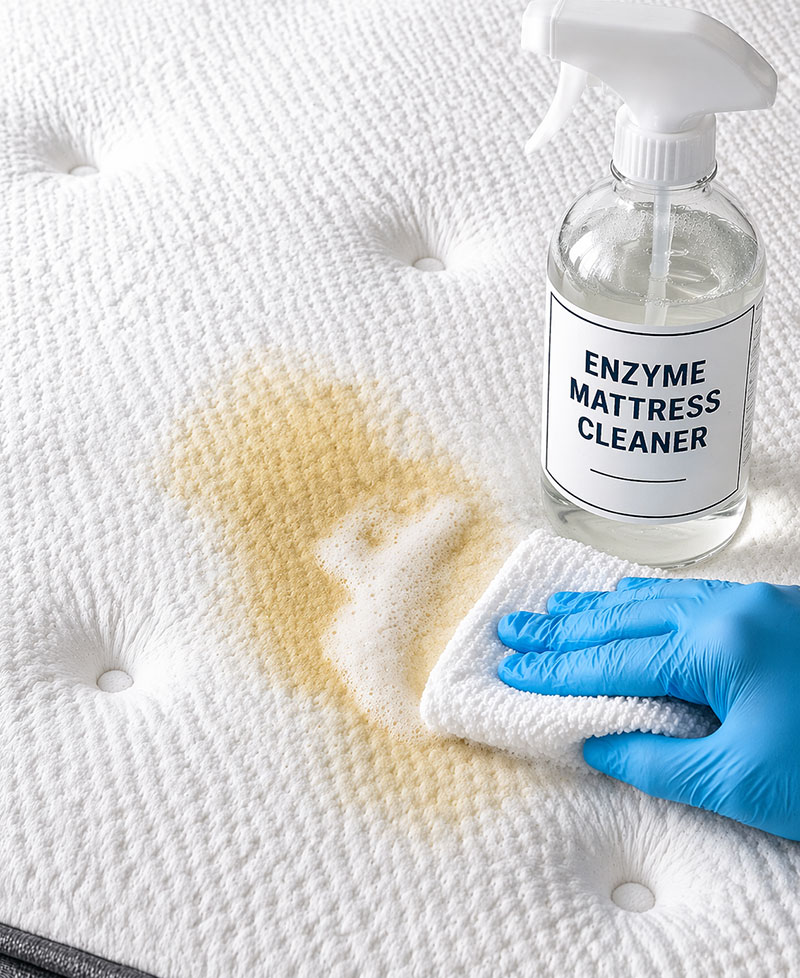
Use an enzyme cleaner or a mixture of hydrogen peroxide, baking soda, and a small amount of dish soap. Apply enough to cover the stain without soaking the mattress. Let it sit so it can break down the stain before blotting.
When cleaning a crib mattress, use a lighter application and allow it to dry completely before putting it back into use.
Urine stains often spread a little wider than they first appear, especially on lighter mattress covers. Cleaning only the exact center of the spot can leave a faint halo once the fabric dries, so it usually works better to treat slightly beyond the visible edge.
For a full step-by-step process, use this guide:
how to clean urine from a mattress
The result should not release any odor when pressure is applied. If it does, the stain is still active beneath the surface.
If you can still smell it after the stain looks gone, my guide on how to get pee smell out of mattress explains how to remove odor that is still trapped deeper in the mattress.
Odor that stays after the stain looks gone usually needs a separate fix, and this remove mattress smell completely guide breaks down how to clear what is trapped below the surface.
How to Remove Blood Stains From a Mattress Without Setting Them
Blood reacts differently than most stains. Temperature changes the outcome.
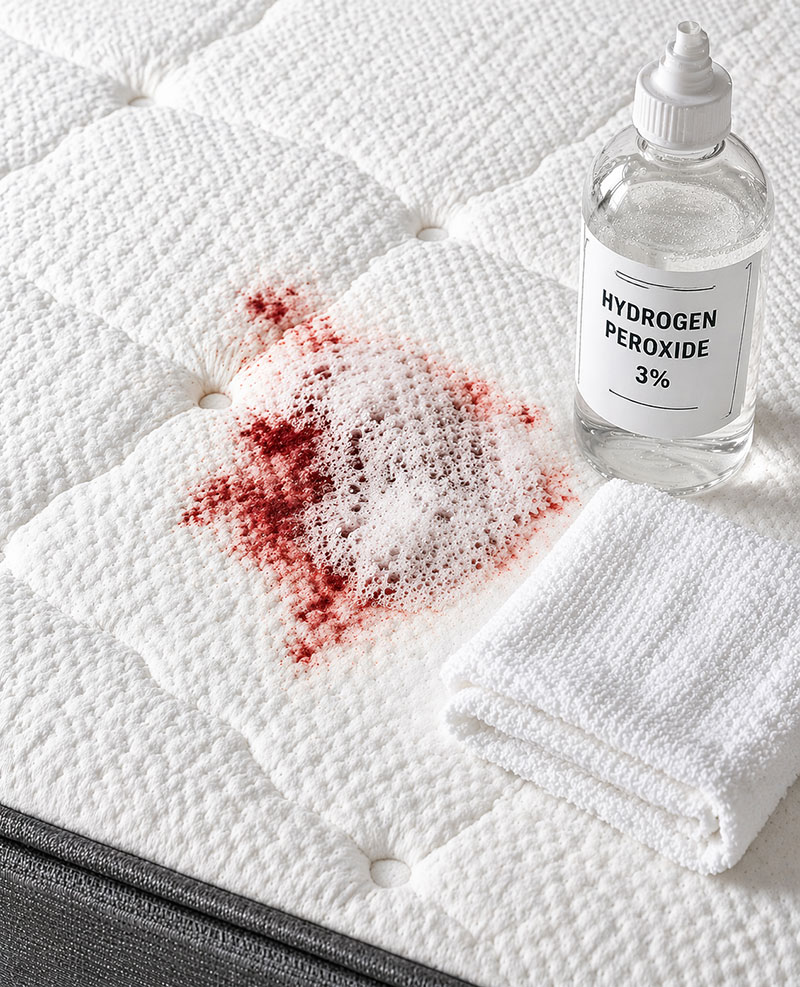
Cold water should always be used first. Warm water causes the stain to set deeper into the fibers. After blotting with cold water, apply hydrogen peroxide and allow it to bubble. That reaction lifts the stain upward.
Repeat in short cycles. Each pass should lighten the stain gradually instead of forcing a full removal in one step.
Blood stains can look gone while the fabric is still damp, then show up again once the mattress dries. It helps to wait until the area is fully dry before deciding whether the stain is truly removed or needs one more careful pass.
How to Remove Yellow and Sweat Stains From a Mattress Even When Set
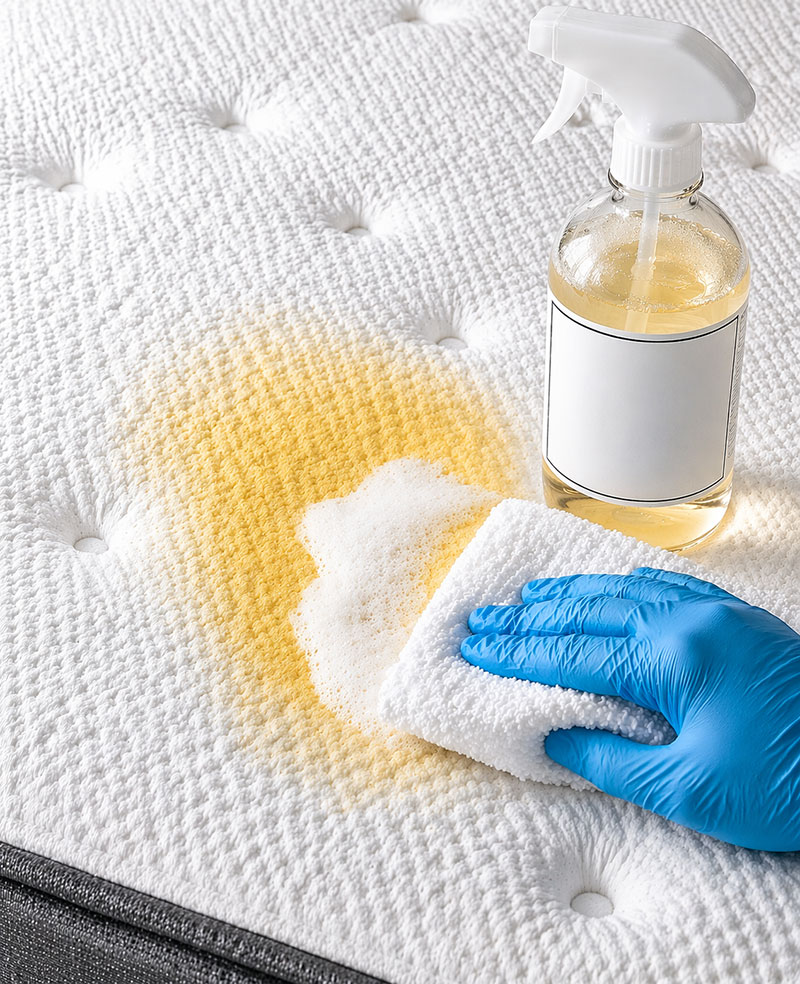
Yellow stains often spread slowly over time, which is why they appear larger than expected. They do not stay contained in one spot.
A baking soda and hydrogen peroxide mixture works well for these stains. Spread it evenly across the entire stained area. Let it dry completely before vacuuming.
Stopping too early leaves a faint outline that becomes more visible once the mattress dries.
Yellow areas often show up more clearly in daylight than under indoor lighting. Checking the mattress near a window after it dries can reveal faint sections that were easy to miss earlier.
The surface should blend in with the rest of the mattress with no visible edge.
Best Mattress Stain Removers When Basic Methods Do Not Work
Some stains require a stronger solution. This usually happens when the stain has been sitting longer or has reached deeper layers.
Choosing the right product makes a difference when basic methods stop working, and this best stain remover for tough mattress stains guide breaks down which options perform best for different types of buildup.
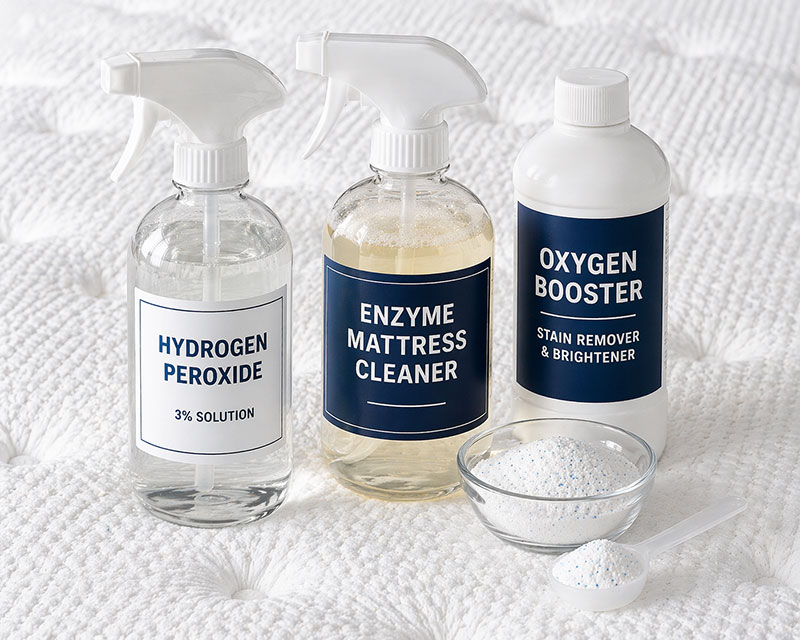
Enzyme cleaners break down organic material at the source. They continue working after application, which helps prevent stains from returning.
For full cleaning methods and maintenance, see:
When a Mattress Stain Will Not Come Out Completely
Some stains change the material itself rather than sitting on the surface. When that happens, full removal may not be possible.
The goal shifts to improving the appearance and removing any odor so the mattress is clean and usable again.
Continuing to clean beyond that point can damage the material.
Not every stain can be completely removed.
For sizing, fit, and long-term care, use this guide:
crib mattress sizes, fit, and care guide

Frequently Asked Questions About Mattress Stains
Can old mattress stains be removed?
Older stains can often be reduced, but full removal depends on how deeply the stain has set into the fabric and padding.
What is the fastest way to remove a mattress stain?
Blotting first and using the correct cleaner for the stain type gives the fastest visible improvement. Scrubbing usually makes the stain spread.
How long should a cleaning solution stay on a mattress?
Most cleaning solutions need about 10 to 20 minutes to start breaking down a stain. Wiping too soon often weakens the result.
Why does a mattress stain come back after cleaning?
This usually means the stain was pushed deeper instead of lifted out, or the odor and residue underneath were not fully removed.
Should a mattress ever be soaked to remove stains?
No. Too much moisture can reach the inner layers, slow down drying, and leave the mattress smelling worse later. For crib mattresses, excess moisture can also create an unsafe sleep surface, so it is important to keep cleaning methods light and allow full drying before use.
What if the stain lightens but does not disappear?
That usually means the cleaning method is working, but the stain is older or deeper than it looked on the surface. A second careful pass may improve it more, but not every stain can be fully removed.
For general cleaning guidance, refer to:
When you click on links to various merchants on this site and make a purchase, this may result in this site earning a commission. This does not affect the price you pay.

UBGI Gold Standard 2026
Reviewed under the site's
editorial checklist.
Photos, decorating ideas, party setups and reader submissions are shared for inspiration unless a page is specifically presented as a pattern, tutorial, reference guide or step-by-step project. Follow the instructions, measurements, safety guidance and manufacturer directions provided for the particular project or product.
About Jan | Contact | Baby Nursery Ideas (Blog) | Site Map | Privacy Policy | Disclosure Policy | Disclaimer | Affiliate Disclosure | Earnings Disclosure | Facebook | Pinterest
I am a participant in the Amazon Services LLC Associates Program, an affiliate advertising program designed to provide a means for us to earn fees by linking to Amazon. As an Amazon Associate I earn from qualifying purchases.
Copyright © 2006-2026. All Rights Reserved.