Best Nursery Flooring for a Baby’s Room
By Jan Bay
Choosing nursery flooring is not only about finding a pretty color or finish. The floor will need to handle spills, quiet nighttime footsteps, crawling, dropped toys, furniture, and several years of changing use, so it helps to compare comfort, cleaning, noise, durability, and cost before making a decision.
More Help Planning Your Baby’s Room
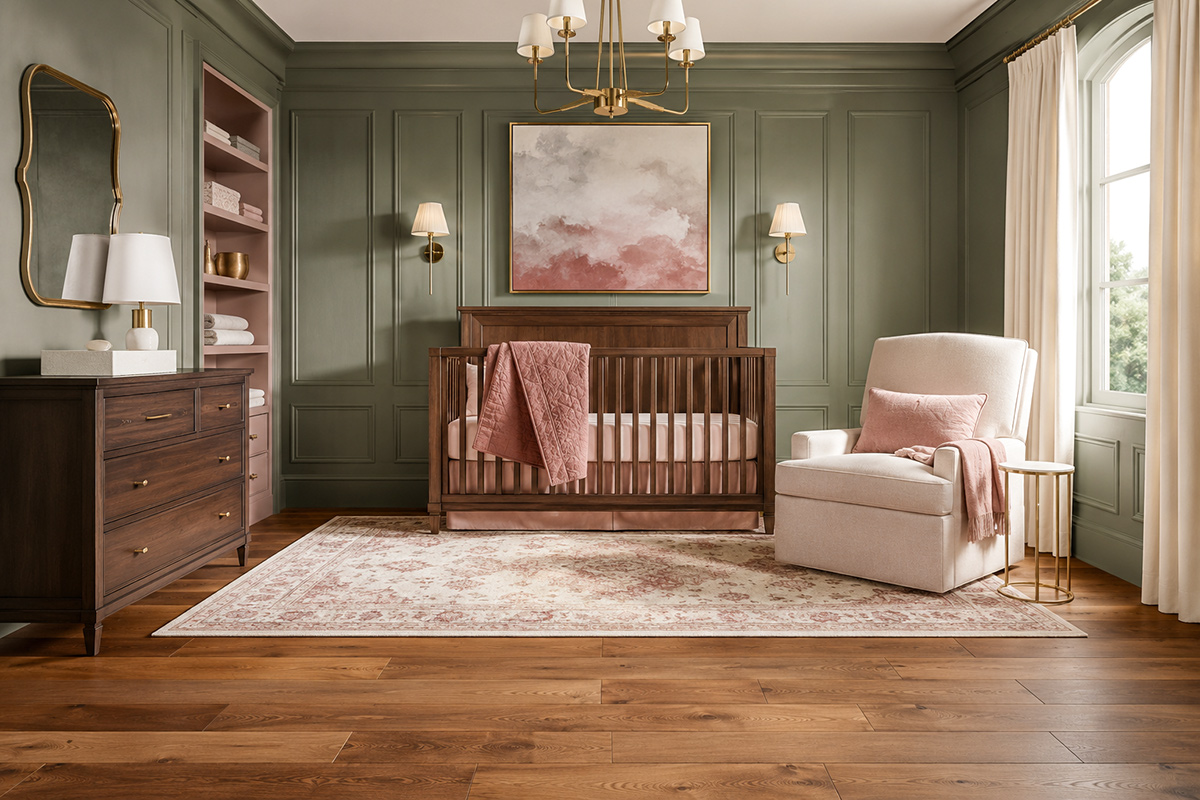
See Nursery Flooring and Rugs in Inventory
The rooms on this page are styled to show flooring and furniture placement. Before sleep, remove decorative blankets and other loose items from the crib and follow current CPSC safe-sleep guidance.
Jump to a Nursery Flooring Topic
My practical answer: For many nurseries, the best overall setup is a sound hard floor with a low-pile area rug and a floor-compatible rug pad. Choose carpet when warmth and quiet matter most, vinyl when spill cleanup is the priority, hardwood for long-term use, laminate for a lower-cost wood look, and cork when warmth and sound control matter more than simple maintenance.
My nursery flooring checklist is very plain. The floor still has to make sense after the room is decorated, when bottles spill, toys roll underneath the crib, and the nursery begins turning into a child’s bedroom.
Quick Nursery Flooring Comparison
The best nursery flooring depends on what is already in the room, how much work you want to take on, and how the space will be used after the baby years. For many homes, a durable hard floor with a washable area rug gives the best mix of easy cleaning, comfort, and flexibility.
Carpet feels warm and quiet, but spills and dust can be harder to manage. Hardwood lasts for years and is easy to sweep, although it benefits from a rug in the main play area. Luxury vinyl plank handles moisture well and takes less fuss to clean, while laminate can offer a similar look at a lower price if water exposure is limited. Cork is softer and quieter than many hard floors, but it needs more careful maintenance.
Wall-to-Wall Carpet
Comfort: Soft and warm.
Cleaning: Spills can reach the fibers and padding.
Noise: Provides the greatest room-wide sound reduction.
Durability: Depends heavily on fiber, pile, padding, and maintenance.
Cost level: Low to moderate.
Best for: Cold rooms, upstairs bedrooms, and families who place softness and quiet first.
Hardwood
Comfort: Firm and sometimes cool.
Cleaning: Easy to sweep and wipe when moisture is removed promptly.
Noise: Footsteps and toys can sound louder without a rug.
Durability: Can remain useful through several versions of the room.
Cost level: High.
Best for: Long-term use, easy surface cleaning, and continuity with nearby rooms.
Luxury Vinyl Plank
Comfort: Firm, but often slightly more forgiving than hardwood.
Cleaning: Spills remain on the surface and are generally easy to remove.
Noise: Moderate, depending on the product and underlayment.
Durability: Well suited to ordinary family traffic when correctly installed.
Cost level: Moderate.
Best for: Spill-prone rooms and households that want straightforward maintenance.
Laminate
Comfort: Firm underfoot.
Cleaning: Simple when spills are removed before they reach the seams.
Noise: May sound hollow or sharp without approved underlayment.
Durability: Often resists everyday scratches but remains sensitive to standing moisture.
Cost level: Low to moderate.
Best for: A wood-style appearance without the cost of solid hardwood.
Cork
Comfort: Warm and slightly cushioned.
Cleaning: Requires careful moisture control and product-approved methods.
Noise: Quieter than many hard flooring choices.
Durability: Can dent, scratch, or fade without careful maintenance.
Cost level: Moderate to high.
Best for: Rooms where warmth, cushioning, and sound reduction are priorities.
Existing Hard Floor with an Area Rug
Comfort: Adds softness only where it is needed.
Cleaning: Leaves much of the floor exposed for sweeping and wiping.
Noise: Quieter than a completely bare hard floor.
Durability: Depends on the existing floor and the rug pad used.
Cost level: Low to moderate.
Best for: Flexible room planning without replacing a serviceable floor.
Before removing a floor that is still in good condition, think about what a well-sized rug could change. A rug can add warmth beside the crib and create a softer play space without locking the room into one flooring choice for the next ten years.
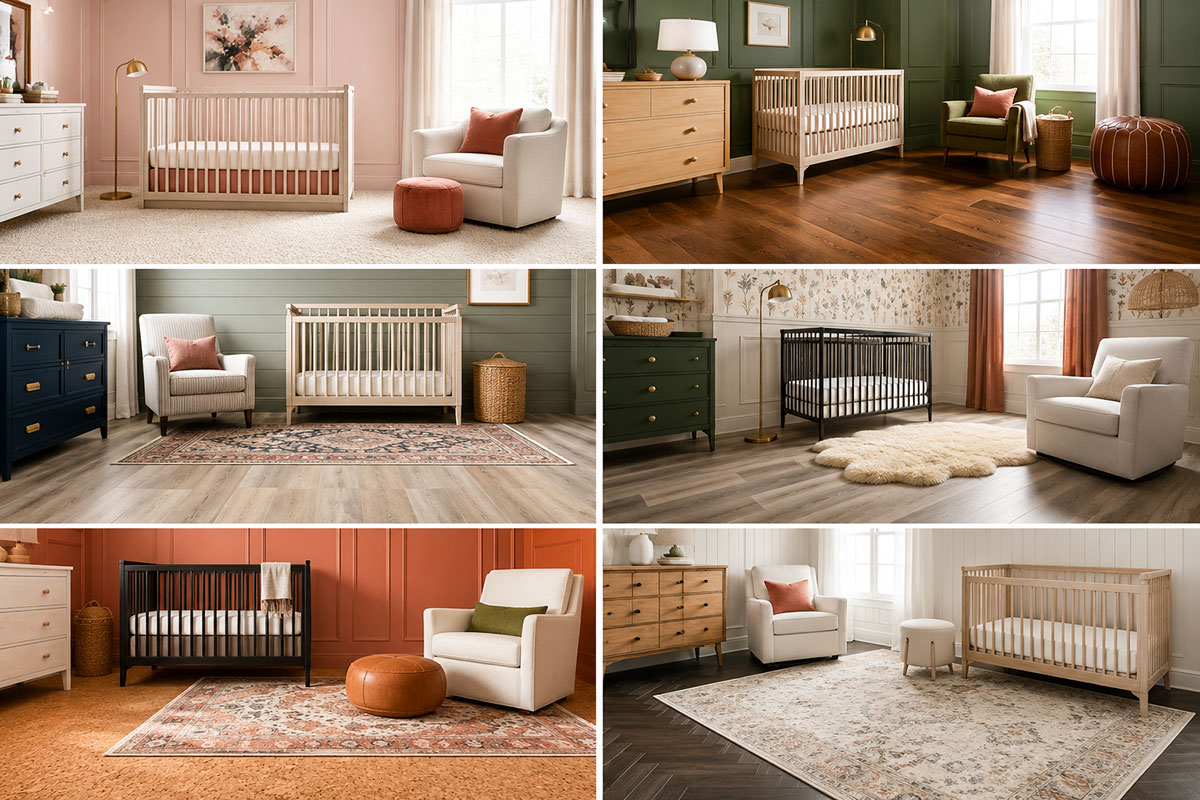
Is Carpet Good for a Nursery?
Wall-to-wall carpet gives a nursery a warm, cushioned floor and helps soften everyday sounds. It can be especially useful in an upstairs bedroom where footsteps, rolling furniture, and dropped toys might otherwise carry through the house.
The soft surface is comfortable for sitting, crawling, and early play. It also makes a cold room feel warmer underfoot, which can matter during nighttime feedings and diaper changes.
Carpet does require more upkeep than a hard floor. Milk, formula, diaper leaks, and medicine can soak into the fibers instead of staying on the surface. Prompt blotting and occasional deeper cleaning may be needed to prevent stains and odors.
Dust, pet hair, and other particles can also settle into carpet. Regular vacuuming is important, especially around the crib, changing table, and doorway. Families with specific allergy or breathing concerns should discuss their individual needs with a qualified medical professional rather than assuming that one flooring material is right for everyone.
The carpet pile matters too. A dense, low-pile carpet is generally easier to vacuum and allows furniture to sit more steadily than a thick, shaggy style. Check the flooring manufacturer’s care, installation, and product information before choosing a particular carpet or pad.
Wall-to-Wall Carpet or a Removable Rug?
Wall-to-wall carpet covers the entire room and gives consistent softness, but it is expensive and inconvenient to replace after a stubborn stain or decorating change.
A removable area rug offers softness only where you need it. The hard floor remains easier to clean, and the rug can be changed when the nursery becomes a toddler room or older child’s bedroom.
The guide to choosing a nursery rug explains useful sizes, placement ideas, and ways to coordinate a rug with the rest of the room without covering every inch of flooring.
A practical middle ground is often a washable or easy-care rug placed over a durable floor, with a nonslip rug pad beneath it. Keep rug edges flat and arrange the room so adults are not stepping over a loose corner while carrying the baby.
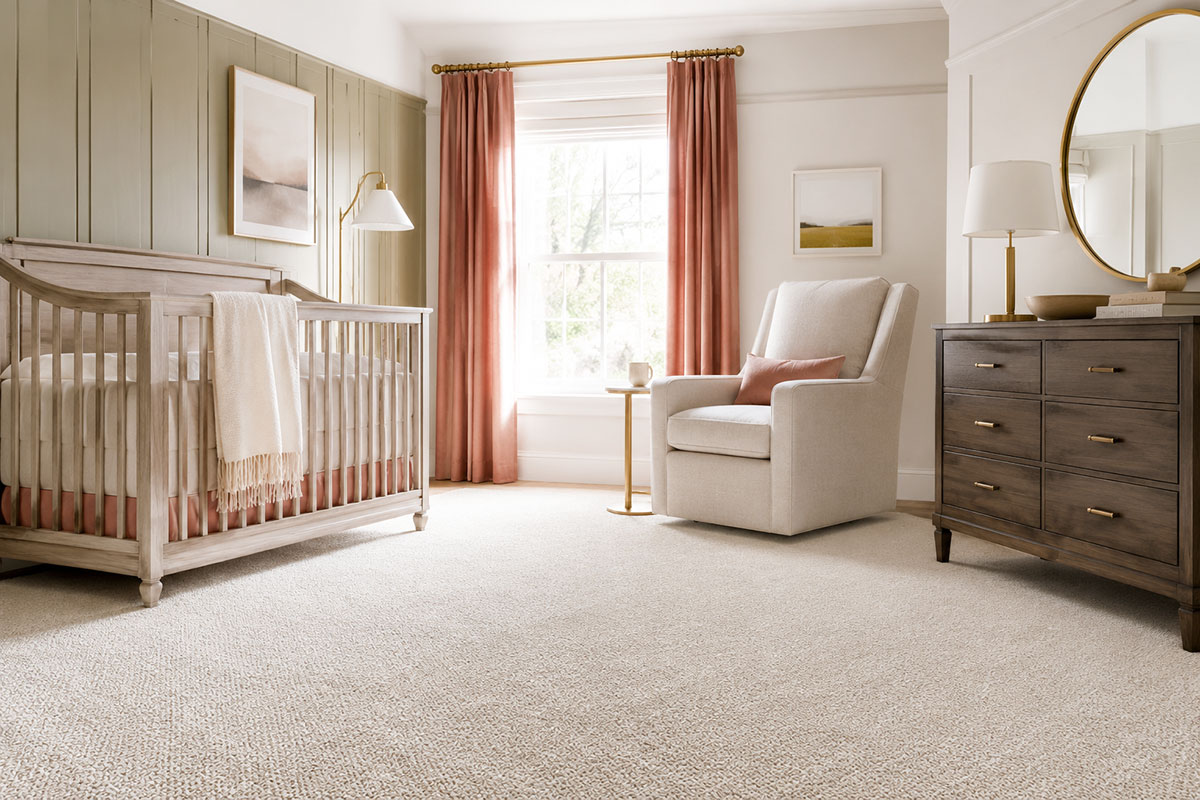
Hardwood Flooring in a Nursery
Hardwood is a practical nursery choice when the floor is already in place or when the room needs to work well for many years. It does not trap crumbs or spills, and everyday cleanup is usually limited to sweeping, vacuuming with the correct floor attachment, and wiping up moisture promptly.
A wood floor also makes it easy to change the room later. The nursery can become a toddler room, homework space, guest room, or older child’s bedroom without another flooring project.
The main tradeoff is comfort. Hardwood feels firm beneath knees and can be cold during winter, especially in a room over a garage, crawl space, or unfinished lower level. It also reflects more sound than carpet, so footsteps, toys, and a rocking chair may seem louder.
An area rug can solve much of that without hiding the entire floor. Place it where adults will stand and where the child will eventually sit and play. A quality rug pad adds cushioning, helps reduce movement, and keeps the rug from rubbing directly against the finish.
Protecting Hardwood from Nursery Furniture
Check the crib, dresser, changing table, and rocking chair for rough feet or exposed hardware before moving them into the room. Furniture pads can help protect the finish, but they should stay firmly attached and should not make a crib or dresser unstable.
Never drag heavy furniture across the boards. Lift each piece with help and place it carefully, especially if the floor has a glossy finish that shows scratches easily.
A waterproof mat is not needed across the whole room, but a small washable layer beneath a bottle-preparation area or beside a diaper pail may make occasional spills easier to manage. Wipe moisture promptly rather than allowing it to sit between the boards.
Is Hardwood Worth Installing Just for a Nursery?
Installing new hardwood solely for the baby years can be a large expense. It makes more sense when it fits a larger home improvement plan, matches nearby rooms, and is a finish you would still want after the nursery changes.
When the existing floor is sound, refinishing it or adding a comfortable rug may be enough. The room can still look finished and inviting without replacing a surface that already performs well.

Vinyl Flooring for a Nursery
Luxury vinyl plank is a practical choice for a nursery when easy cleaning and moisture resistance are high priorities. Spills stay on the surface long enough to be wiped up, and routine care is generally simpler than it is with carpet.
Vinyl flooring also handles the daily wear that comes with a growing child. Rolling storage bins, dropped toys, and frequent furniture changes are less likely to create the same problems they might on a softer or more delicate surface.
The floor still feels firm, but it may be slightly more forgiving underfoot than hardwood or laminate. Adding a rug in the main play area can provide extra warmth and cushioning without making the whole room difficult to clean.
Quality Differences Matter
Not every vinyl product is made the same way. Thickness, wear layer, backing, surface texture, locking system, and warranty can vary considerably between products.
Read the manufacturer’s installation instructions and product specifications before buying. Look for information about approved rooms, moisture limits, subfloor preparation, cleaning products, and whether an underlayment is built in or must be purchased separately.
Do not rely on a display sample alone. A plank that looks convincing under store lighting may appear shinier, darker, or more patterned across an entire room. Taking a sample home can help you see it beside the nursery walls, trim, and natural light.
Installation Considerations
Vinyl plank can be installed as a floating floor, glued down, or attached by another method depending on the product. The subfloor needs to be level, clean, dry, and suitable for the installation system.
A poor installation can cause gaps, movement, uneven areas, or edges that lift. Those concerns matter in a nursery because adults may cross the room in low light while carrying the baby.
Follow the product instructions for expansion space, room temperature, acclimation, and furniture placement. When the floor requires extensive preparation or the room has moisture damage, hiring a qualified installer may prevent a costly redo.
Check Product Information Carefully
Claims about emissions, chemicals, or indoor air quality should be verified through current manufacturer documentation and recognized certification information. Marketing words such as “natural,” “clean,” or “family friendly” do not explain exactly what a product contains or how it was tested.
The United States Environmental Protection Agency’s indoor air quality information offers general guidance about ventilation and indoor pollutants. Product-specific questions should be answered with documentation for the exact flooring, adhesive, and underlayment being considered.
Allow the room to air out as directed after installation, and complete the flooring work before bringing in the crib, dresser, clothing, and other nursery items.
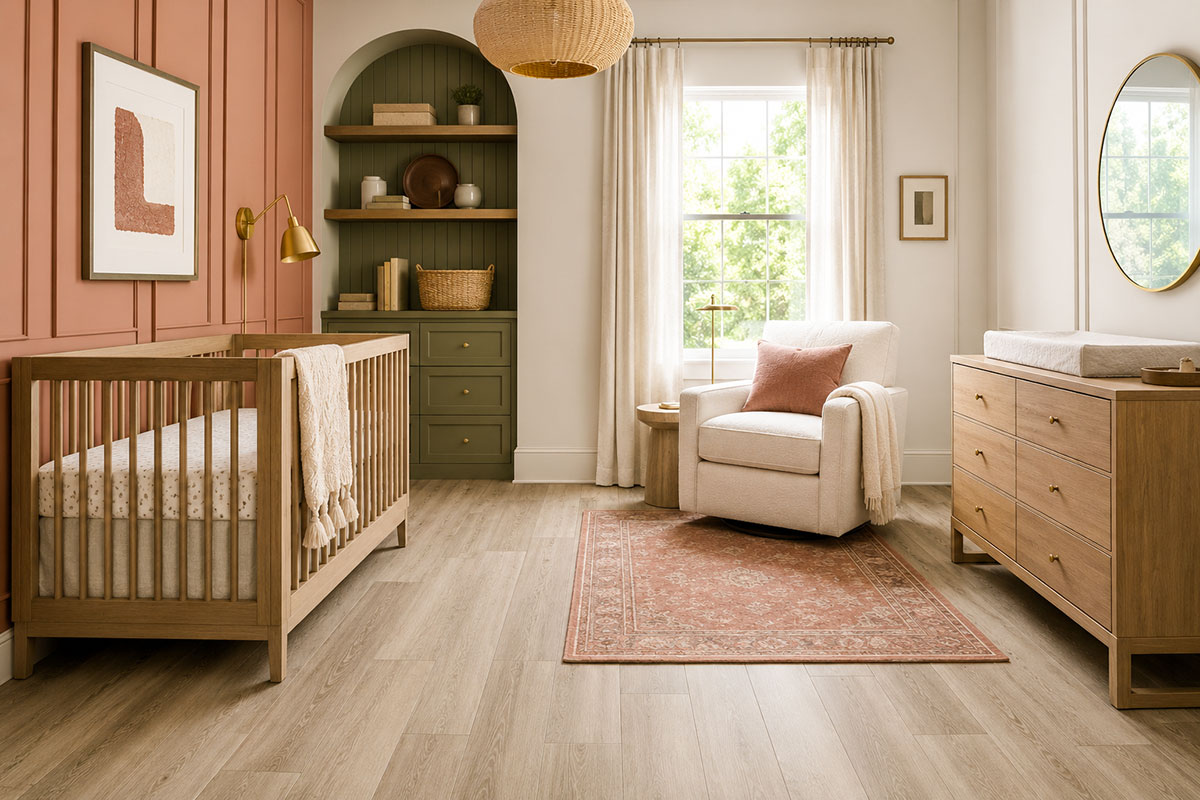
Laminate Flooring in a Nursery
Laminate can give a nursery the look of wood without the higher price of solid hardwood. It is often a sensible choice when the room needs a fresh floor but the budget also has to cover a crib, dresser, window treatments, and the many smaller purchases that add up quickly.
The surface is generally easy to sweep and can stand up well to rolling storage bins, toy baskets, and ordinary foot traffic. Many laminate floors also resist scratches better than softer wood finishes, although dragging furniture or leaving grit on the floor can still cause damage.
Moisture Is the Main Concern
Laminate is not the same as waterproof vinyl plank. Some products offer improved water resistance, but standing liquid can still seep into seams or reach the core.
Wipe up spilled bottles, cleaning water, and diaper-related accidents promptly. Pay close attention to seams near the doorway, radiator, window, and changing area where moisture may go unnoticed.
Check the exact product instructions before using a steam mop or wet-cleaning method. Too much water can damage flooring even when the top surface appears sealed.
Underlayment Can Improve the Room
Laminate sometimes has a hollow or tapping sound when installed without the right underlayment. A suitable underlayment can help reduce noise, smooth minor subfloor irregularities, and make the floor feel less sharp beneath each step.
Some laminate includes an attached backing, while other products require a separate layer. Follow the manufacturer’s directions rather than adding extra padding that could interfere with the locking system.
An area rug can quiet the busiest part of the room further. A rug beside the crib or across the future play area adds warmth without covering the entire floor.
Look at the Pattern Across Several Planks
A single sample does not show how often the printed wood pattern repeats. Open several cartons or review a larger display before choosing a floor, especially when the design has bold knots, dark streaks, or wide color changes.
Mix planks from different boxes during installation so repeated patterns are not grouped together. A balanced layout looks more natural and keeps one corner of the nursery from appearing darker than the rest.
Laminate makes the most sense when you want a tidy wood look, easy everyday care, and a moderate project cost. It is less appealing for a room with a history of leaks, dampness, or frequent standing water.
Cork Flooring in a Nursery
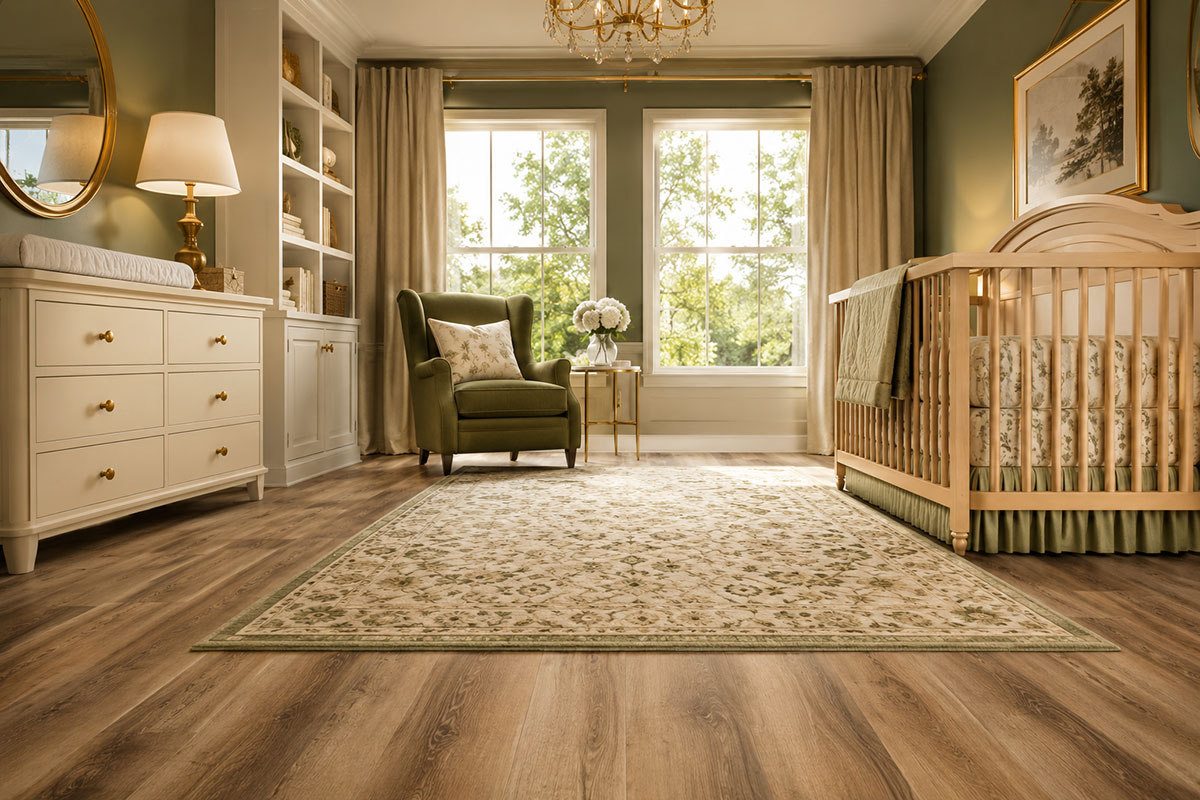
Cork flooring is worth considering when you want a surface that feels warmer and quieter than hardwood, vinyl, or laminate. It has a slight give underfoot, which can make the room more comfortable for standing, rocking, and sitting on the floor.
The natural texture also helps absorb sound. Footsteps and dropped toys may seem less sharp than they do on a harder surface, making cork appealing for an upstairs nursery or a room near a busy part of the house.
Comfort Comes with Extra Care
Cork is softer than many other flooring materials, so heavy furniture can leave dents. Wide furniture pads may help spread the weight beneath a crib, dresser, or rocking chair, but they must not interfere with the furniture’s stability.
Sharp objects, rough furniture feet, and grit can damage the finish. Regular sweeping or vacuuming with a hard-floor attachment helps keep small particles from scratching the surface.
Direct sunlight may also change the color of some cork floors over time. Window shades or curtains can reduce uneven fading in rooms that receive bright light for several hours each day.
Moisture and Cleaning
Cork should not be treated like a fully waterproof floor. Spills need to be wiped up promptly, and cleaning methods should match the manufacturer’s directions for the exact product and finish.
Too much water can reach seams or damage the material beneath the protective surface. Avoid soaking the floor, and check before using steam cleaners or harsh cleaning products.
Some cork flooring is sold as sealed tiles, while other products use a floating plank system. Installation instructions, moisture limits, and sealing requirements can differ, so read the product information carefully before buying.
Cost and Availability
Cork is not stocked as widely as laminate or vinyl plank, and the selection may be smaller in local stores. The flooring, underlayment, shipping, and professional installation can place it above basic carpet or entry-level laminate in total project cost.
Ask to see a larger sample before deciding. Cork has visible grain and color variation, and a small square may not show how the pattern will look across an entire nursery.
Cork can be a lovely fit when warmth, cushioning, and sound control matter more than having the easiest possible floor to maintain. It is less practical for a room with recurring moisture problems or furniture that will be moved often.
Existing Hard Floor with an Area Rug
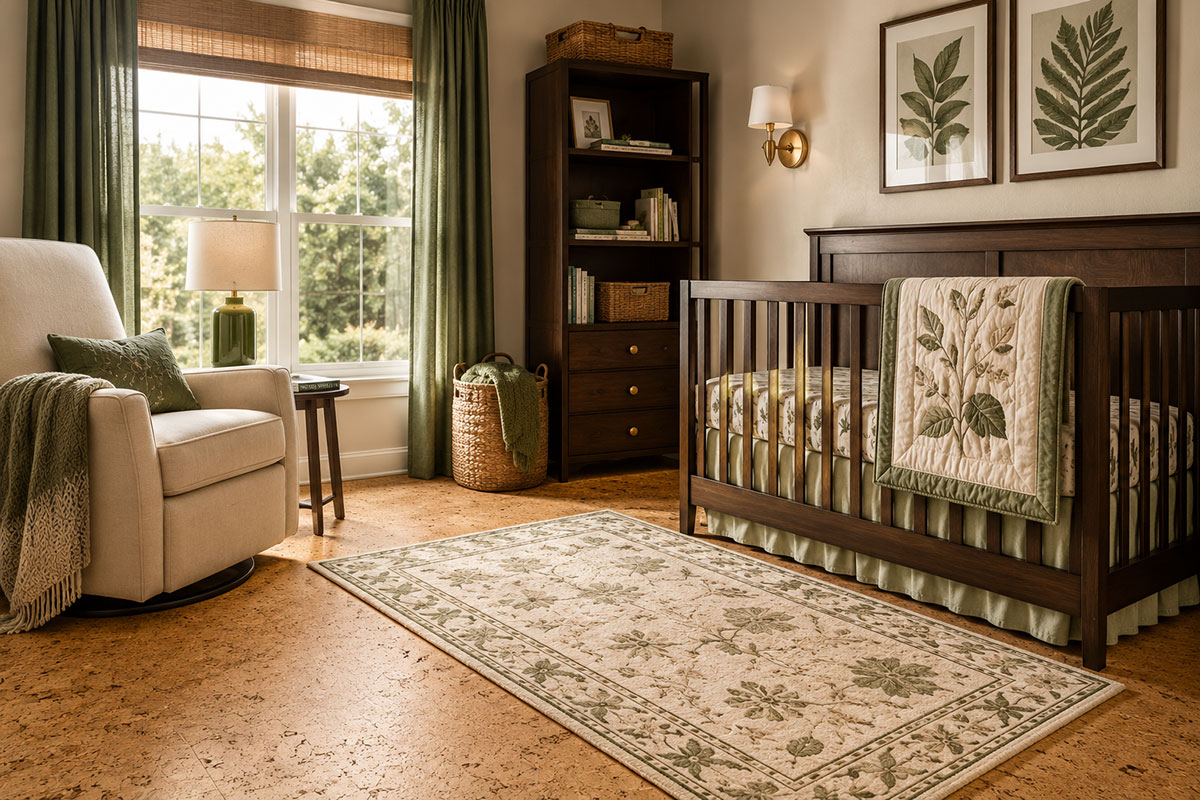
Keeping the existing hard floor and adding an area rug is often the most flexible nursery flooring choice. It gives the room a softer place for sitting and play without creating another major renovation before the baby arrives.
Hardwood, vinyl, laminate, and tile are easier to sweep and wipe than wall-to-wall carpet. When a rug becomes stained, worn, or too childish for the next version of the room, it can be cleaned or replaced without disturbing the floor beneath it.
A rug also lets you control where the softness goes. You may want cushioning beside the crib and changing table now, then move the rug toward a play area once the baby becomes more active.
Choose a Rug Size That Looks Intentional
A rug that is too small can look like a mat floating in the middle of the room. It may also create extra edges to step over during nighttime visits.
Choose a size that connects several pieces of furniture or clearly defines one part of the nursery. Depending on the room layout, the rug might extend beneath the front legs of the crib and dresser, fill the center play area, or sit beneath a chair and side table.
The full guide to nursery rug sizes and placement covers the decorating side in more detail. This flooring decision is mainly about protecting the existing surface while adding warmth and comfort where the room needs it.
Use the Right Rug Pad
A rug pad helps reduce sliding, adds a little cushioning, and can protect the floor from rubbing. Match the pad to both the rug and the flooring material because some backings may react with certain floor finishes.
Trim the pad so it stays hidden beneath the rug and does not create a raised ridge. Check the rug regularly to be sure the corners remain flat and the pad has not shifted.
Plan for Cleaning
A low-pile rug is generally easier to vacuum and allows storage baskets and furniture to move more smoothly. Washable rugs can be convenient, but check the dimensions and care instructions before assuming the entire rug will fit in a home washing machine.
Dark solid rugs can show lint, while very pale rugs may reveal every small mark. A medium-tone pattern often disguises ordinary nursery mess without making the floor look busy.
Leaving part of the hard floor visible around the rug keeps cleanup manageable. It also gives the room a finished look without covering a floor that may already be attractive and durable.
Best Nursery Flooring by Need
There is no single floor that wins every category. A soft floor is not always the easiest to clean, and the least expensive option may not be the one you want to live with for the next decade. It helps to decide which two or three qualities matter most in your room.
Best Nursery Flooring for Easy Cleaning
Luxury vinyl plank and existing sealed hard flooring are among the easiest choices to maintain. Crumbs, dust, and small spills stay on the surface where they can be swept or wiped away.
Hardwood is also easy to clean when moisture is removed promptly and the correct products are used. Laminate needs similar care, but spilled liquid should not be allowed to sit along the seams.
Wall-to-wall carpet takes more work because liquid can soak below the visible surface. A removable low-pile rug over a hard floor gives you softness without committing the entire room to carpet.
Best Nursery Flooring for Noise Reduction
Wall-to-wall carpet provides the greatest overall sound reduction because it covers the entire floor. Cork is another quiet choice and has more give than hardwood, laminate, or vinyl.
A hard floor does not have to remain noisy. A large rug with a suitable pad can soften footsteps, reduce the sound of dropped toys, and keep a rocking chair from scraping or tapping against the floor.
Underlayment can also improve the sound of laminate or floating vinyl plank. Use the type approved by the flooring manufacturer so the added layer does not interfere with the joints or warranty.
Best Nursery Flooring for a Cold Room
Carpet and cork feel warmer underfoot than bare hardwood, tile, laminate, or vinyl. They can make early-morning and nighttime visits more comfortable in a room above a garage, basement, or crawl space.
Replacing a sound floor may not be necessary, though. A large rug beside the crib and across the main walking area can add warmth at a much lower project cost.
Also look beyond the flooring. Window drafts, exterior walls, insulation, and heating vents may be causing more discomfort than the floor itself.
Best Nursery Flooring for a Small Budget
The least expensive answer is often the floor already in the room. Cleaning it thoroughly, making minor repairs, and adding a well-chosen rug can change the space without paying for removal, materials, and installation.
When replacement is necessary, basic laminate, some vinyl products, and certain carpet styles may cost less than hardwood or cork. Compare the complete project rather than the price printed on one flooring sample.
The total may include old-floor removal, subfloor repairs, underlayment, trim, thresholds, delivery, tools, and installation. The guide to planning a nursery budget can help you balance the flooring project with furniture and other room expenses.
Best Flooring as the Baby Becomes a Toddler
A durable hard floor with a removable rug adapts easily as the room changes. The rug can provide a soft crawling and play area now, then be replaced with a different size or style when the room needs space for larger toys, a child’s bed, or a desk.
Vinyl plank, hardwood, and good-quality laminate can all work beyond the nursery years. The better choice depends on moisture, household traffic, budget, and how much surface wear you are willing to see.
Carpet remains comfortable for play, but paint, drinks, craft supplies, and muddy shoes become more common as children grow. Choosing a stain-resistant, low-pile style may make it easier to manage than a thick or pale carpet.
I believe long-term flexibility deserves almost as much attention as the first nursery design. The baby stage passes quickly, but a well-chosen floor can keep doing its job through several versions of the room.
Nursery Flooring Cost Considerations
The price of nursery flooring involves more than the material shown on a store display. Removal, delivery, underlayment, subfloor repairs, trim, transitions, labor, and disposal can add a noticeable amount to the project.
Begin by measuring the room at its widest and longest points. Include closets and small alcoves, then allow for the extra material recommended for cuts, pattern matching, and future repairs. The needed allowance varies by flooring type and room shape, so follow the installer’s or manufacturer’s guidance.
Costs That Are Easy to Miss
A low flooring price does not always lead to a low final bill. Ask whether an estimate includes:
- Removal and disposal of the old floor
- Moving furniture out of the room
- Subfloor leveling or repair
- Moisture testing when required
- Underlayment or carpet padding
- Adhesive, fasteners, or installation supplies
- Baseboards, shoe molding, and doorway transitions
- Delivery fees
- Labor and cleanup
Written estimates make comparisons easier. Ask each installer to list the same work so you are not comparing one complete quote with another that leaves out preparation or finishing details.
Repair or Replace?
A scratched hardwood floor, dated laminate, or plain vinyl may still have years of useful life. Deep cleaning, replacing damaged trim, or adding a large rug may be enough to make the room feel ready for the baby.
Replacement becomes more reasonable when the floor has loose pieces, raised edges, water damage, persistent odors, or uneven areas that could create a tripping problem. The cause of moisture or subfloor damage should be corrected before a new surface is installed.
Spend More Where It Matters
A nursery does not need the most expensive flooring in the store. It does need a surface that suits the room, can be maintained realistically, and will remain useful when the baby becomes a busy child.
Put the larger share of the budget toward proper preparation and installation rather than decorative upgrades that do not improve performance. A modest floor installed correctly is a better purchase than a premium product laid over an unsuitable subfloor.
The room also needs furniture, lighting, window coverings, and storage. The nursery cost guide can help you see where flooring fits within the full room budget instead of treating it as a separate project.
Whenever possible, keep a few extra planks, tiles, or a labeled carpet remnant after installation. A matching replacement may be difficult to find several years later, even when the original product name is still available.
Nursery Flooring FAQ
Is carpet or hardwood better for a nursery?
Carpet is warmer, softer, and quieter, while hardwood is easier to sweep and wipe clean. Hardwood with a properly secured area rug offers a useful balance when you want a soft play space without covering the entire room in carpet.
The better choice depends on the condition of the existing floor, the temperature of the room, cleaning needs, and how long you expect to use the flooring.
Is vinyl flooring suitable for a nursery?
Vinyl flooring can work well in a nursery because it is durable, moisture resistant, and easy to maintain. Product quality varies, so review the manufacturer’s installation instructions, cleaning guidance, warranty, and available testing or certification information for the exact flooring you are considering.
Complete the installation and follow any ventilation or waiting instructions before moving nursery furniture and textiles into the room.
Do you need a rug over hardwood nursery flooring?
A rug is not required, but it can make hardwood warmer, quieter, and more comfortable for floor play. It may also help protect the finish from furniture movement and dropped toys.
Use a rug pad that is approved for the floor finish, keep the edges flat, and choose a rug large enough that it does not look or feel like a small obstacle in the middle of the room. More placement help is available in the nursery rug guide.
What flooring is easiest to clean in a baby’s room?
Sealed hardwood, luxury vinyl plank, and other smooth hard floors are generally easier to clean than wall-to-wall carpet. Dust and spills remain visible on the surface and can be removed without soaking into fibers.
Follow the manufacturer’s care instructions because too much water, steam, or an unsuitable cleaner can damage some hard floors.
What flooring makes a nursery quieter?
Wall-to-wall carpet provides the most complete sound reduction. Cork also absorbs more sound than many hard flooring choices.
A large area rug and rug pad can make hardwood, vinyl, or laminate noticeably quieter. Approved underlayment may also reduce the tapping or hollow sound associated with some floating floors.
Should flooring be installed before nursery furniture arrives?
Yes. Flooring work is easier when the room is empty, and the crib, dresser, clothing, bedding, and curtains will not be exposed to dust or installation debris.
Allow enough time for cleaning, ventilation, and any manufacturer-recommended curing or waiting period before setting up the nursery. Do not rush heavy furniture onto a newly finished or installed floor.
Can a crib sit on carpet?
A crib can sit on carpet as long as it is assembled correctly, stands level, and does not rock or shift. Thick carpet may make it harder to notice an uneven leg, so check the crib carefully after placing it in position.
Do not place loose padding, folded fabric, or an unstable platform beneath the crib. Follow the crib manufacturer’s instructions and recheck the hardware after the crib has been moved.
What flooring works best as the baby becomes a toddler?
A durable hard floor with a removable rug is one of the easiest arrangements to adapt. It provides a softer play area during the early years, while the rug can be cleaned, moved, or replaced as the room changes.
Hardwood, vinyl plank, laminate, carpet, and cork can all remain useful in a child’s room when they are installed correctly and suited to the household. Choose the material you can maintain comfortably rather than one that only looks appealing in a newly decorated nursery.
What is the safest flooring for a nursery?
No single flooring material is automatically the safest choice for every nursery. The floor should be level, dry, secure, undamaged, correctly installed, and practical to maintain. Loose edges, raised planks, shifting rugs, moisture damage, and unstable furniture are more immediate concerns than choosing one material simply because it is advertised as baby friendly.
Check the instructions and documentation for the exact flooring, adhesive, finish, underlayment, and rug pad being used instead of relying on broad marketing claims.
Should existing flooring be replaced before the baby arrives?
Not automatically. A clean, level floor that is dry, secure, and in good condition may work perfectly well in a nursery. Replacement makes more sense when there are loose sections, raised edges, unresolved moisture damage, persistent odors, severe staining, or another problem that ordinary cleaning or minor repairs cannot correct.
Keeping a usable floor may leave room in the budget for a properly sized rug, better storage, window coverings, or other improvements that affect the nursery every day.
What is the best nursery flooring overall?
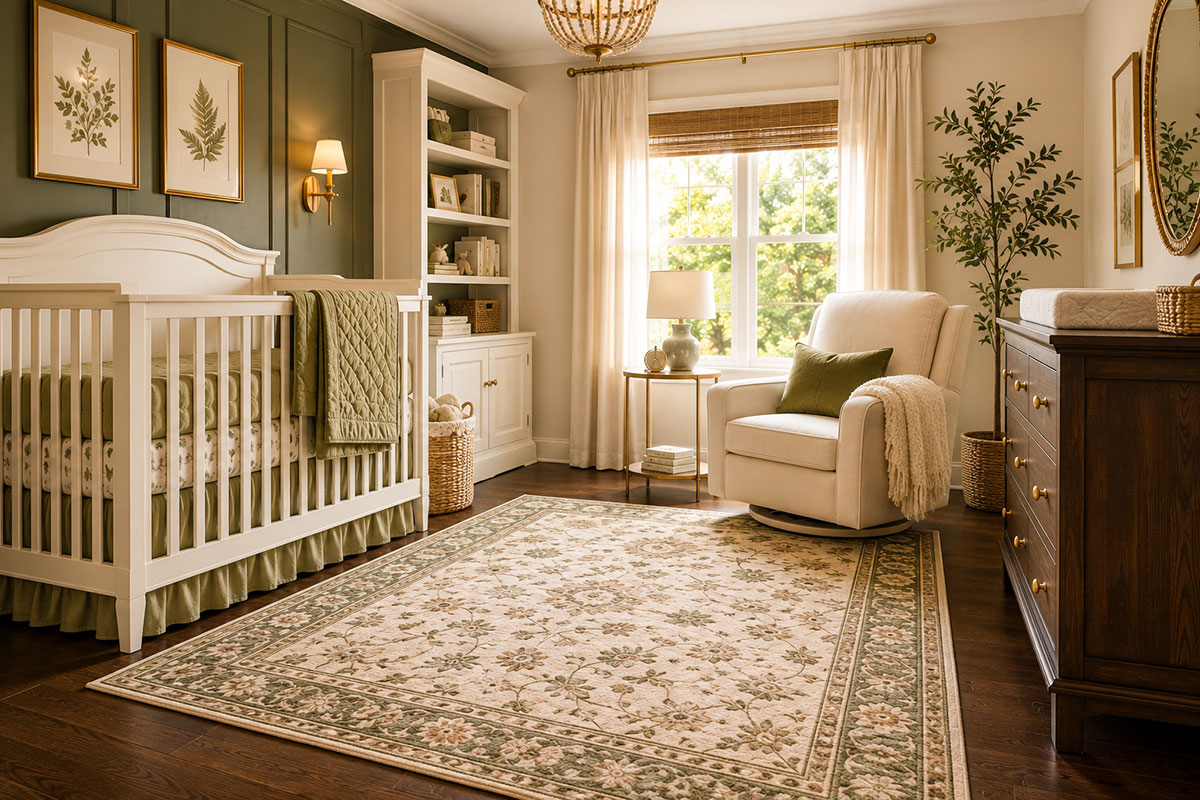
For many rooms, the best all-around choice is a durable hard floor with a well-sized area rug. The floor is easy to clean, the rug adds warmth and sound control, and the arrangement can change as the baby grows.
That does not mean an existing carpet or cork floor needs to be replaced. A clean, secure floor in good condition is often a better starting point than taking on an unnecessary renovation.
Choosing the Best Floor for Your Nursery
Start with what is already under your feet. When the existing floor is clean, level, dry, secure, and in good condition, there may be no sensible reason to turn it into another nursery project.
My rule for nursery flooring is simple: do not replace a serviceable floor just to solve a problem the room does not have. Carpet earns its place when warmth and quiet come first. Hardwood offers long-term value and easy surface cleaning. Vinyl plank handles spills with less fuss, laminate gives you the wood look at a more moderate cost, and cork adds warmth and cushioning when you are prepared to care for it properly.
For a room that will change as the baby grows, a durable hard floor with a well-sized area rug remains the most adaptable arrangement. The rug adds comfort now and can be cleaned, moved, or replaced later without beginning another flooring job.
A pretty floor helps finish the nursery. A practical floor keeps earning its place through spilled bottles, crawling, toy wheels, furniture changes, and the day the crib is replaced by a child’s bed.
Once the floor is settled, browse these baby nursery ideas for practical ways to arrange and decorate the rest of the room. You can also explore the collection of baby nursery themes when you are ready to choose colors, wall details, and finishing touches.
When you click on links to various merchants on this site and make a purchase, this may result in this site earning a commission. This does not affect the price you pay.

UBGI Gold Standard 2026
Reviewed under the site's
editorial checklist.
Photos, decorating ideas, party setups and reader submissions are shared for inspiration unless a page is specifically presented as a pattern, tutorial, reference guide or step-by-step project. Follow the instructions, measurements, safety guidance and manufacturer directions provided for the particular project or product.
About Jan | Contact | Baby Nursery Ideas (Blog) | Site Map | Privacy Policy | Disclosure Policy | Disclaimer | Affiliate Disclosure | Earnings Disclosure | Facebook | Pinterest
I am a participant in the Amazon Services LLC Associates Program, an affiliate advertising program designed to provide a means for us to earn fees by linking to Amazon. As an Amazon Associate I earn from qualifying purchases.
Copyright © 2006-2026. All Rights Reserved.