Baby Stocking Stuffers: Cute and Useful Gift Ideas
By Jan Bay
Baby stocking stuffers don't have to be expensive, complicated or include a lot of tiny toys that a baby isn't ready to play with. A few thoughtful little gifts can make baby's first Christmas stocking feel special. I've gathered practical ideas for newborns through 12 months, including baby socks, board books, teething toys, useful everyday items and handmade keepsakes. Whether you're filling a stocking for a baby boy, baby girl or a new grandchild, these ideas will help you choose gifts that not only fit the baby's age but make sense.
Explore More Baby Christmas Gifts and Keepsakes
Baby's First Christmas Stocking Ideas
Personalized Baby Christmas Gifts
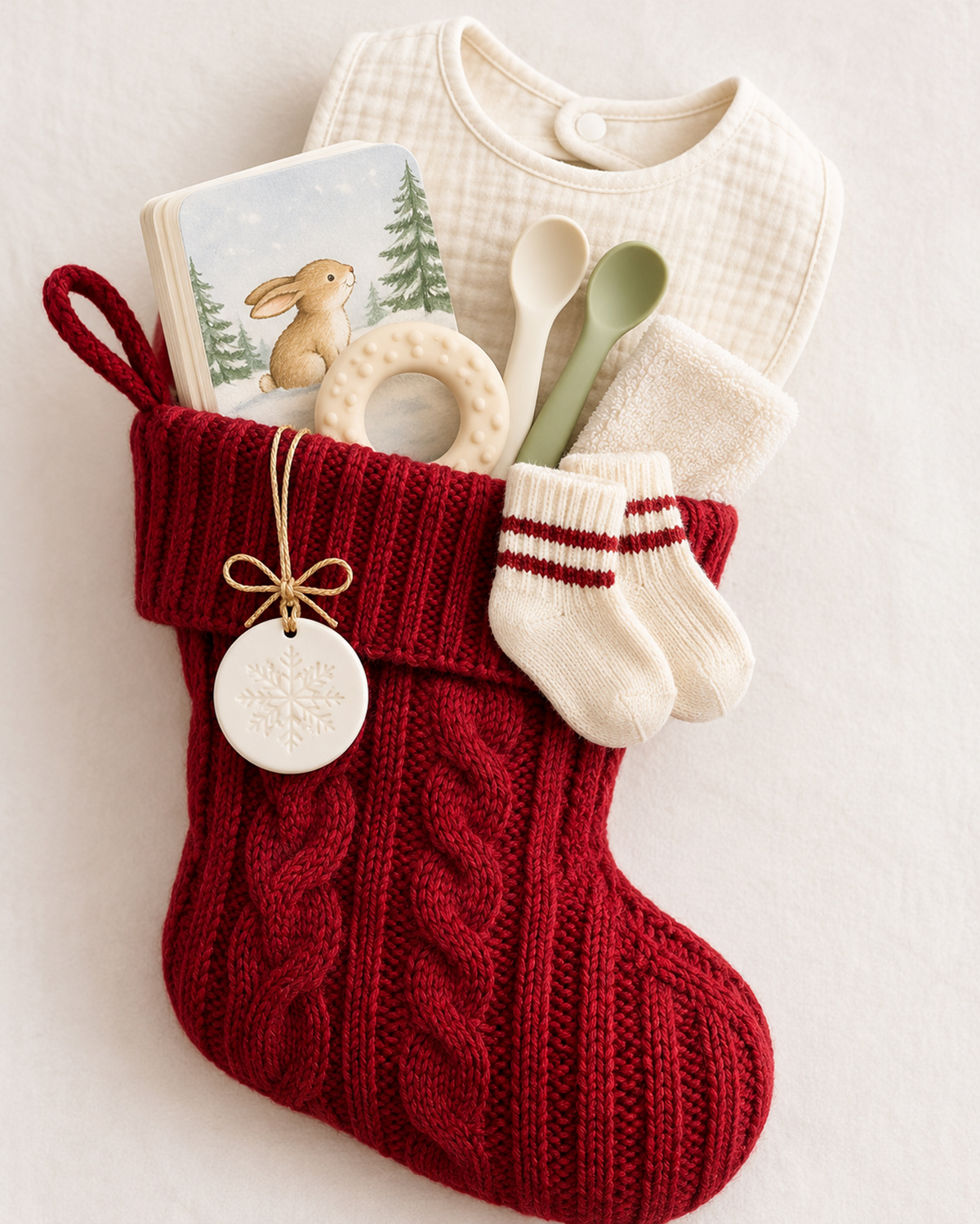
See Baby Stocking Stuffer Gift Ideas Here.
Jump to Baby Stocking Stuffer Ideas
- Best Baby Stocking Stuffers
- Newborn Stocking Stuffers
- Stocking Stuffers for Babies 3–6 Months
- Baby Stocking Stuffers 6–12 Months
- Baby Boy and Girl Stocking Stuffers
- Practical Baby Stocking Stuffers
- Handmade Stocking Stuffers and Keepsakes
- Budget-Friendly Stocking Stuffers
- Baby's First Christmas Stocking
- Choosing Age-Appropriate Gifts
- Frequently Asked Questions
Best Baby Stocking Stuffers: What I'd Put in the Stocking
If you're putting together a baby's Christmas stocking, I'd start with four little gifts: something useful, something to play with, a book, and something the family can keep. You don't need to buy a dozen things just because the stocking has room for them.
And if the baby is only a few weeks old? Skip the toys for now. A pair of socks, a little board book, and a first Christmas keepsake are plenty.
Here are my top choices for baby stocking stuffers:
- A small board book: A gift that can be enjoyed from the newborn stage, first as a read-aloud book and later as something the baby can hold.
- Baby socks: Practical, inexpensive, and available in just about every Christmas design you can imagine.
- A simple teether: A good choice for a baby who's ready to grasp and mouth toys. Look for a one-piece design made for infants.
- A lightweight baby rattle: Choose one designed for the baby's age, with no detachable pieces.
- A cotton bib: Something useful that can be folded small enough to tuck into almost any stocking.
- Stacking cups: A fun choice for an older baby who's beginning to explore how things fit together.
- Baby feeding spoons: A practical gift for a baby who has started eating solids.
- A personalized ornament: Not a toy, but a lovely little keepsake for the family to hang on the Christmas tree.
You don't need everything on that list. In fact, I'd pick one good toy over several cheap little ones that might break or get tossed aside.
Choose Gifts for the Baby's Age, Not Just the Stocking
Here's a quick way to narrow your choices:
| Baby's Age | What I'd Choose |
|---|---|
| Newborn to 3 months | Socks, a bib, a board book, and a keepsake |
| 3 to 6 months | An infant rattle, a simple teether, a cloth book, and socks |
| 6 to 12 months | Stacking cups, a sturdy board book, an age-appropriate toy, and a feeding accessory |
These are shopping suggestions, not strict developmental rules. Check the age guidance on each toy, and choose for what the baby is ready to use.
One more thing: ask what the baby already has. A second copy of a favorite book might be nice for Grandma's house, but a fifth teether probably isn't necessary.
Newborn Stocking Stuffers for Babies 0–3 Months
For a newborn, I'd make the stocking more about useful little gifts and a memory of that first Christmas. There's no need to pretend a six-week-old baby needs an exciting collection of presents.
I'd choose these four things:
1. A Pair of Baby Socks
A pair of tiny Christmas socks tucked over the top of a stocking looks adorable, and the baby can actually wear them. Look for a soft fabric, comfortable cuffs, and the size the baby will need around Christmas.
If you're buying ahead, the next size up may be more useful than newborn socks. Babies can outgrow those little sizes surprisingly quickly.
2. A First Board Book
You can read to a newborn long before the baby understands the story. A book with high-contrast pictures, faces, or a few simple words makes a nice first addition to the nursery bookshelf.
I'd choose a sturdy little book instead of one with paper pages that could tear later. A Christmas story is sweet, but an everyday book about animals or bedtime will get more use throughout the year.
3. A Cotton Bib or Washcloth
A little cotton bib isn't the most exciting Christmas present in the world. But it's useful, washable, and small enough to fit into a stocking without any trouble.
Choose a simple design the family can use every day. You can save the embroidered reindeer and fancy holiday trims for photographs if you like.
4. A First Christmas Keepsake
I'd make this the special gift. A little ornament with the baby's name, a miniature footprint keepsake, or a photograph in a small frame gives the family something to remember.
The baby won't appreciate it yet, of course. That's fine. Some Christmas gifts are really for the people who love the baby.
If you'd like to make something yourself, browse my baby Christmas crafts and keepsakes for ideas you can personalize. Keep handmade decorations out of the baby's reach.
What I'd skip: Tiny novelty toys, baby jewelry, and anything with loose decorative pieces. A newborn doesn't need those extras.
Stocking Stuffers for Babies 3–6 Months
By this stage, many babies are reaching for things, holding toys, and exploring with their mouths. That gives you a few more choices, although I'd still keep the stocking fairly simple.
5. A One-Piece Baby Teether
Look for a teether made for infants, without separate beads, clips, or dangling decorations. A simple shape that's easy to grip is more useful than a fancy one that needs special handling.
I wouldn't buy a teething necklace or a beaded accessory to use as a toy. Choose a teether intended for babies instead.
6. A Lightweight Infant Rattle
A rattle gives the baby something to grasp and makes a little noise when it's moved. That's enough. It doesn't need flashing lights, complicated buttons, or music.
I'd look for an infant-rated rattle that's easy to hold and clean, with a securely enclosed sound maker.
7. A Little Cloth Book
A cloth book with large pictures and simple textures is worth considering, especially for a baby who likes to hold and explore things during supervised play.
Check that the pages and any attached features are secure. I'd skip books with loose little decorations that could come off.
8. A Simple Baby Hat or Booties
If the baby already has plenty of toys, a hat or pair of booties can be a better gift. Choose something comfortable in a useful size rather than buying the smallest, prettiest pair you can find.
For a handmade option, my free baby crochet patterns include baby hats, booties, and other little gifts.
I'd leave off loose buttons, dangling ties, and decorative pieces that a baby could pull into the mouth. Hats and booties are for appropriate wear, not for sleeping.
Baby Stocking Stuffers for Babies 6–12 Months
Now you can have a little more fun choosing gifts. Older babies are often interested in holding things, banging them together, looking at pictures, and figuring out what happens when they move an object.
You still don't need a stocking full of toys. Pick one or two that offer different kinds of play.
9. Stacking Cups
I'd put these near the top of my list for an older baby, provided the set is labeled for the child's age.
Stacking cups can be nested, knocked over, and eventually stacked into towers. Even before the baby can build anything, the cups offer plenty to explore.
Choose a set without little detachable decorations or pieces that are too small for infant use.
10. A Textured Baby Ball
A lightweight, easy-to-grip ball can be fun for supervised floor play. Look for an infant toy with interesting textures and a size that can't fit into the baby's mouth.
I'd skip small bouncing balls and novelty balls filled with loose materials. They aren't the same thing as an infant sensory ball.
11. A Sturdy Board Book
This is still one of my favorite stocking choices. An older baby may enjoy turning thick pages with help, pointing at pictures, and hearing the same little story again and again.
Look for books with familiar objects, animals, or faces. You don't have to buy something educational just because the package says it is.
12. A Pair of Baby Feeding Spoons
If the baby has started solids, a couple of infant spoons can be a useful addition. I'd choose a style that's easy to wash and suited to the family's feeding routine.
There's no reason to buy feeding accessories for a baby who isn't ready for them yet. Save those purchases for later.
13. A Simple Bath Toy
A small bath toy can be fun if the baby already enjoys bath time. I'd look for a design that's easy to wash and dry, without hidden spaces that hold water.
Bath toys are for adult-supervised play in the bath. They don't replace an adult's attention, even for a moment.
My pick for this age: One set of stacking cups, a little board book, and a useful feeding item if needed. Add a Christmas keepsake, and the stocking is finished.
Baby Boy and Baby Girl Stocking Stuffers
If you're shopping for baby boy stocking stuffers or baby girl stocking stuffers, I'd choose the gifts by age first and the colors or Christmas theme second.
You can make a stocking look beautifully coordinated without buying a completely different collection of toys.
Baby Boy Stocking Stuffers: A Woodland Christmas
Try forest green or cranberry striped socks, a small board book featuring woodland animals, and a simple infant teether or rattle if the baby is ready for one.
A little bear or deer ornament with the baby's name would finish the theme. That's a keepsake for the family to hang on the tree, not a toy for the baby.
Baby Girl Stocking Stuffers: A Winter Bunny Theme
A winter bunny theme could include cream socks, a bunny board book, a cotton bib, and a personalized ornament in ivory or cranberry red.
For an older baby, you could swap the bib for an age-appropriate teether or rattle.
Of course, you can switch the themes around. The woodland gifts would be just as lovely for a girl, and a boy can certainly have the bunny.
I'd keep the theme in the colors and pictures, not let it dictate which toys the baby gets.
Practical Baby Stocking Stuffers That Won't Sit in a Drawer
Practical baby gifts sound easy to buy until you discover you've chosen the wrong size, a pacifier the baby doesn't use, or something the family already has a drawer full of.
If you're buying for someone else's baby, I'd ask three questions before shopping.
1. What Size Is the Baby Wearing?
Baby socks, hats, and booties are lovely little stocking fillers, but they won't be much use if the baby has already outgrown them.
Ask about the current size and whether the next size up would be more useful. Don't assume that the baby's age tells you exactly which clothing size to buy.
2. Has the Baby Started Solids?
Feeding spoons and other small feeding accessories can make useful gifts, but only if they fit the family's feeding routine.
If the baby hasn't started solids, there's no need to buy feeding accessories just to have something else to put in the stocking.
3. Does the Family Already Use This Product?
I'd check before buying pacifiers, baby skincare products, or another feeding accessory. The family may have a preferred brand or may not use that type of product at all.
Books are worth checking, too. If you're choosing a particular title, ask whether it's already on the baby's bookshelf.
What I'd Skip
I'd leave behind novelty items that serve no purpose, skincare products nobody requested, and toys with questionable age labels.
There's no prize for filling every inch of the stocking. One good gift that fits the baby's needs is worth more than several things that won't get used.
Handmade Baby Stocking Stuffers and Keepsakes
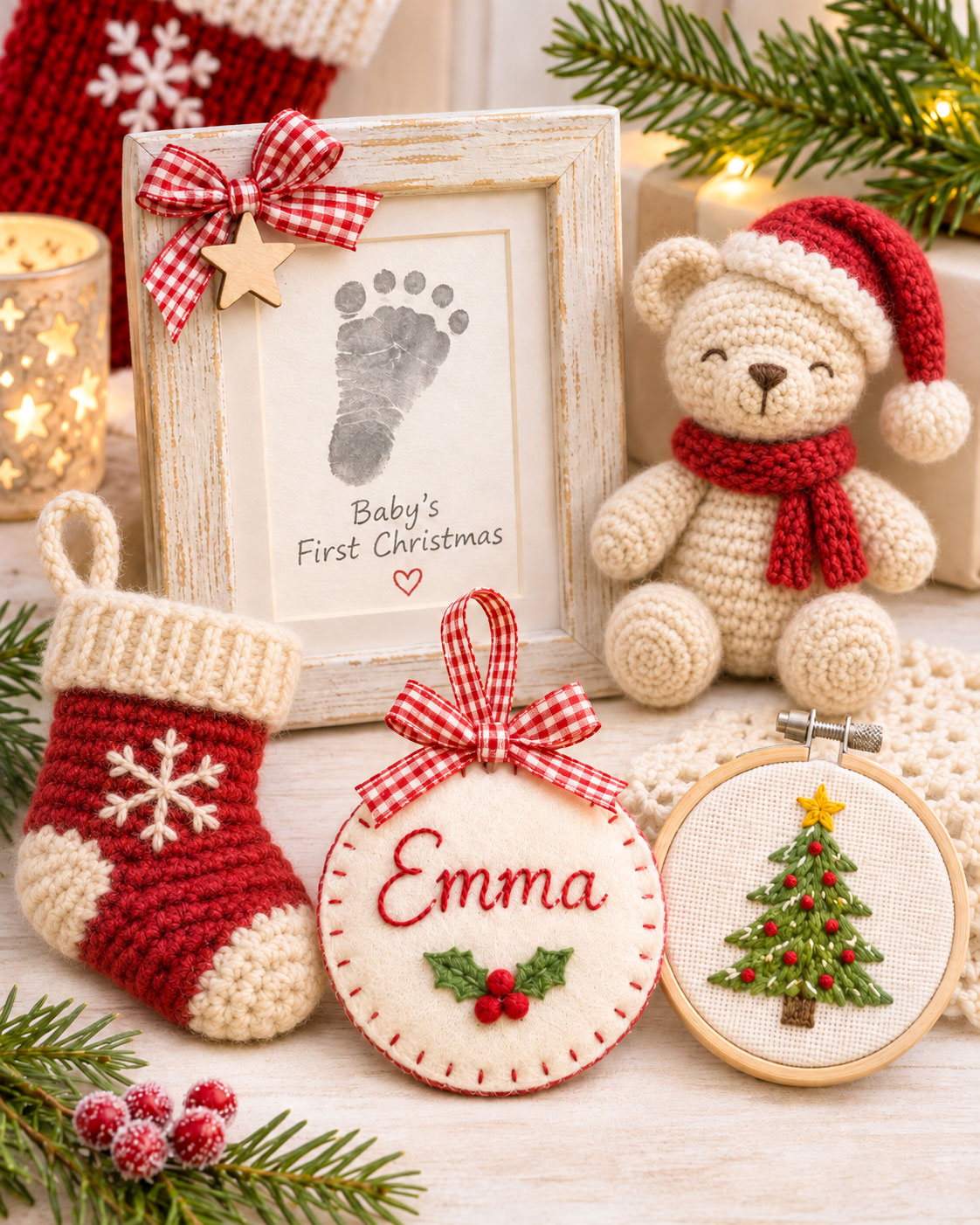
I think there's room in every baby's first Christmas stocking for one handmade surprise. It might be a little ornament, a framed handprint, or something stitched with the baby's name.
It doesn't have to be a complicated project. Sometimes the simplest things are the ones that become the sweetest memories.
A Miniature Footprint Keepsake
A tiny footprint makes a lovely first Christmas gift. You could print the baby's foot on a small piece of cardstock, let it dry completely, and place it in a miniature frame.
If you want to make an ornament instead, use a small, lightweight frame or another keepsake holder intended for display.
I'd leave the finished keepsake for the parents to hang or store. Paint, frames, hanging cords, and craft decorations don't belong in a baby's hands.
A Personalized Christmas Ornament
Choose one little ornament that tells the story of this Christmas. Maybe it has the baby's name, a tiny footprint, or a special design that matches the family's tree.
For handmade ideas, browse my baby Christmas crafts. You'll find projects that can be made into ornaments, framed pictures, and gifts for grandparents.
A Small Crochet Christmas Decoration
If you enjoy crocheting, a miniature Christmas stocking, star, or little holiday character can make a pretty keepsake.
My free Christmas crochet patterns include ornaments, baby accessories, and other holiday projects.
I'd keep crochet ornaments separate from the baby's playthings. Hanging loops, decorative stitching, beads, buttons, and other small details can make a decoration unsuitable for infant handling.
A Little Embroidered Name Keepsake
Here's another idea if you want something personal without making a large project. Embroider the baby's first name or initial on a small piece of fabric and frame it in a miniature embroidery hoop made for display.
Choose fabric and thread colors that match the Christmas stocking or nursery. That little bit of coordination can make a simple gift feel thoughtful.
You'll find more ideas on my personalized baby gifts you can make page.
Put the Keepsake in a Little Envelope
If you're giving a tiny ornament, footprint, or photograph, consider putting it in a small paper envelope before tucking it into the stocking.
Write a short note about the baby's first Christmas on the outside. It gives the parents something else to save without adding another expensive gift.
Remove the envelope, ribbon, and any other packaging before the baby gets to explore the age-appropriate presents.
Budget-Friendly Baby Stocking Stuffers
You don't have to spend a fortune filling a baby's Christmas stocking. I'd rather put the money toward a few things the baby can actually use than buy extra presents just to fill the space.
Start With Something You Were Going to Buy Anyway
If the baby needs new socks, choose a pair that will look cute peeking over the stocking cuff. If the family needs bibs or washcloths, put one of those inside.
It doesn't matter that the gift is practical. You were going to spend the money anyway, so why not make it part of Christmas morning?
Spend More on One Gift That Matters
Once you've chosen the practical item, decide what deserves the rest of your budget.
For a newborn, I'd put more toward a little book or meaningful keepsake. For an older baby, I might choose a well-made, age-appropriate toy that offers something different from what the baby already has.
You don't need several toys that do essentially the same thing.
Use Multipacks When They Make Sense
If you're putting together stockings for several babies, a multipack of socks or washcloths can be economical. Just make sure the sizes and items suit each child.
Keep any product instructions and age information with the appropriate item. Don't divide a toy set if doing so leaves you with pieces that aren't meant to be used separately.
Make One Little Keepsake
A framed footprint, an embroidered initial, or a tiny handmade ornament can make the stocking personal without adding another store purchase.
If you already have fabric, thread, paper, or craft supplies, use what you have. You don't need to buy a collection of special materials to make one little Christmas memento.
What if You Can Only Afford Two Gifts?
For a newborn, I'd choose a small book and one useful item or keepsake. For an older baby, an age-appropriate toy and a board book would make a nice pair.
You can stop there.
A stocking with three thoughtful gifts is better than one stuffed with things nobody wanted.
How to Fill Baby's First Christmas Stocking
Once you've chosen the gifts, putting the stocking together is the fun part. You don't need complicated wrapping or a dozen little packages.
I'd arrange everything so the stocking looks full at the top without packing it so tightly that you have to tug the gifts out.
Start With the Larger Gifts
Put the largest sturdy item into the stocking first. That might be a board book or a boxed toy.
Keep fragile keepsakes separate until you're ready to arrange the top.
Fill the Gaps With Practical Things
Roll a pair of baby socks or fold a cotton bib and tuck it beside the larger gift.
These little items take up awkward spaces and help the stocking keep its shape without needing extra purchases.
Let One Pretty Gift Show at the Top
A little board book, pair of striped socks, or folded bib peeking over the stocking cuff can look charming.
If you have a personalized ornament, place it where an adult can see it without needing to bury it among the toys.
Just remember that an ornament with a hanging cord is a decoration, not something to hand to the baby.
Keep the Wrapping Simple
You can wrap the gifts for an older child, but a baby doesn't need the extra paper, ribbons, or tiny gift tags to enjoy Christmas morning.
If you're wrapping gifts for photographs, have an adult remove the paper, tape, ribbons, and packaging before offering any toy to the baby.
Choosing the Stocking Itself
I'd choose a stocking that's roomy enough to use again as the child grows. A miniature one may look adorable beside a newborn, but it won't hold much when that baby is a little older.
If you're still shopping for the stocking, have a look at my baby Christmas stocking ideas. You'll find personalized, handmade, quilted, and crochet styles.
And don't feel that the stocking needs to match every decoration in the house. One that has the baby's name on it and fits in with the family's Christmas traditions is a lovely choice.
Keep filled stockings and their contents out of the baby's reach except when an adult is helping with the gifts.
How to Choose Age-Appropriate Baby Stocking Stuffers
Before buying a stocking stuffer, check that it's actually made for a baby. Just because a toy is small and cute doesn't mean it's suitable for an infant.
Look at the age label on the package. If the toy is marked for ages three and older, leave it out of a baby's stocking.
The U.S. Consumer Product Safety Commission's toy guidance explains why age recommendations, small parts, and packaging matter when choosing children's gifts.
What I'd Leave Out
- Toys with detachable small parts
- Beads, charms, or decorative pieces that could come loose
- Small balls that present a choking hazard
- Teething necklaces and jewelry
- Water beads and expanding sensory beads
- Loose magnets and button batteries
- Latex balloons and balloon pieces
- Hard candy, nuts, and other choking hazards
- Long cords, ribbons, and dangling decorations
Don't Treat Keepsakes Like Toys
A tiny framed footprint, handmade ornament, or crochet Christmas decoration may be perfect for remembering baby's first Christmas. That doesn't mean it belongs in the baby's play area.
Let an adult unwrap and put those keepsakes away. Save the baby's playtime for products intended for infant use.
Check the Gifts Again Before Christmas Morning
Remove the packaging, inspect each toy, and make sure nothing has come loose or been damaged.
Also keep Christmas gifts, ornaments, stuffed items, and other loose objects out of the baby's crib or other sleep space.
I'd rather give one age-appropriate toy than take a chance on something simply because it looks cute in the stocking.
Frequently Asked Questions About Baby Stocking Stuffers
Do you need to fill a Christmas stocking for a newborn?
Not at all. A newborn won't know whether the stocking is full or empty. If you want to start a family tradition, a little book, a useful baby item, and a first Christmas keepsake are plenty.
Can I buy stocking stuffers for a baby who hasn't been born yet?
Yes. I'd stick to gifts that don't depend on knowing the baby's exact size or development, such as a small board book, washcloths, or a family keepsake. If you buy clothing, consider how old the baby will be when the gift is actually used.
Should I wrap each baby stocking stuffer separately?
You can, but it isn't necessary. For a young baby, I would keep the presentation simple. Let an adult handle the wrapping and remove all ribbons, tags, tape, and packaging before giving the baby an appropriate toy.
What if the baby's Christmas stocking is too small for the gifts?
Don't force everything inside. Put one or two little items in the stocking and place the larger gift beside it. A board book, for example, can lean against the stocking rather than getting bent to fit.
Can I include gifts the baby will grow into?
Yes, as long as you keep them stored away until the child reaches the appropriate age and abilities. I'd put a gift meant for later in a separate package so it doesn't get mixed in with toys the baby can use now.
What's the nicest thing to save from baby's first Christmas stocking?
A personalized ornament, tiny handprint or footprint, or a small family photograph makes a lovely keepsake. You might also save the original stocking and a handwritten note about that first Christmas.
You don't need all of those things. One little reminder of how small the baby was can mean more than a whole box of holiday decorations.
When you click on links to various merchants on this site and make a purchase, this may result in this site earning a commission. This does not affect the price you pay.

UBGI Gold Standard 2026
Reviewed under the site's
editorial checklist.
Photos, decorating ideas, party setups and reader submissions are shared for inspiration unless a page is specifically presented as a pattern, tutorial, reference guide or step-by-step project. Follow the instructions, measurements, safety guidance and manufacturer directions provided for the particular project or product.
About Jan | Contact | Baby Nursery Ideas (Blog) | Site Map | Privacy Policy | Disclosure Policy | Disclaimer | Affiliate Disclosure | Earnings Disclosure | Facebook | Pinterest
I am a participant in the Amazon Services LLC Associates Program, an affiliate advertising program designed to provide a means for us to earn fees by linking to Amazon. As an Amazon Associate I earn from qualifying purchases.
Copyright © 2006-2026. All Rights Reserved.