Crystal Mini Chandeliers for a Baby's Nursery
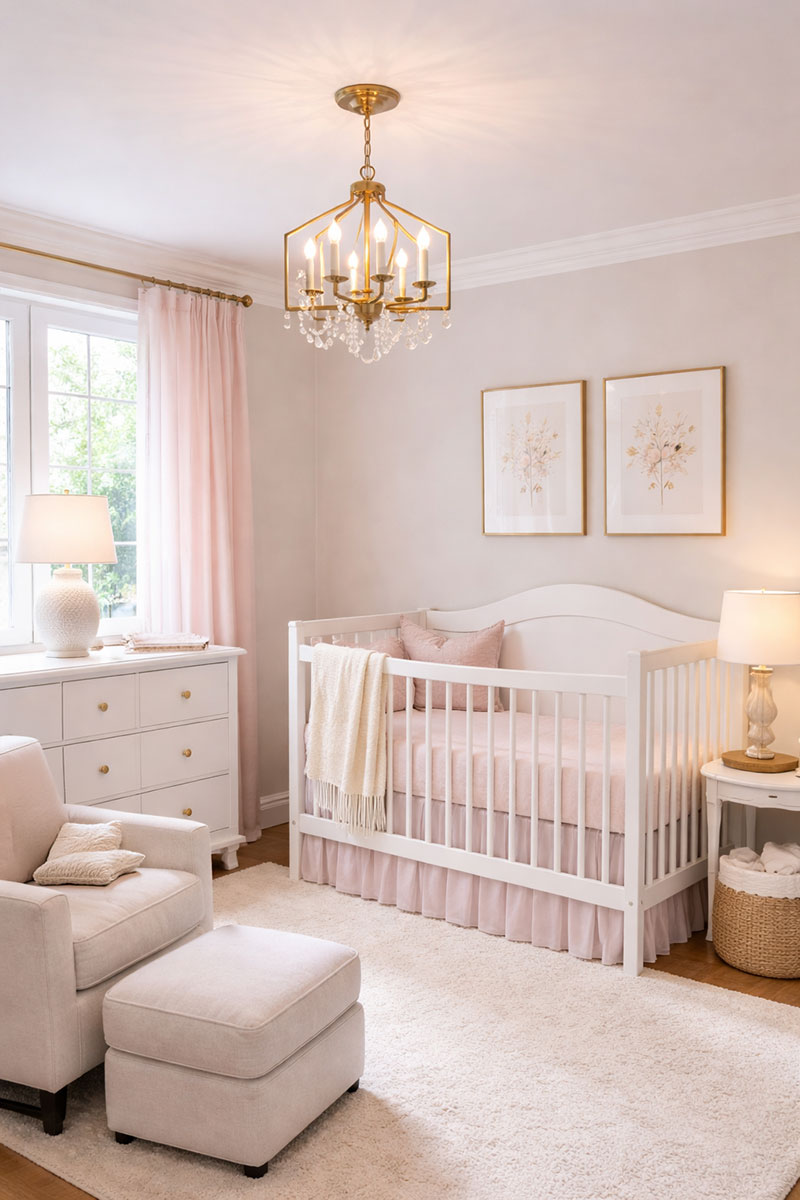
Mini chandeliers for nurseries can completely change how a small room feels the moment the light turns on, especially in the quiet early evening when the glow softens everything instead of spotlighting it. I’ve noticed that in tighter nursery layouts, a well-sized chandelier doesn’t make the ceiling feel lower like you might expect. It actually draws the eye upward and makes the room feel finished in a way a basic flush mount never quite does. The key is choosing a piece that looks delicate when the crib is right underneath it, not bulky or heavy when you’re standing there during a late-night diaper change or feeding.
Nursery lighting often looks simple at first — until you realize brightness, placement, and fixture style all change the feel of the room:
The lighting choice parents rely on most at night
Why ceiling lighting changes the whole nursery mood
The lighting setups that actually work in real nurseries
For more lighting tips see: nursery lighting ideas or explore Elegant nursery lighting setups.
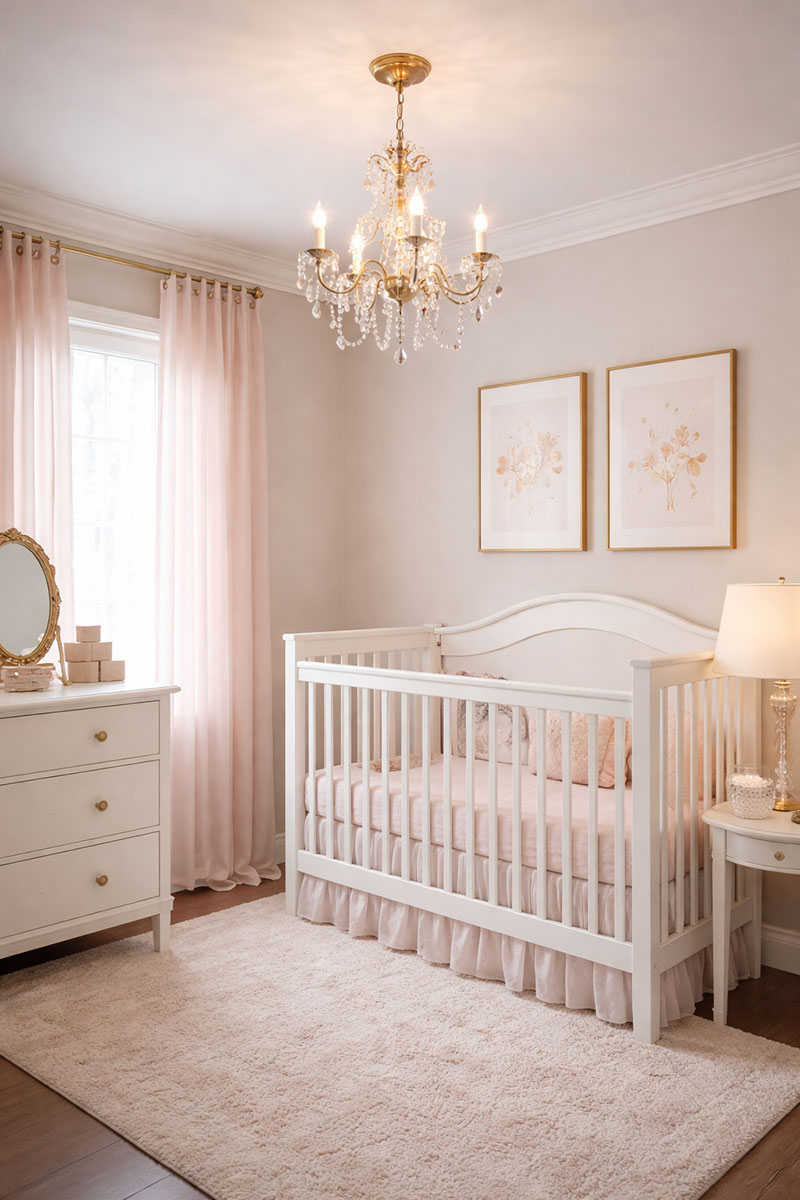
compact ceiling light for small nursery spaces
Jump to what matters most:
Why mini chandeliers work in small nurseries How to choose the right size Styles that fit without crowding the room Placement that works in real nursery layouts How to get usable light at nightWhy Mini Chandeliers for Nurseries Work in Small Rooms
Mini chandeliers for nurseries work because they solve a very specific problem in small rooms. The lower half fills up fast with a crib, dresser, and storage, while the ceiling still feels empty. That imbalance is what makes the room feel unfinished, even when everything important is already in place.
A mini chandelier corrects that without adding bulk. It gives the ceiling structure, anchors the crib area, and makes the room feel intentional instead of pieced together over time.
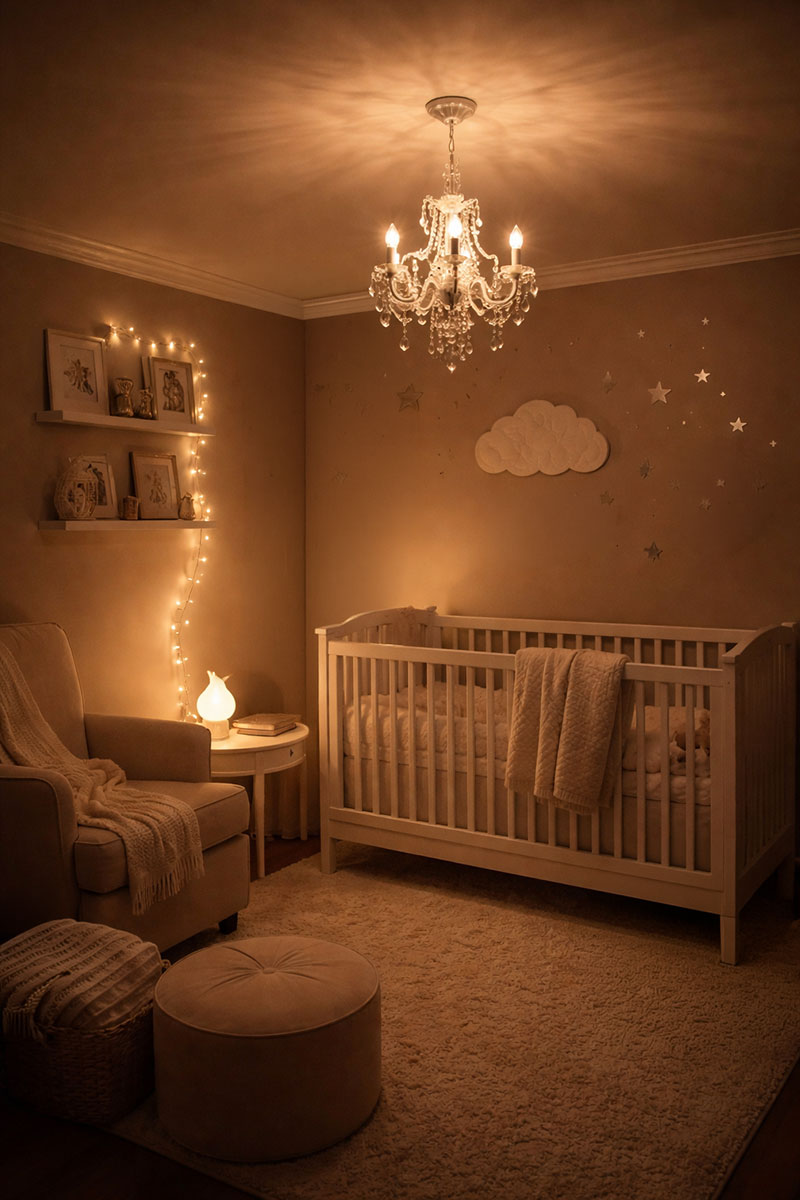
Most parents notice this difference at night. The room can look fine during the day, then feel flat during a diaper change when the overhead light turns everything sharp. A chandelier changes how the light spreads, which keeps the room from feeling harsh.
I have seen this show up in smaller nurseries where everything lines up at the same height. The crib rail, dresser top, and window trim all sit close together visually. Adding even a small ceiling fixture breaks that line and lifts the entire room.
This works best when the lighting is part of a full setup. See nursery lighting ideas for a complete plan that balances overhead and lower light.
If the goal is a more styled space overall, this also connects naturally with baby nursery themes, where lighting plays a key role in how the room comes together.
How to Choose the Right Size Without Guessing
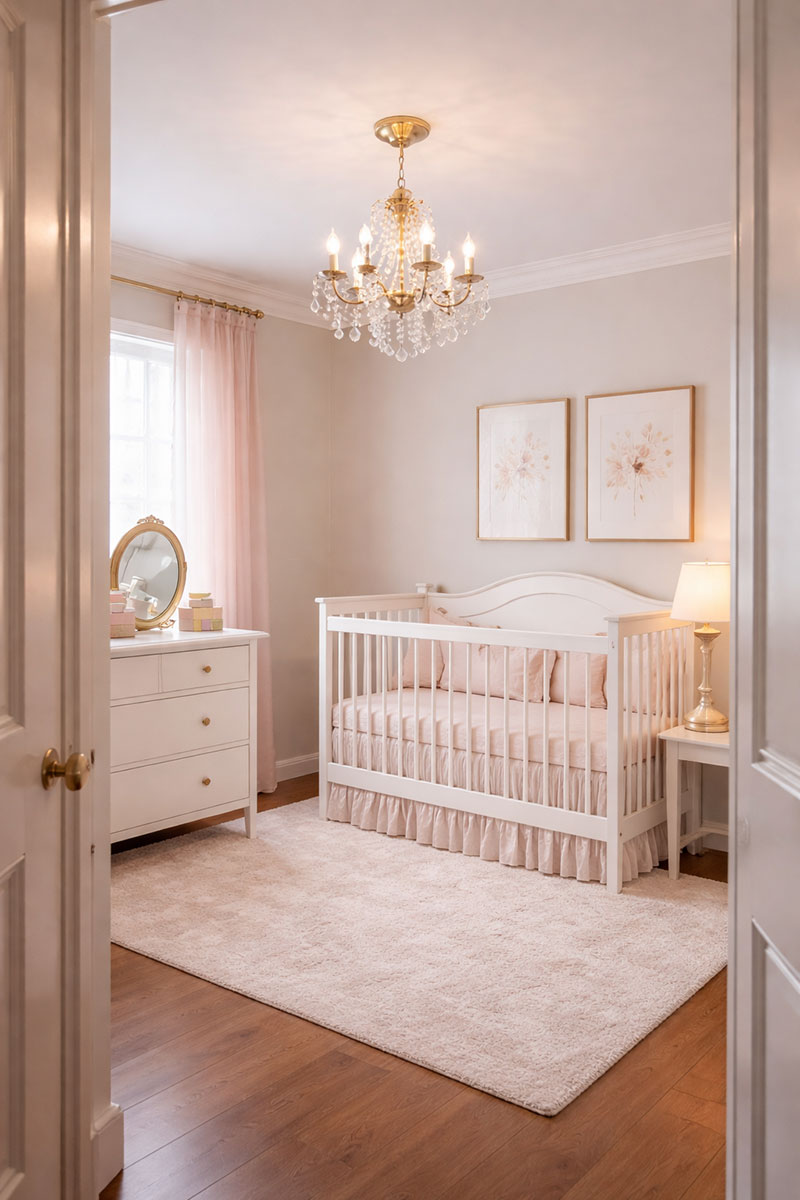
The right size mini chandelier is based on the crib area, not the full room. In most nurseries, a fixture between 12 and 18 inches wide gives enough presence to matter without crowding the ceiling.
Mini chandelier definition: A mini chandelier for a nursery is a compact ceiling fixture, usually 12 to 18 inches wide, designed to provide overhead light and visual structure without overwhelming a small space.
Most sizing mistakes show up after installation. A chandelier that is too wide starts competing with the crib, while one that is too small disappears once everything else is in place.
Parents often notice this when standing beside the crib. If the chandelier feels tied to that space, it works. If it feels like it is floating somewhere else, it does not.
One reliable test is simple. Stand where you normally pause before putting the baby down. If the fixture feels centered on that moment, the size is right.
Styles That Fit Without Crowding the Room
Style affects how the room feels just as much as size. A fixture can measure correctly and still feel heavy if the shape is dense.
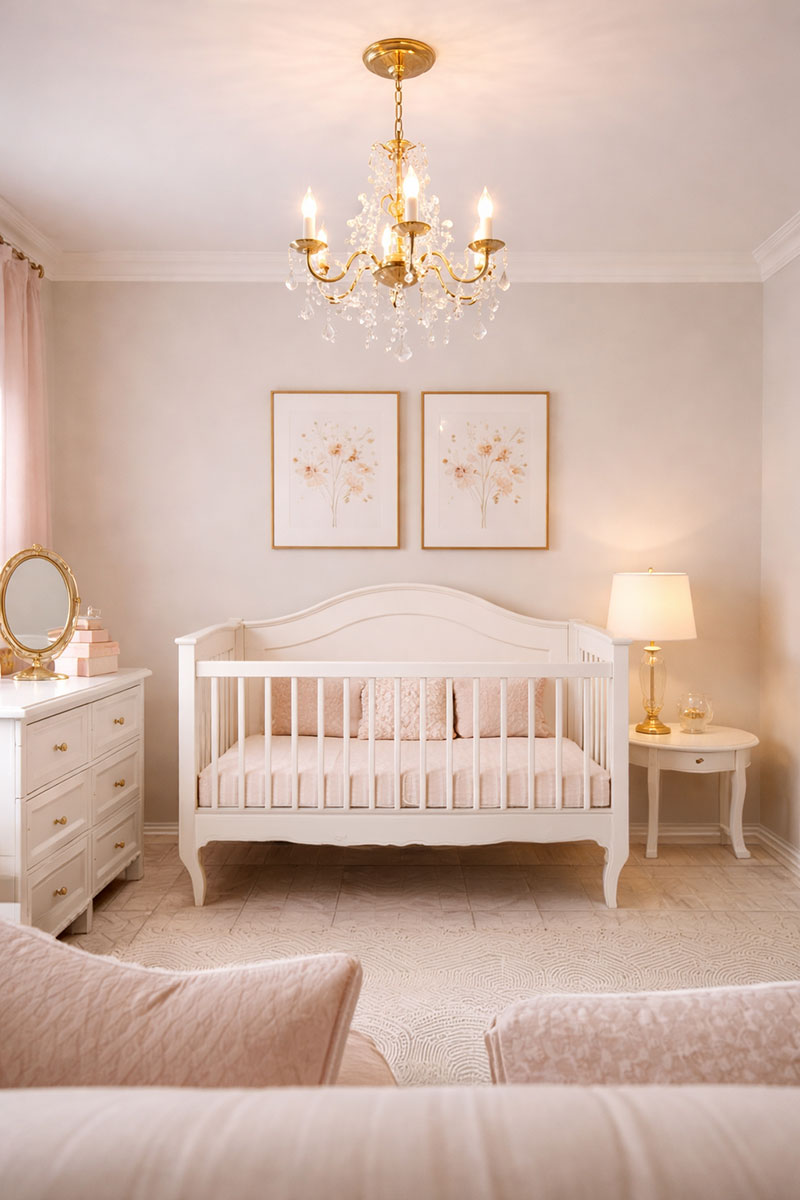
Open-frame mini chandeliers usually work best in small nurseries. They allow the ceiling to stay visible and keep the room from feeling closed in.
This becomes obvious when blackout curtains are pulled and the overhead light is the only source. Some fixtures suddenly feel heavier at that moment, while others still feel open.
Most nurseries already have strong lines from furniture. A chandelier with curved or lighter elements helps break that pattern and keeps the space from feeling stiff.
The finished result should feel easy to read. You notice the crib first, then the chandelier as the piece that completes the space.
Placement That Works in Real Nursery Layouts
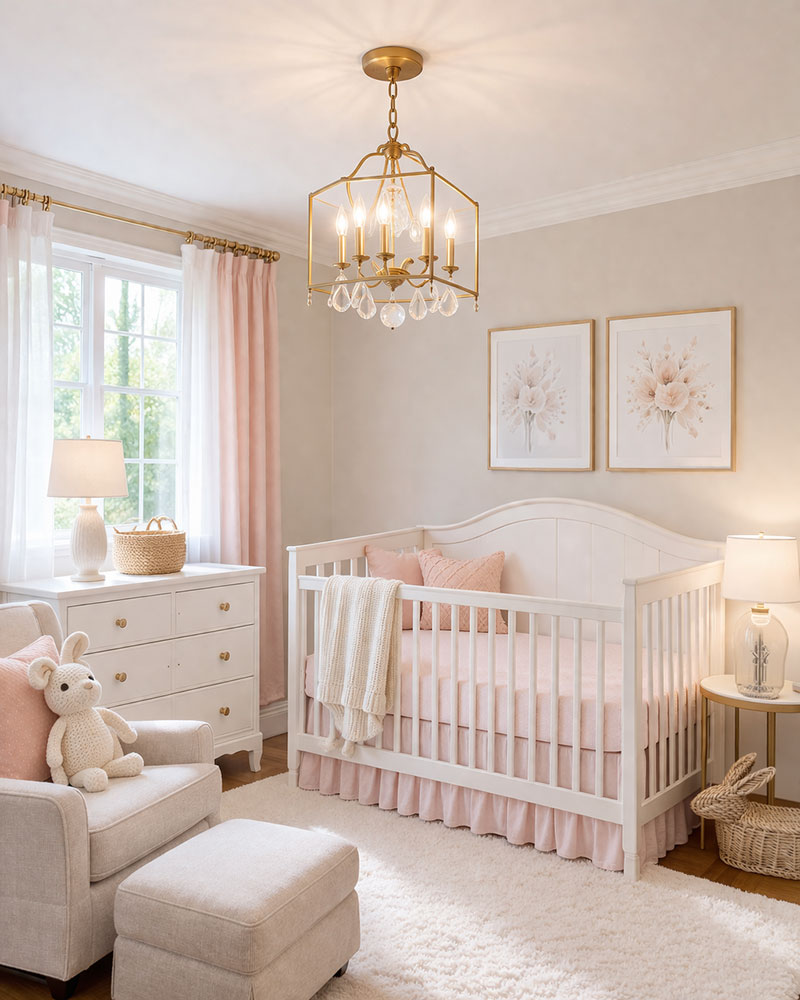
Mini chandelier placement should follow how the nursery is used, not just the center of the ceiling. In many rooms, the crib is slightly offset, and that changes where the light should feel anchored.
Parents often notice this after a few days of actually using the space. The fixture may be centered on paper, but it feels off when you are standing beside the crib at night.
Aligning the chandelier with the crib area usually creates a stronger layout. The room reads clearly as soon as you walk in, which matters more in a smaller space.
Keep the fixture high and out of reach.
To align everything correctly, see where to put a crib in a nursery and small nursery layout ideas. These help the lighting and layout work together instead of competing.
How to Get Usable Light at Night
A chandelier that looks right during the day can still feel wrong at night if the light is not controlled. This usually shows up during the first few nighttime routines.
Using a dimmer or dimmable bulbs changes how the room works. The same fixture can provide full light during the day and a lower level when the room needs to stay calm.
Most parents end up using layered lighting without planning it. The overhead light comes on briefly, then a lower light takes over for the rest of the routine.
That is why creative nursery lighting ideas can make all the difference.
When the lighting is set up well, the nursery works the same way in the middle of the night as it does during the day.
Mini Chandeliers for Nurseries Quick Answer
A mini chandelier for a nursery is a compact ceiling fixture that adds overhead light and visual structure without overwhelming a small room. It should be sized to the crib area, mounted high, and used with dimmable or layered lighting for best results.
Small rooms need disciplined ceiling design.
FAQ About Mini Chandeliers for Nurseries
Are mini chandeliers safe in a nursery?
Yes, when securely installed and kept out of reach of the crib and surrounding furniture.
How low should a mini chandelier hang?
Close-to-ceiling or semi-flush fixtures work best in most nurseries.
Do they provide enough light?
They provide overhead light, but layered lighting improves usability.
What styles work best?
Open-frame and lighter-profile fixtures typically work best in small spaces.
Can they make a nursery feel larger?
They can help the room feel more balanced by drawing the eye upward.


About Jan | Contact | Baby Nursery Ideas (Blog) | Site Map | Privacy Policy | Disclosure Policy | Disclaimer | Affiliate Disclosure | Earnings Disclosure | Facebook | Pinterest
I am a participant in the Amazon Services LLC Associates Program, an affiliate advertising program designed to provide a means for us to earn fees by linking to Amazon. As an Amazon Associate I earn from qualifying purchases.
Copyright © 2006-2026. All Rights Reserved.