Large Wooden Letters for the Nursery Wall
Large wooden letters for the nursery wall are one of those finishing touches that instantly make a baby’s room feel personal. Whether you’re spelling out a name or using a single initial, they turn a plain wall into something meaningful—without overwhelming the space or locking you into a theme you’ll outgrow.
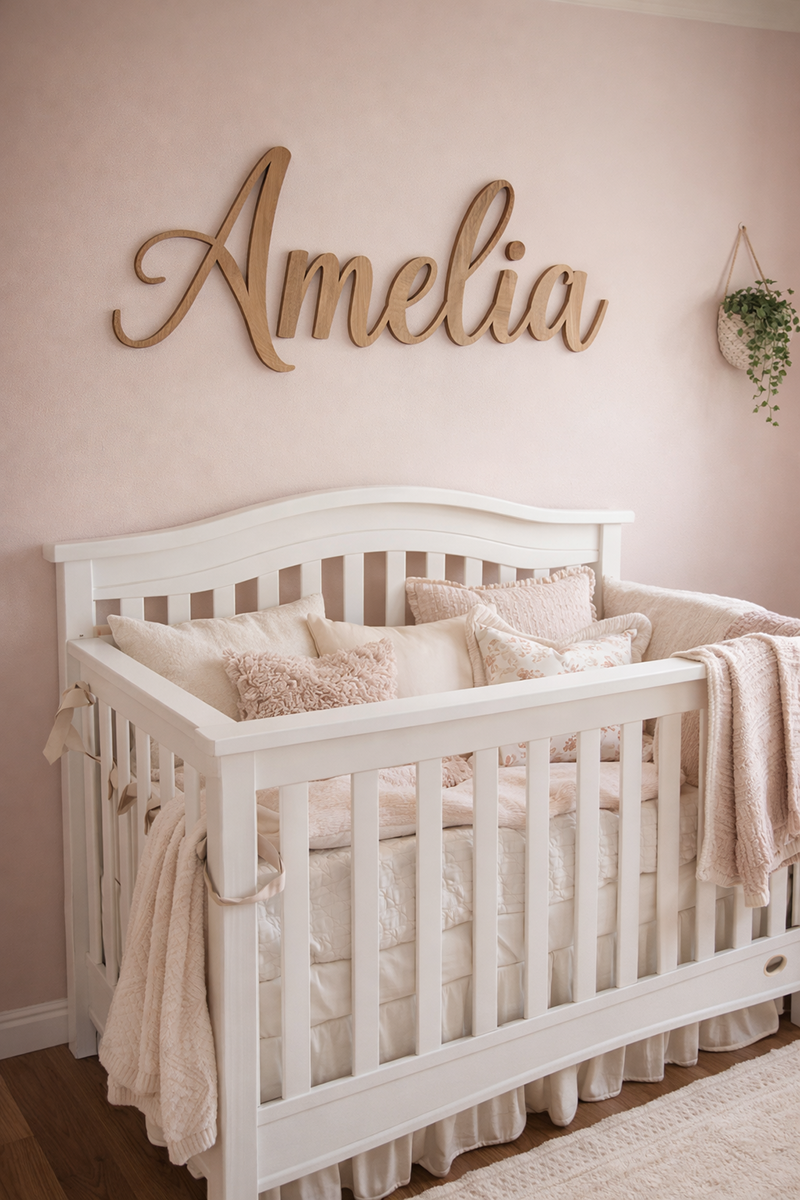
If you’ve ever stared at a blank wall and felt like the nursery is “almost there,” this is one of those finishing touches that makes everything click. Below you’ll find the best placement ideas, sizing help, styling combinations, and a few DIY tricks to make your letters look custom (even if you bought them ready-made).
Large wooden letters for the nursery wall: what makes them look “designed” (not random)
The difference between “cute letters on a wall” and a nursery that feels professionally styled usually comes down to three things: scale, spacing, and what you pair them with. When those three are right, the letters look intentional — like they were always meant to be part of the room.
1) Choose a size that matches the furniture underneath
A simple rule that works in most nurseries: the letter grouping should be close to the width of the piece below it (crib, dresser, changing table, or reading nook). If the letters are too small for the furniture, they can look lost. If they’re too large, they can feel like they’re “shouting.”
- Over a crib: go wider and slightly higher than you think — it photographs beautifully.
- Over a dresser/changing area: slightly smaller is fine, especially if you add a frame ledge or small wall décor beside it.
- Over a rocker: keep it cozy and centered, and add one soft companion piece (like a small wall banner or a tiny shelf).
2) Make the spacing consistent (this is the secret sauce)
If you want a clean, high-end look, keep the space between letters consistent — even if the name has wide and narrow characters. A quick trick: cut a strip of cardboard to your preferred spacing and use it as a “gap guide” while placing each letter.
3) Pick one “anchor style” so the wall feels calm
Letters can be rustic, modern, classic, whimsical, or boho — but the wall looks best when you commit to one main style direction and repeat it elsewhere in the room (in the light fixture, textiles, frames, or hardware).
If you want more wall styling ideas that layer beautifully with name letters, you’ll love my page here:
Where to put large wooden name letters in a nursery
Most parents immediately think “over the crib,” and that’s a beautiful spot — but it’s not the only one. If your crib wall already has a mural, wallpaper, or a statement piece, letters can look even better in a secondary location.
Over the crib
This is the classic placement because it creates a natural focal point. Keep the bottom of the letters high enough that the overall wall still feels open and airy — and try centering the name with the crib rather than centering it with the wall itself (those are not always the same!).
Over the dresser or changing table
This is one of my favorite placements because it makes everyday routines feel personal. It also looks fantastic in photos when you capture diapering moments or little outfit changes.
Above a reading corner
If you have a small bookshelf, a floating ledge, or a comfy rocker setup, letters above that corner make it feel like a “mini room within the room.” Add a soft throw blanket or a pillow, and suddenly it looks like a styled magazine vignette.
Best paint and finish ideas for wooden nursery letters
Here’s the truth: you can match them perfectly to your nursery… but you don’t have to. Often, the prettiest nurseries use letters that coordinate, not letters that match exactly.
- Soft matte white: clean, timeless, and works in every theme.
- Natural wood stain: warm and cozy, especially with neutral linens and soft lighting.
- Greige / warm taupe: a modern neutral that photographs beautifully.
- Dusty blush or muted terracotta: adds warmth without feeling overly bright.
- Navy, forest green, or charcoal: bold but still classic when paired with lighter walls.
One little personal note: I’ve had the best luck using a matte finish in nurseries because it looks soft, it hides tiny bumps, and it doesn’t glare in flash photos when family visits and starts snapping pictures.
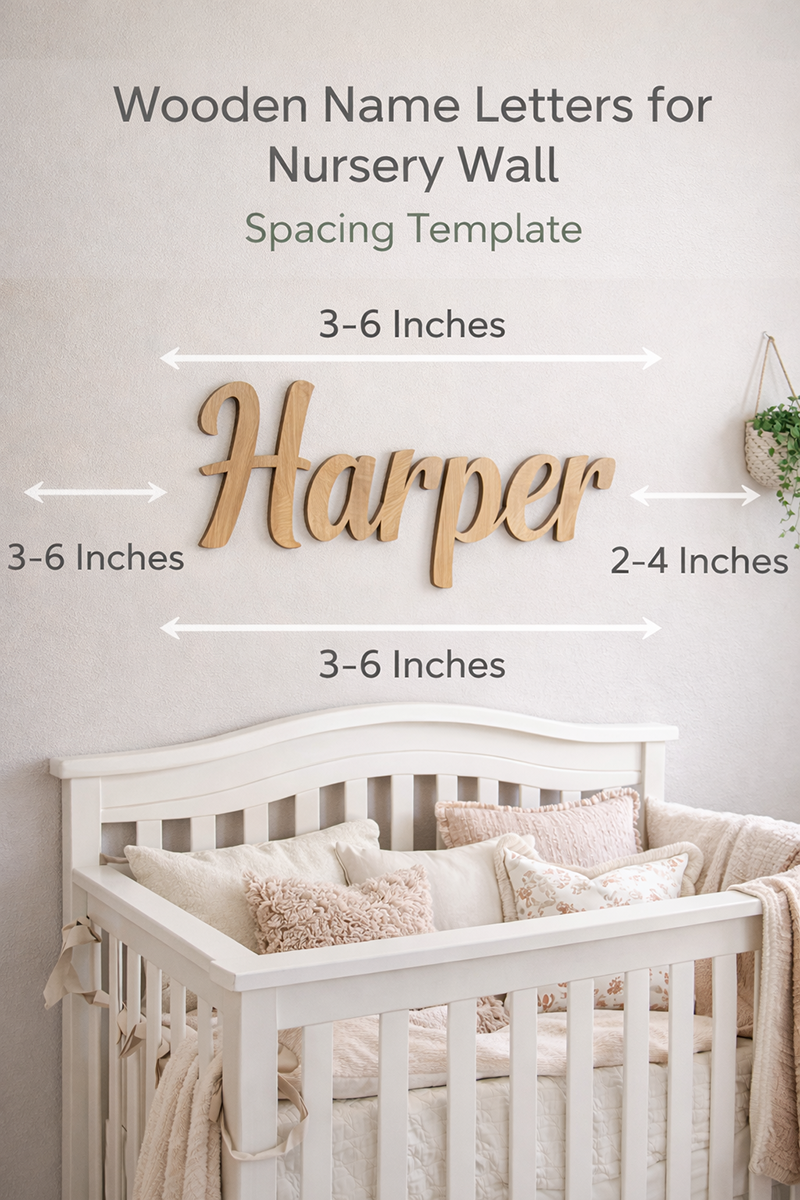
Caption: A simple spacing guide (even a scrap of cardboard) keeps large wooden letters looking neat and professionally placed.
How to hang large wooden letters securely without making a mess
Because letters come in different materials (lightweight MDF, solid wood, hollow wood, or even layered designs), the best hanging method depends on weight. If you’re unsure, do a quick “hand test”: if a letter feels heavier than you expected, treat it like a small frame and use a more secure approach.
Low-mess hanging options
- Removable picture hanging strips: best for lightweight letters and smooth walls.
- Wall putty / museum gel: good for small accents, not great for heavier pieces.
- Small finishing nails: simple, strong, and leaves tiny holes that patch easily.
- Sawtooth hangers: ideal if the letters are thick/heavy and you want them perfectly level.
If your nursery wall is part of a larger “feature wall” idea (mural, painted arch, wallpaper, or color block), you might like these room-level inspiration ideas too:
Design combos that make wooden letters look gorgeous in photos
If you’re aiming for a nursery that photographs well (for baby announcements, monthly photos, or sweet everyday snapshots), pair your letters with one supporting element that repeats elsewhere in the room.
- Letters + a painted arch behind the crib (soft, modern, and easy to refresh later).
- Letters + a tiny shelf ledge with one framed print and a small plant (simple and polished).
- Letters + a wall mural that stays light and airy (clouds, soft landscape, or minimal line art).
- Letters + a bunting/banner if you want a storybook feel without overwhelming the wall.
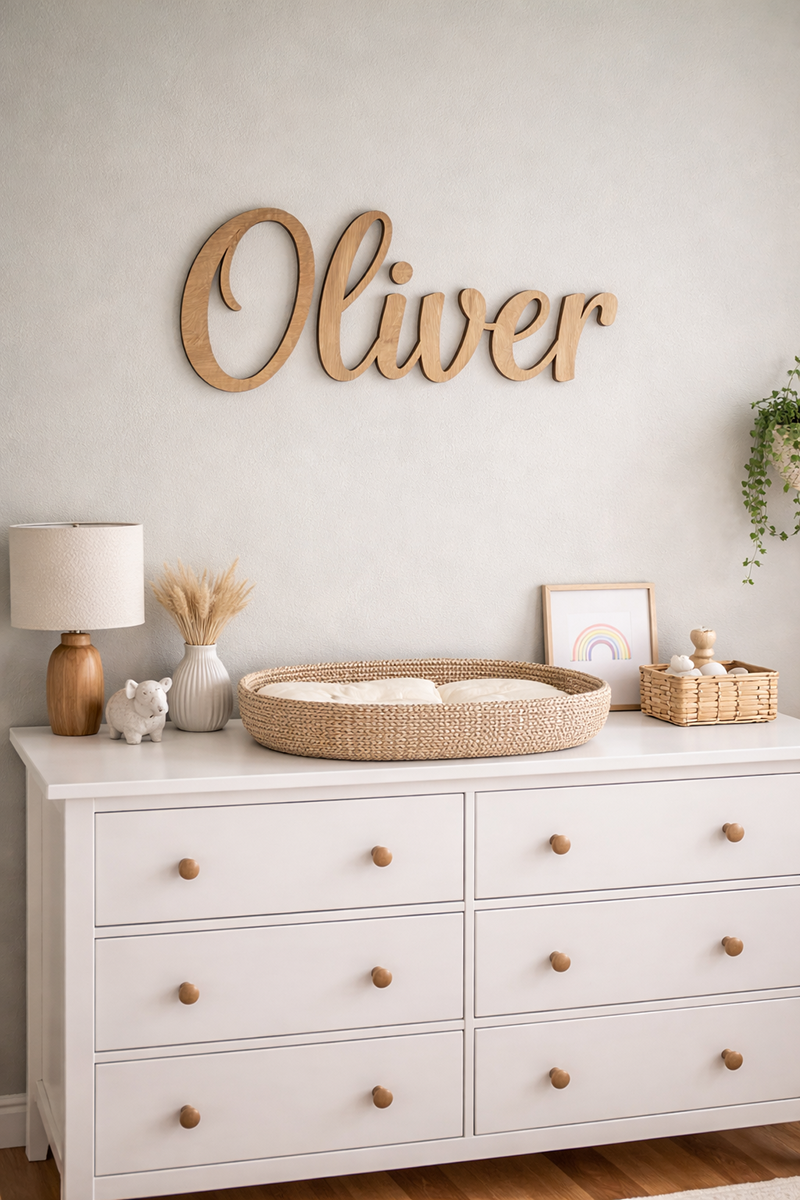
Caption: Over a dresser, large wooden letters add personality without competing with your main crib wall focal point.

FAQ: Large wooden letters for the nursery wall
What size letters look best in a nursery?
Most nurseries look balanced with letters that are large enough to read from the doorway. If you’re choosing between two sizes, the slightly larger option usually looks better once it’s up on the wall — especially over a crib or wide dresser.
Should letters match the crib color?
Not necessarily. Matching can look beautiful, but coordinating often looks more “designed.” For example, natural wood letters can look stunning with a white crib and warm neutral textiles, because they add softness and depth.
Do letters look better in uppercase or lowercase?
Uppercase feels bold and modern; lowercase (or a mix) feels softer and more playful. If your nursery is calm and minimal, uppercase can be a clean statement. If your nursery is whimsical or storybook-leaning, softer typography often feels sweeter.
One simple “finishing touch” link you’ll be glad you saved
If you’re still building out the wall décor around your baby’s name letters, this page is a helpful next step because it gives you lots of mix-and-match ideas that layer nicely:
Helpful safety note when decorating nursery walls
Any time you’re adding décor above a crib, dresser, or changing area, it’s wise to think in terms of secure mounting and stability. For general guidance on anchoring furniture and reducing tip-over risks in children’s spaces, you can review the U.S. CPSC’s tip-over information here:
When you click on links to various merchants on this site and make a purchase, this may result in this site earning a commission. This does not affect the price you pay.

UBGI Gold Standard 2026
Reviewed under the site's
editorial checklist.
Photos, decorating ideas, party setups and reader submissions are shared for inspiration unless a page is specifically presented as a pattern, tutorial, reference guide or step-by-step project. Follow the instructions, measurements, safety guidance and manufacturer directions provided for the particular project or product.
About Jan | Contact | Baby Nursery Ideas (Blog) | Site Map | Privacy Policy | Disclosure Policy | Disclaimer | Affiliate Disclosure | Earnings Disclosure | Facebook | Pinterest
I am a participant in the Amazon Services LLC Associates Program, an affiliate advertising program designed to provide a means for us to earn fees by linking to Amazon. As an Amazon Associate I earn from qualifying purchases.
Copyright © 2006-2026. All Rights Reserved.