1979 Jenny Lind Baby Crib Parts Request
Jenny Lind crib parts can vary widely depending on the manufacturer, model, and time period in which the crib was produced.
Need to check current crib parts inventory?
If you are missing crib screws, bolts, brackets, barrel nuts, mattress support hardware, or a hardware kit, you can check current inventory here:
Inventory listings are provided as general reference only. Crib parts are brand-specific and model-specific, and no listing should be treated as compatibility confirmation for any crib. Before purchasing or using any replacement crib hardware, verify the crib brand, exact model number, production date, part location, measurements, and original manufacturer documentation whenever possible. Do not use a crib with missing, damaged, substituted, or unverified parts.
Although many cribs share the same spindle-style appearance, the hardware, mattress support systems, and connection components are not standardized. Even cribs that look nearly identical can use different internal parts.
Common components may include hooks, brackets, rods, support bars, springs, rails, and fasteners that work together as part of the crib’s original design.
This page brings together commonly referenced Jenny Lind crib hardware and structural components to help identify how these parts were originally used and how they differ across models.
Because these cribs were produced by multiple manufacturers over several decades, identifying parts is typically based on comparing existing components to original manufacturer diagrams or documented examples from the same production period.
A late 1970s Jenny Lind–style baby crib may use metal mattress support components that differ from those found on other cribs with a similar spindle-style appearance.
Because Jenny Lind cribs were produced by many different manufacturers over the years, mattress support hardware was not always standardized. Cribs that look alike on the outside can use different support bars, hooks, brackets, or spring attachments depending on the maker and production period.
In older manuals and parts diagrams, these components were typically identified by their function within the mattress support system rather than by the overall crib style. Comparing the hardware to original manufacturer materials or documented examples from the same era is usually the best way to understand how the parts were described.
This type of reference is most useful for identification and historical background rather than for repair or reuse.
To get an overview of Jenny Lind crib styles and how parts vary by manufacturer, see this Jenny Lind crib guide.
Jenny Lind Baby Crib Rail Glider
by connie
(moultrie ga)
A Jenny Lind crib rail glider is a small component used in some crib designs to allow the rail to move smoothly within its track or guide system.
These pieces are typically positioned along the lower rail assembly and help reduce friction during movement, depending on the crib’s original design.
Because Jenny Lind–style cribs were produced by multiple manufacturers, rail glider shape, size, and placement can vary between models. Identifying the correct type usually depends on matching the component to original manufacturer diagrams or documented examples from similar crib designs.
Crib Mattress for a Jenny Lind
by brandi
(texas)
A vintage Jenny Lind–style crib from the late 1970s may not fit modern crib mattresses the same way newer cribs do.
Many current crib mattresses are designed with slightly rounded corners, which can create visible gaps when placed inside older crib frames that were built for more squared-edge designs.
These differences are often due to changes in manufacturing standards and materials over time, even though the overall crib size appears similar.
Understanding how mattress shape and corner design have evolved can help explain why fit issues occur with older crib models.
For general reference on crib mattress sizing, materials, and fit considerations, see this guide:
crib mattress for a Jenny Lind for sale.
Jenny Lind Model 45304 Crib Parts
by Kim
(Munford, TN., USA)
Jenny Lind Model 45304 crib parts refer to the hardware and components originally used with that specific crib design, including pieces associated with the side rail mechanism.
Some older Jenny Lind–style cribs included release brackets as part of a movable side system, which allowed the rail to be raised or lowered.
Because these cribs were produced by different manufacturers, such as Evenflo or other brands, part design and compatibility can vary even when model numbers appear similar.
For vintage models from the late 1980s, identifying the correct hardware typically depends on matching the component to original manufacturer documentation or to verified examples from the same model.
Jenny Lind Baby Crib Model 1507 81 164 Parts
Jenny Lind Baby Crib Model 1507 81 164 parts refer to the hardware components originally used with that specific crib design, including brackets and connection pieces within the frame.
An ear bracket is typically a small structural component used to secure or stabilize sections of the crib, depending on the model’s design.
Because Jenny Lind–style cribs were produced by different manufacturers over many years, part shapes, sizes, and attachment methods can vary even when model numbers appear similar.
For older cribs, identifying the correct component usually depends on matching the part to original manufacturer documentation or to verified examples from the same model.
Hopkins Jenny Lind Baby Crib Parts
by Kay M
(Washington VA)
A Hopkins Jenny Lind–style crib may include metal mattress support springs and hardware that were specific to that manufacturer’s design.
While the wooden frame can remain intact over time, the metal components—such as springs, brackets, and support hardware—may differ from those used in other Jenny Lind–style cribs.
Because these cribs were produced by multiple companies, hardware systems were not standardized, and similar-looking cribs can use different mattress support designs and connection methods.
For vintage models, identifying original components is typically based on manufacturer documentation or comparison with verified examples from the same crib design. These references are most useful for understanding how the crib was originally constructed.
Hanging Hooks Parts for a 1978 Jenny Lind Baby Crib
by Laurie
(TEXAS)


Metal Hanging Hooks parts for 1978 Jenny Lind baby crib bed
Some 1978 Jenny Lind–style baby cribs used metal hanging hooks as part of the mattress support system, allowing the mattress frame to be suspended within the crib structure.
These hooks were designed to connect the mattress support to the crib frame and could vary in shape, length, and attachment style depending on the manufacturer and specific model.
Because Jenny Lind cribs from this period were produced by different companies, hardware configurations were not standardized, and similar crib designs may use different types of support hooks.
Identifying these components typically involves comparing them to original manufacturer diagrams, parts lists, or documented examples from the same production era.
JENNY LIND BABY CRIB HARDWARE
Some Jenny Lind–style baby cribs used an upper track or guide as part of the side rail mechanism, allowing a hand-release component to move within the track.
In certain crib manuals, this type of piece may be identified by a specific part number, such as PH53, depending on the manufacturer’s labeling system.
Because Jenny Lind cribs were produced by multiple companies, track design, dimensions, and attachment methods can vary between models even when the crib style appears similar.
Identifying this type of component typically involves referencing original manufacturer instructions or parts diagrams where part numbers and hardware functions are documented.
For general hardware naming and identification, see this crib parts reference guide.
Jenny Lind Wood Crib Brackets
by Jim
(Wendell, NC)

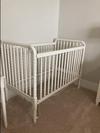
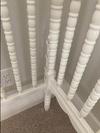
White Jenny Lind Wood Crib Manufactured in 1987


|

|
Some Jenny Lind–style baby cribs use metal brackets to support and secure the mattress frame at different height levels.
In adjustable mattress designs, these brackets are typically attached to the crib frame and hold the mattress support system in place.
Because Jenny Lind cribs were produced by multiple manufacturers over many years, bracket shape, size, and mounting style can vary depending on the specific model and production period.
Identifying the correct bracket type usually depends on comparing the component to original manufacturer diagrams or documented examples from similar crib designs.
Jenny Lind Baby Crib Parts and Instructions
by Gary
(Texas)
Jenny Lind–style baby cribs can include a variety of hardware components such as long machine screws, curved metal connectors, support rods, springs, brackets, and wood fasteners that work together as part of the crib’s structure.
Because these cribs were produced by many different manufacturers, the exact combination and design of parts can vary, even when the overall crib style appears similar.
When multiple components are present but others are missing, identifying the full hardware set typically depends on comparing the available pieces to original manufacturer diagrams or parts lists for that specific model.
Assembly instructions and parts references, when available, provide the most reliable way to understand how the components were originally arranged and identified.
Parts and Hardware for a 1974 Jenny Lind Baby Crib
A 1974 Jenny Lind–style baby crib may include a combination of frame components, mattress support springs, and hardware associated with the side rail mechanism.
These cribs often used specific parts for raising and lowering the side, along with a spring-supported mattress frame that was designed to fit that particular model.
Because Jenny Lind cribs were produced by different manufacturers over many years, hardware systems and frame components can vary even when the crib style appears similar.
Identifying missing pieces typically involves comparing the existing frame and attached hardware to original manufacturer diagrams or documented examples from the same production era.
Metal Mattress Support Bar for a Jenny Lind Crib
Some Jenny Lind–style baby cribs use a metal mattress support bar as part of the system that holds and stabilizes the mattress frame within the crib.
This bar is typically connected to the mattress support assembly and works with hooks, brackets, or springs to keep the mattress level and secure.
Because Jenny Lind cribs were made by different manufacturers over many years, mattress support bars can vary in length, shape, and attachment method depending on the specific model.
Identifying the correct type of support bar usually depends on comparing the remaining hardware to original manufacturer diagrams or documented examples from the same crib design.
Crib Parts for a 1980 Jenny Lind
A 1980 Jenny Lind–style baby crib may include multiple hardware components in addition to the main frame, such as brackets, support bars, fasteners, and parts associated with the mattress support system.
Even when the headboard, footboard, and mattress frame are present, other structural or connecting pieces may differ depending on the manufacturer and original design.
Because Jenny Lind cribs from this era were produced by different companies, hardware configurations were not standardized, and similar-looking cribs may use different internal components.
Identifying missing parts typically involves comparing the existing pieces to original manufacturer diagrams or documented examples from the same model or production period.
Parts for a Jenny Lind Baby Crib Model T121029
by Ruth
(Fayetteville)
Jenny Lind Baby Crib Model T121029 parts refer to the hardware and structural components originally used with that specific crib design.
Some models from this period included metal side rails and foot-operated mechanisms as part of the crib’s movable side system, which could vary depending on the manufacturer.
Because Jenny Lind–style cribs were produced by different companies, hardware configurations, rail systems, and attachment methods were not standardized, even among similar-looking cribs.
Identifying the correct components for a specific model typically depends on comparing the crib to original manufacturer documentation or to verified examples from the same design and production era.
Jenny Lind Crib pre 1980 crib rod
by Donna
(Mebane, NC USA)


Metal crib rod from a pre-1980 Jenny Lind crib showing bent top attachment
A pre-1980 Jenny Lind–style crib rod may be a metal support component used as part of the crib’s side rail or mattress support system.
This type of rod can vary in length, thickness, and bend depending on how it attaches to the crib frame. Features such as a bent end or the absence of rail notches can affect how the rod connects or functions within the design.
Because older Jenny Lind cribs were produced by different manufacturers, rod design and attachment methods were not standardized, even among cribs with a similar appearance.
Identifying a specific rod typically involves comparing its dimensions and shape to original manufacturer diagrams or documented examples from the same era.
SH20 Hook for a Jenny Lind Baby Crib
Some Jenny Lind–style baby cribs use specific hook components, such as an SH20 hook, as part of the mattress support or suspension system.
Although similar hook types (such as S15 hooks) may appear alike, differences in size, bend, and attachment style can affect how they fit and function within a particular crib model.
Because Jenny Lind cribs were produced by multiple manufacturers, hardware components like hooks were not standardized, and visually similar parts are not always interchangeable.
Identifying the correct hook type typically depends on matching its shape and dimensions to original manufacturer diagrams or documented examples from the same crib design and production period.
Missing 1986 Jenny Lind Crib Hardware
A 1986 Jenny Lind–style baby crib may include a combination of hardware components used to support the mattress and operate the side rail system.
These parts can include brackets, support bars, hooks, springs, and mechanisms designed to raise, lower, or hold the mattress frame in place, depending on the crib’s original design.
Because Jenny Lind cribs were produced by different manufacturers, hardware systems and configurations can vary even among cribs that appear similar.
Identifying missing components typically involves comparing the existing structure to original manufacturer diagrams or documented examples from the same model and production period.
Jenny Lind Crib Rails
Jenny Lind–style baby cribs may use side rails or guide rails as part of the crib’s structure, depending on the model and manufacturer.
These rails are typically positioned along the sides of the crib and may be part of a system that allows the rail to move or align within the frame.
Because Jenny Lind cribs were produced by multiple companies over many years, rail design, dimensions, and attachment methods can vary even among cribs that appear similar.
Identifying the correct type of rail usually depends on comparing the crib frame to original manufacturer diagrams or documented examples from the same model and production period.
1987 Jenny Lind Baby Crib - I Need Replacement Parts
by Leigh
( VA)
A 1987 Jenny Lind–style baby crib may include a variety of hardware components that differ depending on the original manufacturer.
When a crib does not have a visible brand label, identifying the correct parts can be more challenging, as similar-looking Jenny Lind cribs were produced by multiple companies using different hardware systems.
These cribs often rely on specific combinations of brackets, support bars, hooks, and fasteners that were designed for that particular model.
Identifying missing components typically involves comparing the existing frame and hardware to original manufacturer diagrams or documented examples from the same production period.
Missing rods for a 1985 Jenny Lind Baby Bed
by Carol
(Tuscaloosa, AL)
Some Jenny Lind–style baby cribs use metal rods as part of the side rail mechanism, allowing the rail to move or be positioned within the crib frame.
These rods are typically connected to components that control the movement or alignment of the side, depending on the crib’s original design.
Because Jenny Lind cribs were produced by multiple manufacturers, rod length, shape, and attachment style can vary even among cribs that appear similar.
Identifying the correct rods usually depends on comparing the remaining hardware and frame structure to original manufacturer diagrams or documented examples from the same production period.
Jenny Lind Deluxe Crib Parts
by Renee
(Robbinsville, NC)
Jenny Lind Deluxe Crib parts for model #91-029WBO2 refer to the hardware components originally used to assemble and support that specific crib design.
These components can include brackets, support bars, fasteners, and connection hardware that work together as part of the crib’s structure.
Because Jenny Lind–style cribs were produced by different manufacturers, hardware systems and part configurations can vary even when the crib style appears similar.
Identifying the correct set of components typically depends on matching the parts to original manufacturer documentation or to verified examples from the same model.
Early 1970s Jenny Lind Baby Crib Parts
by Julie U
(Pacific Grove, CA)
Early 1970s Jenny Lind–style baby cribs may include a mattress support frame, sometimes referred to as a mattress rack, which holds and supports the mattress within the crib.
This component is typically part of a larger system that can include springs, support bars, or a metal frame, depending on the crib’s original design.
Because Jenny Lind cribs from this period were produced by different manufacturers, mattress support systems were not standardized, and similar-looking cribs may use different configurations.
Identifying a missing component such as a mattress rack usually depends on comparing the existing frame and hardware to original manufacturer diagrams or documented examples from the same era.
Jenny Lind Plastic Crib Rail Caps
by Robert Knapp
(Weymouth, MA)
Some Jenny Lind–style baby cribs include plastic rail caps that fit over the top edges of the side rails.
These caps are designed to cover and protect the rail surface and may vary in shape, length, and fit depending on the crib’s manufacturer and model.
Over time, older plastic components can become discolored or brittle, which is common with vintage crib materials.
Because Jenny Lind cribs were produced by multiple companies, rail cap design and attachment methods are not standardized, and identifying the correct type typically depends on comparing the existing rails to original manufacturer references or documented examples from similar models.
1982 Jenny Lind Baby Crib Mattress Hooks
by Debbie
(Clearwater Fl)

Crib mattress hooks for a 1982 Jenny Lind crib



|


|
Some Jenny Lind–style baby cribs from the early 1980s used metal hooks as part of the mattress support system, connecting the support spring or frame to interior brackets within the crib.
These hooks can vary in shape, length, and attachment style depending on the manufacturer and the specific crib model, even when the overall design appears similar.
Because Jenny Lind cribs were produced by multiple companies, hardware components such as mattress support hooks were not standardized across all models.
Identifying these parts typically involves comparing them to original manufacturer diagrams or documented examples from the same production period.
Parts for a 1998 Jenny Lind Baby Crib
by Charity
(Jordan MN )
Because Jenny Lind–style baby cribs were produced by multiple manufacturers over several decades, parts and hardware are not interchangeable across all models.
Even when cribs share the same spindle-style design, internal components such as hooks, brackets, rods, and support systems can differ based on the original manufacturer and production period.
For older crib models, the most reliable way to identify parts is by comparing existing components to original manufacturer instructions, parts diagrams, or verified examples from the same design.
This type of reference is intended to help with identification and understanding of how these cribs were originally constructed.
A 1998 Jenny Lind–style baby crib may include a range of hardware components such as screws, bolts, brackets, and connectors used to assemble the frame and support the mattress system.
Even when all major wooden pieces are present, missing hardware can prevent proper assembly because these components were designed to work together as part of a specific crib model.
Because Jenny Lind cribs were produced by different manufacturers, hardware sets and configurations were not standardized, even for cribs sold during the same time period.
Identifying the correct hardware typically involves comparing the crib to original manufacturer instructions or documented examples from the same model and production era.
When you click on links to various merchants on this site and make a purchase, this may result in this site earning a commission. This does not affect the price you pay.

UBGI Gold Standard 2026
Reviewed under the site's
editorial checklist.
Photos, decorating ideas, party setups and reader submissions are shared for inspiration unless a page is specifically presented as a pattern, tutorial, reference guide or step-by-step project. Follow the instructions, measurements, safety guidance and manufacturer directions provided for the particular project or product.
About Jan | Contact | Baby Nursery Ideas (Blog) | Site Map | Privacy Policy | Disclosure Policy | Disclaimer | Affiliate Disclosure | Earnings Disclosure | Facebook | Pinterest
I am a participant in the Amazon Services LLC Associates Program, an affiliate advertising program designed to provide a means for us to earn fees by linking to Amazon. As an Amazon Associate I earn from qualifying purchases.
Copyright © 2006-2026. All Rights Reserved.