Crib Mattress Weight Guide: What’s Normal and What’s Safe
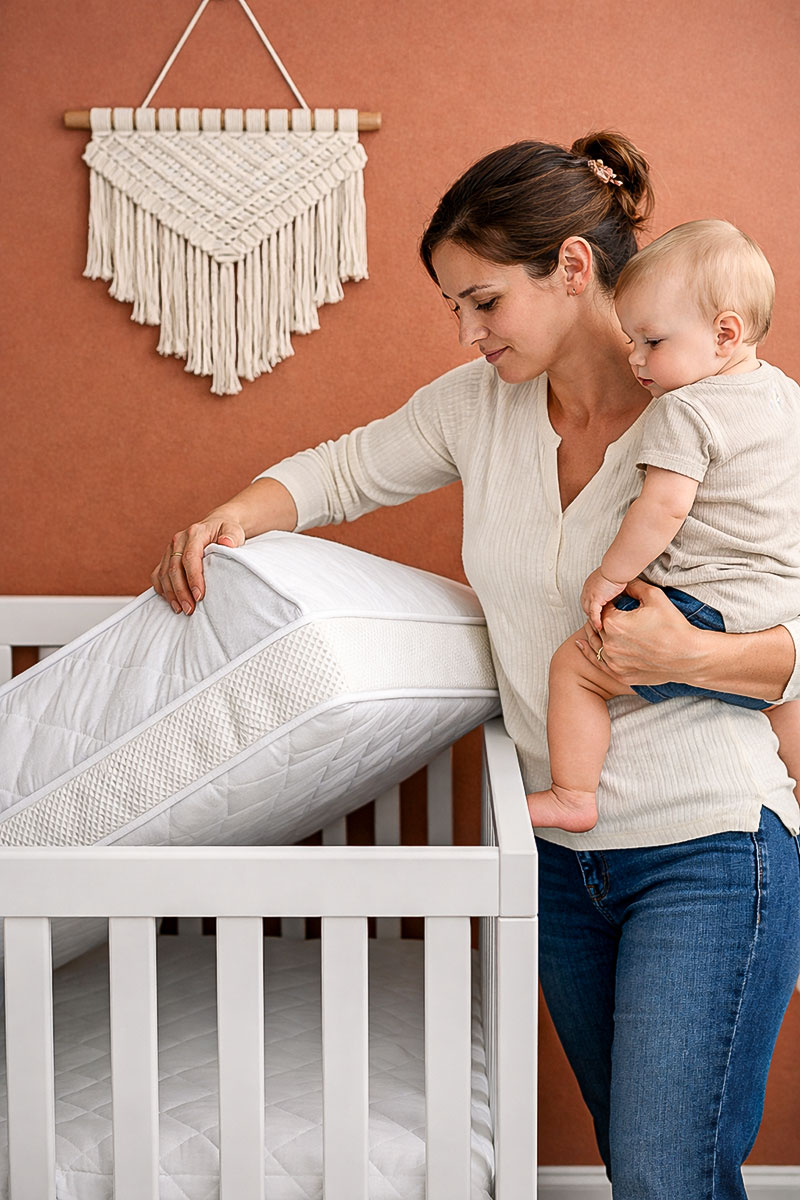
Crib mattress weight is one of those things most of us don’t think about until we’re lifting it in and out of the crib, usually with one hand while holding a baby with the other. Some feel light and easy, others feel surprisingly heavy, and it can leave you wondering what is actually normal and whether weight makes any difference for safety or everyday use.
You might also be wondering:
How to choose the right crib mattress
How a crib mattress should fit safely
Are breathable crib mattresses actually safer?
Quick answers:
What is the normal weight of a crib mattress?
Foam vs innerspring weight differences
Does mattress weight affect safety?
When a mattress feels too heavy
See a lightweight, firm crib mattress option here
Crib mattress weight: what’s normal and what’s safe
Most parents notice this the first time they go to change a crib sheet. You lift the mattress with one hand and suddenly realize it is either much heavier or much lighter than you expected. That moment usually raises the question pretty quickly. Is this normal, and does it actually matter for your baby?
A standard crib mattress usually weighs between 7 and 25 pounds depending on the materials inside.
Most parents end up choosing based on how easy it is to lift, not just the number on the paperwork
This range surprises people because the difference between the lightest and heaviest options is not small. A basic foam mattress may feel easy to lift and move, while a coil mattress can feel solid and noticeably heavier the second you try to adjust it.
In day to day use, weight becomes less about numbers and more about how it feels every time you lift it. If you are changing sheets in the middle of the night or adjusting mattress height, that weight shows up very quickly in your arms and back.
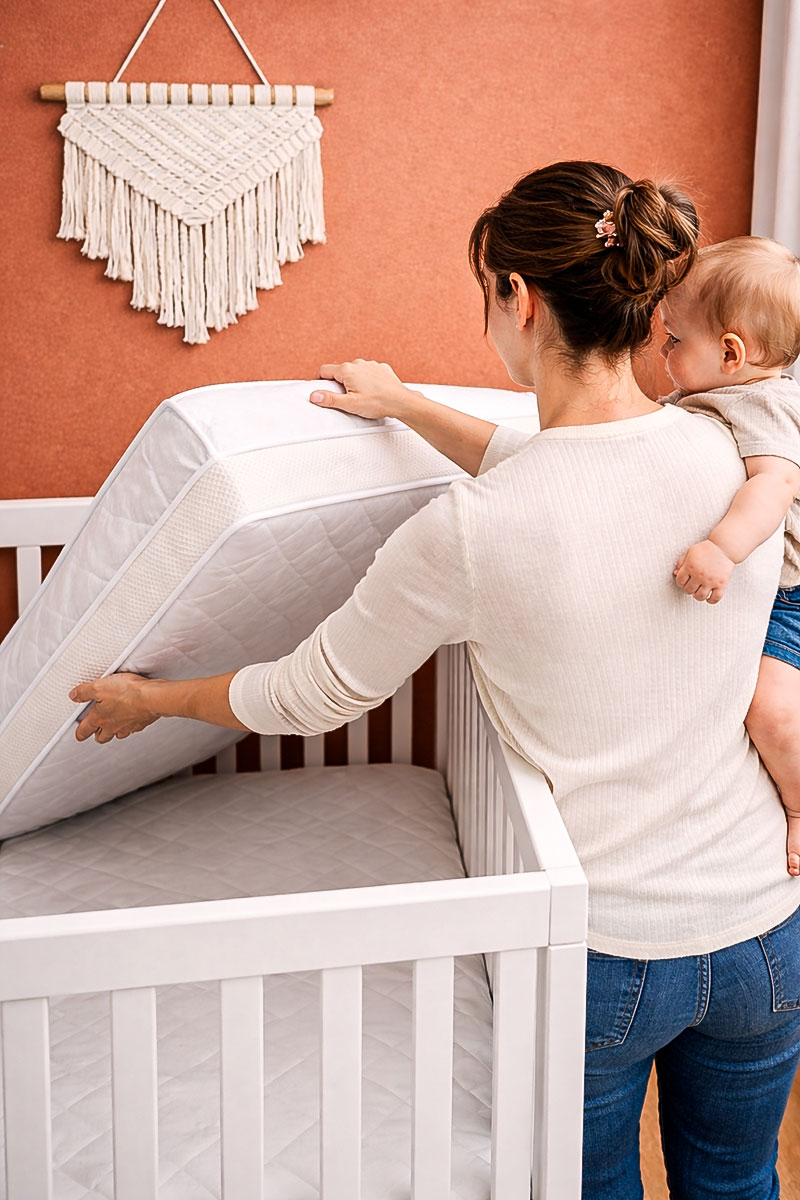
Most foam crib mattresses fall between 7 and 12 pounds. These are the ones that feel easy to lift with one hand. They are often chosen by parents who know they will be changing sheets often or lowering the mattress level more than once.
Innerspring mattresses usually land between 15 and 25 pounds. These feel more solid and take a bit more effort to lift, especially once the crib is set up against a wall and you are reaching over the side rail.
In many situations "heavy" means well-built or solid but the truth is that weight alone is not a safety feature. It is simply a reflection of what is inside the mattress.
Foam vs innerspring crib mattress weight differences explained
The weight difference is a result of construction, not as an indicator of quality.
Foam mattresses are made from dense foam blocks. They are lighter because they do not have metal coils inside. They are often easier to handle and simpler to move when you are adjusting crib height or rotating the mattress.
Innerspring mattresses use steel coils covered by padding layers. Those coils add weight and structure. Many parents assume heavier means better, but that is not always true.
Many nurseries run into this situation when someone buys a heavier mattress thinking it will feel more stable, only to realize later that lifting it during a late night sheet change is a hassle.
I believe this is one of those decisions that depends more on your daily routine than anything else. If you are the one changing sheets most often, weight matters more than you might expect.
Does crib mattress weight affect safety for your baby
Weight by itself does not make a crib mattress safer.
What actually matters for safety is firmness, proper fit, and a stable sleeping surface. A lighter mattress that is firm and fits correctly is safer than a heavier one that does not fit well or compresses too easily.
This usually becomes clear when you press your hand into the mattress. A safe crib mattress should feel firm and return to shape quickly. If it sinks too much, the issue is firmness, not weight.
According to the U.S. Consumer Product Safety Commission safe sleep guidance, the focus should always be on a firm, well fitting mattress with no gaps. Weight is not listed as a safety requirement.
That tells you everything you need to know. Weight is not part of the official safety standard.
When a crib mattress feels too heavy in real daily use
This is where parents really start to notice the difference.
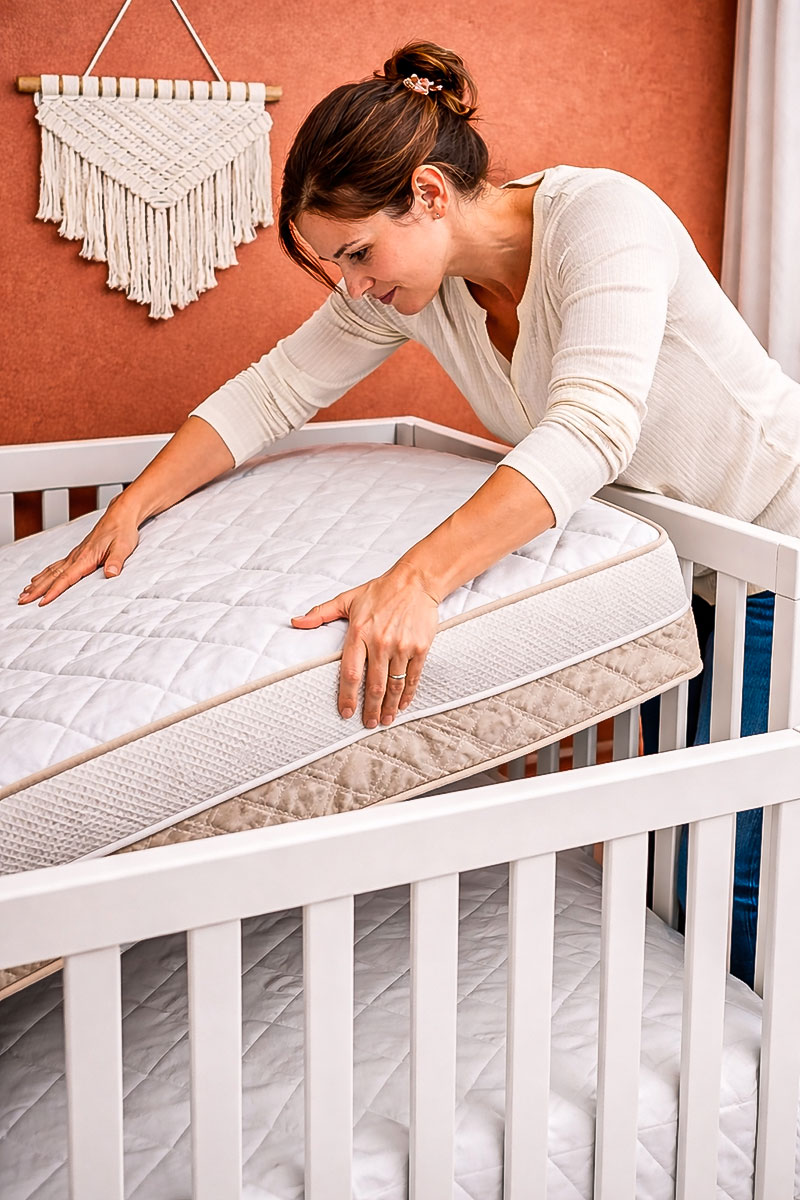
There you are, holding a fitted sheet in one hand, trying to lift the mattress with the other, and the mattress does not move as easily as you expected.
A mattress can feel too heavy when:
- You struggle to lift it high enough to change sheets
- You avoid rotating it because it takes too much effort
- You find yourself setting it down harder than you intended
- You feel strain in your wrist or shoulder during routine changes
I’ve learned that this is one of those small things that adds up over time. What feels manageable on day one can feel frustrating after weeks of repetition.
If you find yourself dreading sheet changes, the mattress may simply be heavier than you can manage.
Mini crib mattress weight differences parents notice quickly
Mini crib mattresses are usually lighter, often between 3 and 8 pounds.
This makes a noticeable difference right away. Most parents notice how easy it is to lift and adjust compared to a full size crib mattress.
This usually happens when someone switches between a mini crib and a full crib in the same home. The difference in handling becomes obvious without needing to compare numbers.
Mini mattresses are smaller and easier to manage, but the same rules apply. They still need to be firm and fit properly to be safe.
Crib mattress weight vs firmness what actually matters
This is where a lot of confusion comes from.
Many parents assume that a heavier mattress must be firmer or safer. That is not always true.
If you are comparing mattresses with different internal constructions, my crib mattress dual sided vs single sided comparison explains how two-stage and single-stage designs differ, and why weight alone does not tell you how a crib mattress is built.
Firmness depends on the materials and construction, not just weight. A lighter foam mattress can be very firm. A heavier mattress can still have softer padding layers that reduce firmness.
Here’s a simple way to think about it.
If you press down and the surface springs back quickly and does not sink, it is firm. That is what matters.
If it feels soft or leaves an impression, weight will not fix that problem.
Here is a bit of information that most people do not hear elsewhere. The easiest way to check firmness is not by reading specs. It is by using your hand and seeing how the surface responds in real time.
When crib mattress weight matters most for parents
Most parents do not think about mattress weight when they are shopping. They notice it later during everyday routines.
This usually shows up during:
- Late night sheet changes
- Lowering the crib mattress level
- Rotating or cleaning the mattress
- Reaching over the crib rail repeatedly
In these moments, lighter mattresses can be a good thing. They make small tasks easier and quicker, especially when you are already tired.
Heavier mattresses can feel more solid, but they require more effort each time you handle them.
If you want to see how mattress weight connects to fit and safety, this page explains it clearly:
crib mattress fit guide
And if you are comparing materials and safety claims, this page breaks that down further:
breathable crib mattress guide
For a full overview of crib mattress types and options, see my
crib mattress guide
Quick crib mattress weight comparison parents can use
Here is a simple way to think about it:
- Foam crib mattress: about 7 to 12 pounds, easier to lift
- Innerspring crib mattress: about 15 to 25 pounds, more effort to handle
- Mini crib mattress: about 3 to 8 pounds, easiest to manage
These ranges are normal and safe when the mattress is firm and fits correctly inside the crib.
If you are also thinking about how long a mattress stays safe to use as your baby grows, this page explains when it is time to replace it:
when to replace a crib mattress
Crib mattress weight questions parents ask
Does a heavier crib mattress mean better quality?
No. Quality depends on materials and construction, not just weight.
Is a lighter crib mattress safe?
Yes, as long as it is firm and fits the crib properly.
Why do some crib mattresses feel so heavy?
They often contain steel coils or thicker internal layers.
Should I choose lighter or heavier?
Choose based on what you can comfortably lift and use every day while still meeting safety requirements.
Crib mattress weight matters more for you than for your baby. Once you start using it every day, the difference becomes clear very quickly. Shop accordingly.
When you click on links to various merchants on this site and make a purchase, this may result in this site earning a commission. This does not affect the price you pay.

UBGI Gold Standard 2026
Reviewed under the site's
editorial checklist.
Photos, decorating ideas, party setups and reader submissions are shared for inspiration unless a page is specifically presented as a pattern, tutorial, reference guide or step-by-step project. Follow the instructions, measurements, safety guidance and manufacturer directions provided for the particular project or product.
About Jan | Contact | Baby Nursery Ideas (Blog) | Site Map | Privacy Policy | Disclosure Policy | Disclaimer | Affiliate Disclosure | Earnings Disclosure | Facebook | Pinterest
I am a participant in the Amazon Services LLC Associates Program, an affiliate advertising program designed to provide a means for us to earn fees by linking to Amazon. As an Amazon Associate I earn from qualifying purchases.
Copyright © 2006-2026. All Rights Reserved.