Convertible Cribs: Styles and Conversion Options
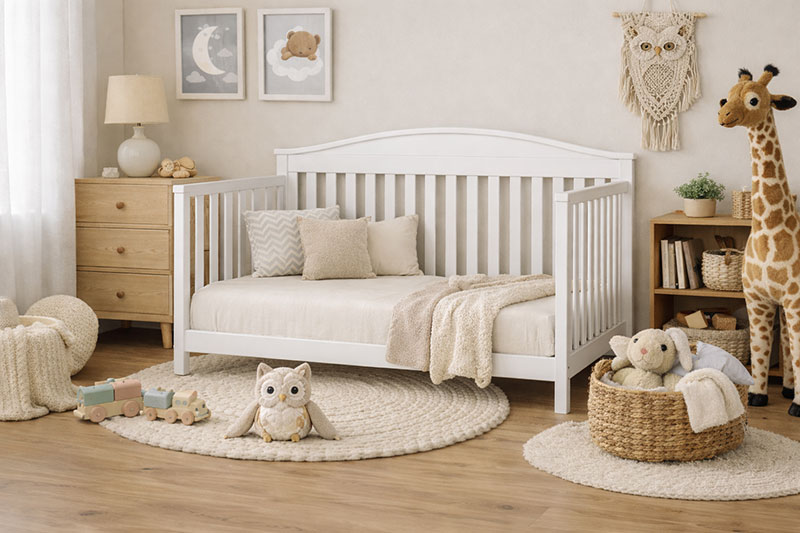
Convertible cribs are multi-stage crib frames designed for use in the United States that transition from crib to toddler bed, daybed, or full-size bed depending on the model. The labels 2-in-1, 3-in-1, and 4-in-1 describe listed configuration stages, not guarantees of long-term use. This page defines those formats, explains how conversion parts are categorized, and clarifies what product listings typically include.
This page provides general reference information only and does not offer recommendations, purchasing advice, safety guidance, or instructions.
In the United States, full-size and non-full-size cribs are regulated under federal safety standards overseen by the U.S. Consumer Product Safety Commission (CPSC). Convertible crib formats must still meet the same structural and performance requirements applicable to crib configurations, even when later stages involve different rails or mattress types. Model manuals and manufacturer documentation remain the authoritative source for configuration details.
For a detailed breakdown of how those federal requirements are structured and applied to crib configurations, see the crib safety standards reference guide.
Convertible Crib Basics: What It Is and Why Parents Choose One
A convertible crib is designed to start as a standard baby crib and later shift into a toddler bed, daybed, or full-size bed, depending on the model. For many families, the appeal is simple: one bed frame that can match more than one stage. In nursery planning, this format is often discussed as a long-range furniture choice that can keep the room looking consistent as a child grows.
Convertible does not mean the later stages always get used. In many households, the crib leaves the room earlier than expected because of a move, storage limits, or a new sibling. This page describes common conversion categories, what later stages typically involve, and which parts are frequently listed separately from the original crib purchase. Convertible labeling does not guarantee that every listed stage will be used in practice.
Convertible Crib Types: 2-in-1, 3-in-1, and 4-in-1 Explained
Quick Format Snapshot
- 2-in-1: Crib + toddler bed or daybed
- 3-in-1: Crib + toddler bed + daybed or full-size bed (varies by brand)
- 4-in-1: Crib + toddler bed + daybed + full-size bed (conversion rails often sold separately)
Stage counts reflect listed configurations, not mandatory usage timelines.
| Feature | How It Varies by Format |
|---|---|
| Number of Stages | 2-in-1, 3-in-1, or 4-in-1 depending on listed configurations |
| Toddler Rail | May be included or sold separately depending on model |
| Full-Size Bed Stage | Requires separate conversion rails and full-size mattress |
| Hardware Kits | Often specific to brand and model; not universally interchangeable |
| Storage Considerations | Rails and manuals may need long-term storage for later conversion |
Convertible cribs are often labeled by the number of stages listed beyond the crib format. The labels can differ by brand, and the same number can refer to different end stages. Differences commonly show up in parts lists, rail sets, hardware kits, and long-term storage needs.
2-in-1 Convertible Cribs
A 2-in-1 convertible crib typically shifts from a crib into a toddler bed or daybed. These models are often described as simpler formats with fewer listed stages than multi-stage designs. In product listings, the conversion stage is commonly tied to a toddler rail or a daybed configuration.
3-in-1 Convertible Cribs
A 3-in-1 convertible crib usually shifts from crib to toddler bed and then to a daybed or, in some cases, a full-size bed. The label varies by manufacturer, so the exact stages depend on the model name and the manual’s parts list. Some brands count a daybed stage separately, while others count a full-size bed stage.
4-in-1 Convertible Cribs
A 4-in-1 convertible crib is commonly listed as a crib, toddler bed, daybed, and full-size bed. In many product lines, the later stages involve additional rails and specific hardware kits that are not packaged with the crib frame. The full-size bed stage also uses a standard full-size mattress rather than a crib mattress.
What’s Usually Included (And What Often Isn’t)
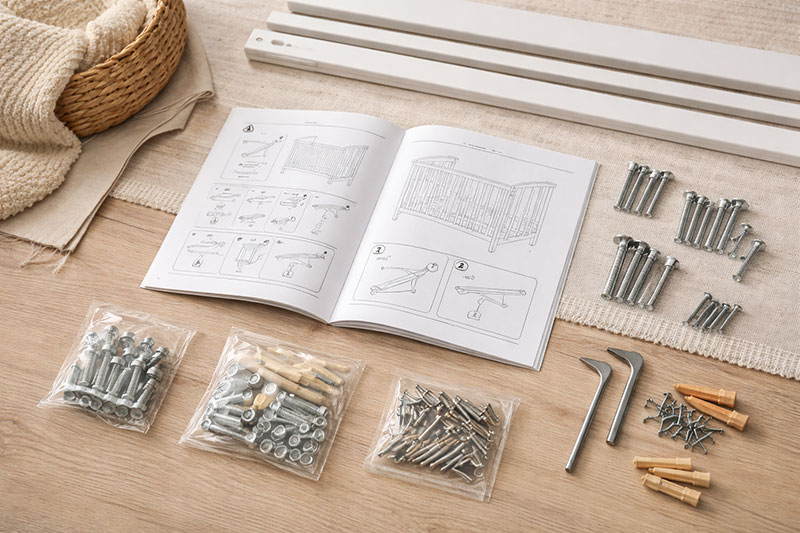
A common point of confusion is which conversion parts are included at purchase. Toddler rails and full-size bed rails are frequently listed as separate items, even when the crib is marketed as convertible. Some listings include a toddler rail, while others list it as an add-on part with a separate SKU.
Product pages often use similar wording across models, so the most reliable indicator is the parts list in the manual and the manufacturer’s included-components list. For model format comparison, an overview of baby crib types and styles is available on this site.
See convertible crib toddler rails and conversion kits
Conversion Timing Notes
Conversion timing is described in many manuals as a stage change that depends on the child and the model’s listed configuration. Some families move from crib format to toddler-bed format, while others continue using the crib format until a later transition. In product descriptions, timing is often presented as flexible, with the conversion stage tied to the parts required for the selected configuration.
Timing varies widely, and the same model can appear in more than one nursery layout across its life cycle. In listings and manuals, the conversion stage is also linked to which rails are used and whether a specific toddler rail is listed as required for that configuration. For additional nursery product coverage, nursery product lists and gear are available on this site.
A note about older drop-side cribs
Current crib manufacturing standards focus on fixed-side designs rather than movable sides, and many older models are no longer produced.
When older models appear in listings, the model name and manual date often identify the generation and configuration type.
Will Your Crib Mattress Still Fit?
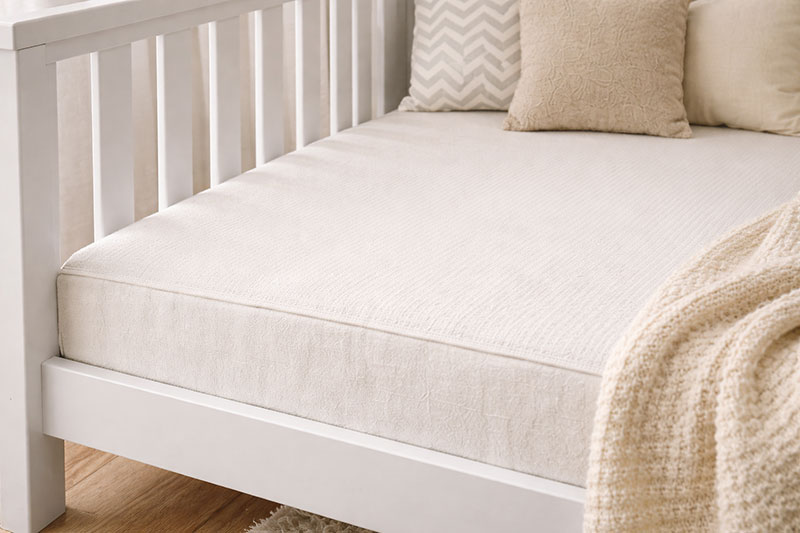
In many convertible crib lines, the crib and toddler-bed stages use the same crib mattress. This continuity is one reason these models are often described as multi-stage designs. When a model lists a full-size bed stage, a standard full-size mattress and the matching rails for that model are part of that later configuration.
Mattress descriptions commonly focus on size and firmness, and the crib frame’s interior dimensions are part of how mattress fit is described. Information on crib mattress thickness and firmness appears on this site, including how product listings typically describe these characteristics.
If a different mattress is considered later, this page on crib mattress options includes additional product characteristics that appear in standard retail descriptions.
See crib mattresses and mattress protectors
For families comparing multi-stage furniture with portable sleep products, the BabyBjörn travel crib is often discussed as an alternative category, with different product characteristics and a different use case than a convertible crib frame.
Pros and Cons of a Convertible Crib
Convertible cribs are commonly described as long-term furniture with multiple listed configurations. Some families prefer a single furniture line across stages, while other families prefer separate furniture for separate stages. These differences show up in purchase timing, parts storage, and how long the crib stays in active use.
Advantages
Convertible cribs can reduce the number of separate bed frames used across early stages. Many models keep the same visual style as the configuration changes, which can help a nursery feel consistent over time.
Drawbacks
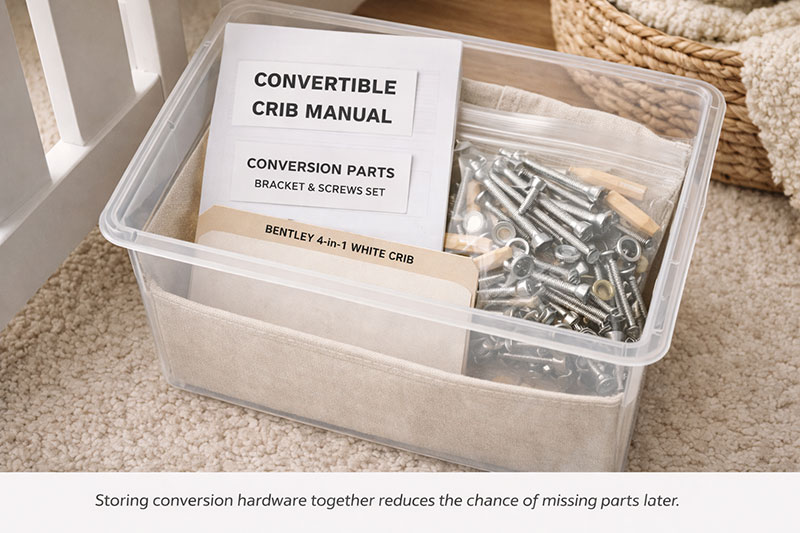
Later stages do not always match real-world timelines. Moves, storage limits, and room changes can shorten crib use. Another common issue is missing rails or hardware years later, especially when conversion kits were sold separately and stored apart from the crib frame.
Missing Parts Over Time
Manuals, extra rails, screws, and hardware sets are often stored for long periods between stages. When these items are kept together in a labeled container, the model name and brand are easier to match later. This storage pattern is often described in product-owner discussions because conversions may happen years after the original purchase.
If replacement hardware or identification support is needed, this page on crib replacement parts collects related product characteristics and common parts categories.
For federal consumer product information, the U.S. Consumer Product Safety Commission provides crib information here: CPSC crib information .
See storage bins and small-parts organizers on
Quick FAQ: Convertible Cribs
Do 2-in-1, 3-in-1, and 4-in-1 labels mean the same thing for every brand?
No. Stage labels are not standardized across manufacturers, so the same number can describe different end stages depending on the model and the manual’s parts list.
Are conversion rails and hardware usually included with a convertible crib?
Not always. Toddler rails and full-size conversion rails are frequently sold separately, and hardware kits may be listed as model-specific parts.
Will a crib mattress be used in every stage?
Usually the crib and toddler stages use a crib mattress, but any full-size bed stage uses a standard full-size mattress along with the matching conversion rails for that model.
Summary of Convertible Crib Formats
A convertible crib is a multi-stage crib format with listed configuration details that vary by model and brand. The conversion labels (2-in-1, 3-in-1, 4-in-1) are commonly tied to rails and hardware kits, and the included parts can differ across listings. This overview is presented using product standards information to describe how convertible crib formats and listed configurations are defined across models.
In many households, the crib stage and toddler stage are the most commonly discussed configurations, while later stages vary widely by family timeline and parts availability. Across product listings, the defining features remain the same: a crib frame built to support more than one named configuration, with conversion parts identified by model and parts list.
For additional documentation-based crib references, including model identification and configuration context across brands, see the crib instructions and model reference hub, which organizes crib categories by manufacturer documentation and structural format.


When you click on links to various merchants on this site and make a purchase, this can result in this site earning a commission. Affiliate programs and affiliations include, but are not limited to, Amazon and the eBay Partner Network such as the ones to your left on this page. Please see our Affiliate Disclosure page for more information.
More UBGI: RSS Feed | Facebook
About Jan | Contact | Baby Room Ideas (Blog) | Site Map | Privacy Policy | Disclaimer | Affiliate Disclosure | Earnings Disclosure
I am a participant in the Amazon Services LLC Associates Program, an affiliate advertising program designed to provide a means for us to earn fees by linking to Amazon.
Copyright © 2006-2026. All Rights Reserved.