Can You Use Bed Rails on a Crib?
Can you use bed rails on a crib? No. Bed rails are designed for standard beds, not cribs. Cribs already have built-in rails and require model-specific toddler rail kits for stage transitions. These are different products made for different sleep setups. This page explains what parents mean when they ask whether bed rails can be used on a crib by comparing crib design, bed rail design, and common terminology used in the United States.
Trying to figure out whether a rail belongs on a crib or a bed? Check these first:
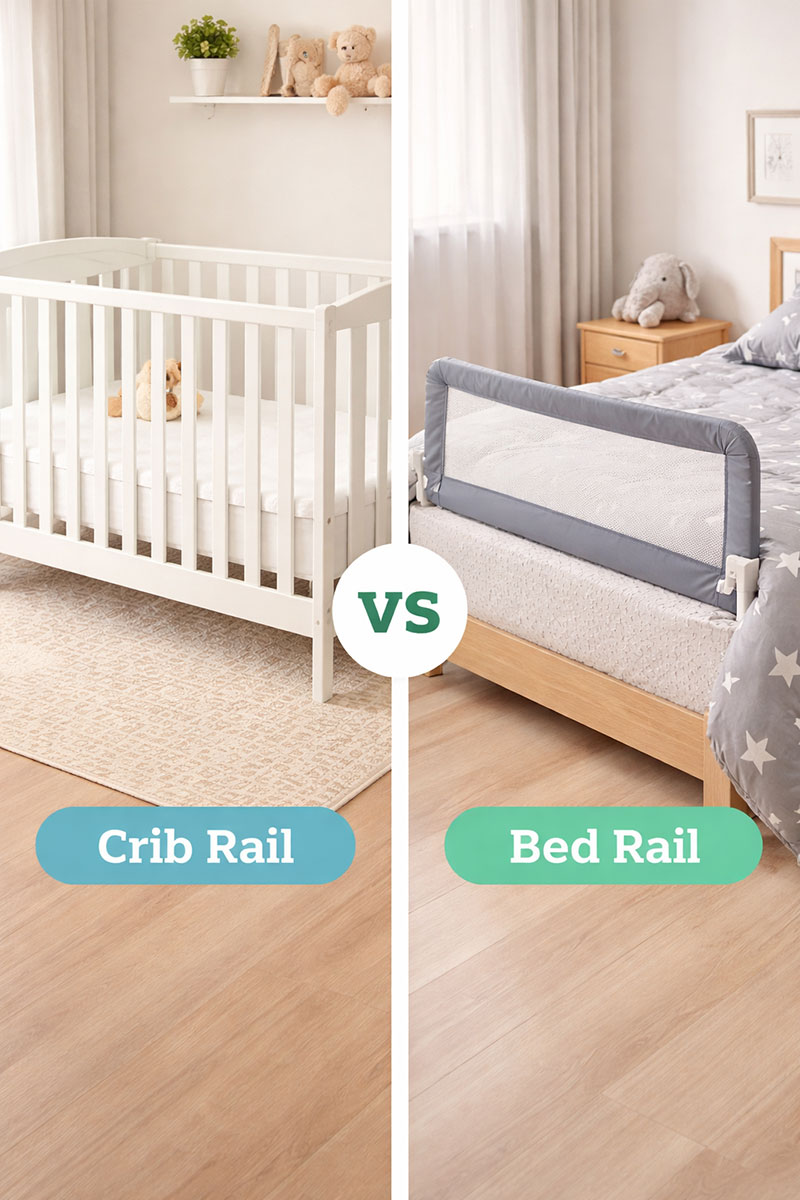
A crib is a regulated infant sleep product in the United States, designed and sold as a complete unit with fixed side rails, a defined mattress support system, and specific intended-use limits. The rails, mattress height settings, and hardware are part of one integrated structure rather than interchangeable accessories. When parents ask whether they can use bed rails on a crib, the underlying issue is usually about sleep stage transitions or product terminology, not about modifying the crib frame itself. Understanding how crib systems are designed helps prevent mixing parts meant for different types of beds.
This page provides general reference information about crib and bed rail terminology and design differences and does not offer product modification or installation guidance.
New parents often wonder can you use bed rails on a crib when a baby starts pulling up, testing the rails, or suddenly looking too big for the crib they slept in just fine last month. The confusion usually comes from the word “rail,” since cribs already have fixed rails while bed rails are a separate product designed for older beds. This page explains what parents really want and need to know when they ask can you use bed rails on a crib, how the products differ by design, and what that question really points to as your child grows.
Can you use bed rails on a crib
This thought is generally the result of three situations. Either you want a “little barrier” so a toddler doesn’t climb out, you bought a bed rail by mistake, or you’re trying to stretch the crib stage a bit longer.
When parents search can you use bed rails on a crib, they’re usually trying to solve a stage problem, not looking to modify the crib itself.
What to do calmly do next is simple: figure out what product you actually have in your hands (bed rail, crib rail cover, or toddler-rail kit), then match it to the right kind of sleep space. Mixing names is common, but the parts themselves are not all meant for the same job.
Crib rail vs bed rail: same word, totally different item
A crib already has rails built into the frame. Those rails are part of the crib. They don’t “add on.” A bed rail is a separate product made to sit on the edge of a regular bed, usually to help keep an older child from rolling out.
That’s why parents get stuck. A listing might say “toddler rail,” “bed rail,” or “guard rail,” and it can look similar in photos. In real life, the way it attaches (and what it expects the bed to look like) is where things head in completely different directions fast.
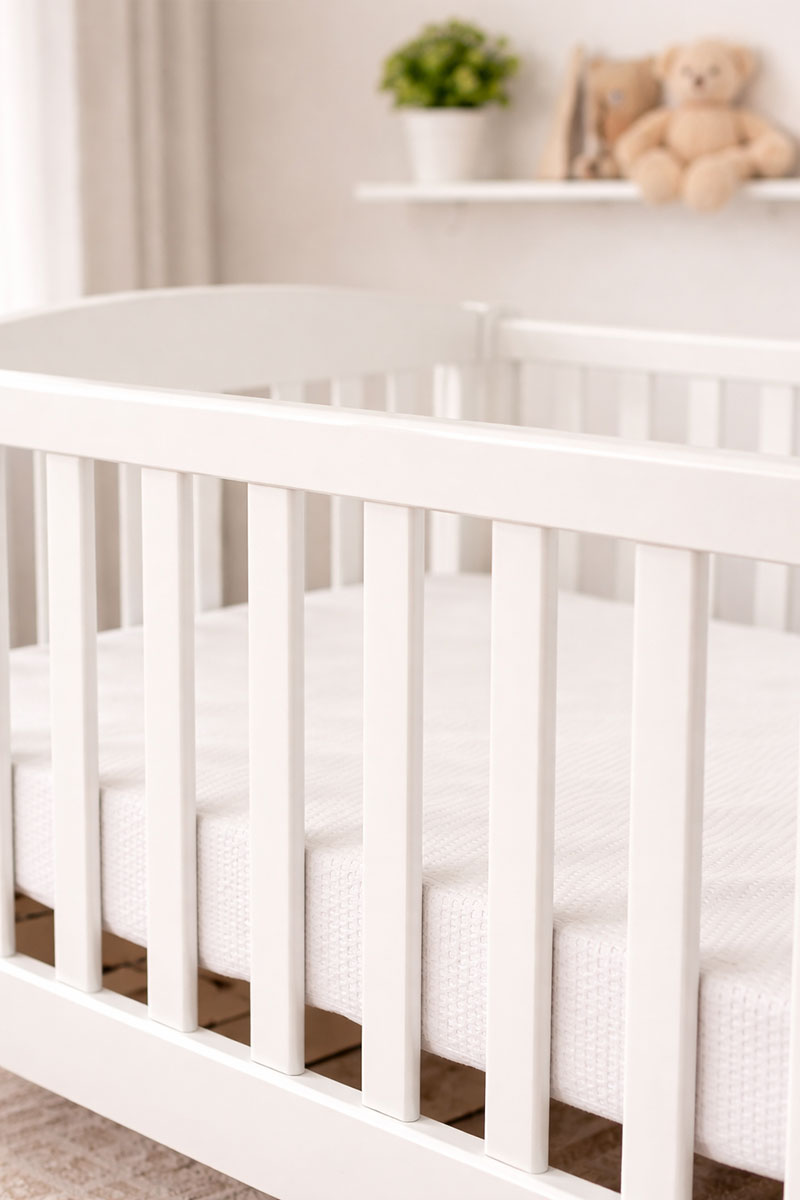
Why bed rails and cribs don’t “match up”
Most bed rails assume a mattress that sits on a flat bed base with open sides. A crib mattress sits inside a frame, down lower, with rails all around it. So even when a bed rail looks like it could help, the shapes and edges are not built the same way.
The reason can you use bed rails on a crib keeps surfacing is because the names sound interchangeable, even though the products are built for very different sleep setups.
Cribs are also designed as one complete unit. The rails, mattress support, and the way the mattress fits are all part of the same “system.” That’s why a crib’s own parts matter so much, especially when you’re trying to solve a new stage problem like climbing, leaning, or testing limits.
When you’re unsure about the crib side of the question, my page on crib rails vs crib bumpers helps separate the terms parents mix up most often.
Quick fit check
Look at the label and the box. A true bed rail usually talks about “beds,” “mattress height,” or “box springs,” and it often shows a standard bed in the photos.
A crib-specific rail part usually names a crib brand or model, or it calls itself a “toddler rail kit” that matches a convertible crib.
What parents are often trying to solve
If you want a broader overview of how cribs are designed, regulated, and used across different stages, you can review the main baby cribs hub for structural context.
Most of the time, the real problem isn’t “missing rails.” It’s a baby who is growing up and getting busy. That can show up as chewing, pulling up, climbing, or just looking too big in the space.
For chewing, I wrote a plain-language page on why babies chew crib rails that explains the timing and what the behavior usually means in a normal day-to-day way.
For “I want to add something to the rail,” you’ll probably want to skim crib rail covers and alternatives so you can tell the difference between a cover (which wraps) and a rail (which is part of the bed frame).
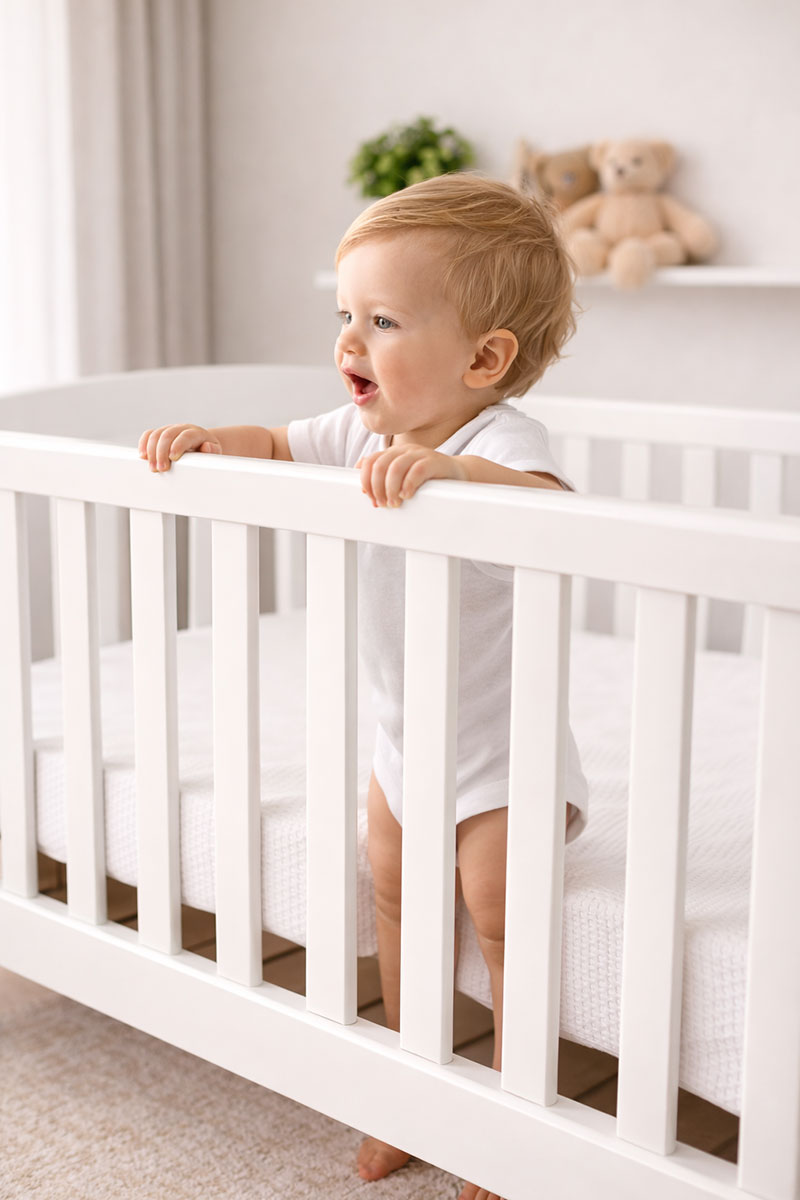
Did I buy the right thing
This is the part where most people feel a little annoyed, because online listings can be sloppy with words. Here’s the clean way to sort it out: a bed rail is made for a bed. A toddler rail kit is made for a specific convertible crib. A “crib rail cover” is not a rail at all—it’s a cover that goes on the top rail.
If you entered a search for the term can you use bed rails on a crib after opening a box and feeling unsure, you’re not alone—this is one of the most common late-night crib questions I see.
When you have a product in hand, the fastest clue is the attachment style. Many bed rails use straps, flat plates, or a long bar that sits under a mattress. Cribs don’t have that open “under mattress” space the same way a bed does.
What to do next: return or exchange anything that clearly says it’s for a standard bed, then look up your crib’s exact brand and model so you can match parts by name, not by guesswork.
“Guard rail,” “toddler rail,” and other confusing labels
Some brands call a toddler rail a “guard rail.” Some stores call a bed rail a “toddler rail.” And sometimes a listing uses both phrases on the same page, which is how people end up here.
The most helpful question to ask yourself is: does this item claim it fits “most beds,” or does it claim it fits “this crib model”? That one line usually tells you what category it belongs to.
For a quick definition check, the U.S. Consumer Product Safety Commission has general crib information and publications you can browse on their site. Here’s one authoritative starting point: CPSC crib information.
Crib mattress details matter more than most people think
A lot of “rail” questions are really mattress questions in disguise. When the mattress sits lower or higher, the whole crib feels different to a parent watching a busy toddler.
If your brain keeps circling around mattress height and “is this still the right setup,” this page helps you sort the terms without getting lost: crib mattress height adjustment guide.
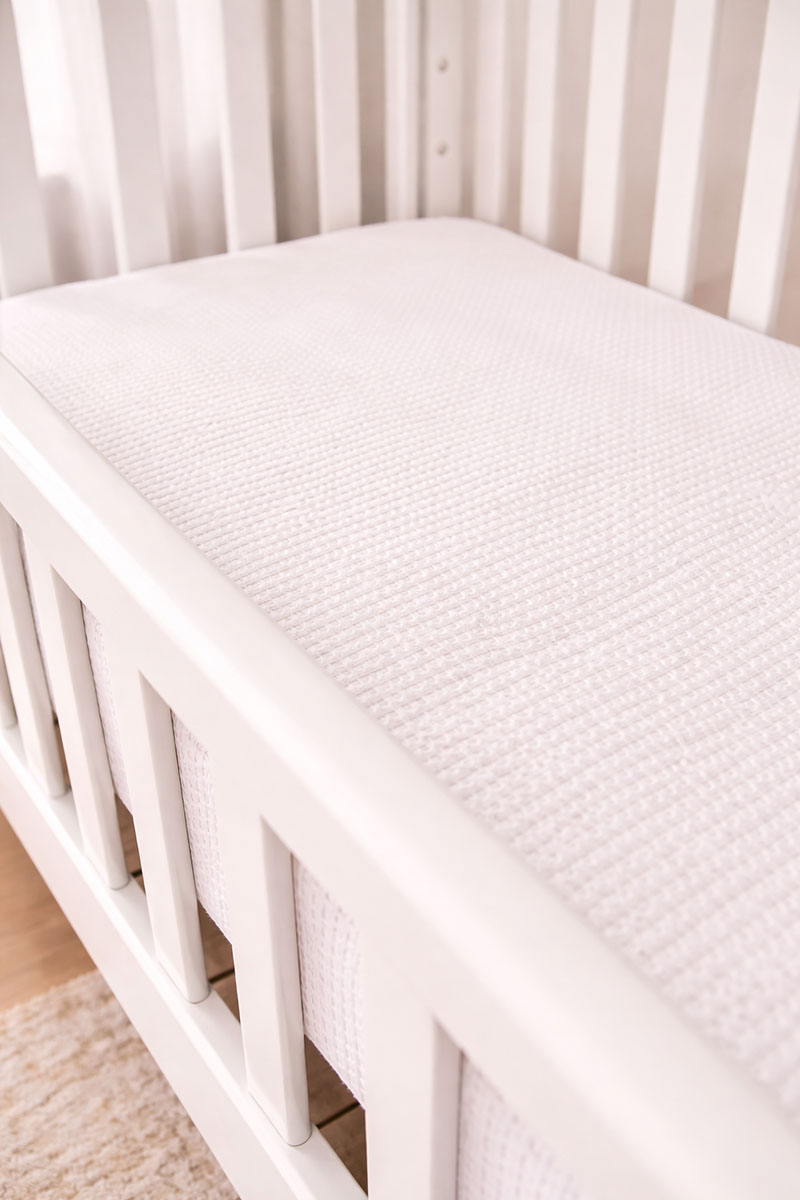
And when you want a clear explanation of how snug a crib mattress is meant to fit inside a crib, this reference page keeps it simple: crib mattress fit tolerances.
Most parents choose
Most parents end up choosing between two clear paths: use the crib exactly as it’s built and focus on the stage (climbing, chewing, restlessness), or move to the next sleep setup that matches the child’s age and habits.
That’s not “giving up.” It’s just matching the tool to the moment, the same way we stop using a baby bathtub when it turns into a splash zone.
What can go in a crib (and what doesn’t belong there)
Sometimes the “bed rail” idea starts because the crib feels too open, or you’re trying to “add” something for comfort. This is where it helps to separate comfort from clutter.
I keep the language plain on this page: what can go in a crib. It’s a quick way to check whether an item belongs in a crib space at all, especially when you’re shopping late at night and everything looks useful.
When you’re dealing with a convertible crib
Some cribs are built to convert to a toddler bed with a matched rail kit. That rail is not a bed rail. It’s a crib brand part made to fit that exact frame and hardware.
When you’re in this situation, don’t rely on “looks similar.” Use the crib’s manual, model name, and the part number language. That’s the difference between “close enough” and “actually fits.”
If you only remember one thing
Bed rails are sold for beds. Cribs already have rails. When a crib needs a different stage, the answer is usually a crib-specific part or a planned next-step sleep space—not an add-on bed rail.
What to do now
Here’s the calm checklist I use when I’m helping a friend untangle this exact question. First, confirm what you bought by reading the product label and looking for the words “bed” versus “crib model.” Next, find your crib brand and model so you can match real parts by name. Then decide whether your question is really about climbing, chewing, or the crib feeling “too small” all of a sudden.
If you want a deeper “language cleanup” for common parent phrases, you might also like these clarifiers: what parents mean when they say “safe crib” and what parents mean when they say “non-toxic crib”. Those two questions show up everywhere, and they’re often tied to buying decisions.
If you’re standing in the nursery right now thinking, “Okay, but what should I do next,” start with the easy win: label what you have (bed rail vs toddler rail kit vs crib rail cover), then choose the matching category page on this site so you’re not chasing the wrong fix.
When you click on links to various merchants on this site and make a purchase, this may result in this site earning a commission. This does not affect the price you pay.

UBGI Gold Standard 2026
Reviewed under the site's
editorial checklist.
Photos, decorating ideas, party setups and reader submissions are shared for inspiration unless a page is specifically presented as a pattern, tutorial, reference guide or step-by-step project. Follow the instructions, measurements, safety guidance and manufacturer directions provided for the particular project or product.
About Jan | Contact | Baby Nursery Ideas (Blog) | Site Map | Privacy Policy | Disclosure Policy | Disclaimer | Affiliate Disclosure | Earnings Disclosure | Facebook | Pinterest
I am a participant in the Amazon Services LLC Associates Program, an affiliate advertising program designed to provide a means for us to earn fees by linking to Amazon. As an Amazon Associate I earn from qualifying purchases.
Copyright © 2006-2026. All Rights Reserved.