Can You Replace Crib Screws With Hardware Store Screws?
Can you replace crib screws with hardware store screws? In most cases, no. Crib hardware is manufactured to match specific frame tolerances, thread types, and connection points, and even small differences in store-bought screws can affect alignment and fit. If original screws are missing, the safest path is to locate manufacturer-matched replacements or a model-specific hardware kit rather than substituting general fasteners.
Thinking about using hardware store screws in a crib? Check these before you guess:
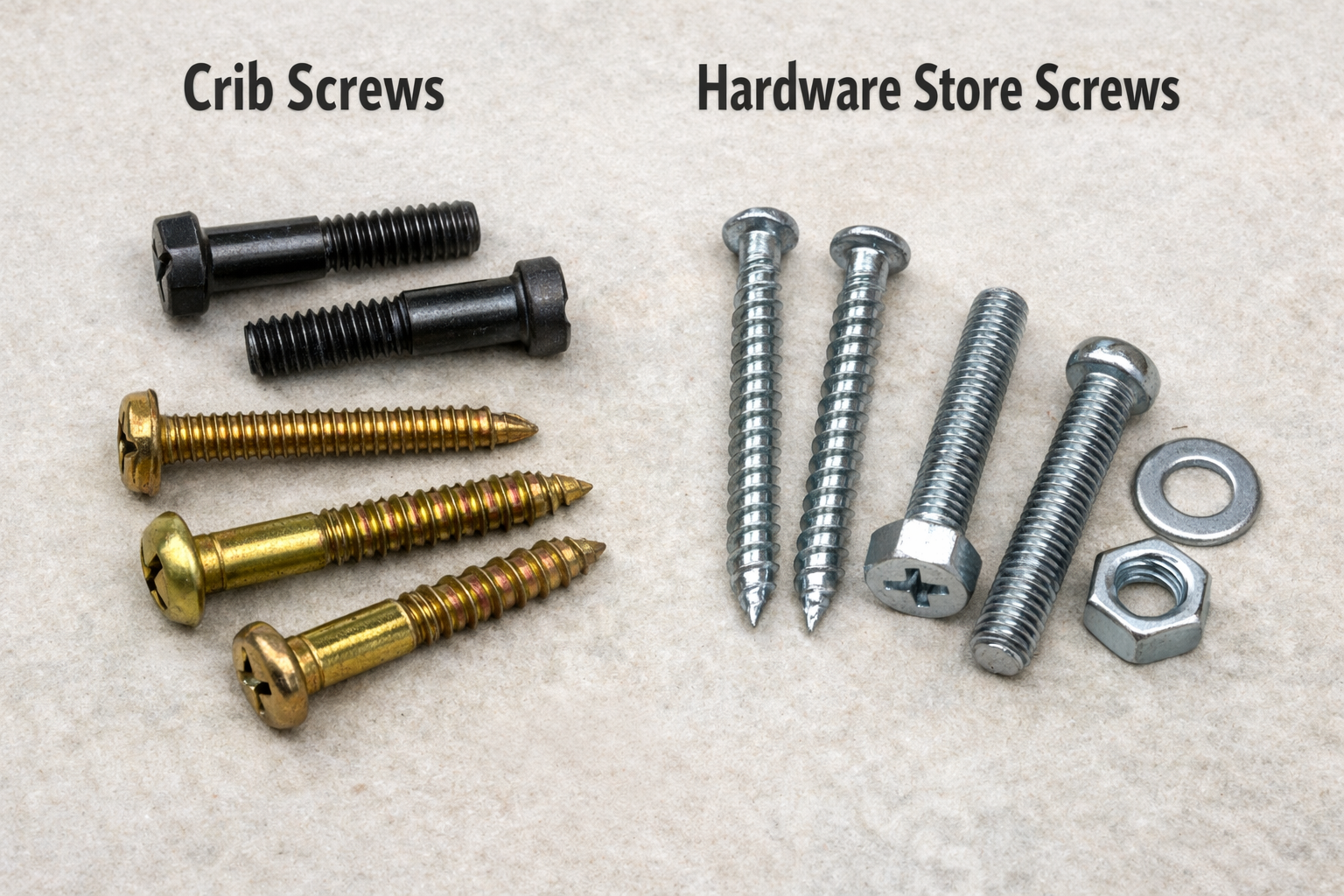
Important: Crib fasteners are part of the original engineered design and are not considered interchangeable household hardware.
Manufacturer specifications and original manuals remain the authoritative source for hardware identification. This page explains why visual similarity can be misleading and does not provide substitute screw specifications.
In the United States, crib recalls and safety guidance are published by the U.S. Consumer Product Safety Commission (CPSC).
- Check the original crib manual for the exact hardware specification.
- Contact the manufacturer for model-matched replacement screws.
- If original parts are unavailable, use a manufacturer-specific crib hardware kit.
Crib Screws and Hardware Store Fasteners
Crib screws are manufactured with specific measurements intended to match the crib’s frame and connection points. These measurements are selected to align rails, posts, and support components according to the original manufacturing standards used for that model.
Crib hardware commonly differs from general hardware store fasteners in thread type, shaft length, head shape, and compatibility with barrel nuts or embedded receivers.
For a more complete breakdown of common fastener types, screw styles, and model-specific crib hardware naming, see this crib screws guide.
Small differences in these features can affect how parts sit together and how evenly components align once fastened.
For measurement-related comparison details, information is available on how to measure crib screws correctly . This page outlines length, diameter, and thread characteristics used in crib hardware descriptions.
In some cases, screws may thread partway into a connection point but stop short of seating fully. In other cases, the screw may tighten while leaving visible gaps where crib parts meet. These outcomes are commonly reported when original specifications are not matched.
For situations involving missing or unavailable hardware, additional information appears on what to do if you can’t find crib replacement parts . This page outlines common outcomes when original components are no longer present.
Why Hardware Store Screws May Seem Compatible at First
Hardware store screws may appear compatible based on visual similarity alone. Length and diameter can look correct when compared side by side, particularly when packaging lists measurements that closely match crib hardware.
In these cases, the screw may appear to fit during initial threading. Visual fit alone does not establish that the screw matches the original manufacturing specifications or interacts with internal components in the same way.
General-purpose fasteners are produced to meet broad use cases rather than crib-specific manufacturing standards. As a result, pressure distribution, head seating, and internal thread engagement may differ from original crib hardware.
Cribs manufactured in earlier years may appear simpler in construction, yet these designs still rely on specific fastener tolerances that are not always visible during visual inspection.
Common situations where store-bought screws are considered
- A crib was disassembled for storage and hardware was misplaced
- A crib was obtained without all original screws included
- A single screw became stripped or was lost during relocation
Why Using the Wrong Screw Can Create Fit Problems
A screw that differs slightly in length may contact the interior of the frame before fully securing connected parts. Screws that are shorter than original specifications may not engage threads at the same depth.
Head shape is another point of difference. Many crib screws use rounded or low-profile heads designed to sit flush within countersunk openings. Alternate head styles can prevent rails or panels from drawing together evenly.
Reports often describe situations where one side of a crib tightens evenly while another side remains misaligned. These outcomes are commonly associated with hardware differences rather than visible damage.
Better Options Than Mixing Individual Screws
For cribs missing multiple fasteners, information on crib hardware kits describes what is typically included in full replacement sets and how kits are organized by model or manufacturer.
Manufacturer-specific screws are produced to match the original barrel nuts, inserts, and spacing used in the crib frame. These characteristics reflect the original manufacturing standards associated with the crib.
When the issue involves the structure supporting the mattress rather than a single fastener, related information appears on crib mattress support frame and replacement parts .
The central hub for brand-based listings and hardware identification is crib replacement parts, which organizes manufacturer-matched components by brand and category.
Additional pages covering common missing-part situations include:
Brand-specific listings may streamline identification. For example: Simmons crib replacement screws .
Why “Close Enough” Screws Still Fail in Cribs
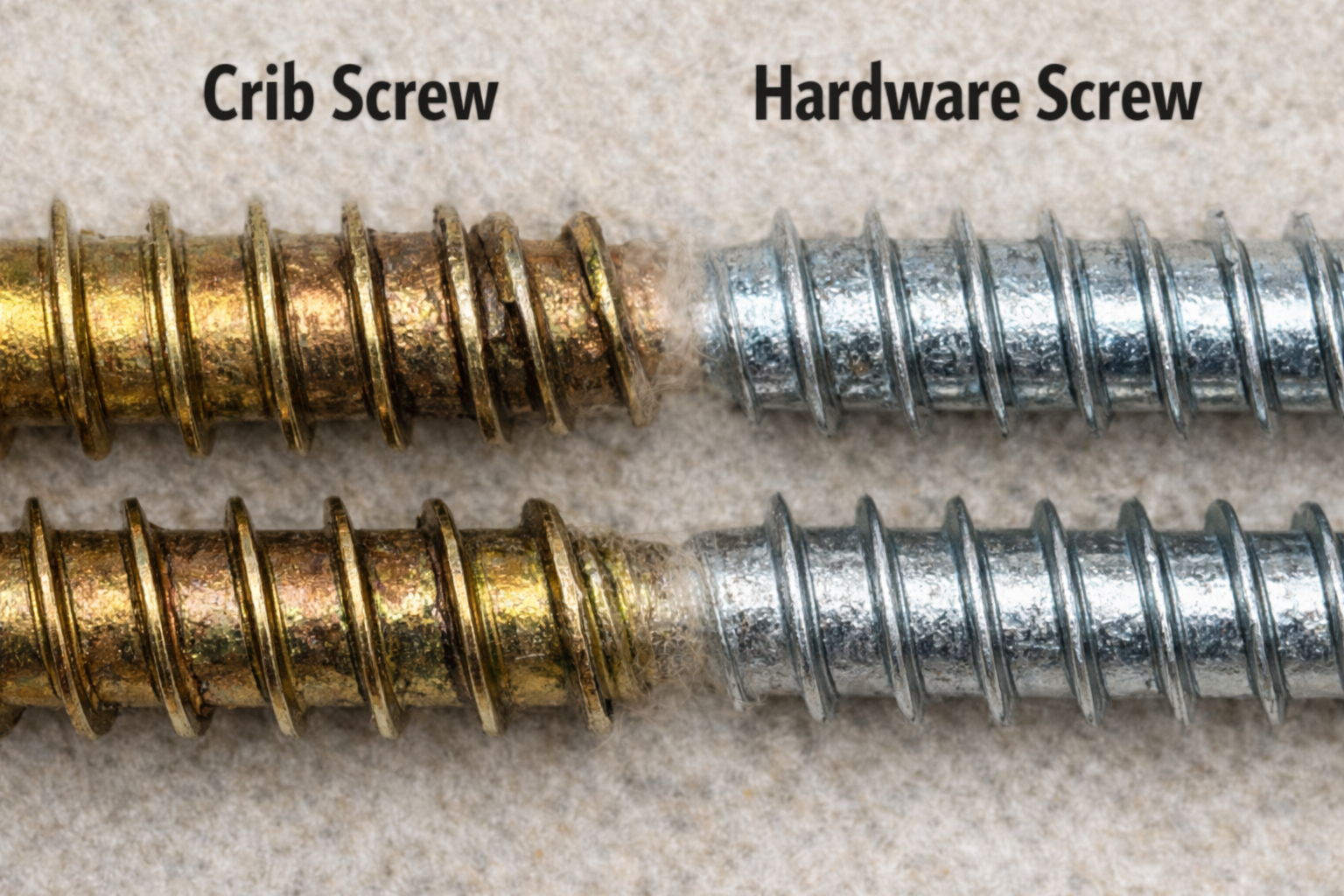
Comparison between original hardware and store-bought screws typically focuses on length, thread spacing, and head diameter. These characteristics are visible without specialized tools.
When at least one original screw remains available, direct comparison highlights differences in thread pitch and head thickness. These features affect how fasteners interact with internal crib components.
If you do not have the original crib hardware, do not assume a hardware store screw is a safe substitute.
Manufacturer Hardware Information
Crib manufacturers typically specify original replacement hardware to maintain intended alignment and connection points. Manufacturer materials often describe fasteners by size, thread type, and head profile.
When original hardware is no longer available, manufacturer manuals and support resources may list hardware characteristics associated with the original specifications.
General consumer product information and recall notices are published by the U.S. Consumer Product Safety Commission (CPSC).
Summary - Can You Replace Crib Screws With Hardware Store Screws
Missing crib screws frequently prompt comparison between original hardware and general-purpose fasteners. Differences in manufacturing standards can affect alignment and fit when specifications do not match.
Original hardware and manufacturer-matched replacements reflect the specifications associated with the crib’s original construction.
Important Information for Parents
This page is presented for reference and reflects common hardware-related questions associated with crib ownership. It does not replace manufacturer materials or official specifications. Manufacturer materials remain the primary source for crib hardware details.
When you click on links to various merchants on this site and make a purchase, this may result in this site earning a commission. This does not affect the price you pay.

UBGI Gold Standard 2026
Reviewed under the site's
editorial checklist.
Photos, decorating ideas, party setups and reader submissions are shared for inspiration unless a page is specifically presented as a pattern, tutorial, reference guide or step-by-step project. Follow the instructions, measurements, safety guidance and manufacturer directions provided for the particular project or product.
About Jan | Contact | Baby Nursery Ideas (Blog) | Site Map | Privacy Policy | Disclosure Policy | Disclaimer | Affiliate Disclosure | Earnings Disclosure | Facebook | Pinterest
I am a participant in the Amazon Services LLC Associates Program, an affiliate advertising program designed to provide a means for us to earn fees by linking to Amazon. As an Amazon Associate I earn from qualifying purchases.
Copyright © 2006-2026. All Rights Reserved.