Baby Footprint Frame Ideas for Newborn Keepsakes and Gifts
By Jan Bay
A baby footprint frame turns one small print into a keepsake that is easy to display, give and save. Once you have a clear footprint, the important choices are the frame style, the amount of open space around the print, and whether to add a baby photo, handprint, name, date or birth details. These baby footprint frame ideas focus on making the finished piece look polished without covering up the tiny print you wanted to remember.
Explore More Baby Footprint and Keepsake Ideas
Baby Footprint Crafts and Keepsake Ideas
How to Make a Clear Baby Footprint
Baby Footprint Ink Pads, Inkless Kits and Stamps
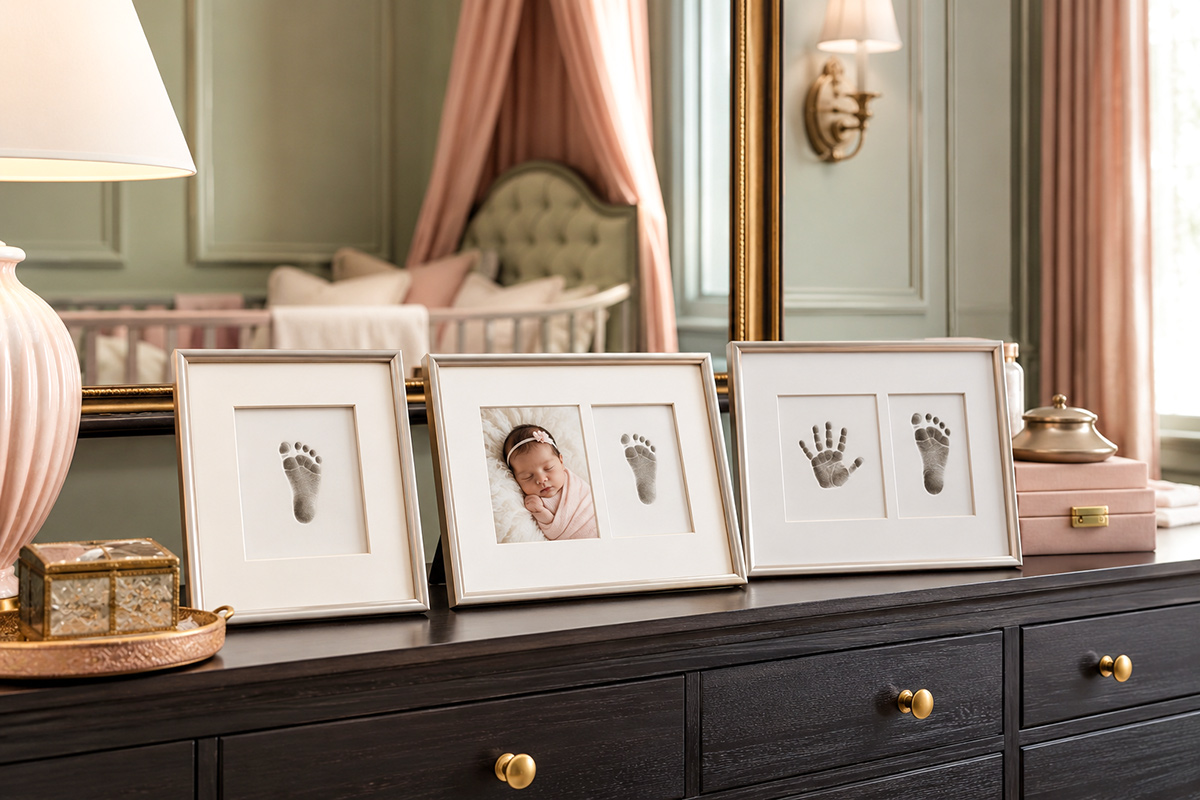
Baby Handprint and Footprint Keepsake Frame Kit
Jump to Baby Footprint Frame Ideas
Footprint Frame With a Baby Photo
Baby Handprint and Footprint Frames
Choose the Frame Before Trimming the Print
Clay Footprint Frames and Shadow Boxes
How to Make the Frame Look Polished
Baby Footprint Frame Ideas That Keep the Print as the Focus
A tiny footprint does not need much decoration to feel special. In fact, the more carefully you frame the print, the less you need to add around it. A simple layout with good spacing can make even a very small newborn footprint feel important.
Start by deciding what you want the eye to notice first. If the footprint itself is the keepsake, give it plenty of open space. A mat with a generous border can make a small print look more finished than a frame filled edge to edge with embellishments, quotes or decorative shapes.
For a single footprint, I prefer a layout that places the print slightly above the visual center of the mat. That leaves room below for a name, date or short line of birth information without making the frame feel crowded. If you have a pair of footprints, place them together as one visual element rather than separating them too far across the frame.
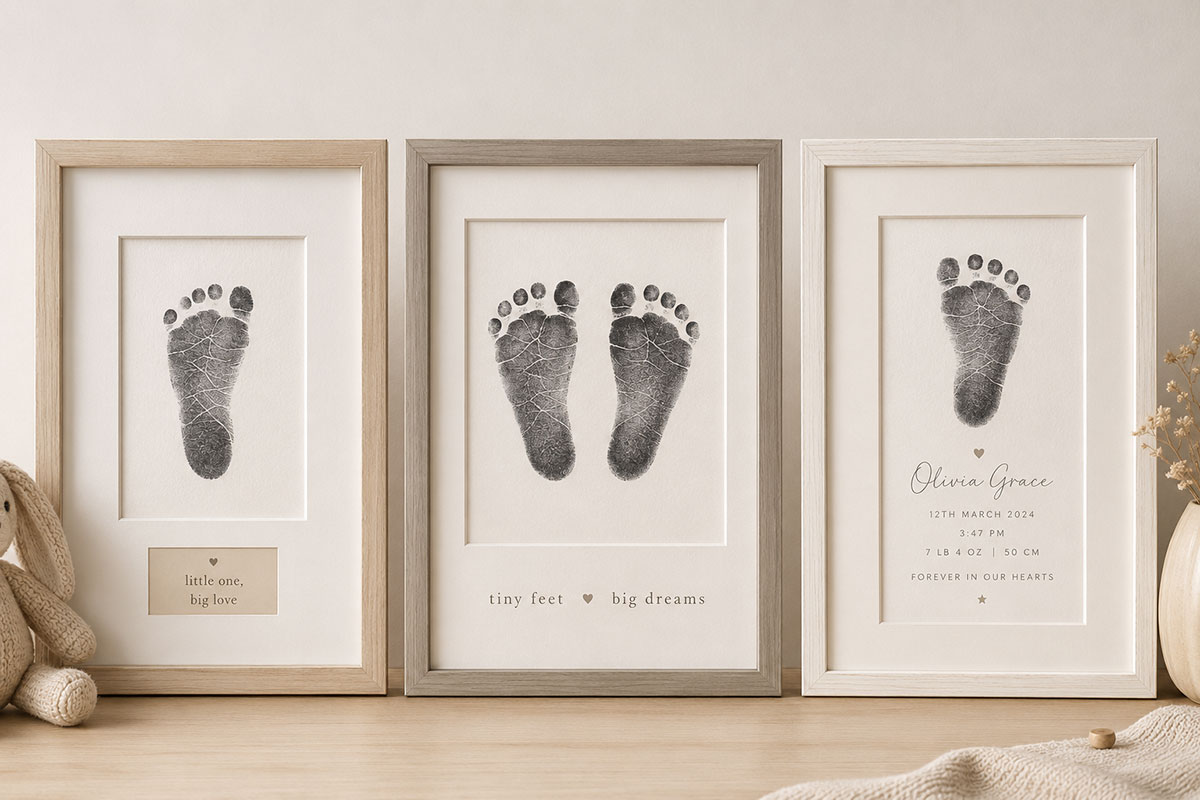
A few layouts are especially useful when you are planning a baby footprint keepsake:
- Single footprint with a wide mat: This keeps the smallest details easy to see and gives the print room to stand on its own.
- Two footprints side by side: A balanced choice when you have a matching pair from the same printing session.
- Footprint with name and date: Add the information beneath the print rather than surrounding it on every side.
- Footprint with full birth details: Name, birth date, weight and length can work well when they are kept in one small area of the design.
- Footprint with a narrow photograph: A simple two-opening layout can connect the print with the stage of babyhood it represents.
Do not feel that you have to fill every empty inch. Open space is useful. It separates the footprint from the frame edge and gives the finished keepsake a cleaner appearance when it is displayed with other family photographs or nursery artwork.
It also helps to decide whether you want the frame to match the nursery or the rest of your home. A footprint may begin as nursery décor, but it is the kind of keepsake that can stay with the family long after the crib and changing table are gone. A simple wood, white, black or understated metal frame is easier to move from one room to another later.
If your original print is on a larger sheet of paper, resist the urge to trim it closely around the toes. Keep more paper than you think you will need until you have chosen the mat and frame. That extra margin gives you much more flexibility when you center the footprint.
If you still need to create the actual print, use my guide to getting a clear baby footprint first. This page begins with the print already made so we can concentrate on turning it into a finished framed keepsake.
Newborn Footprint Frame With a Baby Photo
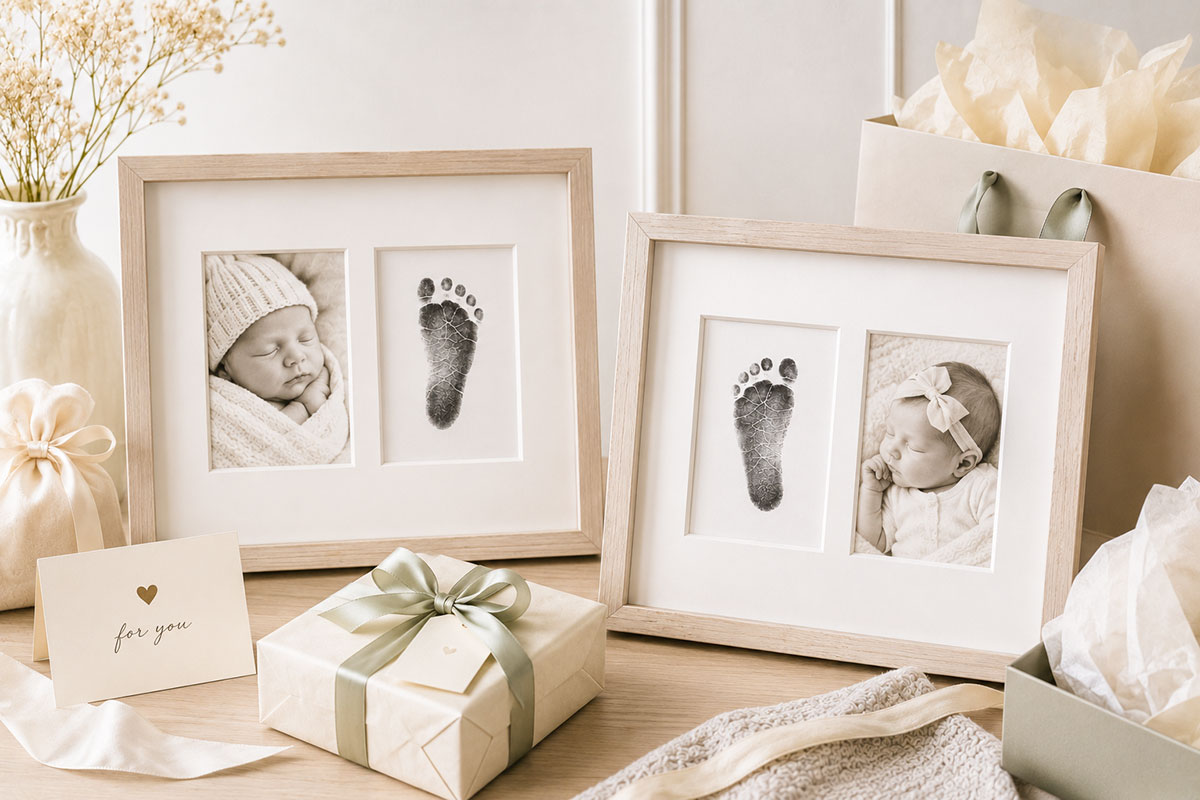
A newborn footprint frame with a photograph tells a little more of the story. The print records scale in a way a photograph cannot, while the photograph gives the footprint a face, a moment and a sense of time.
The easiest arrangement is a two-opening frame with one opening for the footprint and one for the photo. It does not have to be perfectly symmetrical. A slightly larger photograph paired with a smaller footprint opening can look very natural because the two pieces are doing different jobs.
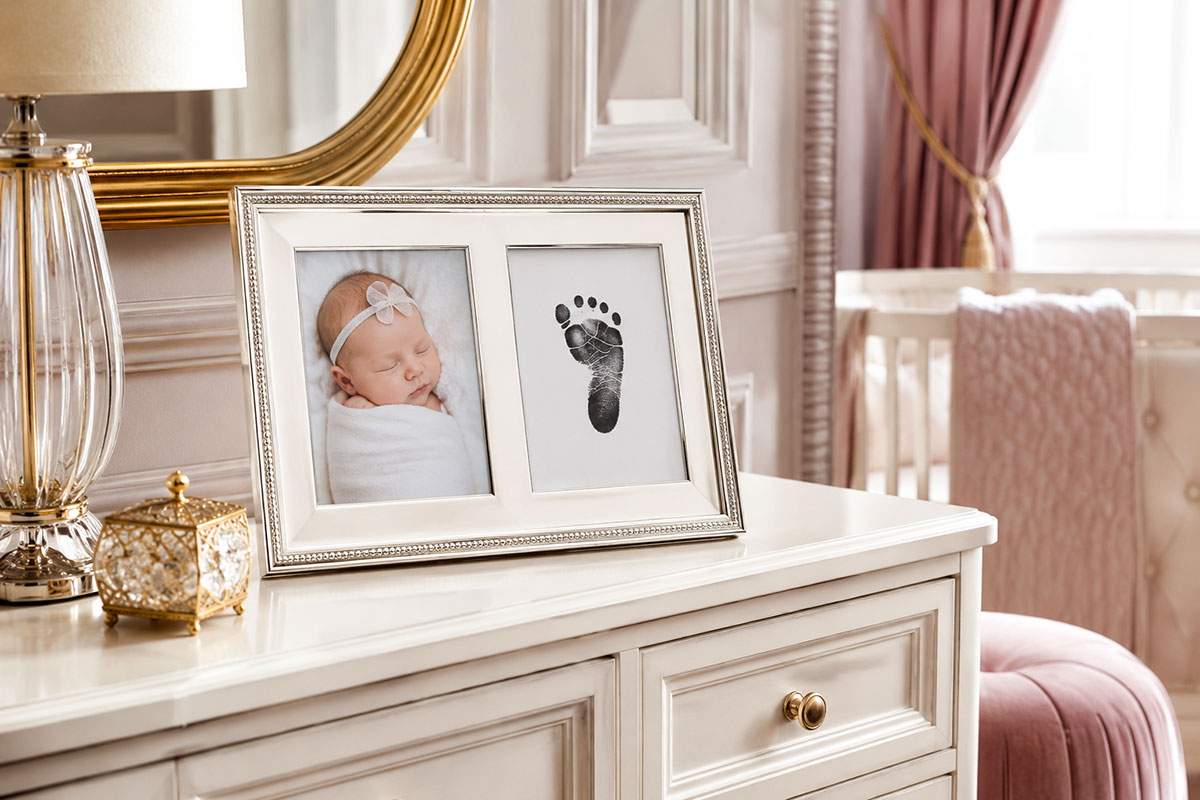
Choose a photograph from roughly the same stage of babyhood as the footprint when possible. A newborn hospital photo beside a newborn footprint feels connected because both belong to the same short window of time. If the print was made a few months later, a photograph from that period creates the same sense of continuity.
For the footprint itself, plain paper often works better beside a photograph than heavily decorated cardstock. The photograph already brings color, texture and detail into the frame. A simple print gives the eye somewhere to rest.
Pay attention to orientation before you order a frame or cut a mat:
- Vertical frame: Works well when the baby photo is a portrait and the footprint sits below it.
- Horizontal frame: A good choice for side-by-side openings or a wider newborn photograph.
- Square frame: Useful when you want one photo, one footprint and a small amount of birth information arranged as a compact group.
If you add the baby's name or birth details, keep the information close to the footprint rather than printing large words across the entire mat. The photograph and footprint should remain the two main elements.
I would also avoid choosing a frame based only on whether it looks like traditional baby décor. Pale pink and blue can be sweet, but they are not required. Walnut, light oak, white, charcoal and soft metallic finishes can make the keepsake easier to display in a living room, hallway or bedroom later.
A family may also want duplicate framed prints for grandparents. If you have one especially clear original, scan or photograph it at high resolution before you begin trimming or mounting. Then you can keep the original intact and use quality copies for additional frames.
Baby Handprint and Footprint Frame Ideas
A baby handprint and footprint frame can be beautiful, but the layout needs more breathing room than a single-print frame. Hands and feet have different shapes, and trying to force both into identical openings can make the finished piece look awkward.
Begin with the actual prints rather than the frame. Lay the handprint and footprint on a large sheet of plain paper and move them around until the pair feels balanced. A handprint often reads wider and more open, while a footprint is longer and narrower. Let those shapes guide the arrangement.
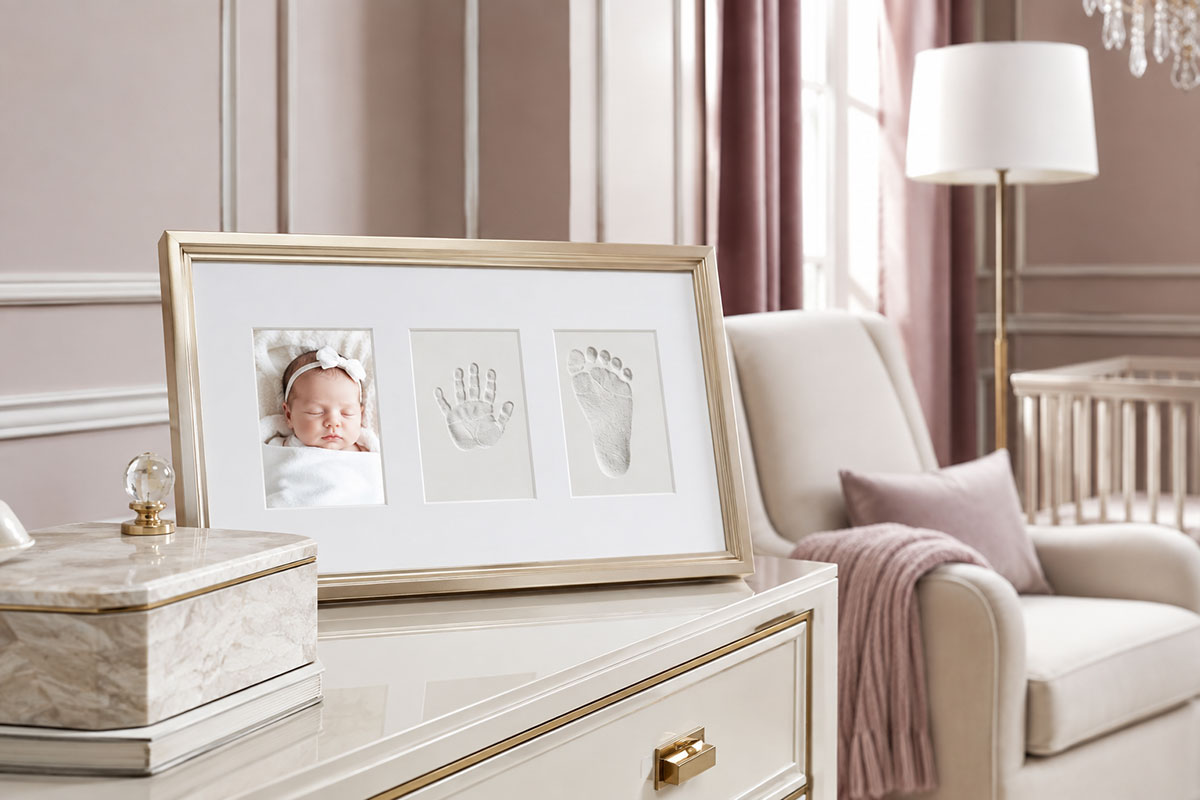
There are several ways to arrange the pair without making the frame feel busy:
- Handprint above, footprint below: A useful vertical arrangement when the two prints are similar in visual weight.
- Handprint and footprint side by side: Best when the frame is wide enough to leave a clear margin around both.
- Two prints with one photograph: Place the photo between the prints or give it a slightly larger opening so the layout has a clear center.
- Separate matching frames: A good solution when the handprint and footprint are different sizes or were made at different ages.
- One print now and one later: Leave a second opening empty until you are ready to add another milestone rather than forcing two unrelated prints into the same frame.
A handprint and footprint do not have to come from the same day to be meaningful, but label them clearly if they represent different ages. A tiny newborn footprint beside a handprint made several months later can still make a lovely comparison when the dates are part of the design.
If you want more ideas specifically for the handprint side of the keepsake, my baby handprint crafts and keepsakes page covers ways to use handprints without turning this frame page into another general craft guide.
Keep decorative additions restrained. A small name line, date or simple birth detail panel can support the prints. Large bows, raised ornaments and layers of themed decorations can compete with the little hand and foot shapes that make the frame worth keeping.
If the prints are going behind glass, make sure the ink, paint or other print material is completely dry before assembly. Do not let a tacky print touch the glazing. If the surface is raised, thick or dimensional, a shadow box may be a better choice than pressing the keepsake into a shallow photo frame.
Choose the Frame Before You Trim the Footprint
A clear baby footprint can be surprisingly easy to spoil at the framing stage. The problem is often not the print itself. It is trimming the paper too closely before you know the size and shape of the frame opening.
Keep the original sheet intact while you compare frame and mat options. A footprint that looks small on a full sheet of paper can fill a mat opening quickly once the margins are removed.
Before cutting anything, place the footprint behind a temporary paper opening. You can make one by cutting a rectangle from ordinary printer paper or cardstock. Move that opening over the footprint until the spacing looks right. This gives you a much better idea of how the finished piece will look than measuring the footprint alone.
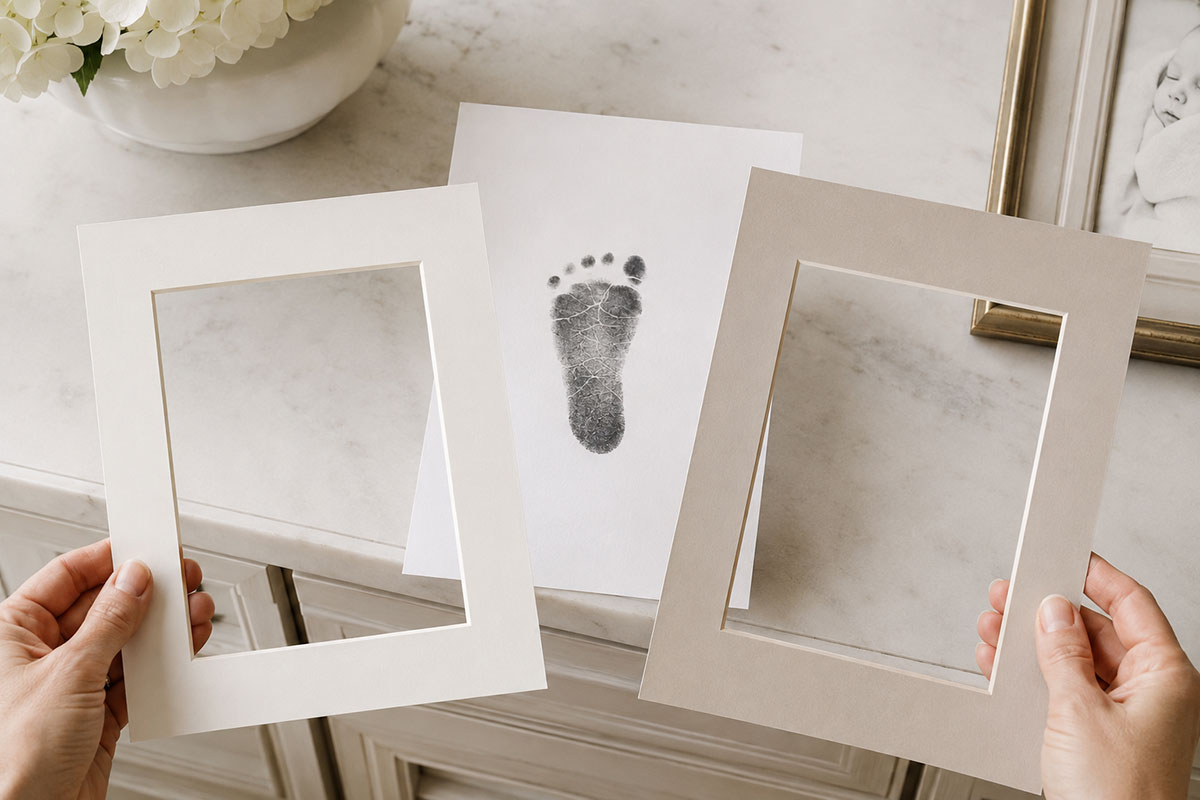
Leave extra paper around the toes, heel and sides of the foot. The mat should surround the footprint without making it look squeezed into the opening. A little more space beneath the heel can also leave room for a name or date if you decide to add one later.
If your print is not perfectly centered on the paper, do not assume you need to make a new one. A custom or hand-cut mat can correct the visual balance. The frame opening does not need to follow the edges of the original sheet.
Think about these measurements before you trim:
- Footprint height: Measure from the top of the longest toe to the bottom of the heel.
- Footprint width: Measure across the widest part of the foot.
- Desired open space: Decide how much blank paper you want visible around the print.
- Mat overlap: Remember that the mat normally covers a small amount of the paper around its opening.
- Extra information: Leave room if you plan to include a name, date, weight or other birth details.
Keep the mat away from the actual printed toes and heel. A tiny overlap may seem unimportant when you assemble the frame, but it can make the finished footprint look clipped.
If you are using a photograph as well, arrange the photo and footprint together before deciding where either one should be cut. You may discover that the photograph needs more space than expected, or that turning the frame horizontally gives both pieces a better proportion.
It is also worth making a digital copy before you alter the original. A clear scan or straight-on photograph gives you a backup if the paper is damaged later and makes it easier to create copies for family members.
If your footprint still needs cleaning up because the toes are faint or the edges are smudged, do not redraw the print to make it look perfect. The clear baby footprint guide explains how to improve the printing process when you want another attempt.
Baby Footprint Frame Sizes: What Size Works Best?
There is no single frame size that fits every baby footprint. The best size depends on whether you are displaying one print, two prints, a photograph or additional birth information.
Start with the finished composition rather than shopping by the baby's foot measurement alone. The footprint is only one part of the framed area. Matting and open space can take up more room than the print itself.
For a single small footprint, a compact frame can look lovely if the mat leaves a comfortable border. If you want to add a photograph or a second print, moving up to a larger frame often looks more intentional than trying to squeeze everything into several tiny openings.
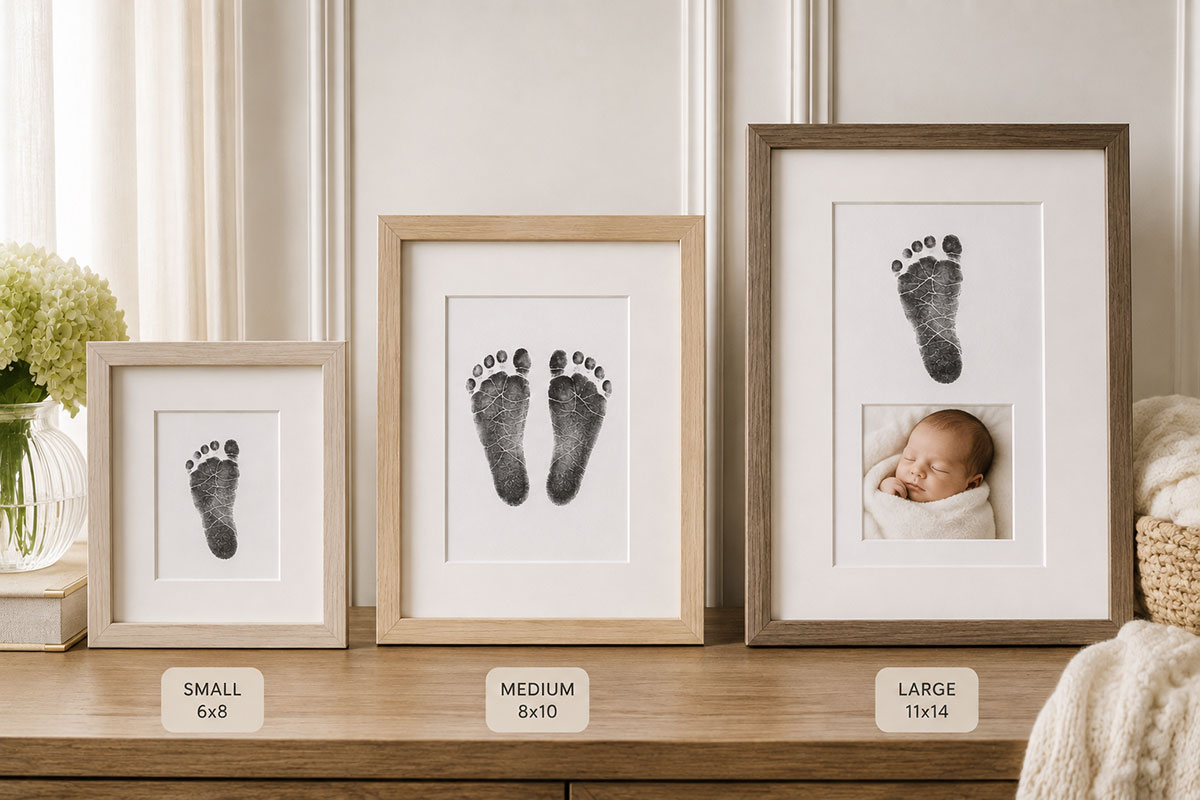
These are useful starting points rather than fixed rules:
- Small frame: Suitable for one footprint with a simple mat and little or no extra information.
- Medium frame: Gives you room for a footprint plus a name, date or small photograph.
- Larger frame: Better for handprint and footprint combinations, multiple photos or a more generous mat.
- Multi-opening frame: Useful when you already know exactly how many prints and photographs you want to include.
- Custom mat: Helpful when the print is an unusual size or sits off-center on the original paper.
A small footprint does not automatically need a tiny frame. In fact, a larger mat can make the print easier to appreciate because the extra space separates it from the frame edge.
Watch the proportion of the mat as well. If the opening is only slightly larger than the footprint but the outer mat is very wide, the print can feel boxed in. If the opening is too large, the footprint may look lost. A temporary paper mat is useful here because you can test several opening sizes before committing to one.
When you are framing both a handprint and a footprint, measure each one separately. Do not assume they should have identical openings. A wider opening for the hand and a taller opening for the foot can look more balanced than two matching rectangles.
If you are ordering a custom mat, measure twice and write the numbers down. Include the amount of paper you want hidden under the mat as well as the amount you want visible.
For a gift, consider where the recipient may display the frame. A very large keepsake can be beautiful, but a modest frame may be easier to place on a dresser, bookshelf or gallery wall.
Clay Footprint Frames and Shadow Boxes
Clay footprint keepsakes need a different framing approach from flat paper prints. The impression has depth, and that depth determines whether a standard frame will work or whether you need a shadow box.
If you still need to make the impression itself, the air dry clay baby keepsake footprint project gives you a complete freestanding clay plaque tutorial before you decide whether to display it on an easel or place it in a deeper frame.
If the clay piece is completely flat and thin, it may fit inside a deeper picture frame. If it has raised edges, decorative molding or noticeable thickness, a shadow box gives the keepsake room without pressing it against the glazing.
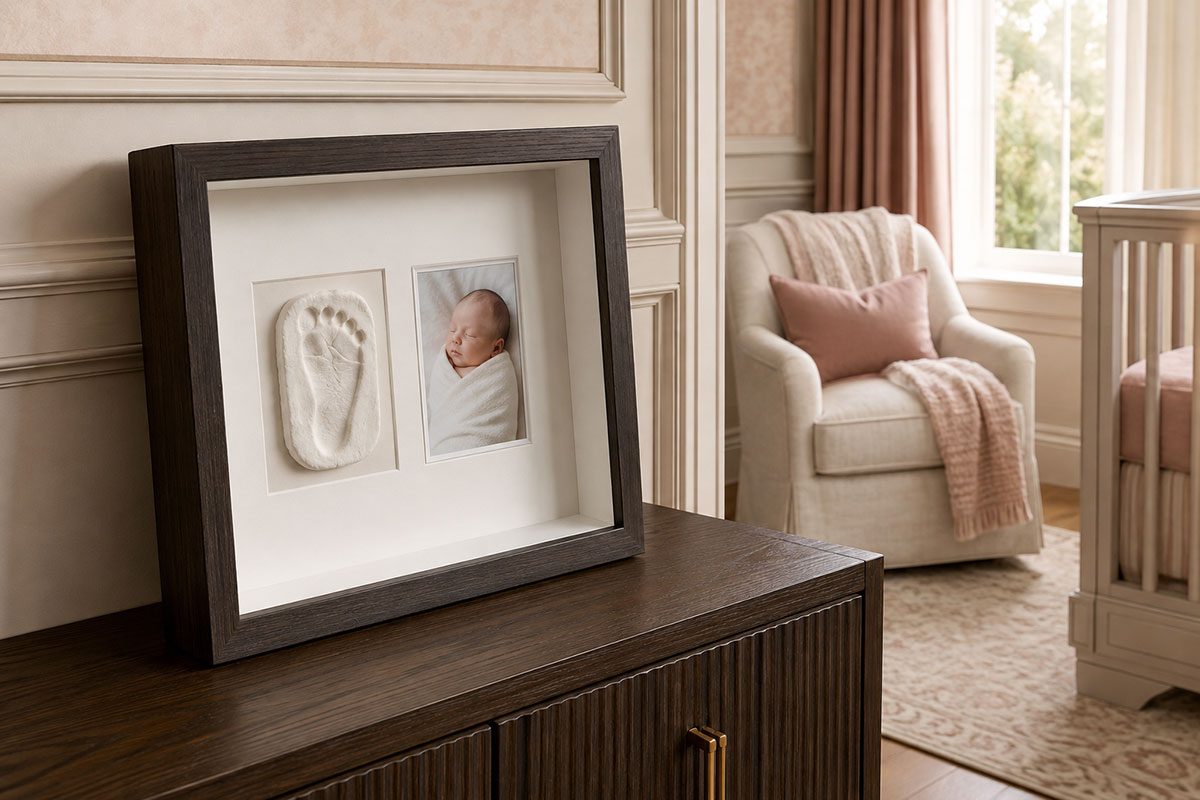
Before choosing the frame, measure the deepest part of the clay impression, not just the thickness at the edge. Then allow extra clearance between the keepsake and the front glazing.
A clay footprint can be displayed in several ways:
- Clay impression by itself: Give it a wide backing area so the shape remains easy to see.
- Clay footprint with photograph: Position the photograph beside the impression rather than overlapping the clay.
- Handprint and footprint pair: Use a larger shadow box so both impressions have enough separation.
- Clay piece with a small name plate: Keep the lettering simple and place it below the impression.
- Two separate shadow boxes: Useful when individual hand and foot impressions are too large to fit comfortably together.
Do not force a thick clay keepsake into a shallow frame. Pressure against the front can damage the impression, and an improvised fit rarely looks finished.
The backing also matters. A smooth, plain background makes the contours of the clay easier to see. If the clay is light, a slightly deeper neutral background can create definition. If the clay is darker, a pale backing can provide contrast.
Avoid loose decorative objects inside the shadow box unless they are securely mounted and genuinely add meaning. The footprint already provides texture and dimension, so the display does not need much else.
If the clay kit includes its own frame or mounting instructions, follow those directions before substituting another mounting method. Different air-dry and casting materials can behave differently as they cure.
The broader baby footprint crafts and keepsake ideas page covers other ways to use footprint keepsakes. Here, the goal is simply to choose a display that protects the dimensional piece and keeps the impression easy to see.
How to Make a Baby Footprint Frame Look Polished
A polished baby footprint frame is usually more about editing than adding. The footprint itself is already personal. You do not need to surround it with many decorative elements to prove that it belongs in a nursery.
Begin with a limited visual palette. Choose the frame finish, mat color and lettering color first. Then stop and look at the composition before adding anything else.
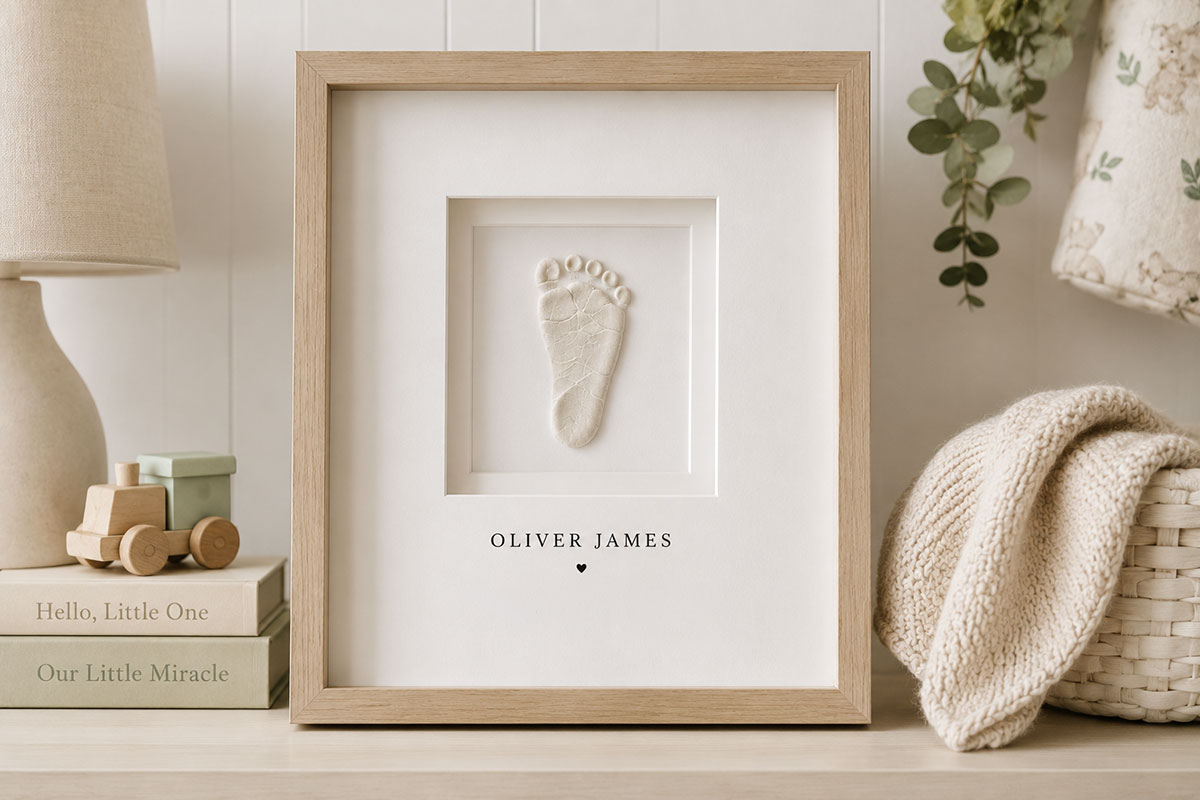
A few details make a noticeable difference:
- Use consistent spacing. Keep the footprint centered within its own area even if the entire composition is asymmetrical.
- Keep lettering smaller than the print. The baby's name should support the footprint rather than compete with it.
- Choose one frame finish. If several footprint frames will hang together, matching frames can make different prints feel like a collection.
- Leave open space. A clean area around the footprint helps small toe marks and heel details remain visible.
- Limit embellishments. If you add a ribbon, charm or decorative paper, use it sparingly.
- Check the alignment before closing the frame. Small shifts are much easier to correct before the backing is secured.
Think beyond nursery themes when choosing the color scheme. A frame that coordinates with ordinary home furnishings can move easily from the nursery to a hallway, bedroom or family photo wall later.
If you want color, use it where it has a purpose. A muted mat that picks up a color from the baby's photograph can connect the two elements without making the frame look themed. A colored footprint can also stand on its own against a plain mat.
Names and dates are useful, but they do not need to dominate the design. A small line beneath the print is enough. If you include weight, length and time of birth, place the information together rather than scattering it around the frame.
I believe a footprint frame looks more personal when it still feels like a real keepsake rather than a piece of mass-produced nursery décor. A slightly irregular toe, a tiny difference between two prints or a handwritten date can be part of what makes the finished piece worth keeping.
Before you close the frame, look at it from several feet away. If your eye goes first to a large bow, oversized lettering or decorative border, simplify the design until the footprint becomes the first thing you notice.
Baby Footprint Frames as Gifts
A baby footprint frame can make a meaningful gift because the personal part comes from the print itself. The frame does not need elaborate wording or decorations to make it feel special.
For grandparents, I would keep the design especially simple. A clear footprint, the baby's name and a small photograph are enough to create a keepsake that can sit comfortably beside ordinary family photos. If you are making frames for more than one relative, the copies do not have to be identical. You can use the same footprint while choosing frame finishes that suit each person's home.
A framed footprint can work well for several occasions:
- New grandparent gift: Pair the footprint with a small newborn photograph and the baby's name.
- Mother's Day or Father's Day: Keep the design centered on the baby's print rather than filling the frame with a long message.
- New baby gift: Give parents an empty or partially prepared frame so they can add their own print when they are ready.
- First birthday keepsake: Frame an earlier newborn footprint beside a recent photograph to show how much has changed.
- Family keepsake set: Make several coordinated frames from a high-quality copy of the same original footprint.
If you are giving a frame before the baby arrives, I would not try to guess the final footprint size. Choose a frame with flexible matting or give the frame with an uncut mat so the parents can fit the actual print later.
For a finished gift, use the baby's full name only if the parents are comfortable with it being displayed. A first name, initials or simply the date can make the keepsake feel complete without adding more personal information than the family wants on view.
To complete the set, pair the frame with another handmade piece chosen from my collection of personalized baby gift projects for name embroidery, crochet gifts and other keepsakes.
Birth details can be lovely, but they are optional. A frame does not become less meaningful because it contains only a footprint and photograph.
If siblings will eventually have matching keepsakes, choose a frame style that is easy to repeat rather than something highly specific to one nursery theme. The prints will already make each frame different.
You can also build a gift around the footprint without making the frame the only keepsake. The baby footprint crafts and keepsake ideas page has additional ways to use the same kind of print for made-to-keep projects.
When making several gifts, preserve one untouched version of the footprint for the parents. Use scanned or carefully reproduced copies for the extra frames whenever practical. That way, the family does not have to give away its best original print.
Protecting and Displaying the Finished Footprint
A footprint may take only a few seconds to make, but the framed paper can remain part of the family's keepsakes for decades. A few careful choices during framing can reduce fading, staining and handling damage.
First, make sure the print is completely dry. Do not place a damp or tacky print under a mat or against glazing. If you used an ink pad, paint or another print material, follow the product directions for drying and handling before framing it.
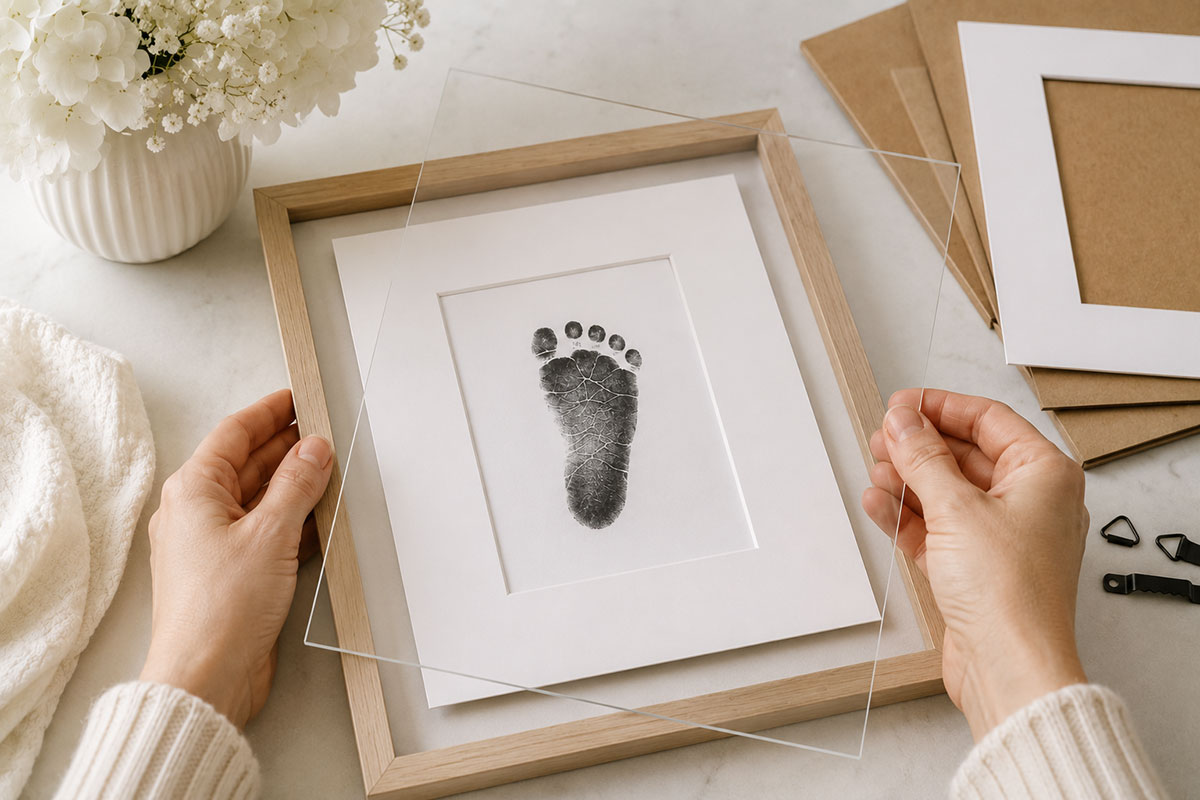
If the footprint is especially important to you, make a digital copy before it goes into the frame. Photograph it straight on in even light or scan it at a useful resolution. Save the file somewhere other than your phone so you still have a copy if the original is damaged.
For the framed original, keep these preservation points in mind:
- Keep the print away from the glazing. A window mat or frame spacer can prevent the paper from resting directly against the glass or acrylic.
- Choose suitable mat and backing materials. Look for framing materials described as acid-free, pH-neutral or intended for archival use.
- Avoid unnecessary adhesive on the original. Do not cover the back with ordinary tape or glue simply to keep it from moving.
- Limit bright light exposure. Do not place an original footprint where direct sunlight falls across it for long periods.
- Avoid damp locations. Bathrooms, damp basements and areas with frequent moisture changes are poor places for paper keepsakes.
- Handle the original as little as practical. Work on a clean, dry surface when you remove or reframe it.
The U.S. National Archives recommends limiting light exposure for family papers and photographs and suggests using a window mat or spacers so the original does not touch the glazing. Its guidance also discusses pH-neutral or acid-free mat board and methods that avoid unnecessary adhesive on originals. You can read the National Archives guidance for displaying family papers and photographs if you want more detailed preservation information.
If you want the original footprint on display, consider where the frame will hang throughout the day. A wall that receives hours of direct sun is not a good location for a print you cannot replace. An interior wall, dresser or shelf away from intense daylight gives you more flexibility.
Another option is to display a high-quality copy and store the original separately. That can be particularly useful if the footprint was made only once or includes handwriting you do not want to risk fading. The National Archives specifically notes that displaying copies while storing originals is a way to reduce light damage.
Store an unframed original flat rather than folding it to fit a smaller container. Keep it in a clean enclosure that is large enough for the sheet. The National Archives family archive storage guidance gives additional information about storing family papers without bending or crowding them.
If you are hanging several baby keepsakes together, leave a little space between the frames. A footprint, handprint and baby photograph already carry plenty of visual detail. They do not need to be packed tightly together to read as a collection.
And remember that the frame does not have to stay in the nursery. A small footprint can later move to a bedroom, family gallery wall or keepsake shelf without looking out of place. Choosing simple framing now makes that much easier.
Frequently Asked Questions About Baby Footprint Frames
Should I frame the original baby footprint or a copy?
You can frame either one. If the original cannot be replaced, consider making a high-quality scan first. You may decide to display a copy and store the original, especially in a bright room.
Should a baby footprint touch the frame glass?
I would avoid direct contact when practical. A mat or frame spacer creates separation between the printed surface and the glass or acrylic.
What if the footprint is not centered on the paper?
Do not trim it immediately. A mat can often correct an off-center print by changing what portion of the sheet is visible. Test the opening with a paper template before cutting the original.
Can I put a handprint and footprint in the same frame?
Yes. Measure both prints first because their shapes are different. A custom mat or separate openings can give each print enough room without forcing them into matching rectangles.
Can I frame an inkless baby footprint?
Yes, once the print is complete and ready for handling according to the kit directions. If you are still deciding between inkless kits, ink pads and stamps, see the baby footprint ink pads, inkless print kits and stamps guide.
What information should I add beneath a baby footprint?
You can use only the baby's name and date, or add birth weight and length if you want a fuller record. Keep the information smaller than the footprint so the print remains the main feature.
Do I need a special baby-themed frame?
No. A simple photo frame with an appropriate mat can work beautifully. Choosing a finish that coordinates with your home can also make the keepsake easier to display after the nursery changes.
Can I use a regular picture frame for a clay footprint?
Only if the frame has enough depth for the finished clay piece without pressing it against the glazing. A shadow box is often more practical for raised or dimensional impressions.
A footprint frame does not need to be elaborate to become something worth keeping. Give the print room, protect the original, and choose a frame that lets that tiny foot remain the reason you stop and look.
A Final Baby Footprint Frame Checklist
Before you close the back of the frame, take a minute to check the details that are difficult to fix later. A footprint can look perfectly centered while the frame is lying flat and then appear slightly crooked as soon as it is standing upright.
- Check the footprint from several feet away. Make sure the print looks centered within its visible opening rather than centered only on the original sheet of paper.
- Look at the toes and heel. Confirm that the mat does not cover any part of the print you meant to show.
- Check names and dates. Make sure spelling, dates and birth details are correct before the backing is secured.
- Remove dust and fibers. Look closely at the inside of the glazing and mat because small specks become much more noticeable after the frame is closed.
- Make sure everything is dry. Ink, paint, clay and adhesives should be fully dry according to their directions before the keepsake is enclosed.
- Check the photograph. If the frame includes a baby photo, make sure the orientation and crop still look right once the mat is in position.
- Photograph or scan the finished print. Keep a digital copy before the original goes permanently into the frame.
- Choose the display location carefully. Avoid a spot where direct sunlight, moisture or frequent handling could affect the keepsake.
If you are still deciding what kind of keepsake to make, start with the broader baby footprint crafts and keepsake ideas. For projects that combine hands and feet, the baby handprint crafts page gives you more ways to use the handprint without crowding everything into a single frame.
The nicest result does not have to be the most elaborate one. A clear little footprint, enough open space around it and a frame you would be happy to keep on display can be all the design the keepsake needs.


When you click on links to various merchants on this site and make a purchase, this may result in this site earning a commission. This does not affect the price you pay.

UBGI Gold Standard 2026
Reviewed under the site's
editorial checklist.
About Jan | Contact | Baby Nursery Ideas (Blog) | Site Map | Privacy Policy | Disclosure Policy | Disclaimer | Affiliate Disclosure | Earnings Disclosure | Facebook | Pinterest
I am a participant in the Amazon Services LLC Associates Program, an affiliate advertising program designed to provide a means for us to earn fees by linking to Amazon. As an Amazon Associate I earn from qualifying purchases.
Copyright © 2006-2026. All Rights Reserved.