S15 Crib Spring Hooks (Vintage & Discontinued) - Identification Guide
S15 crib spring hooks are discontinued metal hook components used in some vintage crib mattress support systems manufactured prior to modern federally compliant fixed-platform crib designs.
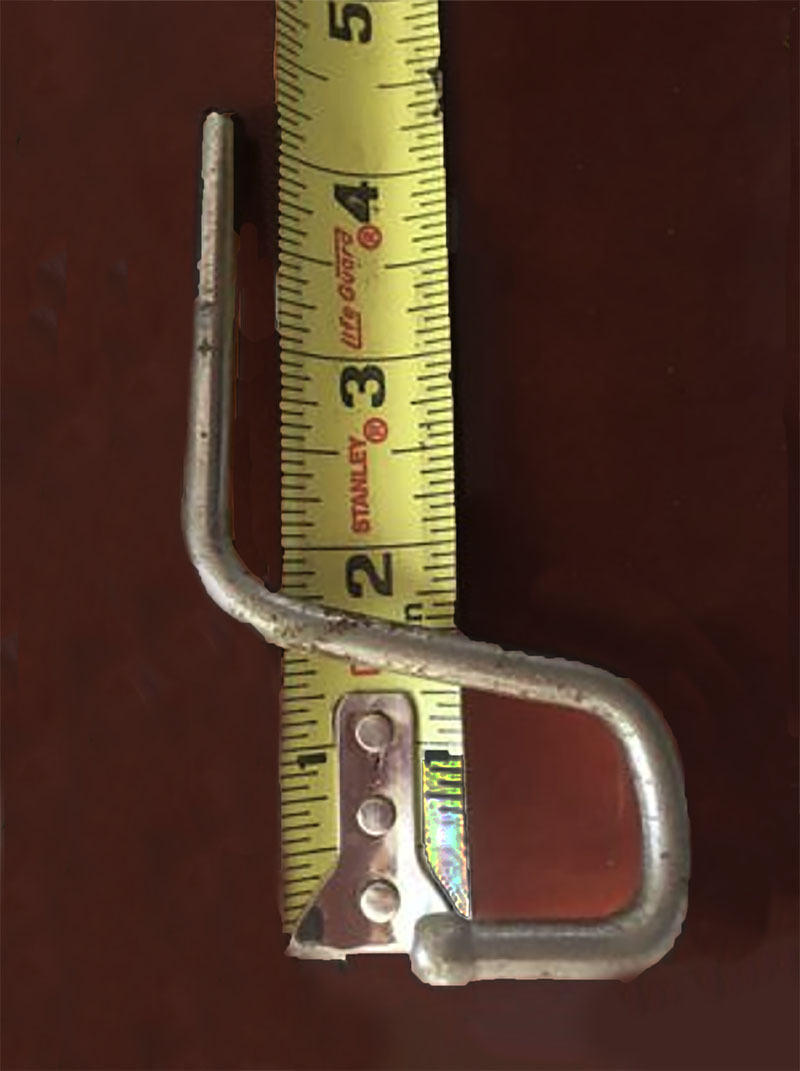
Authentic vintage S15 crib spring hook shown for identification, commonly associated with older Childcraft crib mattress support frames and similar designs.
If you are missing crib hooks, screws, bolts, brackets, barrel nuts, mattress support hardware, or a hardware kit, you can check current inventory here:
Inventory listings are provided as general reference only. Crib parts are brand-specific and model-specific, and no listing should be treated as compatibility confirmation for any crib. Before purchasing or using any replacement crib hardware, verify the crib brand, exact model number, production date, part location, measurements, and original manufacturer documentation whenever possible. Do not use a crib with missing, damaged, substituted, or unverified parts.
S15 crib spring hook identification summary
- Part reference: S15 crib spring hook
- Associated crib brand: Commonly referenced with certain older Childcraft crib models
- Approximate length: Slightly over 4 inches
- Material: Metal hook component
- Original crib function: Used in some mattress support systems
- Page purpose: Visual and dimensional identification only
- Availability: Commonly associated with older and discontinued crib models
- Common size description: Often described as a crib spring hook measuring a little over 4 inches long
The related label “SH15” is sometimes used interchangeably in archived documentation and visitor discussions.
S15 crib spring hooks
S15 crib spring hooks are among the most frequently missing components associated with vintage baby cribs. This pattern appears in estate-sale listings, long-term storage finds, and secondhand crib collections where small hardware pieces were separated from the main crib frame. Because manufacturing of these hooks ended many years ago, availability today is limited primarily to retained examples, photographs, and descriptive records.
Within older crib designs, S15 crib spring hooks typically appear as bent metal components with a simple hooked profile. They are commonly referenced using shorthand terms such as “S15” or “SH15,” though labeling was not always consistent across manufacturers or production runs, as shown in crib parts identification across manufacturers. In many cases, the designation appears informally rather than as a stamped or branded part number.
Visual characteristics associated with S15 crib spring hooks include a single continuous metal form, a curved upper section positioned within a crib frame opening, and a lower bend that holds a mattress spring frame wire. Surface finishes vary across examples, including plain steel, lightly coated metal, or aged patina consistent with extended household use. Length and curvature may differ slightly while maintaining a broadly similar profile, as reflected in the crib hardware identification reference.
These hooks are most often discussed in relation to cribs produced from the 1970s through the early 1990s, particularly models that used suspended mattress support frames rather than rigid platforms. Childcraft cribs are frequently mentioned in association with S15-style hooks, though similar components appear in other brands from the same period. In many cases, manufacturer documentation for these parts is incomplete or unavailable.
Because original packaging and owners manuals are rarely retained for cribs of this age, identification often relies on visual comparison rather than written specifications. Photographs of intact crib assemblies, close-up images of hardware, and shared user-submitted images form the primary basis for recognizing S15 crib spring hook styles today. Measurements are sometimes noted descriptively, though no single authoritative specification source exists.
Discussions referencing S15 crib spring hooks often appear alongside broader material covering discontinued crib hardware. These discussions focus on naming conventions, general appearance, and how parts were positioned within the crib structure at the time of manufacture. The emphasis remains descriptive, centered on recognition and comparison rather than modification or adaptation.
In historical crib configurations, S15 crib spring hooks appear as intermediary hardware positioned between the crib frame and the mattress spring assembly. Their presence allowed the spring frame to remain elevated and centered within the crib footprint. Over time, removal, loss, or bending of these hooks has contributed to incomplete crib sets observed today.
Because these components interact with the mattress support system, general reference material on routine mattress surface care is collected on the crib mattress cleaning information page.
Archived photographs and secondhand listings show that S15 crib spring hooks were typically present in sets, with one hook positioned at each corner of the spring frame. This arrangement distributed weight evenly across the frame, similar to the hardware shown on the crib mattress springs support hooks page. While this configuration appears consistently in visual records, written manufacturer explanations are uncommon.
Some historical discussions reference general metal hardware terminology when describing legacy crib components, but no specifications, fabrication guidance, or manufacturing standards are documented for S15 crib spring hooks.
These references are descriptive in nature and note how similar metal components are categorized or characterized in general terms, without establishing specifications, standards, or instructions.
From a documentation standpoint, S15 crib spring hooks occupy a space between formally cataloged replacement parts and undocumented household hardware. Unlike larger crib components such as side rails or mattress frames, small hooks were rarely labeled individually. As a result, modern references rely heavily on shared images and comparative descriptions.
Collectors and researchers interested in vintage nursery furniture often catalog S15 crib spring hooks alongside other crib hardware types. These catalogs may group hooks by visual similarity, approximate era, or associated crib brand. Such groupings support identification and comparison but do not establish compatibility.
Online archives, discussion boards, and user-submitted collections provide much of the available descriptive material related to S15 crib spring hooks. These sources typically emphasize recognition and naming. Images contributed by visitors often include close-up views, side profiles, and contextual placement within crib frames, similar to examples collected on the baby crib mattress hooks page.
Review of these materials shows that S15 crib spring hooks were not standardized in the same way as later crib components. Variations in bend radius, finish, and length appear across examples, suggesting that multiple manufacturers produced visually similar parts without uniform specifications.
Despite these variations, the term “S15” persists as a convenient label used by collectors and crib owners to describe a general hook type rather than a precise part number. This informal usage reflects the absence of centralized manufacturer records for many discontinued crib models.
Pages that collect information about S15 crib spring hooks exist to consolidate visual references and naming conventions in one place. By presenting images, descriptive text, and visitor contributions together, these pages support comparison across similar crib hardware types.
Unique Baby Gear Ideas does not sell crib hardware and does not source discontinued crib components; this page exists solely for historical identification and documentation purposes.
For broader context on discontinued crib hardware categories, naming conventions, and manufacturer documentation patterns, see the crib parts reference hub.
For broader background on how older crib designs are classified at the federal level, see the U.S. Consumer Product Safety Commission crib information page .
Visitor submissions included below reflect individual observations and collected materials related to S15 crib spring hooks and similar components. These submissions are shared for identification and comparison purposes only and may reference specific crib models, production eras, or visual details observed by contributors.
All descriptive information presented here documents how S15 crib spring hooks are identified, named, and visually recognized within the context of older crib designs. The content remains descriptive and observational in nature.
These hooks are discontinued hardware and are not part of modern crib manufacturing.
Frequently Asked Questions About S15 Crib Spring Hooks
What are S15 crib spring hooks?
S15 crib spring hooks are discontinued metal hook components used in some vintage crib mattress support systems, primarily in designs manufactured prior to modern federally compliant fixed-platform crib standards.
Are S15 crib spring hooks still manufactured?
No. S15 crib spring hooks are no longer widely manufactured and are generally referenced only in historical identification discussions and archived documentation contexts.
Are S15 crib spring hooks standardized parts?
No. Variations in shape, length, and finish appear across examples, and no centralized authoritative specification source exists for this discontinued hardware category.
The section below contains archived visitor-submitted requests related to crib part identification. These entries are preserved for historical reference and terminology context only. They do not provide instructions, recommendations, or guidance for crib repair, modification, or continued use.
Archived visitor-submitted S15 spring hook identification requestsS15 Crib Spring Hooks — Identification Requests
Searching for S15 crib spring support hooks or similar vintage crib hardware?
Use this space to share part identification questions, reference information, or documentation sources related to older crib models.
If you’ve located manufacturer documentation, archived manuals, or historical part names associated with S15-style crib spring hooks, your contribution may help others understand how these components are referenced in official records.
This area is intended for information sharing and identification only, particularly for discontinued or hard-to-find crib components.
Visitor Questions & Parts Resources
Do you have:
a question about identifying a missing crib part,
details from a manufacturer label or manual, or
a link to an official documentation source related to crib parts or models?
You’re welcome to share that information here so others researching similar crib models can benefit.
Editorial Safety Note
Some older cribs were manufactured with sliding or drop-side rails that no longer meet current U.S. safety standards.
If a crib includes any movable or sliding side, safety agencies advise that it should not be repaired or placed back into use.
This page exists only to support crib model identification, part naming, and reference resources.
It does not exist to enable the repair, modification, or continued use of recalled or unsafe crib designs.
Submission Guidelines
Submissions may include:
Questions about missing or unidentified crib parts
Model numbers, manufacturer labels, or production details
Links to official manuals, archived documents, or manufacturer resources
Submissions must not include:
Assembly instructions
Repair, modification, or fabrication guidance
Advice on continuing use of a crib
Comments, Replies & Shared Resources
Comments and visitor submissions reflect individual experiences and shared information.
They do not represent professional, manufacturer, or safety guidance, and do not necessarily reflect the views of Unique Baby Gear Ideas.
What Other Visitors Have Said
Click below to see contributions from other visitors to this page...
Sh15 Crib Hooks 
I need to find and buy (4) SH15 crib hooks.
I Need an S15 Crib Hook
I am in need of one S15 crib hook and have been having a very hard time finding one. I only need a single hook to complete the crib, but so far I have …
S15 Hooks for a Childcraft Baby Crib
Please refer to the photo when identifying S15 hardware hooks associated with a Childcraft baby crib. The metal hooks shown measure just over four inches …
SH15 Crib Mattress Support Hooks
I am trying to identify where SH15 (sometimes labeled S15) crib mattress support hooks may be referenced or documented for an older crib that is missing …

Crib Mattress Springs Support Hooks
I’m trying to identify replacement hardware associated with a vintage crib manufactured in the late 1980s. After long-term storage, several original components …
Baby Crib Mattress Hooks Not rated yet
I am trying to identify metal hooks used with a baby crib mattress support. I am not completely sure of the correct part name, but they appear to be what …
When you click on links to various merchants on this site and make a purchase, this may result in this site earning a commission. This does not affect the price you pay.

UBGI Gold Standard 2026
Reviewed under the site's
editorial checklist.
Photos, decorating ideas, party setups and reader submissions are shared for inspiration unless a page is specifically presented as a pattern, tutorial, reference guide or step-by-step project. Follow the instructions, measurements, safety guidance and manufacturer directions provided for the particular project or product.
About Jan | Contact | Baby Nursery Ideas (Blog) | Site Map | Privacy Policy | Disclosure Policy | Disclaimer | Affiliate Disclosure | Earnings Disclosure | Facebook | Pinterest
I am a participant in the Amazon Services LLC Associates Program, an affiliate advertising program designed to provide a means for us to earn fees by linking to Amazon. As an Amazon Associate I earn from qualifying purchases.
Copyright © 2006-2026. All Rights Reserved.