Guess the Baby Shower Game: How to Play, Questions, and Ideas
Guess the baby shower game is one of those activities that looks simple on paper but always ends up getting guests involved once it starts. There’s usually a moment where someone confidently calls out an answer, only to be completely wrong, and the whole room cracks up, especially when the clue sounded so obvious at first. I’ve seen guests who said they “don’t do games” lean forward in their chairs trying to win just one round, which is exactly why this game works so well; it appeals to all ages.
More baby shower game ideas
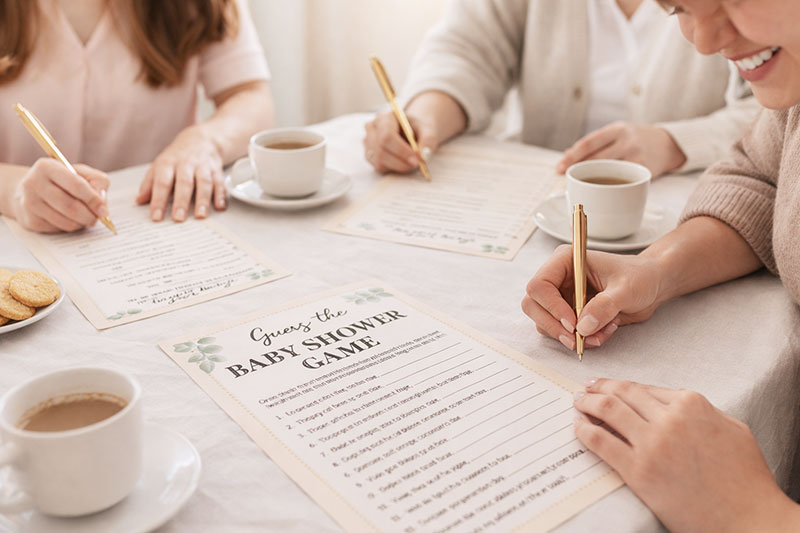
Jump to what you need
Quick answer:
The guess the baby shower game is a simple activity where guests try to identify baby items, parent answers, or common baby-related clues. The host presents prompts one at a time, guests write their guesses, and the person with the most correct answers wins.
How to Play the Guess the Baby Shower Game
A lot of baby shower games sound good when you’re planning, but once everyone is seated and the room settles, you can tell pretty quickly which ones are going to work and which ones fall short. This game usually makes the cut. There’s always that first moment where someone answers confidently, then looks up a second later realizing they may have gone the wrong direction, and the table starts to get lively.
The structure is simple on purpose. You give a clue, guests write their answer, and you move on. At the end, you read the answers and count scores. No complicated setup, no movement, and no pressure to perform in front of the room.
What makes it work is steady pacing. Most groups stay engaged when clues move steadily, without long pauses. If the game slows down, side conversations take over fast. If it moves too quickly, people stop trying after missing a couple in a row.
One thing I’ve seen is that starting with two easy clues changes the whole tone. People relax, get a quick win, and stay with the game instead of checking out early.
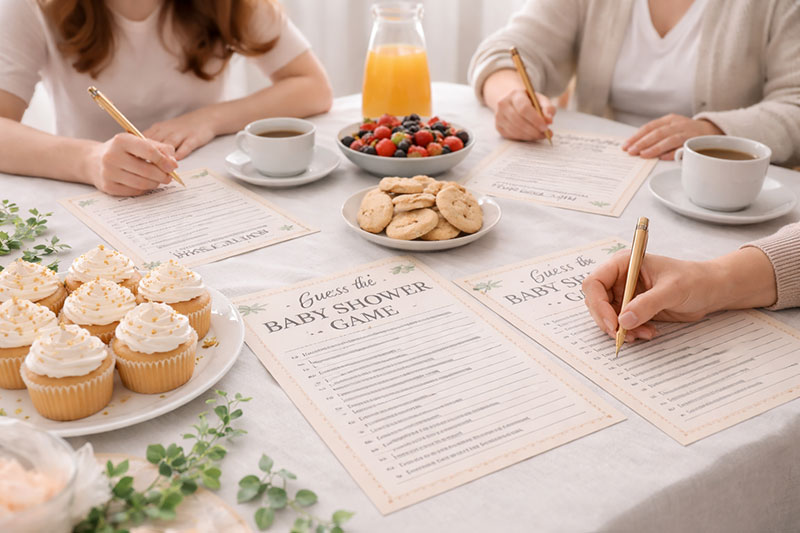
Best Guess the Baby Shower Game Clues That Keep People Playing
There is a trick to making the most of this game; the clues matter more than anything else. If they are too easy, people stop paying attention. If they are too hard, they stop guessing.
The best mix feels familiar but slightly off. The baby shower emoji game uses that same idea, where clues feel familiar but still keeps guests slight off kilter so that they have to pause and think.
Guests recognize the idea right away, but still need a second to decide. That small hesitation is what keeps the game interesting.Parents often notice this when a clue sounds obvious at first, then suddenly doesn’t. That is when people get engaged rather than bored.
Clue styles that work in real rooms:
- Describe a baby item without naming it
- Guess which parent gave a certain answer
- Match baby terms with their use
- Guess the item from a short situation
- Finish a nursery rhyme line
Practical insight: Use mostly easy clues, a few medium ones, and one or two that could go either way. That keeps scores close and avoids the game feeling one-sided.
I’ve seen full tables split on a clue like “used late at night and usually misplaced,” with half writing pacifier and half writing bottle. That kind of split is what makes the answer reveal fun.
Simple Setup That Keeps the Game Running Smoothly
At this point hosts either make things easy or accidentally create friction. The setup doesn’t need to be detailed, but it does need to be clear.
Many showers run into this problem when guests can’t hear the clues clearly. Once people miss even one question, they start guessing randomly or asking neighbors, and the structure breaks down.
A setup that works:
- Use large, readable printed sheets
- Give each guest a working pen
- Stand where your voice carries evenly
- Keep clues short and direct
I’ve watched a game lose momentum just because the host had to repeat every clue twice. When the flow breaks like that, people disengage faster than you expect.
If guests cannot hear you, the game will not work.
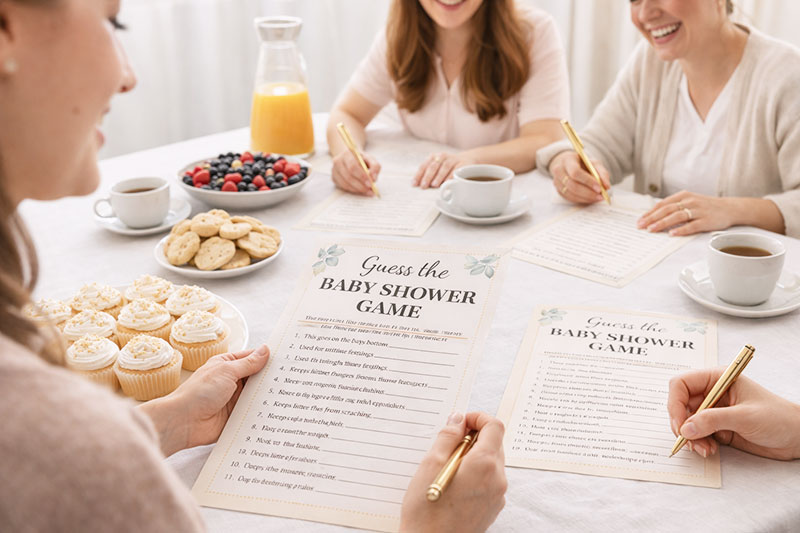
Ways to Make the Guess the Baby Shower Game More Fun
Most guests don’t need or want a complicated game. They just need something that keeps moving. Once the room starts reacting to answers, the energy builds on its own.
This usually happens when answers are revealed quickly and people realize how close they were. Those near misses get the strongest reactions.
Simple ways to improve the experience:
- Reveal answers right after the last clue
- Add one bonus tie-breaker question
- Give a small prize for funniest wrong answer
- Keep instructions short and clear
I’ve seen quiet groups get energized when there is a “funniest wrong answer” moment. It shifts the game from winning to reacting, which works better in mixed groups.
Adding a simple prize keeps guests more engaged, and these diaper raffle prize ideas give you easy options that fit almost any shower style.
Common Mistakes That Break the Flow
Most games don’t fail because of the idea. They fall apart because the rhythm is off or the clues aren't received the way you expected.
One of the biggest issues is unclear wording. If a clue could reasonably match several answers, people stop trusting their guesses. Another is making every question difficult. Once guests miss several in a row, they mentally check out.
There’s also a moment I’ve seen more than once where scoring drags too long and the room shifts attention to food or conversation instead. Timing matters just as much at the end as it does at the beginning.
Avoid these:
- Clues that are too broad
- Reading too quickly
- Long gaps between questions
- Slow scoring at the end
When This Game Works Best at a Shower
This game fits best once guests have settled in but before attention shifts to gifts. If you start too early, people are still arriving and distracted. Too late, and the room is already winding down.
It also works well in mixed groups because no one is put on the spot physically. Everyone can participate at their own pace, even if they don’t know many of the other guests.
For bigger showers where you want that same easy participation to scale across more guests, these baby shower games for larger groups help keep everyone involved whether they are acquainted or not.
The result should feel steady and easy. Guests are writing, pausing, glancing at each other, and reacting together when answers are revealed. That’s usually when you know the game landed.
For a completely different kind of guessing challenge, try my baby shower food guessing game, which swaps written clues for mystery baby food flavors.
If you’re planning the party, the next step is choosing one or two more games that match your group. Start with baby shower games to put together a lineup, or use baby shower ideas.
Guess the Baby Shower Game FAQ
How many questions should this game include?
Most hosts find that 10 to 15 questions keeps the game moving without losing attention.
Should guests write answers or say them out loud?
Writing answers works better because it keeps the game organized and avoids early answer sharing.
Can this game work with large groups?
Yes. Larger groups often create stronger reactions during answer reveals, which improves the overall experience.
What makes the game more engaging?
A balanced mix of easy and slightly challenging clues keeps guests involved from start to finish.
Is this game suitable for mixed ages?
Yes. It works well across different age groups because it does not require movement or prior knowledge.
For general event planning basics, see family gathering guidance.
The guess the baby shower game works because it keeps things simple while still giving people something to react to. When the pacing is right and the clues feel familiar but not obvious, the game runs smoothly and holds attention all the way through.
When you click on links to various merchants on this site and make a purchase, this may result in this site earning a commission. This does not affect the price you pay.

UBGI Gold Standard 2026
Reviewed under the site's
editorial checklist.
Photos, decorating ideas, party setups and reader submissions are shared for inspiration unless a page is specifically presented as a pattern, tutorial, reference guide or step-by-step project. Follow the instructions, measurements, safety guidance and manufacturer directions provided for the particular project or product.
About Jan | Contact | Baby Nursery Ideas (Blog) | Site Map | Privacy Policy | Disclosure Policy | Disclaimer | Affiliate Disclosure | Earnings Disclosure | Facebook | Pinterest
I am a participant in the Amazon Services LLC Associates Program, an affiliate advertising program designed to provide a means for us to earn fees by linking to Amazon. As an Amazon Associate I earn from qualifying purchases.
Copyright © 2006-2026. All Rights Reserved.