Baby Shower Emoji Game Ideas and How to Play
Baby shower emoji game ideas can look almost too easy on paper, but once people start playing, they turn into one of those surprisingly lively little moments that pull the whole room in. I have seen guests smile at the page like it will be simple, then stop halfway through and squint at the emojis as if that tiny baby bottle is supposed to explain everything by itself. Usually someone at the table gets one answer fast, someone else confidently guesses wrong, and before long everybody is laughing and comparing sheets. It works especially well during that early part of the shower when people are still settling in, balancing a plate in one hand, and warming up to each other before the bigger activities begin.
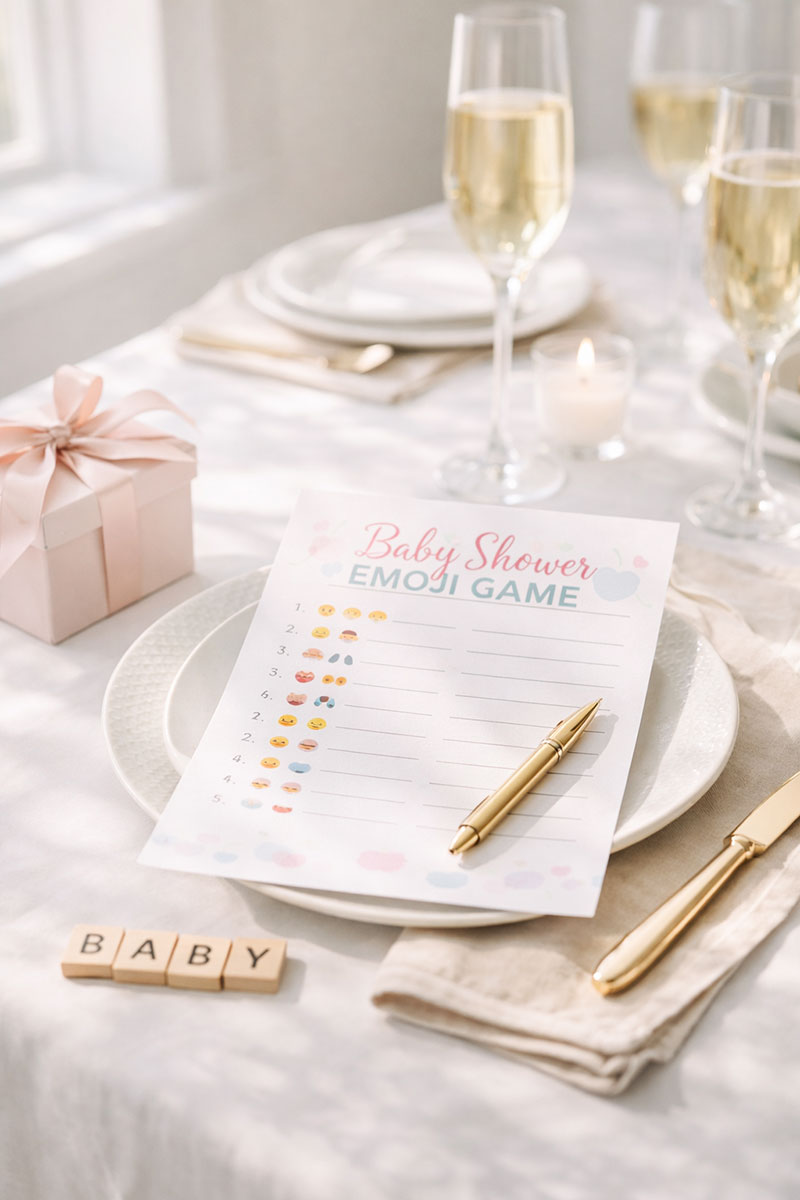
Emoji baby shower game prize set
Start here: easy baby shower game ideas
Jump to what you need
Quick answer: what is a baby shower emoji game
A baby shower emoji game is a simple shower activity where guests look at emoji clues, write down the baby word or phrase each clue stands for, and try to finish with the most correct answers before time is up.
It works because emojis feel familiar at first glance, but they do not always mean the same thing to every guest. That tiny pause between “I know this one” and “wait, maybe not” is what turns a plain printed sheet into a game people actually talk about.
This game works best when it feels quick, clear, and lightly competitive.
How a baby shower emoji game pulls the room together
There is usually a point near the beginning of a shower when the room has not quite settled yet. Someone is still setting down a purse. Another guest is deciding where to sit. Somebody else is halfway through a plate of food and smiling politely at people she has not met before. That is exactly where a baby shower emoji game earns its place.
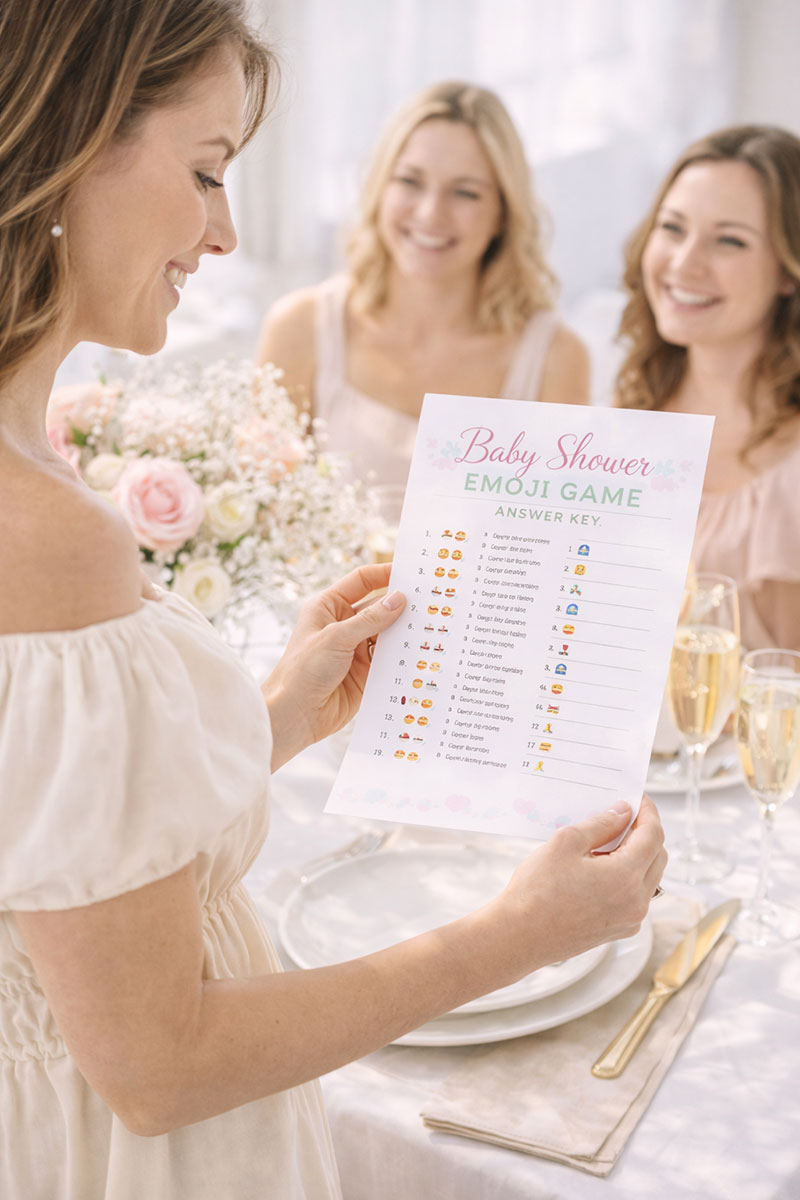
Each guest gets a sheet with emoji clues that stand for baby-related words or phrases. Guests write their guesses, the host sets a short time limit, then the answers are read aloud and scored. The person with the most correct answers wins. That structure is simple, which is part of why it works so well.
What makes the game useful in a real shower is not just the clue sheet. It is the way the room reacts to it. I have seen quiet guests lean over the table and suddenly start comparing answers with people they had not spoken to yet. I have also seen a guest laugh at her own answer before the timer even ended because she knew it sounded right and wrong at the same time.
The game gives people something to do with their hands and their attention. That matters more than most hosts expect.
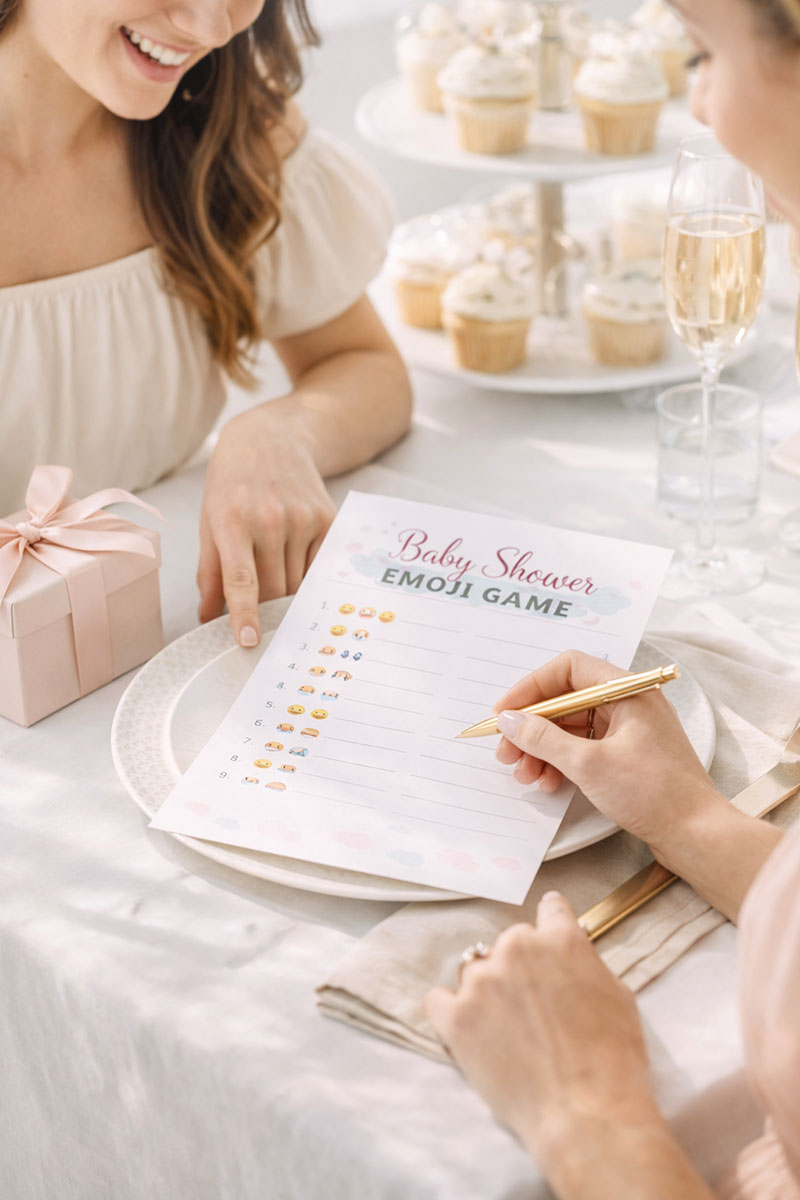
If you want this page to lead naturally into more activity ideas, continue with baby shower games.
Baby shower emoji game ideas that guests can actually solve
The best baby shower emoji game ideas are not the ones that leave the whole table staring in silence. They are the ones that look familiar, take a second to land, and create just enough disagreement to keep people smiling.
I have watched one guest solve bottle plus clock immediately while another guest argued that it had to mean bedtime bottle, not feeding time. That little back-and-forth is exactly what you want. People stay interested when a clue feels close enough to solve, but not so obvious that the whole sheet is done in two minutes.
- Baby bottle + clock = feeding time
- Baby face + bed = nap time
- Pregnant woman + hospital = delivery day
- Diaper + trash can = diaper change
- Baby + music notes = lullaby
- Pacifier + moon = bedtime
- Baby stroller + path = stroller walk
- Baby face + bath = bath time
- Milk bottle + sleepy face = night feeding
- Baby socks + laundry basket = baby laundry
- Baby face + tears = crying baby
- Moon + rocking chair = late-night rocking
One detail that does not get mentioned often enough is clue order. The strongest sheets do not put all the hard clues at the end. They spread them through the middle. When a guest solves an easy clue right after a tricky one, she feels like she is still in the game. When four confusing clues pile up in a row, people start talking over the page and mentally move on.
That pacing choice is small, but it changes the whole mood of the room.
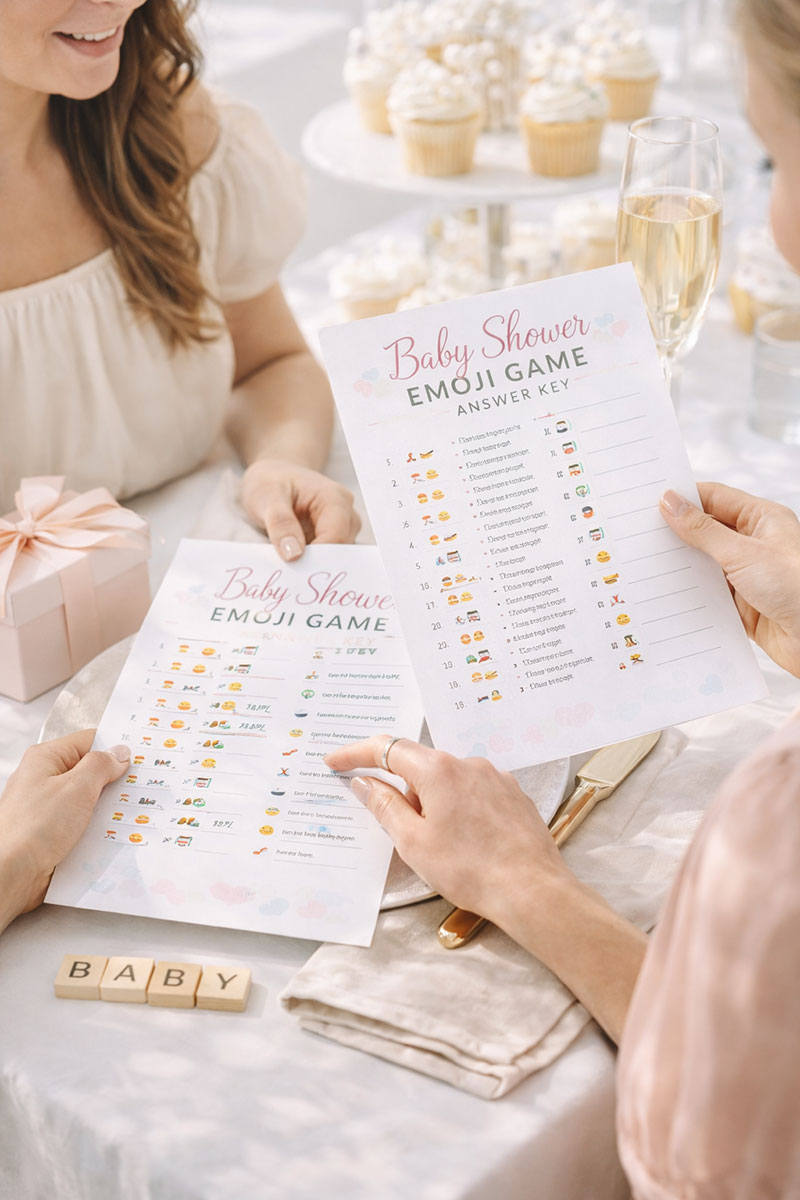
By this point, most hosts can tell whether this is the kind of game their guests will enjoy, and for a lot of showers, it ends up being one of the easiest "yes" moments in the planning of the event.
For huge guest lists where you need something that really keeps multiple tables active and going all at once, these large group baby shower games are designed to keep the momentum of the room.
If you want to follow this with a game that gets more laughs out loud, go next to funny baby shower games.
How to set up the baby shower emoji game without making it awkward
Most hosts do not need another complicated activity. They need something that drops into the shower without turning into one more thing to manage. This game does that well when the setup stays simple.
Print one sheet per guest. Put pens where people can reach them without asking. Decide before anyone arrives whether guests will play individually or by table. Then keep the directions short and start the timer.
I have seen the smoothest setup happen when the sheets are already sitting at each place setting before the first guest walks in. People notice them right away. One person picks up the page while waiting for a drink. Someone else reads the first clue before even sitting down. That kind of early curiosity helps the room settle without a big announcement.
Try not to over-explain the game. The more talking there is before the page hits the table, the more the energy drifts. Short directions work better.
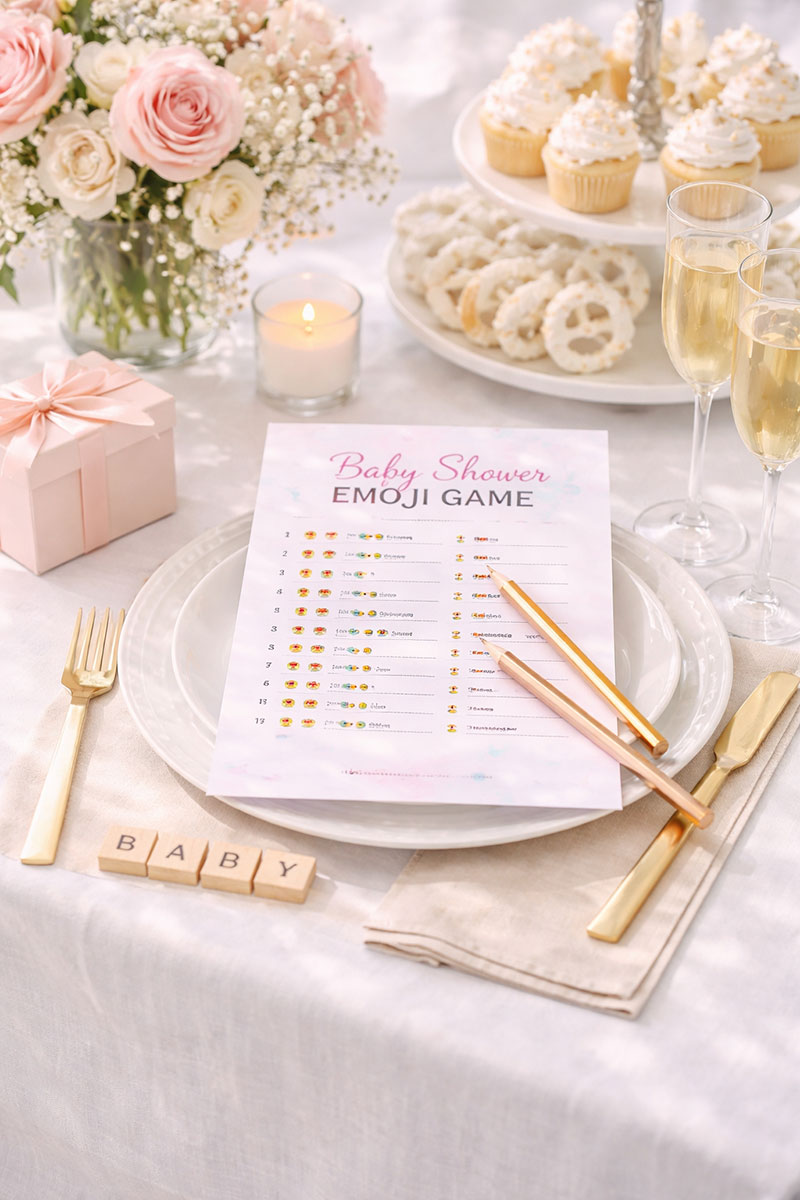
If you are building out the whole event, connect the activity area visually with ideas from baby shower decorations so the game table feels like part of the shower instead of a last-minute add-on.
When to play the emoji game so guests respond well
Timing matters more than hosts think. The best moment is usually after guests arrive and get settled, but before gift opening or eating becomes the main focus.
This is the part of the shower when people are still finding their rhythm. Somebody is adjusting a chair. Someone else is topping off a drink. The quieter guests are still deciding how much they want to join in. The emoji game gives everyone a way in without putting anyone on display.
I have seen the same game fall flat when it was saved for too late. By then, guests were already deep in side conversations and did not want to stop. A game that would have felt easy earlier suddenly felt like an interruption.
Five to ten minutes is usually enough. Keeping it short leaves people with energy to laugh over the answers instead of feeling like the game overstayed its welcome.
Most hosts find that 10 to 15 clues and a short timer keep the game moving without guests losing interest.
Simple prize ideas that feel right for this game
The prize should feel useful, not overdone. This is not a game that needs a dramatic reward.
Choosing something simple and appealing makes the game feel more rewarding, and these diaper raffle prize ideas give you easy options that guests actually enjoy.
I have seen a small coffee gift card get a better reaction than a wrapped prize bag because guests can picture using it right away. That suits the tone of the game. It is fast, social, and light. The prize should match that same mood.
- Coffee gift card
- Candle
- Hand cream
- Tea or cocoa packets
- Packaged cookies or chocolates
There is usually one guest who says she was not even trying to win, right after everyone watched her guard her answer sheet for five straight minutes. That little moment is part of the fun too.
Common baby shower emoji game mistakes that change the mood
A few small mistakes can pull the energy down fast.
The first is making the clues too hard. When guests cannot solve anything in the first minute or two, the room goes quiet in the wrong way. I have watched an entire table stop cold over one confusing clue, and that kind of silence lands very differently than the quiet that comes from people thinking.
The second is making the sheet too long. Ten to fifteen clues is usually enough. Once guests feel like they are still writing while everyone else has mentally moved on, the game starts dragging.
The third is reading out answers too early. One answer called across the room can unlock three more clues at once, and suddenly the challenge disappears.
The fourth is tiny print. This sounds minor, but it is not. At real showers, guests are often holding a plate, drink, or purse while looking down at the page. If the clue sheet is cramped, people stop trying faster than they say.
Why this game keeps guests talking after the timer ends
Some shower games end the second the winner is announced. This one usually keeps going for a few more minutes because guests want to compare answers and explain what they thought each clue meant.
I have seen people laugh more during the answer reveal than during the game itself, especially when somebody shares a very confident wrong answer that almost made sense. That after-moment gives the game more value than an activity that ends cold and disappears.
It also helps the shower move into the next activity more naturally. You do not have to reset the room. The conversation is already moving.
For a broader party plan that connects games, flow, and guest pacing, continue with baby shower ideas.
Baby Shower Emoji Game Questions People Always Ask
How many clues should a baby shower emoji game include?
Most games work best with 10 to 15 clues. That gives guests enough to solve without making the game feel long.
How long should the game last?
About 5 to 10 minutes is usually right. Short timing keeps the energy up and helps the game end while people are still enjoying it.
Should guests play individually or in groups?
Both can work, but table groups often create more laughter because guests compare answers as they go. Individual play works better if you want a cleaner score at the end.
Do you need printed sheets?
Printed sheets are usually the easiest option. Phones can make it harder for guests to switch between clues and answers while they are eating or talking.
What makes a good emoji clue?
A good clue looks familiar, makes sense after a moment, and does not need explanation. If the host has to explain the clue before guests can solve it, it is usually not the right one.
What if some guests do not use emojis often?
Keep clues tied to common baby phrases and simple symbols. Guests do not need to use emojis every day to enjoy the game if the clue choices are clear.
When you click on links to various merchants on this site and make a purchase, this may result in this site earning a commission. This does not affect the price you pay.

UBGI Gold Standard 2026
Reviewed under the site's
editorial checklist.
Photos, decorating ideas, party setups and reader submissions are shared for inspiration unless a page is specifically presented as a pattern, tutorial, reference guide or step-by-step project. Follow the instructions, measurements, safety guidance and manufacturer directions provided for the particular project or product.
About Jan | Contact | Baby Nursery Ideas (Blog) | Site Map | Privacy Policy | Disclosure Policy | Disclaimer | Affiliate Disclosure | Earnings Disclosure | Facebook | Pinterest
I am a participant in the Amazon Services LLC Associates Program, an affiliate advertising program designed to provide a means for us to earn fees by linking to Amazon. As an Amazon Associate I earn from qualifying purchases.
Copyright © 2006-2026. All Rights Reserved.