Updated by Jan of Unique Baby Gear Ideas
If you’ve found yourself wondering, ‘How much furniture do you need for a nursery?’ you’re not alone. Preparing a nursery can feel overwhelming at first when you’re trying to decide which pieces of furniture you truly need and which ones are optional. After years of setting up nurseries, testing layouts, and talking with thousands of parents, I’ve learned that creating a functional baby room is less about buying a long list of items and more about choosing the right few pieces that fit your space, budget, and daily routines.
For more guidance as you prepare for baby, you can also browse my full collection of pregnancy questions, where I answer the most common concerns expecting parents have during nursery planning.
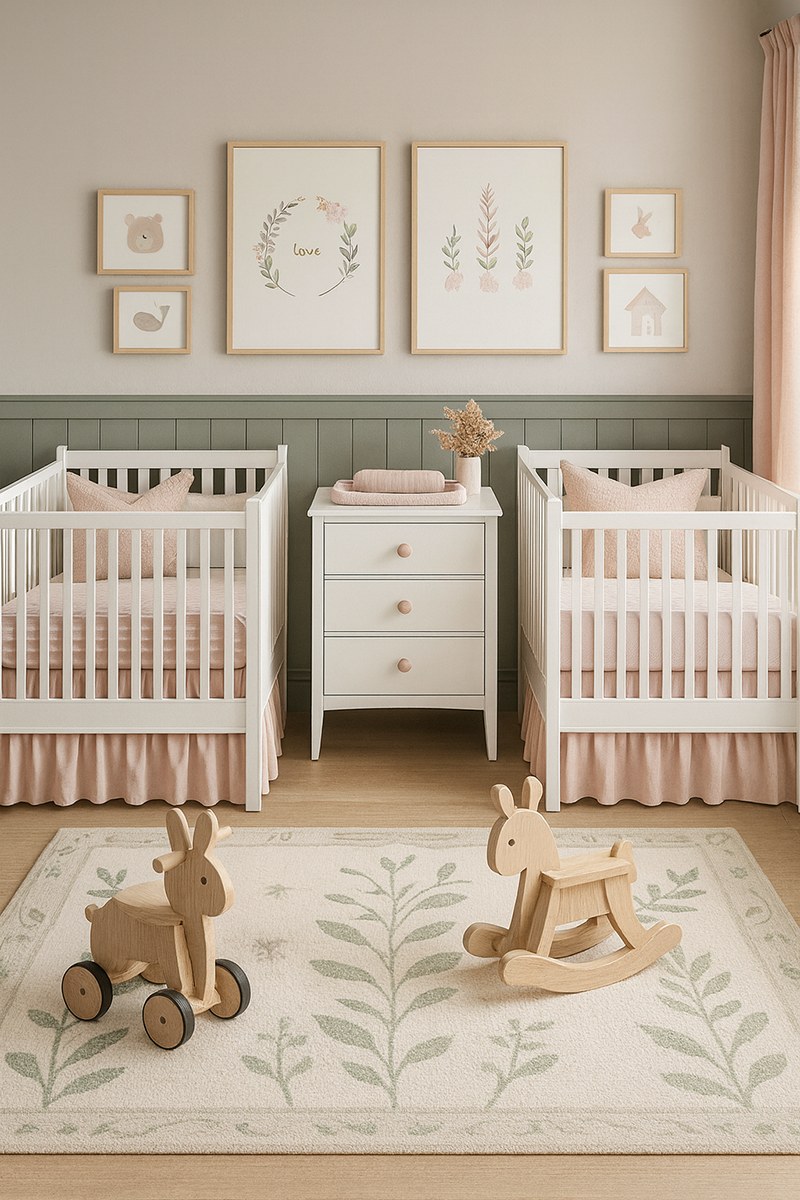
A calm, functional nursery layout for twins showing just the essential furniture pieces.
One of the biggest surprises for expecting parents is that you don’t need nearly as many pieces of nursery furniture as the baby stores make it seem. I’ve set up large nurseries, tiny nurseries, shared rooms, and unusual spaces, and no matter the layout, there are really just a few core items that create a safe, functional, and comfortable baby room. Everything else falls into the “nice to have but not essential” category.
If you’re exploring different looks while you plan, my curated list of baby nursery themes can help you imagine how your essentials will fit into the overall style of the room.
If you’re working with a small room or trying to stay on budget, this simple framework helps you decide what to buy now and what can wait until you understand your daily routines.(And trust me — once your baby arrives, you’ll instantly know which pieces matter most to you.)
1. A Safe Crib or Bassinet
A safe sleep space is the only true non-negotiable. Whether you choose a full-size crib, mini crib, or bassinet depends on your room size and lifestyle. If you’re unsure which style works best, my page on crib instructions and safety basics is a great place to start.
2. A Sturdy Dresser That Doubles as a Changing Area
Many parents skip the traditional changing table (and yes — this will be its own Q&A page), opting instead for a waist-height dresser with a non-slip changing pad on top. It saves space, lasts longer, and works beautifully in small nurseries. If you want ideas, I share lots of real-mom examples on my real nursery ideas page.
3. A Comfortable Chair or Glider
You don’t need the fanciest glider in the world, but you will want something supportive for late-night feedings and early-morning cuddles. A basic glider is absolutely worth it for most families. If you’re debating, you can explore inspiration throughout my nursery furniture gallery.
For more examples of how these pieces come together in real rooms, you can browse my collection of nursery furniture ideas to see layouts that work for every size space.
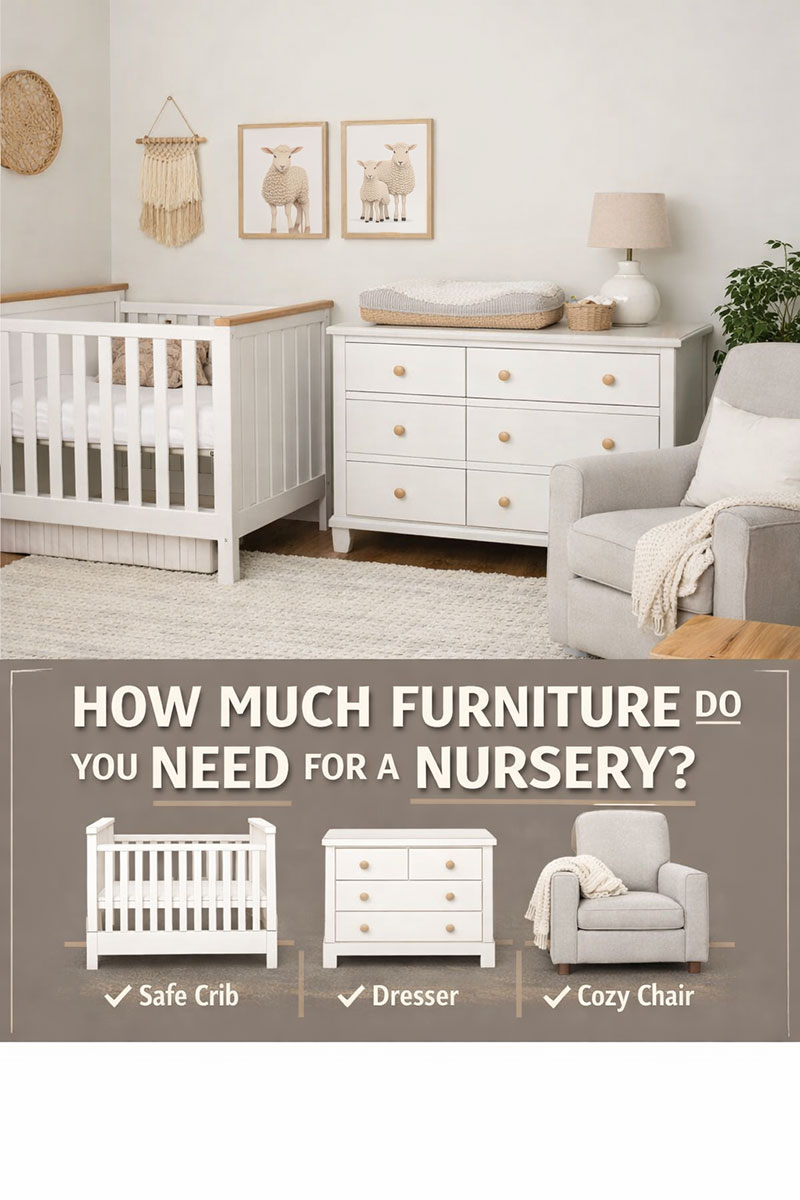
A simple, practical nursery arrangement showing the three essential furniture pieces.
Here’s the truth: most nurseries only need three major pieces of furniture to function beautifully — a sleep space, a storage space, and a comfortable place to sit. Everything else is optional, seasonal, or something you can add later.
In my own early days as a new mom, I bought more furniture than I actually needed. After a few weeks with the baby, I realized we were only using the crib, a dresser, and a chair — everything else was just taking up square footage I desperately needed for moving around during sleepy nighttime feedings. That experience forever changed how I helped other parents plan their nurseries.
A Changing Table — Many families skip it, but if you prefer one, there’s nothing wrong with that. The key is making sure it fits your room without creating tight walkways.
If you’re trying to decide whether it’s worth having a separate changing table, my guide answers that exact question: Do I Need a Changing Table?
Your Quick-Reference Nursery Furniture Checklist Before you start shopping, printing out a simple checklist can make the whole process feel calmer and more organized. Here’s a straightforward list of what most parents actually use in the first months — and what can wait until your routines evolve. Feel free to bookmark this page or add it to your nursery planning folder. Essentials You Need Now ✓ Safe Sleep Space — A full-size crib, mini crib, or bassinet works beautifully. If you’re comparing crib styles or curious about safety notes, you can browse my page on crib instructions & tips. ✓ Dresser for Clothing + Changing Pad Topper — One piece, two jobs. This keeps your room clean and prevents overcrowding early on. ✓ Comfortable Chair or Glider — You’ll be surprised how many hours you spend here. If you need ideas, I keep an updated gallery on nursery furniture inspiration. Optional Pieces You May Want Later ✓ Changing Table — I recommend reading my full breakdown on Do I Need a Changing Table? so you can decide based on your room size and habits. ✓ Bookshelves — Add these closer to the six-month mark when books become part of your bedtime routine. ✓ Toy Bins or Organizers — You can check examples of small, tidy setups on my baby room ideas page. ✓ Extra Storage Furniture — Things like cabinets, benches, or cube organizers work better after you understand your baby’s daily flow. What to Avoid When Buying Nursery Furniture It’s so easy to get swept up in Pinterest boards and matching furniture sets, but oversized or unnecessary pieces can make your nursery feel smaller and harder to use. Stick to lightweight, flexible items and avoid committing to large sets too early. Many parents tell me that once they removed even one bulky item, the whole room felt brighter and more peaceful. A good rule of thumb is this: if a piece of furniture doesn’t serve at least two purposes in the newborn stage, you can safely hold off. When I set up one of my early nurseries, I thought I needed a full seven-piece matching set. It didn’t take long to realize we used only three pieces daily — the rest became expensive clutter. That lesson shapes how I help parents design nurseries today: simple always wins. Final Thoughts Creating a calm, functional nursery is less about having a long list of furniture and more about focusing on what supports your day-to-day life. When you start with the essentials and let the room grow naturally as your baby’s needs change, you set yourself up for comfort, confidence, and joy during those early months. If you ever feel unsure about what to buy next or whether an item is truly necessary, the pages below can help guide your decisions: What Should I Buy First for the Baby? Nursery Ideas DIY Baby Furniture Ideas Next up — I can prepare the Pinterest Hero Pin package for this page, or we can move into reverse-linking placements for the other pages in your furniture cluster. Just say “next” for whichever direction you'd prefer. DISCLAIMER: I share nursery projects and repair ideas for inspiration, but I’m not an authorized crib technician or manufacturer representative. Always verify part compatibility and safety standards before making repairs or modifications. For details, please read the full disclaimer.
A cozy small nursery layout with only the most practical furniture in place.
Room Size: Measure twice. You should be able to walk in, lift the baby out of the crib, sit comfortably, and move around at night without bumping into anything.
Storage Needs: Your dresser will likely hold everything for the first six months. Babies don’t need as many things as we imagine — and most items are tiny.
If you’re comparing furniture alongside baby gear essentials, my Baby Gear Hub breaks down the items that truly help during those first months.
Daily Routines: Think about where you’ll feed the baby, change them, and store their clothing. Good planning keeps nighttime stress low.
If you’re starting to think about décor styles while planning your furniture layout, my baby nursery themes guide can help you picture how your room might look once everything comes together.
Safety: Follow current sleep guidelines. For clarity on crib safety, I recommend reviewing the consumer guidance on the CPSC website — the authority I trust most for updated nursery furniture safety recommendations.
Many expecting parents tell me they feel relieved once they understand exactly how much furniture do you need for a nursery because it helps them focus on creating a space that feels calm, uncluttered, and easy to move around in during those early months.
• Baby Nursery Themes
• DIY Baby Furniture Ideas
• Baby Room Ideas
• What Should I Buy First for the Baby?
Keep scrolling — I’ll walk you through the smartest way to lay out your nursery furniture, even in tricky rooms or tight spaces.
Once you’ve chosen the essential pieces, the next step is figuring out where everything should go. A thoughtful layout can make your nursery feel bigger, calmer, and easier to use — especially during nighttime feedings when your brain is running on very little sleep. Over the years, I’ve found that a simple, uncluttered layout almost always works better than one with too many moving parts.
Start by placing the crib on the most solid wall in the room, away from windows and heating vents. This keeps the baby comfortable and reduces distractions. From there, I like to position the dresser closest to the door so diaper changes feel quick and efficient, especially when you’re stumbling in half-awake at 3 a.m.
If you’re using a glider or chair, tuck it in a corner with soft lighting and a small basket for burp cloths, blankets, or nighttime essentials. This creates a “quiet zone” where you can settle in comfortably without navigating around extra furniture.
For even more ideas on creating a calm nighttime setup, you can explore my nursery lighting guide, which covers soft lamps, glider-friendly lighting, and safe choices for baby rooms.
One of my favorite nursery layouts came from a tiny upstairs room with an angled ceiling. At first, it felt impossible to fit everything. But once we committed to just the essentials — crib, dresser, chair — the room suddenly felt peaceful and surprisingly spacious. We even had enough room left for a small reading nook that became a nightly ritual.
If you’re working with a small nursery or a shared room, the “essential trio” becomes even more important. In rooms under 10×10 feet, I’ve found that keeping furniture along two walls and leaving one entire path open dramatically improves the way the room functions. This lets you move smoothly from crib to dresser to chair without feeling squeezed in.
You can also explore additional layouts and tiny-room inspiration on my nursery ideas page, where I share clever ways parents make the most of every inch.
A simple, calm furniture arrangement showing how a clean layout makes even small nurseries feel inviting.
Nursery overcrowding usually happens when you try to plan for every stage of babyhood at once. Instead of imagining your room filled with toddler toys, walkers, bouncers, and books, focus only on the first six months. Babies truly don’t need much in the beginning, and your room will evolve naturally as your routines change.
I always tell new moms: start simple and let the room grow with your baby. It keeps the space peaceful, makes cleaning easier, and prevents the stress of furniture you’re not even using yet. You’ll thank yourself later when you’re navigating those sleepy nights without feeling boxed in.
If you’re still in the early planning stages and want help choosing where to begin, my guide on what to buy first for the baby walks through the most important essentials step by step.
Keep scrolling — our next section walks through the items that are worth adding later and the ones that most parents end up skipping entirely.
Newborns don’t need much at all, which is why the first six months are the perfect time to keep your nursery simple and peaceful. As your baby grows, their routines will start to reveal what pieces of furniture would genuinely make your life easier. I’ve watched this happen in my own home and in the homes of hundreds of parents I’ve helped over the years — you don’t know what you need until you actually start living in the space.
But you don’t need to rush into anything. Many families wait until their baby reaches the six- to eight-month mark before buying extra pieces, because that’s when toys begin to multiply and awake time stretches longer. As your baby becomes more active and toys slowly start to gather, a small bookshelf or simple organizer can help keep the room feeling tidy.
A Low Bookshelf: Great for bedtime stories and for displaying favorite board books. When you’re ready, you can find plenty of small-space ideas on my list of baby room ideas, where I share clever ways parents keep everything within reach without creating clutter.
A Toy Bin or Organizer: Babies don’t accumulate toys right away, so this is one item that can wait.
As you start exploring colors, layouts, and styles, you might enjoy browsing my Nursery Themes Hub, which organizes every nursery idea on the site into easy categories.
Once your little one shows interest in stacking cups, rattles, or soft blocks, a bin or two will suddenly make perfect sense.A Larger Dresser: If your baby’s wardrobe grows faster than expected (and boy, does that happen!), adding a slightly larger dresser later can make your mornings go much smoother.
Simple storage additions like low bookshelves and bins can be added gradually as your baby’s routines change.
One of the most surprising things I’ve learned over the years is how many parents end up skipping items they once thought were essential. For example, traditional changing tables often fall into this category — which is exactly why I created a full Q&A page on Do I Need a Changing Table? to help you make that decision with confidence.
Other pieces like large toy chests, dedicated hampers, or matching nursery “sets” tend to be more about aesthetics than practicality. They look beautiful in a showroom but can easily overwhelm a real-life nursery, especially if your room is on the smaller side.
I once walked into a nursery that had almost every piece from a matching seven-piece set. It looked stunning at first glance, but the mom pulled me aside and whispered, “We actually only use three things in here.” That moment stuck with me — and it’s a big reason why I try to help parents focus on what truly matters.
A calm, uncluttered nursery isn’t just prettier — it’s easier to clean, safer for crawling babies, and far more functional during those bleary-eyed midnight wake-ups. When you focus on the three essentials (crib, dresser, chair) and add only what you need later, the whole space feels lighter and more intentional.
And here’s something I’ve seen again and again: parents who start with less are more satisfied with their nursery in the long run because they add items thoughtfully instead of trying to predict every future need.
Keep scrolling — we’ll wrap up with a quick-reference checklist to help you confirm what you need now and what can wait.
Before you start shopping, printing out a simple checklist can make the whole process feel calmer and more organized. Here’s a straightforward list of what most parents actually use in the first months — and what can wait until your routines evolve. Feel free to bookmark this page or add it to your nursery planning folder.
✓ Safe Sleep Space — A full-size crib, mini crib, or bassinet works beautifully. If you’re comparing crib styles or curious about safety notes, you can browse my page on crib instructions & tips.
✓ Dresser for Clothing + Changing Pad Topper — One piece, two jobs. This keeps your room clean and prevents overcrowding early on.
✓ Comfortable Chair or Glider — You’ll be surprised how many hours you spend here. If you need ideas, I keep an updated gallery on nursery furniture inspiration.
✓ Changing Table — I recommend reading my full breakdown on Do I Need a Changing Table? so you can decide based on your room size and habits.
✓ Bookshelves — Add these closer to the six-month mark when books become part of your bedtime routine.
✓ Toy Bins or Organizers — You can check examples of small, tidy setups on my baby room ideas page.
✓ Extra Storage Furniture — Things like cabinets, benches, or cube organizers work better after you understand your baby’s daily flow.
It’s so easy to get swept up in Pinterest boards and matching furniture sets, but oversized or unnecessary pieces can make your nursery feel smaller and harder to use. Stick to lightweight, flexible items and avoid committing to large sets too early. Many parents tell me that once they removed even one bulky item, the whole room felt brighter and more peaceful.
A good rule of thumb is this: if a piece of furniture doesn’t serve at least two purposes in the newborn stage, you can safely hold off.
When I set up one of my early nurseries, I thought I needed a full seven-piece matching set. It didn’t take long to realize we used only three pieces daily — the rest became expensive clutter. That lesson shapes how I help parents design nurseries today: simple always wins.
Creating a calm, functional nursery is less about having a long list of furniture and more about focusing on what supports your day-to-day life. When you start with the essentials and let the room grow naturally as your baby’s needs change, you set yourself up for comfort, confidence, and joy during those early months.
If you ever feel unsure about what to buy next or whether an item is truly necessary, the pages below can help guide your decisions:
Next up — I can prepare the Pinterest Hero Pin package for this page, or we can move into reverse-linking placements for the other pages in your furniture cluster. Just say “next” for whichever direction you'd prefer.
Hi, I’m Jan — the creator of Unique Baby Gear Ideas. I love helping expecting parents discover nursery décor inspiration and creative photo shoot ideas that make every stage of pregnancy feel beautiful.
Over the years, I’ve helped thousands of parents choose safe, stylish nursery furniture through hands-on reviews and real-world testing.
The suggestions I share here come from years of hands-on experience styling nurseries, reviewing maternity gowns, and learning what makes each photo session shine.
All articles and images on Unique Baby Gear Ideas are personally reviewed and edited by Jan Bay. Modern creative tools may assist with design or drafting, but every final page reflects my own voice, experience, and editorial judgment.
Have a gorgeous nursery or DIY project you'd love to show off?
✨ Share Your Nursery →
UBGI Gold Standard 2025
Verified for performance, SEO,
and accessibility compliance.
New! Comments
I would love to know what you think of our site! Leave me a comment in the box below.