Are Crib Screws Universal? Documented Differences in Crib Hardware by Model
Are crib screws universal? This question appears frequently in discussions about crib hardware and missing fasteners. In documented manufacturer materials and crib model records, crib screws are generally not universal. Even when screws appear similar in length or diameter, differences often exist in threading, head style, load rating, finish, or manufacturing tolerance.
Wondering if crib screws are universal before you buy the wrong hardware? Check these first:
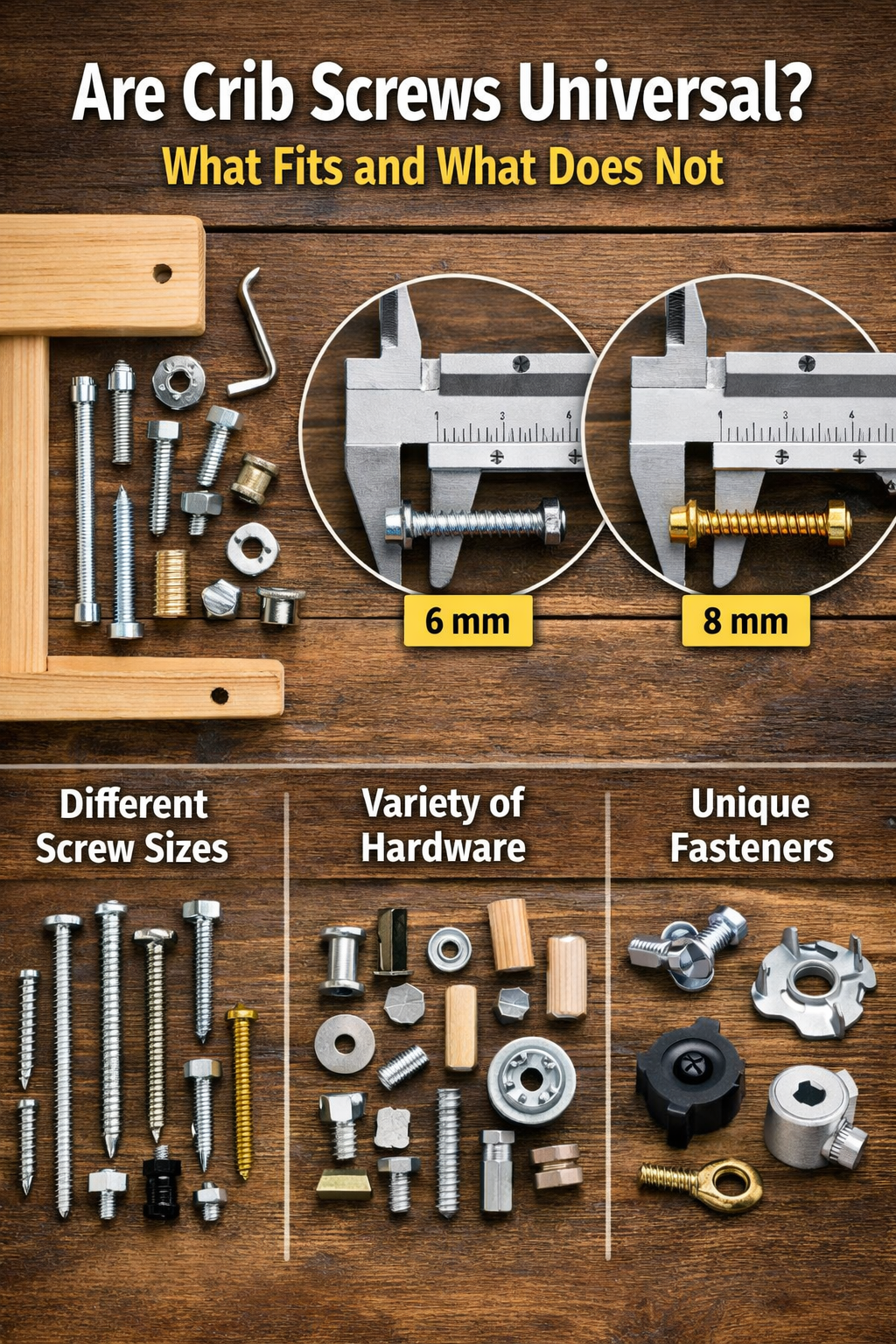
Are crib screws universal? This question appears frequently in discussions about crib hardware and missing fasteners. In documented manufacturer materials and crib model records, crib screws are generally not universal. Even when screws appear similar in length or diameter, differences often exist in threading, head style, load rating, finish, or manufacturing tolerance.
Are Crib Screws Universal? Overview of Manufacturer Documentation
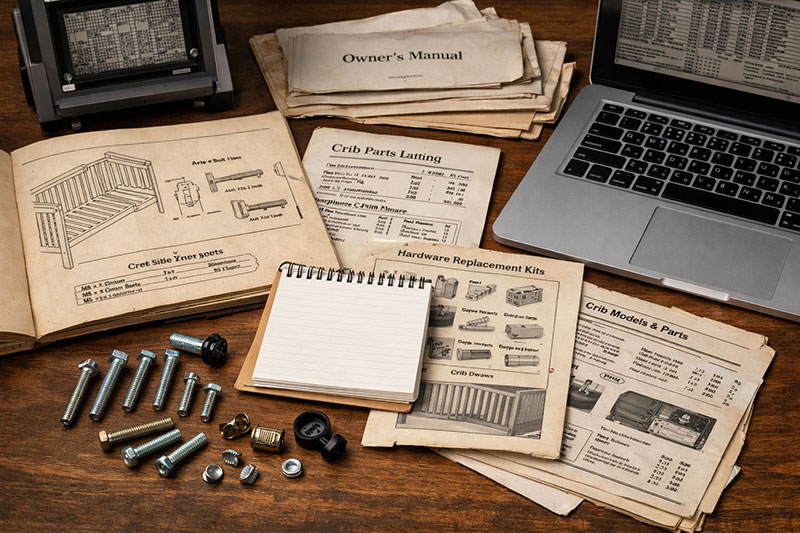
Manufacturer manuals and official parts lists consistently indicate that crib screws are associated with specific crib models rather than interchangeable hardware systems. These documents typically identify screws using internal part numbers that correspond to a defined crib frame, rail configuration, or production period. When reviewed collectively, these records provide a consistent response to the question, “Are Crib Screws Universal?” by documenting hardware as model-specific.
Crib manufacturers historically designed hardware as integrated systems. Screws, bolts, brackets, and connector plates were documented as coordinated components intended for specific locations within a crib structure, similar to the documented categories shown on the crib hardware kits page. Exploded diagrams and assembly illustrations reinforce this approach by assigning each screw to a fixed position rather than treating fasteners as interchangeable items.
Documented Design Differences Among Crib Screws
Differences in crib screw design are documented across several characteristics, including thread pitch, thread depth, shaft diameter, overall length, head shape, and surface finish. Some screws are manufactured to interface with metal inserts embedded in crib rails, while others align with internal brackets or threaded plates. These distinctions are not always visible without reference to documentation, including the model-based labeling patterns outlined in crib parts identification across manufacturers.
Additional reference material related to crib hardware classification appears across manufacturer archives, discontinued product listings, and third-party documentation repositories. These records often preserve original terminology, part identifiers, and schematic labels used at the time of manufacture. In these sources, crib screws are consistently documented as components associated with defined crib models rather than generalized fasteners. The repeated use of model-linked identifiers across independent records reinforces the conclusion that crib hardware is categorized by design lineage and production context. This documentation approach appears regardless of brand size, manufacturing region, or retail distribution channel, indicating a broadly consistent industry practice rather than an isolated classification method.
Industry reference materials also note that crib hardware documentation is frequently preserved in fragmented formats, including scanned manuals, legacy retailer catalogs, and archived customer support records. Within these materials, crib screws are referenced using consistent internal naming conventions tied to specific crib frames or assemblies. This pattern appears across multiple decades of crib manufacturing history and is visible in both printed and digital records. The recurrence of model-linked terminology across unrelated sources supports the classification of crib screws as design-specific components rather than universally standardized hardware.
Additional historical context on crib manufacturing standards and product recalls is documented in public records maintained by the U.S. Consumer Product Safety Commission (CPSC). Archived notices and product summaries reference crib models and associated components as part of broader product classifications. Consumer Product Safety Commission crib recall archive
Archived manuals often list multiple screws that appear similar in size but are assigned different part identifiers.
For a broader look at the common screw types, head styles, and fastener categories referenced across crib documentation, see this crib screws overview.
These distinctions are maintained in manufacturer records even when visual differences are minimal. As a result, crib screws are documented based on specification and intended placement rather than appearance alone.
Crib Models, Production Periods, and Hardware Classification
Crib hardware documentation frequently reflects variations across production years. A crib model produced during one manufacturing period may use hardware that differs from later versions of the same design. These changes may involve revised materials, altered thread specifications, or updated manufacturing tolerances. Manufacturer records reflect these variations by listing screws according to model and production range.
Historical catalogs and archived product listings further illustrate this pattern. Hardware components, including screws, are referenced alongside specific model numbers rather than grouped under a universal category. This documentation practice reinforces the classification of crib screws as model-dependent components.
Retail Hardware Comparisons in Reference Context
Retail hardware screws are sometimes visually compared to crib screws in consumer discussions, but manufacturer documentation does not typically classify crib screws as standard retail hardware. Crib fasteners are produced to meet defined structural requirements associated with crib frame connections, mattress support assemblies, and rail alignment, as also reflected across the broader crib parts reference hub.
Reference materials emphasize identification rather than interchangeability. Manuals and archived support documents focus on matching hardware to original crib models using part numbers and diagrams. This approach treats crib screws as elements of a designed system rather than generic fasteners.
Public Records and Safety Documentation References
Public safety records and recall notices also reference crib hardware in model-specific terms. When recalls occur, affected products are identified by crib model and production details rather than by individual screw types. Hardware components are discussed as part of the overall product configuration within broader crib safety standards.
These records align with manufacturer documentation by reinforcing the non-universal classification of crib screws. Screws are referenced in relation to specific crib designs rather than as interchangeable hardware items.
Summary of Documented Findings
Across manufacturer manuals, archived parts lists, historical catalogs, and public records, documentation provides a consistent answer to the question “Are Crib Screws Universal?” Available reference materials indicate that crib screws are designed for specific crib models, production periods, and hardware systems. Visual similarity does not override documented differences in design and specification.
This classification reflects long-standing manufacturing and documentation practices. Crib screws are recorded as integral components of defined crib designs rather than universal fasteners. This approach appears consistently across private manufacturer records and public reference materials.
When you click on links to various merchants on this site and make a purchase, this may result in this site earning a commission. This does not affect the price you pay.

UBGI Gold Standard 2026
Reviewed under the site's
editorial checklist.
Photos, decorating ideas, party setups and reader submissions are shared for inspiration unless a page is specifically presented as a pattern, tutorial, reference guide or step-by-step project. Follow the instructions, measurements, safety guidance and manufacturer directions provided for the particular project or product.
About Jan | Contact | Baby Nursery Ideas (Blog) | Site Map | Privacy Policy | Disclosure Policy | Disclaimer | Affiliate Disclosure | Earnings Disclosure | Facebook | Pinterest
I am a participant in the Amazon Services LLC Associates Program, an affiliate advertising program designed to provide a means for us to earn fees by linking to Amazon. As an Amazon Associate I earn from qualifying purchases.
Copyright © 2006-2026. All Rights Reserved.