Fisher Price Sit and Stand Stroller Ideas and Reviews
Fisher Price sit and stand stroller ideas and reviews focus on this stand-and-ride style stroller designed for use across multiple stages, with overview information on models, features, seating configurations, and general use scenarios.
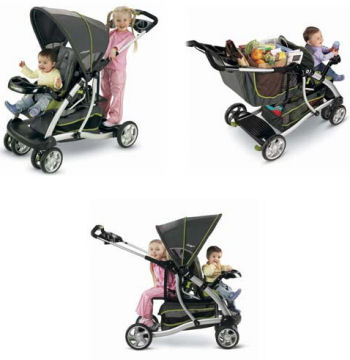
Overview of Fisher Price Sit and Stand Stroller
Fisher Price sit and stand stroller ideas and reviews commonly focus on this stand-and-ride stroller style designed to accommodate more than one child across different early childhood stages. These strollers are generally categorized as transitional models, allowing one child to ride seated in the front while another may stand or sit on a rear platform, depending on the model design. For broader context, this category is often referenced alongside other baby stroller styles.
Stand-and-Ride Stroller Design Concepts
Sit and stand strollers are often referenced in discussions about sibling transportation needs where a full double stroller may not be required. The Fisher-Price sit and stand stroller category is typically associated with compact frames, lighter construction, and configurations intended for everyday outings rather than full travel system use. Similar layouts are discussed within double stroller categories.
Common Features and Layout
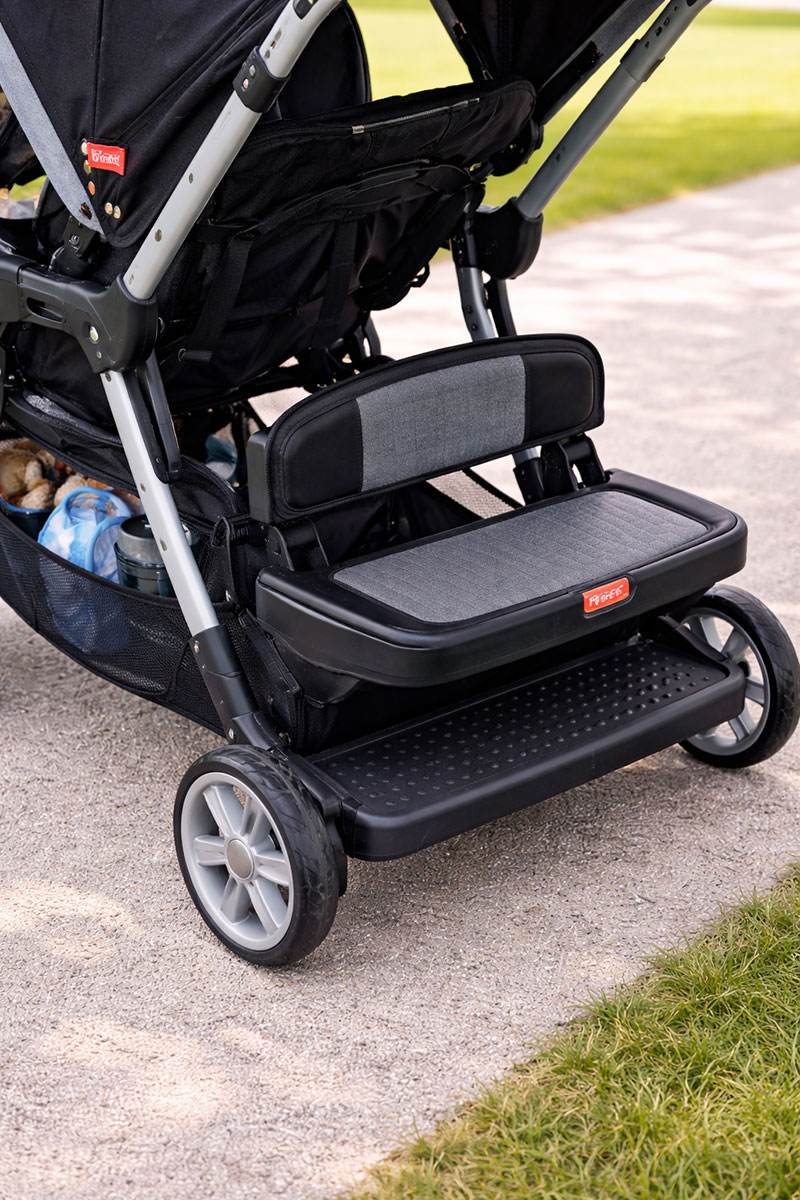
Features commonly documented in Fisher-Price sit and stand stroller models include a front seated position with safety restraints, a rear standing platform or bench-style seat, and under-seat storage areas integrated into the frame. Some models also include parent trays, child trays, or cup holders, depending on the production year and specific version. Feature references may appear in archived stroller reviews.
Age Range and Usage Context
Age range references for sit and stand strollers generally reflect use across toddler and preschool stages. Seated positions are typically associated with younger children, while rear standing or bench options are intended for older children capable of independent movement. This usage context is consistent with general baby gear classifications.
Reviews and Product References
Reviews of Fisher-Price sit and stand strollers usually focus on layout, fold style, maneuverability, and overall configuration rather than performance claims. Historical discussions may also reference discontinued models, material changes, or design updates introduced over time as stroller standards evolved. These discussions are commonly grouped within baby strollers.
Duo Stroller Specifications and Model Information
Specifications for duo and stand-and-ride strollers typically include frame dimensions, wheel configuration, seating arrangement, and accessory compatibility notes. Manuals and archived product listings are frequently referenced when identifying specific model details, original features, or replacement part compatibility, similar to other baby gear specifications.
Parts and Manuals Reference
Parts and manuals for Fisher-Price sit and stand strollers are commonly identified using model numbers found on frame labels or original documentation. Reference materials may include printed manuals, archived retailer listings, or manufacturer documentation. Official product manuals and historical information are available through the Fisher-Price parent company at Mattel Product Instructions.
Discontinued Fisher-Price Sit and Stand Stroller Models
Several Fisher-Price sit and stand stroller models are no longer in active production. Discontinued models are often identified through archived listings, older manuals, and secondary market references. These strollers may still appear in historical product discussions or discontinued baby gear archives such as discontinued baby product lists.
Product Category Context
Within the broader sit and stand stroller category, Fisher-Price models are often grouped with similar stand-and-ride designs as examples of how this stroller style has been implemented across different product generations. Informational pages commonly document these strollers for reference and comparison purposes rather than endorsement or usage instruction.
Evolution of Sit and Stand Stroller Designs
Sit and stand stroller designs emerged as an alternative to traditional double strollers as manufacturers explored ways to accommodate children of different ages within a single frame. Early models emphasized basic rear standing platforms, while later versions introduced bench-style seating options that allowed older children to rest without fully sitting in a second stroller seat. Fisher-Price sit and stand stroller designs are often referenced as part of this broader product evolution.
Over time, changes in materials, frame construction, and wheel design reflected broader shifts in stroller manufacturing standards. These updates were influenced by safety regulations, consumer preferences, and advancements in lightweight stroller engineering. As a result, sit and stand strollers produced in different years may vary noticeably in appearance and configuration even when categorized under the same general product type.
Manufacturing Variations and Model Differences
Fisher-Price sit and stand strollers have been produced across multiple manufacturing periods, with variations in frame color, fabric style, wheel size, and accessory layout. Some versions were released as part of limited product lines, while others remained available for several years before being discontinued. These differences are often documented through archived product listings and historical retail catalogs.
Model distinctions may also include differences in folding mechanisms, handlebar shape, or storage basket capacity. These variations are typically noted in original manuals or specification sheets rather than promotional materials. When reviewing historical models, product identification often relies on a combination of visual features and frame labeling.
Labeling, Identification, and Documentation
Stroller identification labels are commonly located on the frame near the rear axle, under the seat, or along the side rails. These labels may include model numbers, manufacturing dates, or compliance statements. Fisher-Price sit and stand stroller documentation frequently references these identifiers when distinguishing between similar-looking models.
Archived manuals and instruction sheets are often used as reference documents rather than operational guides. These materials typically include diagrams, part names, and layout illustrations that help clarify original design intent and component placement without providing step-by-step usage guidance.
Storage, Transport, and General Configuration Notes
Sit and stand strollers are commonly discussed in terms of their overall footprint when folded or stored. Compared to full-size double strollers, stand-and-ride designs are often noted for their narrower profile and reduced frame length. These characteristics contributed to their popularity in urban and travel-oriented contexts during certain production periods.
Configuration discussions may also reference handle height, wheel spacing, and weight distribution as design characteristics rather than performance claims. These attributes are generally documented for comparison and reference purposes across different stroller categories.
Historical Context Within Baby Gear Categories
Within the broader baby gear landscape, sit and stand strollers occupy a transitional category between single strollers and traditional doubles. Fisher-Price models are often cited alongside comparable products from the same era to illustrate how manufacturers approached multi-child transport solutions during periods of rapid product diversification.
Informational pages and archived reviews typically present these strollers as examples of evolving design philosophy rather than definitive solutions. As baby gear standards and consumer expectations changed, sit and stand strollers continued to adapt in form, layout, and intended use context.
Reference-Only Summary
Fisher Price sit and stand stroller ideas and reviews are commonly documented for historical, comparative, and reference purposes. These strollers represent a specific design approach within the broader stroller market, reflecting changing family needs, manufacturing trends, and regulatory environments. Reference materials, manuals, and archived listings continue to serve as primary sources for understanding how these models were originally designed and positioned.


About Jan | Contact | Baby Nursery Ideas (Blog) | Site Map | Privacy Policy | Disclosure Policy | Disclaimer | Affiliate Disclosure | Earnings Disclosure | Facebook | Pinterest
I am a participant in the Amazon Services LLC Associates Program, an affiliate advertising program designed to provide a means for us to earn fees by linking to Amazon. As an Amazon Associate I earn from qualifying purchases.
Copyright © 2006-2026. All Rights Reserved.